

Decorative Concrete: Stamped, Stained, Colored, and Exposed Aggregate
Plain gray concrete is just the starting point. These guides cover the most popular decorative finishes — what they look like, what they cost, how durable they are, and whether you can DIY them.
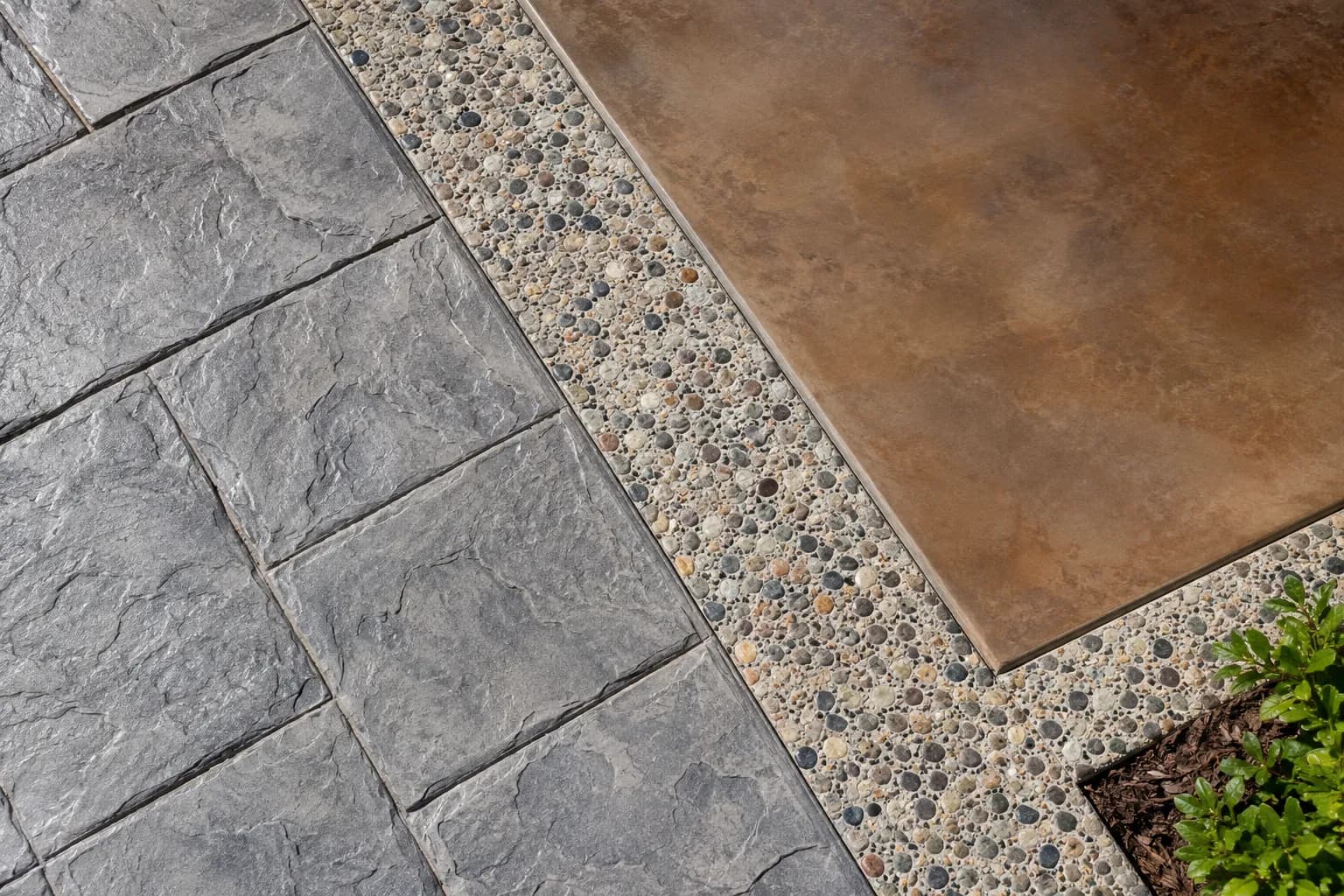
Decorative Techniques
Stamped Concrete: Complete Guide (Patterns, Costs, Pros & Cons)
Stamped concrete mimics the look of natural stone, brick, slate, or even wood at a fraction of the cost. It's created by pressing patterns into freshly poured concrete and adding color treatments that replicate expensive materials. For patios, pool decks, and walkways, stamped concrete offers high-end appearance with the durability concrete is known for.
Read Guide →Stained Concrete: Types, Costs, and DIY Guide
Staining transforms dull gray concrete into rich, colorful surfaces—and unlike other decorative methods, it works on existing concrete. Acid stains create unique, marbled patterns through chemical reaction with the concrete. Water-based stains offer consistent color and a wider palette. Both are achievable DIY projects with proper preparation.
Read Guide →Colored Concrete: Options, Costs, and How It's Done
Colored concrete transforms plain gray slabs into design features that complement your home and landscape. You have four main options: integral color mixed throughout, color hardener applied to the surface, stains applied after curing, and dyes for vibrant tones. Each method has different costs, durability, and applications.
Read Guide →Colored vs Stamped vs Plain Concrete: Cost & Durability Compared
Plain concrete is the right choice for most utility work. Colored concrete is the middle path - more visual appeal for a modest price premium. Stamped concrete delivers the most dramatic results but costs about 1.7-2x as much as plain, requires professional installation, and must be resealed every 2-3 years without fail. If you skip that maintenance, stamped concrete deteriorates faster than either alternative. Know what you're signing up for before choosing the upgrade.
Read Guide →Exposed Aggregate Concrete: What to Know
Exposed aggregate concrete reveals the natural stones within the mix, creating a textured, slip-resistant surface with visual depth. It's made by removing the top layer of cement paste to expose the decorative aggregates beneath—pebbles, crushed granite, river rock, or other stones.
Read Guide →Sealing & Protection
How to Seal Concrete (Step-by-Step Guide)
Sealing concrete is one of the easiest ways to extend its lifespan and improve its appearance. A quality sealer protects against water penetration, staining, freeze-thaw damage, and UV fading. The application process is straightforward—even beginners can achieve professional results with proper preparation.
Concrete Sealer Types: Penetrating vs. Topical and When to Apply
You know you should seal your concrete, but the sealer aisle has 30 products and no clear guidance. Penetrating, acrylic, epoxy, polyurethane, silane, siloxane--each works differently and each is suited to specific applications. Using the wrong type is worse than not sealing at all. An acrylic sealer on a driveway in Minnesota will peel in the first winter. A penetrating sealer on a garage floor won't protect against oil stains. Here's how to match the right sealer to your concrete.
Do You Need to Seal New Concrete? A Simple Decision Guide
Concrete sealer isn't mandatory — but for some projects, skipping it is a clear mistake. For others, sealing provides cosmetic benefits but no real protection. This guide gives you a simple decision framework: when to seal, when it's optional, and when to skip it entirely.
Related Guides
Concrete Countertops: Realistic DIY Assessment and Common Failures
DIY concrete countertops look stunning on Pinterest and terrible in half the kitchens that attempt them. The gap between inspiration and reality is enormous--pinholes, cracking, uneven color, staining, and sealing failures are common. This isn't to discourage you, but to set honest expectations. Concrete countertops are among the most difficult DIY concrete projects, and understanding where others fail gives you the best chance of succeeding.
Concrete Discoloration: Causes and Solutions
Concrete discoloration—blotchy patches, white deposits, rust stains, or uneven color—is almost always a cosmetic issue rather than a structural one. The cause determines whether it's fixable: efflorescence usually disappears on its own, while some stains require specific cleaners. In stubborn cases, staining or dyeing the concrete can create a uniform appearance.
Concrete Surface Finish Problems: Pinholes, Rough Spots and Color Issues
Your finish has a problem — and the first thing you need to know is what you're actually dealing with. Pinholes, rough texture, blotchy color, and trowel marks all have different causes and very different fixes. Most concrete surface defects are cosmetic: the slab is structurally sound even when it looks wrong. Identify the problem first, then decide whether you're looking at a simple fill, a grinder pass, or a resurfacing overlay.
Calculate Your Project
Use our free concrete calculator to estimate materials and costs for your decorative concrete project.