

Concrete Sealer Types: Penetrating vs. Topical and When to Apply
You know you should seal your concrete, but the sealer aisle has 30 products and no clear guidance. Penetrating, acrylic, epoxy, polyurethane, silane, siloxane--each works differently and each is suited to specific applications. Using the wrong type is worse than not sealing at all. An acrylic sealer on a driveway in Minnesota will peel in the first winter. A penetrating sealer on a garage floor won't protect against oil stains. Here's how to match the right sealer to your concrete.
Sealing is the single most effective maintenance step for any concrete surface. It prevents water damage, staining, freeze-thaw deterioration, and extends the concrete's lifespan by years. Our guide on how to seal concrete covers the application process--this guide focuses on choosing the right product. For estimating your project size, use our concrete calculator.
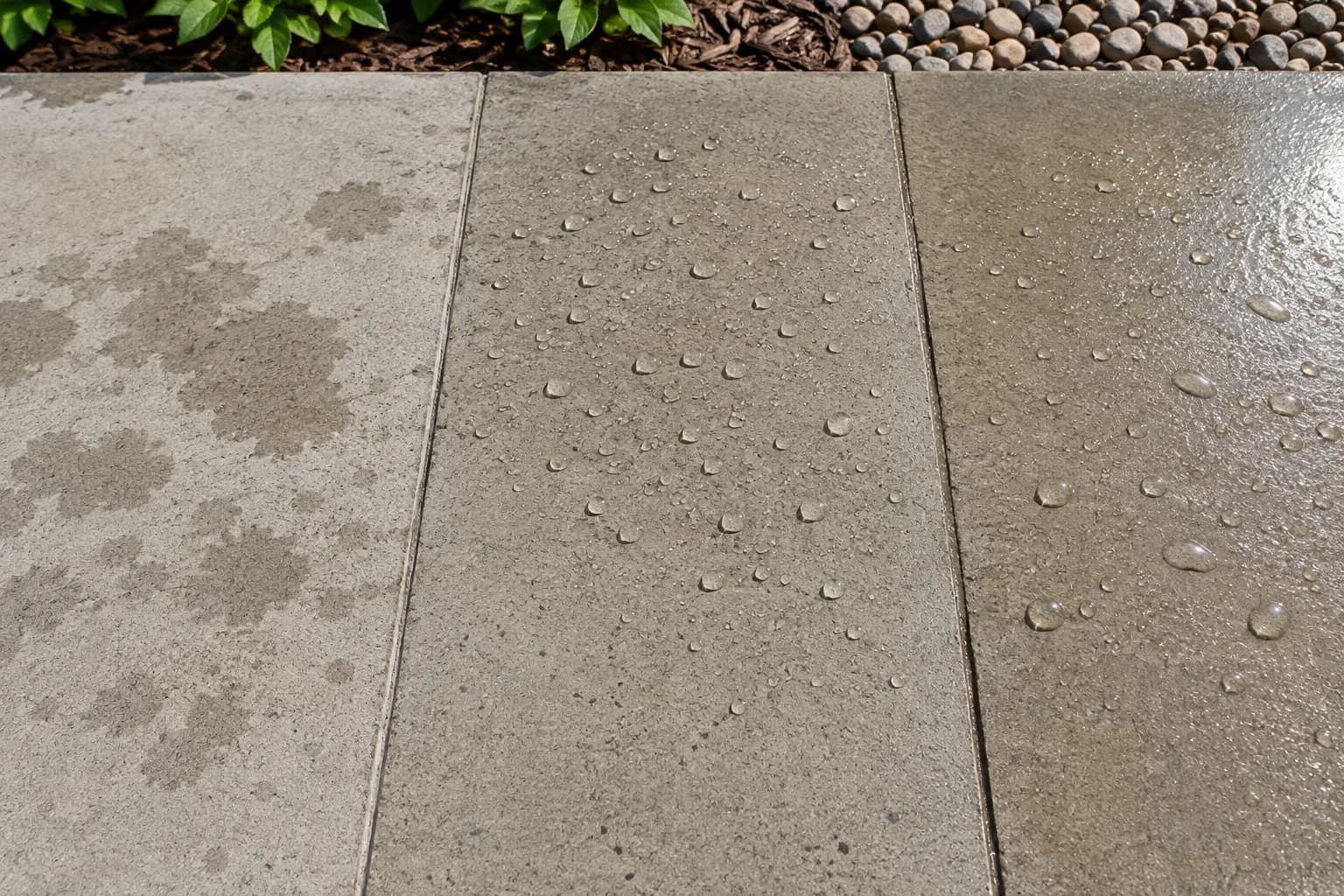
The Two Main Categories
All concrete sealers fall into two groups: penetrating (goes into the concrete) and topical (forms a film on top). Understanding this distinction narrows your choice immediately.
Penetrating Sealers
Penetrating sealers soak into the concrete's pore structure and react chemically to create a water-repellent barrier below the surface. They don't change the concrete's appearance, don't create a film that can peel, and allow the concrete to breathe (release moisture vapor).
| Subtype | How It Works | Water Repellency | Lifespan | Cost/sq ft |
|---|---|---|---|---|
| Silane | Small molecules penetrate deep (1/4 inch+) | Excellent | 7-10 years | $0.15-0.30 |
| Siloxane | Larger molecules, shallower penetration | Very good | 5-7 years | $0.10-0.25 |
| Silane/siloxane blend | Combines deep and shallow protection | Excellent | 5-10 years | $0.15-0.30 |
| Silicate (densifier) | Reacts with calcium to harden the surface | Minimal (hardens, doesn't repel) | Permanent | $0.10-0.20 |
Best for: Driveways, sidewalks, patios, pool decks, exterior flatwork. Any surface exposed to rain, freeze-thaw, or deicing salt.
Not for: Surfaces needing stain resistance (penetrating sealers don't block oil), decorative concrete where you want color enhancement.
Topical Sealers
Topical sealers form a visible film on the concrete surface. They change the appearance (usually adding sheen or a wet look), provide stain resistance, and block both water and contaminants from reaching the concrete. The trade-off: they can peel, wear, yellow, and need more frequent reapplication.
| Subtype | Finish | Stain Resistance | Lifespan | Cost/sq ft |
|---|---|---|---|---|
| Acrylic (water-based) | Low to medium sheen | Moderate | 1-2 years | $0.10-0.20 |
| Acrylic (solvent-based) | Medium to high sheen, wet look | Moderate | 2-3 years | $0.15-0.30 |
| Polyurethane | Satin to high gloss | High | 3-5 years | $0.25-0.50 |
| Epoxy | High gloss | Excellent | 3-5 years (interior) | $0.50-2.00 |
Best for: Decorative concrete (stamped, colored, stained), garage floors, interior floors, surfaces needing stain protection.
Not for: Exterior concrete in freeze-thaw climates (film can trap moisture and peel), surfaces subject to standing water.
Matching Sealer to Application
| Application | Best Sealer Type | Why |
|---|---|---|
| Driveway (cold climate) | Penetrating silane/siloxane | Won't peel in freeze-thaw; blocks water without trapping moisture |
| Driveway (mild climate) | Penetrating or solvent-based acrylic | Acrylic adds sheen if desired; less freeze-thaw concern |
| Stamped/colored patio | Solvent-based acrylic | Enhances color, provides wet look that shows off the pattern |
| Plain patio | Penetrating silane/siloxane | Natural look, low maintenance |
| Garage floor | Epoxy coating or polyurethane | Stain resistance from oil, chemicals; abrasion resistance |
| Basement floor | Penetrating silicate + topical as needed | Densifies the surface; topical adds moisture barrier |
| Pool deck | Penetrating silane/siloxane | Won't create slippery film; handles constant moisture |
| Sidewalk | Penetrating silane/siloxane | Low maintenance, handles freeze-thaw and deicing |
Application Timing
New Concrete
Wait at least 28 days after pouring before applying most sealers. The concrete needs to cure and the majority of moisture needs to escape. Some penetrating sealers allow application at 14 days--check the product data sheet.
Don't seal before the concrete is ready. Sealing too early traps moisture, which causes:
- White discoloration under topical sealers
- Reduced concrete strength
- Efflorescence pushed to the surface
Existing Concrete
When to seal:
- Fall, before the first freeze (highest-impact timing for winter damage prevention)
- After power washing (clean surface bonds better)
- After stain removal or repair work
Weather requirements for application:
- Surface temperature: 50-90 degrees F
- No rain expected for 24 hours (48 hours for topical sealers)
- Surface must be dry (no standing water, no dew)
The Water Bead Test (When to Reseal)
Sprinkle water on the sealed surface. If it beads up and sits on top, the sealer is still working. If it darkens the concrete (absorbs), it's time to reseal. Check annually, especially on high-traffic areas.
Common Mistakes
Using acrylic sealer on a driveway in freeze-thaw climates. The acrylic film traps moisture beneath it. When that moisture freezes, it pushes the film off--peeling, flaking, and white discoloration. Penetrating sealers avoid this entirely because there's no film to trap moisture.
Applying too thick. More sealer is not better. Topical sealers applied too heavily trap solvents, causing bubbling, cloudiness, and peeling. Follow the manufacturer's coverage rate exactly.
Sealing over contamination. Oil stains, dirt, existing sealers, and curing compounds all prevent bond. Clean and strip the surface completely before sealing. Our stain removal guide covers prepping contaminated surfaces.
Using the wrong sheen on a walkway. High-gloss topical sealers on walkways, steps, or pool decks create slip hazards when wet. Use a matte or satin finish on any walking surface, or add an anti-slip additive.
Not maintaining. Even the best sealer wears out. Plan for reapplication and include sealing in your annual concrete maintenance routine.
Cost Comparison
For a typical 400 sq ft driveway:
| Sealer Type | Product Cost | Coverage | Total Material | Reapplication | 10-Year Cost |
|---|---|---|---|---|---|
| Silane/siloxane | $60-120 | 5 gallons | $60-120 | Every 7 years | $120-240 |
| Acrylic (solvent) | $40-80 | 3 gallons | $40-80 | Every 2 years | $200-400 |
| Polyurethane | $100-200 | 3 gallons | $100-200 | Every 4 years | $250-500 |
Penetrating sealers cost less over time because they last longer and don't require stripping between applications.
For full driveway planning including thickness, reinforcement, and finishing, see our comprehensive driveway guide.
Key Takeaways
- Penetrating sealers (silane/siloxane) are best for outdoor concrete in any climate--no peeling, no film, 5-10 year lifespan
- Topical sealers (acrylic, polyurethane, epoxy) provide stain resistance and color enhancement but need more frequent maintenance
- Never use film-forming sealers on exterior concrete in freeze-thaw climates
- Wait at least 28 days after pouring before sealing new concrete
- The water bead test tells you when to reseal--if water absorbs instead of beading, it's time
- Penetrating sealers are cheaper over 10 years despite higher initial cost per application
For more project guidance, browse our complete library of concrete guides and tutorials.