

Concrete Discoloration: Causes and Solutions
Concrete discoloration—blotchy patches, white deposits, rust stains, or uneven color—is almost always a cosmetic issue rather than a structural one. The cause determines whether it's fixable: efflorescence usually disappears on its own, while some stains require specific cleaners. In stubborn cases, staining or dyeing the concrete can create a uniform appearance.
Understanding what caused the discoloration helps you choose the right fix and prevent it from happening again.
Types of Concrete Discoloration
Efflorescence (White Deposits)
What it looks like: White, powdery, or crystalline deposits on the surface
What causes it: Water moves through concrete, dissolving salts. When water evaporates at the surface, it leaves salt crystals behind.
Is it serious? No—it's purely cosmetic and usually temporary.
Solution:
- Often disappears naturally over time (months to a year)
- Scrub with stiff brush and water
- For stubborn deposits: diluted muriatic acid (1:10) or commercial efflorescence cleaner
- Seal the concrete to reduce future occurrences
Rust Stains
What it looks like: Orange or reddish-brown stains, often in streaks or spots
What causes it:
- Metal furniture or planters left on concrete
- Fertilizer containing iron
- Corroding rebar (if stain appears along cracks)
- Iron-rich well water from sprinklers
Is it serious? Usually cosmetic, except when caused by corroding rebar—that indicates a structural concern.
Solution:
- Commercial rust remover (oxalic acid-based)
- Lemon juice or white vinegar for light stains
- Pressure washing after chemical treatment
- If from rebar: professional assessment needed
Oil and Grease Stains
What it looks like: Dark spots or patches, often in driveways or garage floors
What causes it: Vehicle leaks, spills, mechanical work
Solution:
- Fresh stains: Absorb with cat litter, then degrease
- Set stains: Concrete degreaser, scrub, pressure wash
- Old stains: Poultice method (absorbent material + solvent)
- Severely stained: May need grinding or resurfacing
Organic Stains (Leaves, Mold, Algae)
What it looks like:
- Leaf stains: Tan or brown outlines
- Mold/mildew: Black or dark green patches
- Algae: Green film, usually in shaded/damp areas
What causes it: Organic material sitting on wet concrete; shaded areas that stay damp
Solution:
- Leaf stains: Pressure washing, may need bleach solution
- Mold/mildew: Bleach solution (1:10), scrub, rinse thoroughly
- Algae: Same as mold; improve drainage and sunlight if possible
- Prevention: Remove leaves promptly; keep concrete clean
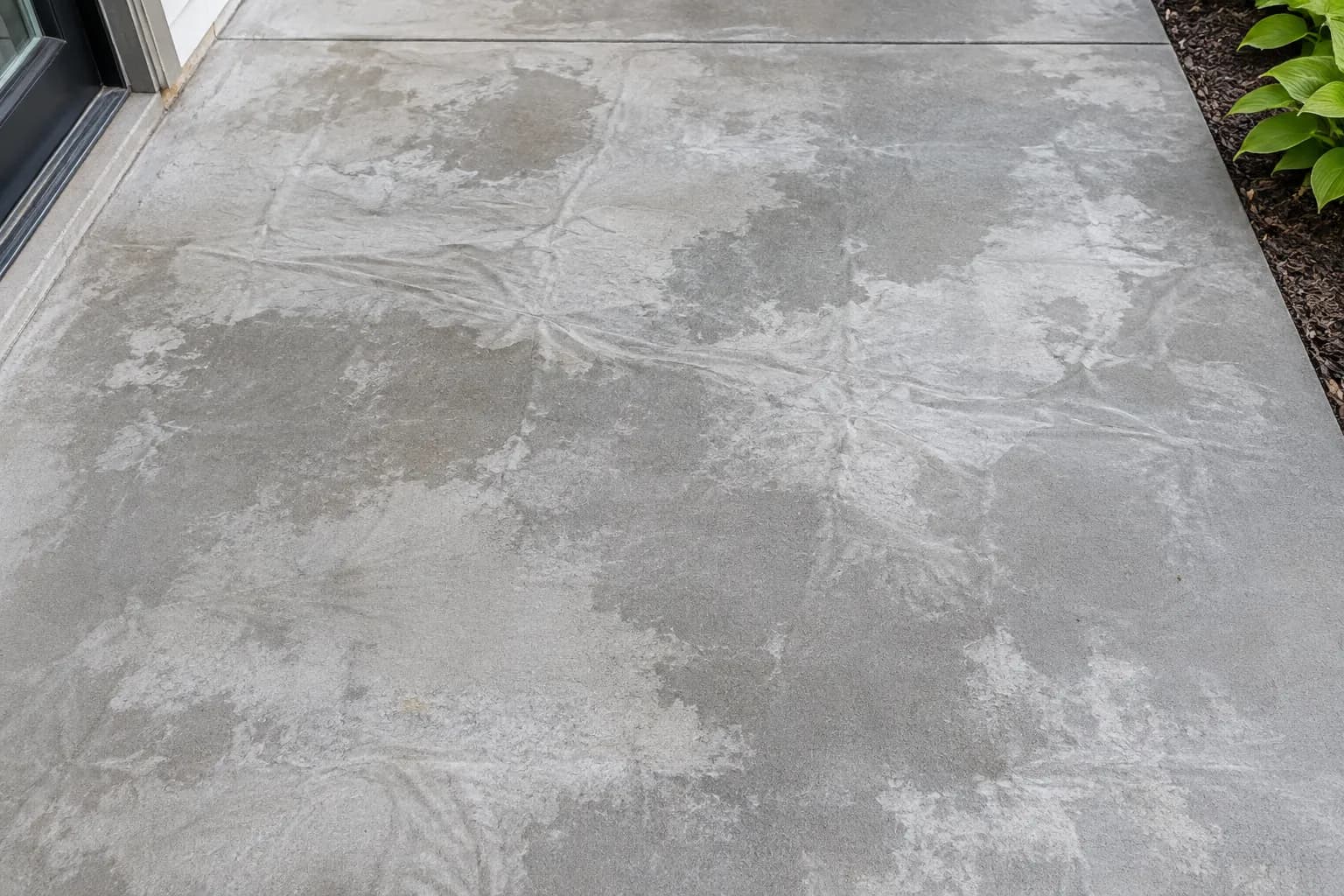
Color Variation from Pouring
What it looks like: Patches of lighter or darker concrete, mottled appearance
What causes it:
- Inconsistent curing (some areas dried faster)
- Different water content across the pour
- Calcium chloride accelerator (causes dark spots)
- Different finishing techniques across the slab
- Batch variation in ready-mix deliveries
Is it fixable? Sometimes fades over time; may need staining to even out.
Solution:
- Wait 6-12 months—variation often reduces
- Acid staining can create uniform look
- Concrete dye evens out appearance
- Sealer sometimes reduces visible variation
For intentional coloring options, see our colored concrete guide.
Cleaning Discolored Concrete
General Cleaning Process
- Sweep loose debris
- Rinse with water
- Apply cleaner appropriate for stain type
- Scrub with stiff brush
- Let sit per product directions (5-15 minutes typically)
- Pressure wash or rinse thoroughly
- Repeat if necessary
- Seal after cleaning to protect
Cleaner Selection
| Stain Type | Recommended Cleaner |
|---|---|
| Efflorescence | Efflorescence cleaner or diluted muriatic acid |
| Rust | Oxalic acid-based rust remover |
| Oil/grease | Concrete degreaser |
| Mold/mildew | Bleach solution (1:10) |
| Leaf/organic | Pressure washing + bleach if needed |
| General grime | TSP (trisodium phosphate) or concrete cleaner |
Safety Notes
- Wear gloves, eye protection, and old clothes
- Never mix cleaners (especially bleach + acid = toxic gas)
- Test cleaners in inconspicuous area first
- Rinse thoroughly—residue can damage concrete
- Protect plants and landscaping from runoff
When Discoloration Won't Clean
If cleaning doesn't work, you have options:
Concrete Staining
Acid or water-based stains can create a uniform color over the entire surface. This turns the "problem" into a design feature.
- Works on existing concrete
- Creates permanent color
- Costs $2-4/sqft DIY, $4-10/sqft professional
Concrete Dyeing
Similar to staining but with more color options. Better for indoor use (UV can fade dyes).
Resurfacing
Apply a thin overlay that covers discoloration completely. Creates a fresh surface.
- Covers all existing issues
- Can add texture or pattern
- Costs $3-7/sqft professional
Sealing with Tint
Some sealers come tinted, adding slight color while protecting the surface.
Prevention
During Installation
- Consistent curing across entire slab
- Same water ratio throughout pour
- Avoid calcium chloride in cold weather
- Single batch of ready-mix when possible
- Uniform finishing technique
After Installation
- Seal concrete within first year
- Clean spills promptly
- Remove leaves and debris regularly
- Keep metal objects off unsealed concrete
- Address drainage to prevent standing water
Key Takeaways
- Efflorescence (white deposits) is temporary and usually resolves naturally
- Rust stains clean with oxalic acid-based products
- Oil stains need degreaser—treat fresh stains immediately
- Mold/algae clean with diluted bleach solution
- Color variation from pouring may fade; staining evens it out
- Sealing prevents many discoloration issues
For related surface issues, see concrete spalling and why concrete cracks. Learn concrete fundamentals in our basics guide.