
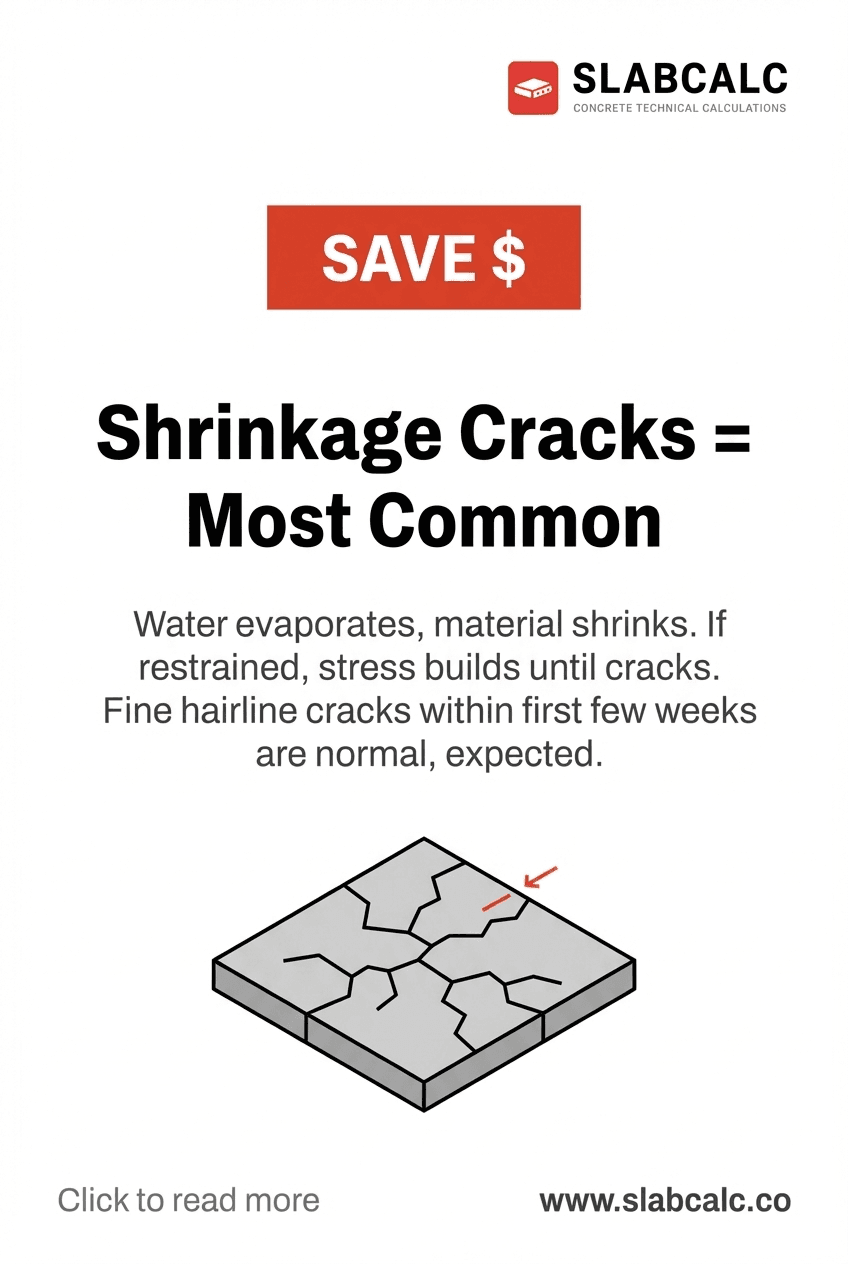
Shrinkage Cracks = Most Common
Save $2,000–$5,000 by Understanding What's Normal
The most common concrete problem—shrinkage cracking—is also the cheapest to manage if you understand it. A homeowner who panics and hires a concrete contractor to seal, inject, or grind every hairline crack can spend $3,000–$5,000 on cosmetic work. A homeowner who knows what to expect and prevents it upfront spends under $500 on control joints and proper curing. This article cuts through the confusion so you make the right choice.
Why Concrete Shrinks (And Why It Cracks)
When concrete cures, water evaporates from the mix. The material naturally shrinks by 0.1–0.2% of its volume—small but relentless. On a 30-foot driveway, that's movement of up to 0.5 inches. If the concrete is held in place (by subbase friction, forms, or internal reinforcement), stress builds. Once the tensile stress exceeds the concrete's strength (around 300–500 psi for residential mixes), the material relieves that stress by cracking.
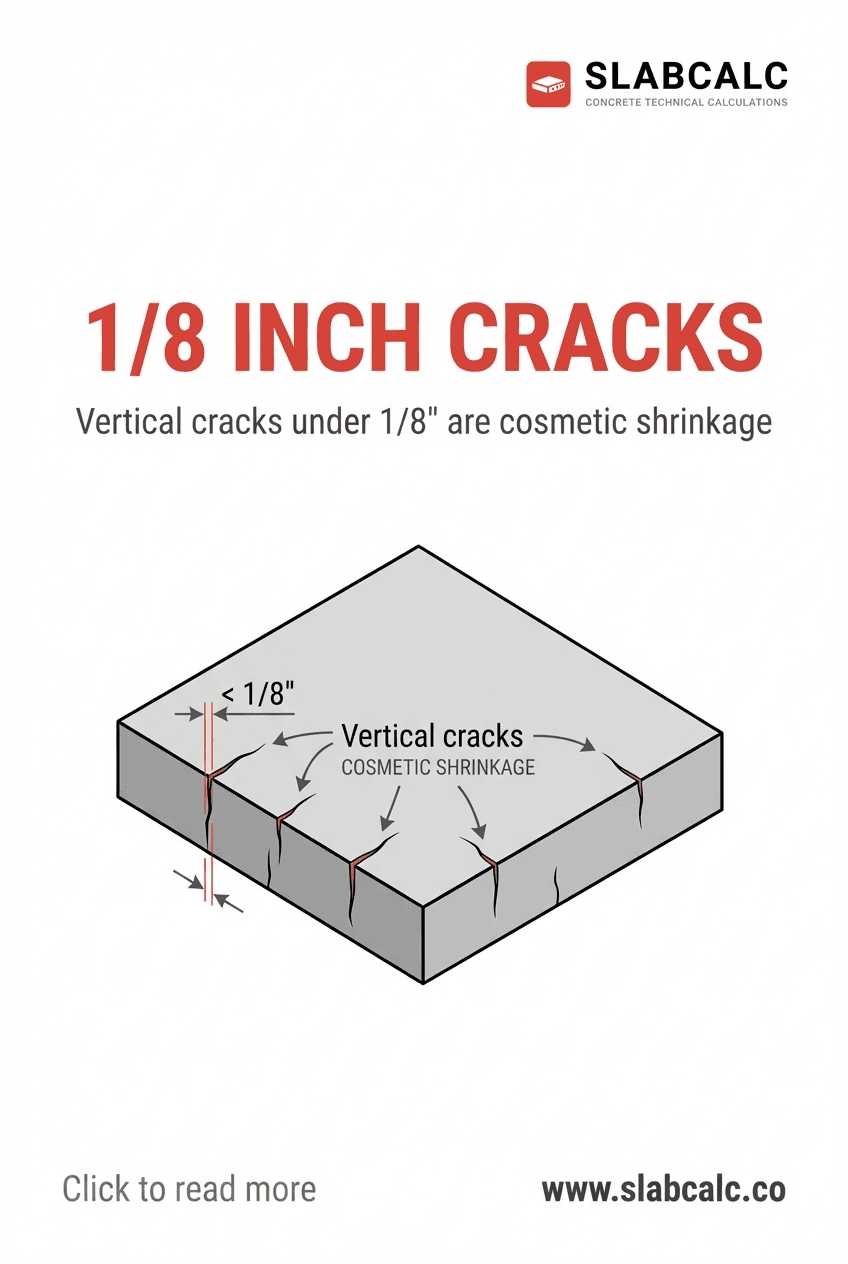
This happens within days to a few weeks after pouring. The cracks are typically hairline—thinner than a human hair—and random in pattern. You may see straight lines, map-like networks, or scattered spiderwebbing. These are cosmetic and structurally harmless.
The Math: Prevention vs. Repair
Prevention cost (the smart choice):
- Control joints every 8–10 feet: $50–$150 per slab (one-time, during pouring)
- Proper curing (keeping concrete moist for 7+ days): $0–$100 in materials
- Total: $50–$250
Reactive repair (the expensive route):
- Concrete sealant application: $1–$2 per square foot ($150–$400 per driveway)
- Crack injection (epoxy or polyurethane): $3–$5 per linear foot ($300–$800 per slab)
- Grinding and polish to hide cracks: $1–$3 per square foot ($400–$1,200)
- Professional assessment and consultation: $200–$500
- Total: $1,050–$2,900 (and the cracks still show)
If cracks widen beyond 0.5 inches or water enters, costs jump to $3,000–$5,000+ for injection and potential base repair.
The Prevention Formula That Works
Control joints are the cornerstone. These are shallow grooves (1/8–1/4 inch deep) cut into the concrete every 8–10 feet in both directions. They create a predetermined weak point where shrinkage cracks will form—but invisibly, along the joint line instead of randomly across the slab.
Curing is non-negotiable. Keep the concrete damp for 7 days minimum. This slows water evaporation, reducing shrinkage stress. Cover with plastic sheeting, mist with a hose, or use curing compound ($20–$40 per gallon).
Avoid excess water in the mix. More water = more shrinkage. Use only what's needed for workability. This is why hiring an experienced concrete finisher matters.
When to Actually Worry
Hairline shrinkage cracks do not require sealing unless water intrusion is a concern (basement walls, pool decks). Wide cracks (over 0.25 inches), cracks with vertical displacement, or cracks that grow over time signal settlement or structural issues—those need professional assessment.
Bottom line: Expect fine cracks in the first month. Plan control joints during the pour. Keep it moist. Save thousands by doing nothing else. That's the concrete owner's advantage.