
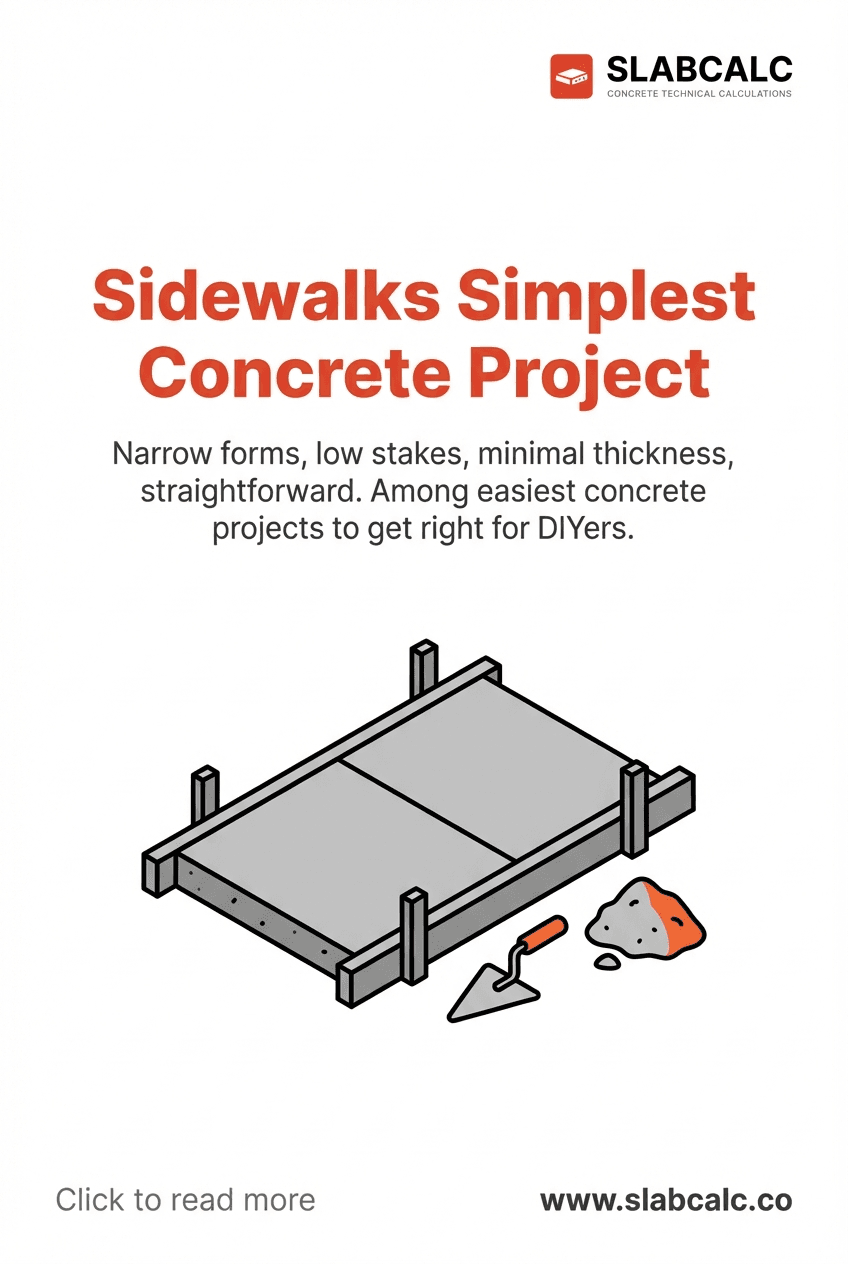
Sidewalks Simplest Concrete Project
The 4-Inch Standard for Residential Sidewalks
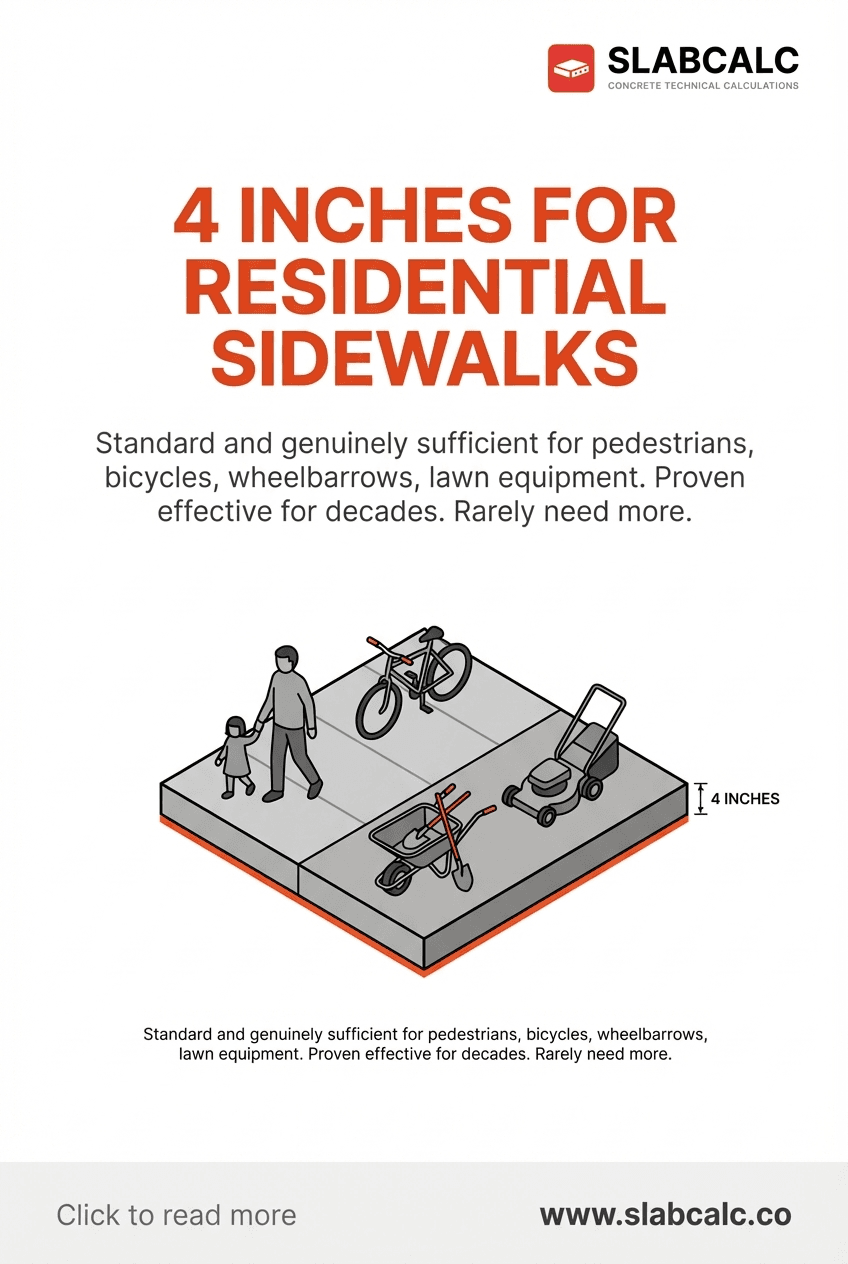
Stick with 4 inches for nearly every residential sidewalk project. This is the baseline specification recommended by the American Concrete Institute (ACI) and adopted in most local building codes. It's not arbitrary—it's based on real load analysis.
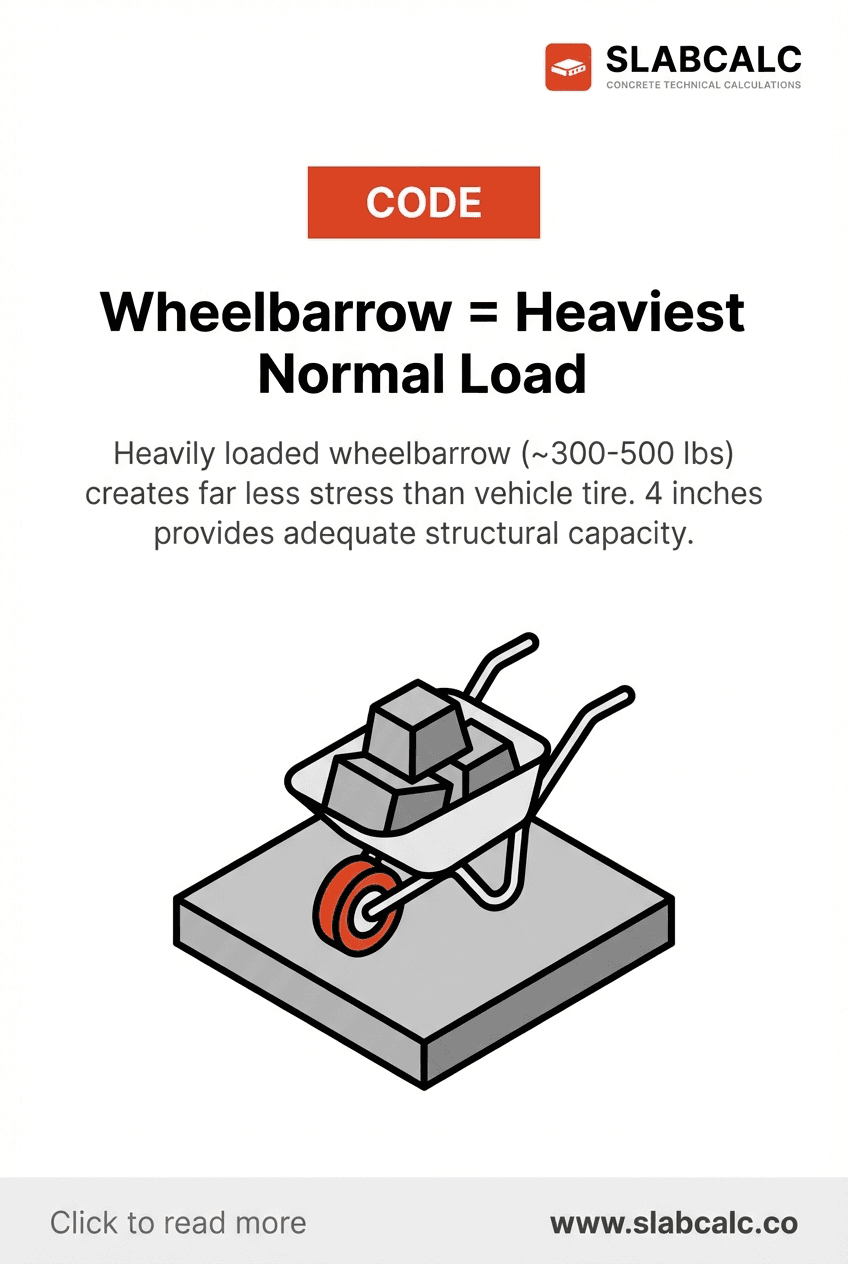
A residential sidewalk carries predictable, modest loads: pedestrians (150–250 lbs), bicycles with riders (200 lbs), and occasionally wheelbarrows or lawn equipment (300–500 lbs max). None of these come close to the wheel loads of vehicles. A 4-inch concrete slab with proper reinforcement easily handles these stresses with a comfortable safety margin. You're not building a driveway; you're building a walking surface.
Why Thickness Directly Affects Durability
Thickness isn't just about strength—it's about longevity and freeze-thaw resistance. Concrete less than 4 inches is prone to spalling (surface breaking and flaking) after years of freeze-thaw cycles in cold climates. The thinner the slab, the faster moisture penetrates to reinforcement, accelerating rust and deterioration.
A 4-inch slab maintains structural integrity through 20–30 years of freeze-thaw cycles. Anything thinner creates a false economy: you save a few dollars in materials upfront but replace the sidewalk 10 years early.
When to Go Thicker: 5–6 Inches
Increase to 5–6 inches only if vehicles will cross your sidewalk. Common scenarios:
- Driveway apron or entrance (where a car parks partially over the sidewalk)
- Side yard access where equipment or a vehicle occasionally crosses
- High-traffic commercial or municipal right-of-way
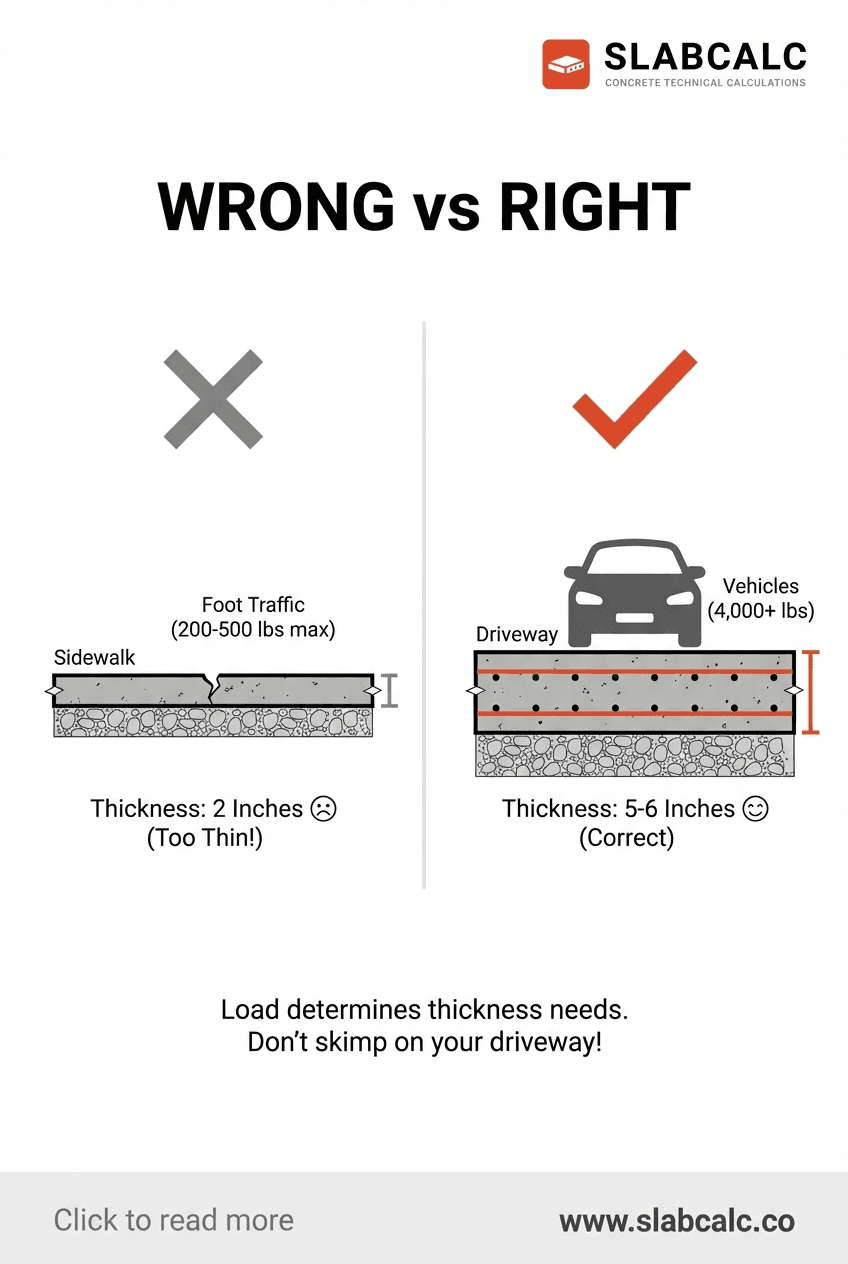
Vehicle wheels concentrate loads in a small area, creating stress that exceeds pedestrian loads by 10–50 times. A 5–6 inch pour handles occasional vehicle traffic; 4 inches will crack.
Material Sourcing and Cost Reality
A 4-inch residential sidewalk typically requires:
- Concrete mix: Standard 3,000–3,500 PSI (pounds per square inch) strength. Don't overpay for 4,000+ PSI unless locally required; 3,500 PSI is plenty.
- Reinforcement: 4x4 mesh or #3 rebar at 18-inch spacing. Cost: $20–40 per 100 square feet.
- Concrete cost: $140–160 per cubic yard. A 100-square-foot sidewalk, 4 inches thick, requires ~1.23 cubic yards (roughly $170–200 in concrete).
Pro tip: Order ready-mix concrete from a local batch plant, not bags. Bagged concrete costs 3–5× more and produces inconsistent results.
The Control Joint Math
Install control joints every 4–5 feet along the length. These create intentional, clean crack points and prevent random, ugly fractures. Spacing them correctly prevents the common mistake of joints too far apart, which causes the concrete to crack between them anyway.
Bottom Line
4 inches is the sweet spot. It's code-compliant, durable through decades of use, economical, and straightforward to form and pour. Start with this specification, verify your local code allows it (most do), and only deviate upward if vehicle traffic demands it. This simplicity is exactly why sidewalks are the best first concrete project for DIYers.