
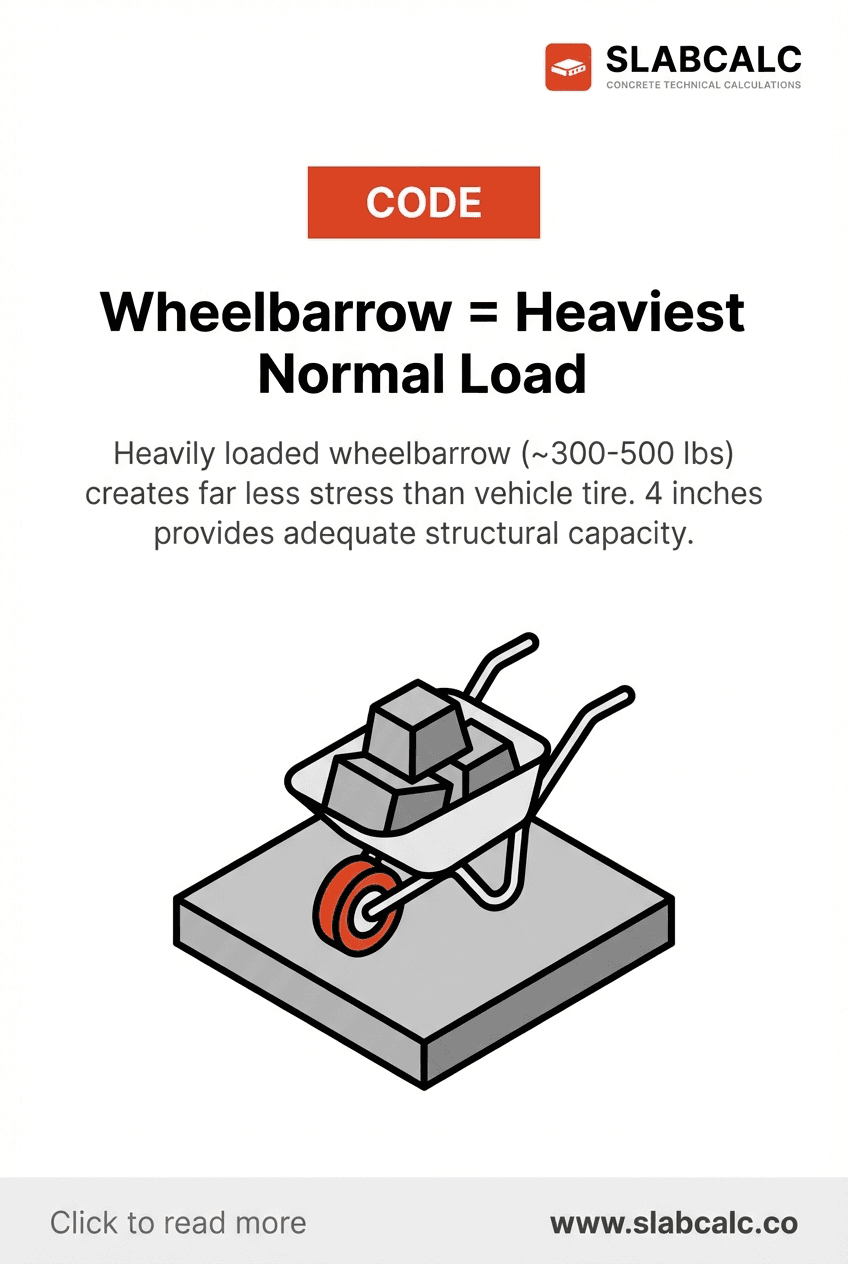
Wheelbarrow = Heaviest Normal Load
Code Says 4 Inches Is Enough
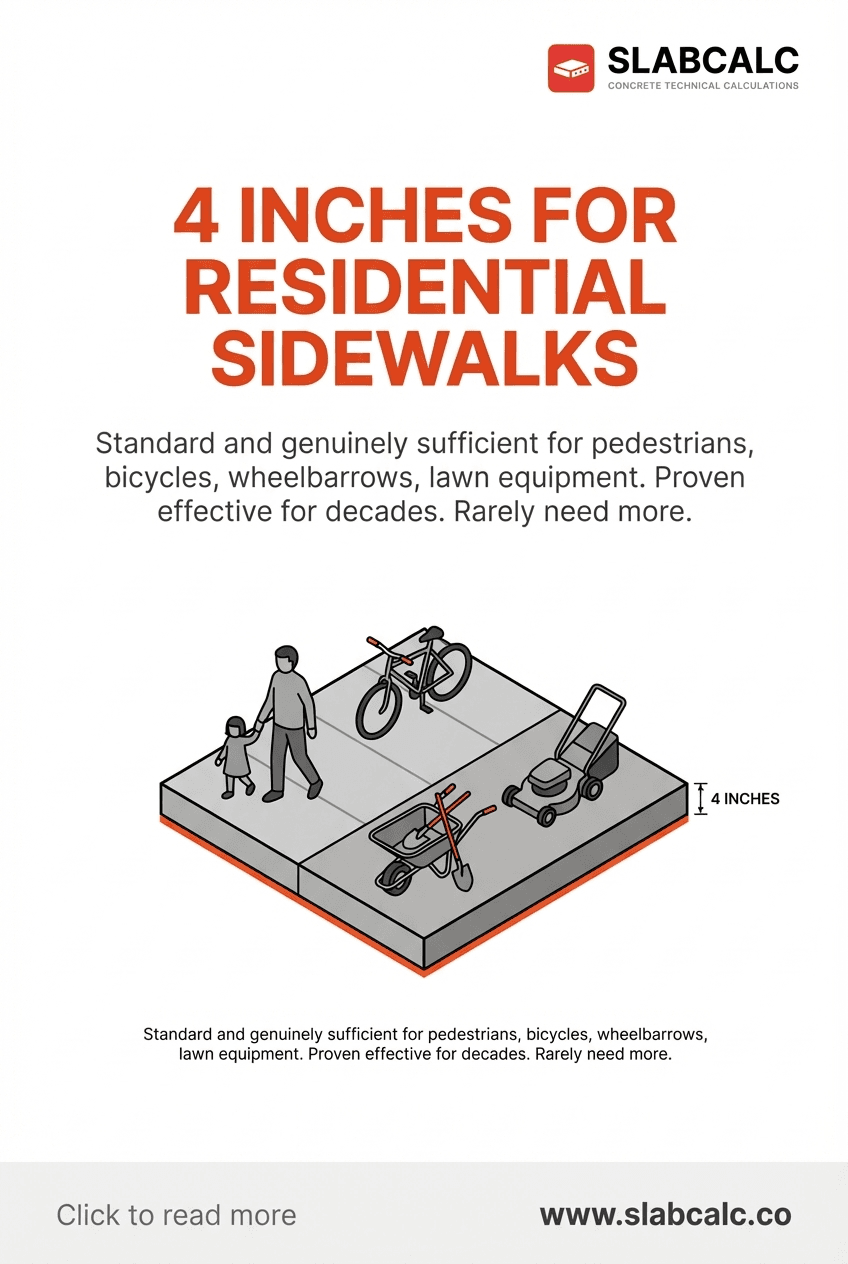
The International Residential Code (IRC) Section R302 specifies a minimum of 4 inches of concrete thickness for residential sidewalks. The American Concrete Institute (ACI) backs this standard in their 302.1R guide for concrete floors and slabs not on grade. Your local building department likely enforces one or both of these standards. Neither requires thicker concrete for normal foot traffic.
The logic is straightforward: code writers based sidewalk thickness on realistic load conditions, not worst-case scenarios.
What Actually Loads Your Sidewalk?
A residential sidewalk encounters predictable traffic:
- Pedestrians: 150–250 lbs per person
- Children on bicycles: ~200 lbs combined
- Loaded wheelbarrow: 300–500 lbs
- Lawn mower or small tiller: 100–400 lbs
- Hand trucks and garden carts: 150–300 lbs
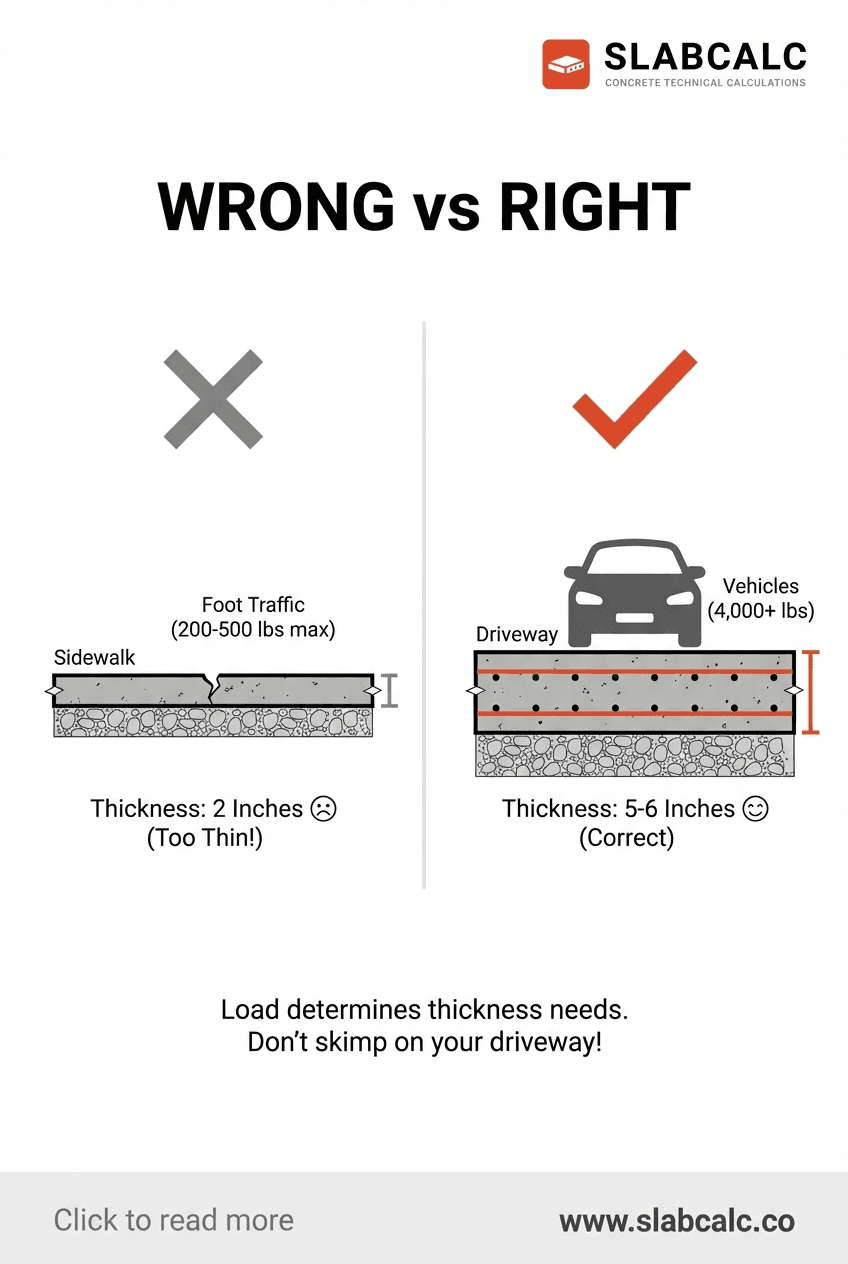
None of these concentrates force the way a vehicle tire does. A car tire exerts 500–800 psi depending on vehicle weight and tire pressure. A person standing still distributes maybe 50 psi across their shoe footprint. A fully loaded wheelbarrow—the heaviest normal load—spreads 300–500 lbs across two small wheels, creating manageable point stress that 4 inches of concrete handles comfortably.
Why Engineers Chose 4 Inches
ACI calculations account for:
- Subgrade support (assumed stable soil)
- Load duration (pedestrians move; they don't park)
- Safety factor (built-in margin, typically 2.0×)
- Freeze-thaw cycles (thicker concrete resists cracking in cold climates)
At 4 inches with a properly prepared base and 3,000 psi concrete, you get a safety margin of roughly 2 to 2.5 times the expected maximum load. That's plenty.
When Code Requires Thicker
Standard 4 inches applies only to foot traffic and light equipment. Deviate when:
- Vehicles cross occasionally (accessing a detached garage or side yard): Pour 5–6 inches in that zone
- Heavy equipment will pass regularly (construction access, delivery trucks): Use 5–6 inches minimum
- Municipal or public sidewalks: Check your local code; many require 5 inches for high-traffic areas
- Freeze-thaw zones (northern climates): Some jurisdictions bump to 4.5 or 5 inches for durability
Common Violations (And How to Avoid Them)
Under-thickness below 4 inches is code noncompliance. Many DIYers pour 3 inches thinking it saves money. It doesn't—when the thin slab cracks or fails, removal and replacement costs double the original savings. Stick to 4 inches minimum.
Inadequate base is equally common. Four inches only works if supported by a compacted 4-inch gravel base. Skip that, and your concrete cracks faster than a thinner slab on good subgrade.
No control joints every 4–5 feet allows random cracking that spreads quickly.
Bottom Line
Code specifies 4 inches because that's what engineering data proves necessary and sufficient. A loaded wheelbarrow creates a tiny fraction of the stress a car tire does. Don't overthink it—meet code, prepare your base properly, and your sidewalk will outlast expectations.