
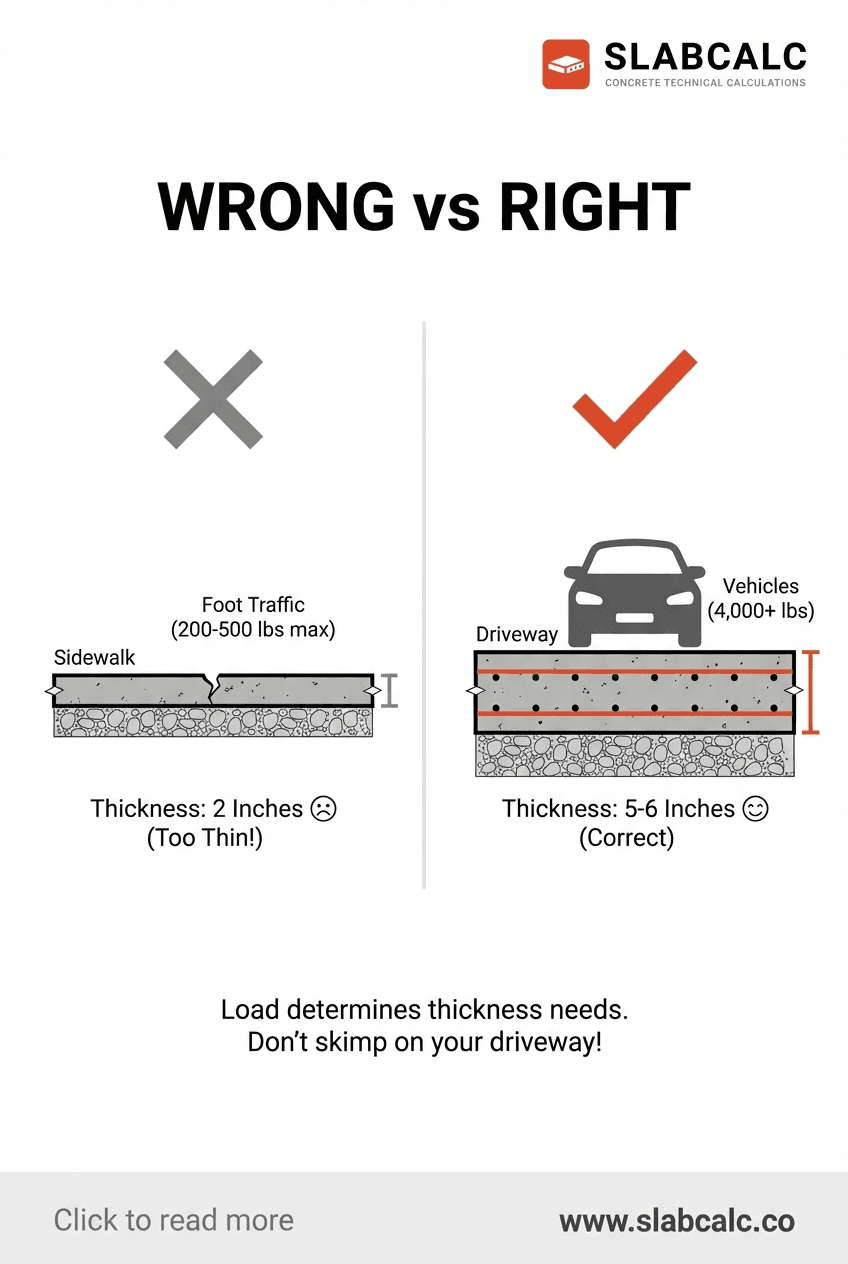
Sidewalk vs Driveway Thickness
The Load Decision Tree
Here's the single rule that determines concrete thickness: thicker concrete supports heavier loads. Before you order your concrete, ask yourself one question:
Will vehicles drive on this slab?
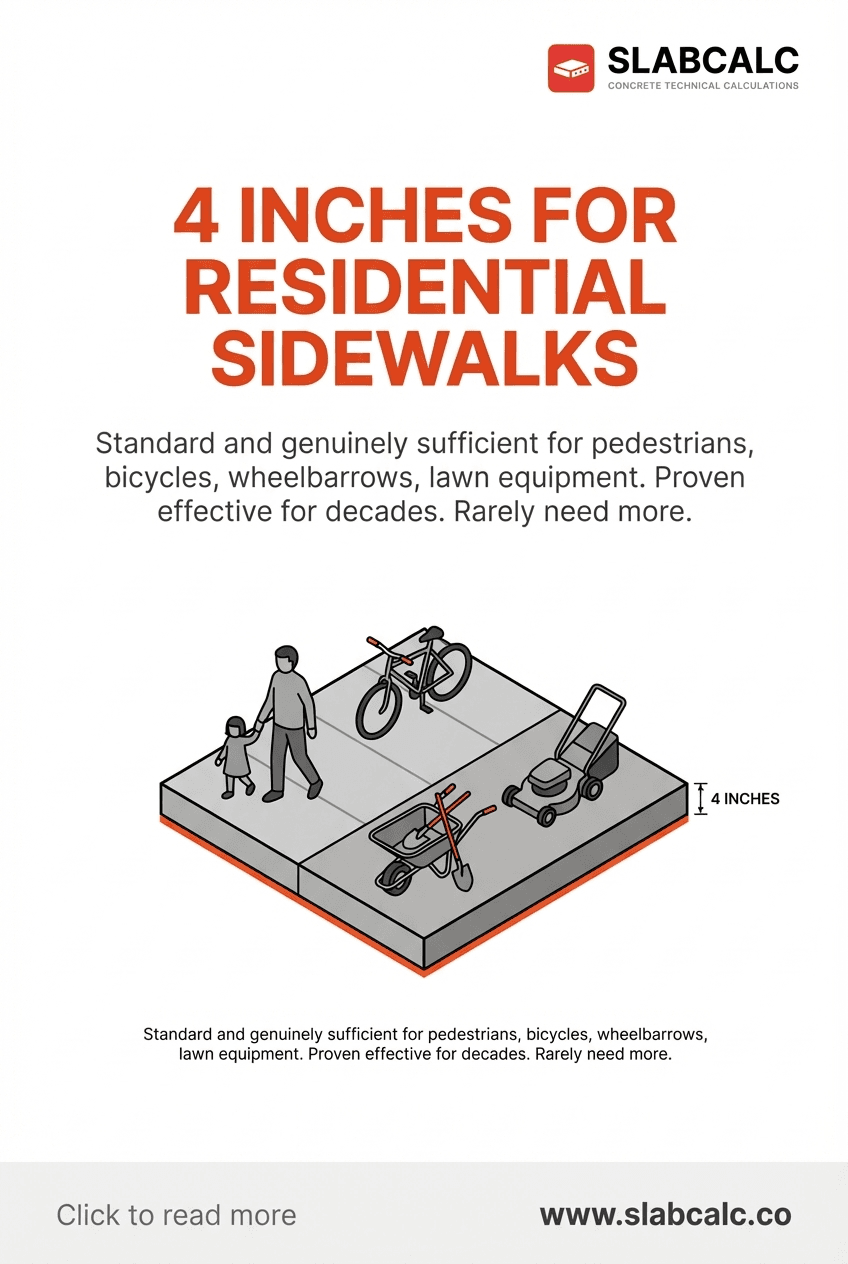
- No vehicles → 4-inch sidewalk
- Occasional vehicles → 5-inch transition
- Regular vehicles → 6-inch driveway
That decision cascades to everything else: reinforcement, base preparation, and cost.
Why Sidewalks Are 4 Inches
A residential sidewalk handles pedestrian traffic only. The maximum realistic loads are:
- Adult walking: 150–250 lbs
- Bicycle with rider: 200–300 lbs
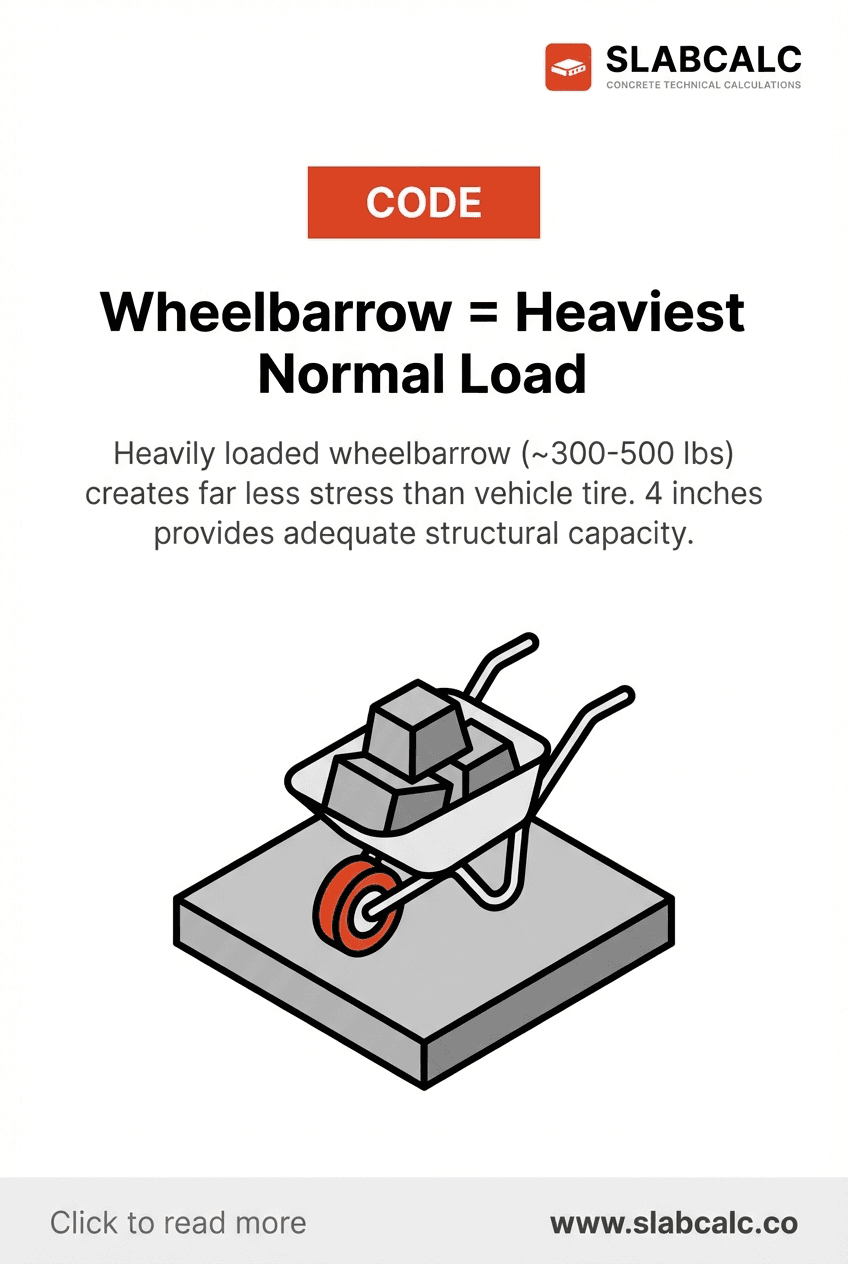
- Loaded wheelbarrow: 300–500 lbs
- Push mower: 100–400 lbs
Even a heavily loaded wheelbarrow distributes its weight across a wheel assembly. A car tire? That's 1,000+ lbs concentrated in a 5-inch contact patch. The structural demand is completely different.
4 inches provides a 2–3x safety margin for all pedestrian-only applications. Pour thinner and you risk surface spalling (flaking). Pour thicker than 4 inches for a sidewalk and you're wasting concrete—typically an extra $1–2 per square foot for no structural benefit.
Why Driveways Are 5–6 Inches
Vehicles impose concentrated, dynamic loads:
- Car tire pressure: 4,000–6,000 lbs per tire
- Truck tire pressure: 8,000–12,000 lbs per tire
- Repeated stress cycles (braking, turning, thermal cycling)
A 4-inch slab under these loads will crack, especially in freeze-thaw climates. The first winter proves this mistake costly. 5 inches is the minimum for light-duty residential driveways. 6 inches is standard for areas with harsh winters or heavier vehicles (trucks, RVs).
The Edge Cases Nobody Plans For
Vehicle crossings on sidewalks: If a sidewalk crosses a driveway entrance or runs alongside a side-yard where vehicles occasionally pass, thicken that section to 5–6 inches. One snowplow crossing annually is still a vehicle load.
Public and municipal sidewalks: Check your local code. Many cities require 5 inches even for pedestrian sidewalks, citing durability and liability. This is especially true in northern regions where freeze-thaw cycles accelerate surface deterioration.
Heavy equipment access: If lawn maintenance contractors, HVAC techs, or delivery trucks need occasional access, plan for 5–6 inches. A zero-turn mower weighs 400–500 lbs; a full-size air conditioning unit on a dolly can exceed 1,000 lbs.
The Forgotten Factor: Subgrade
Thickness alone isn't enough. A 4-inch slab on poor soil fails just as fast as undersized concrete. Always pour over 4 inches of compacted base material (gravel or recycled asphalt). This distributes loads into the earth and prevents settlement. Test your subgrade compaction with a pneumatic impact device if the ground is questionable.
Final Recommendation
For a residential sidewalk serving pedestrians only: Pour 4 inches over a 4-inch compacted base. This costs roughly $8–12 per square foot and lasts 30+ years.
For a driveway or any slab vehicles will use: Pour 5–6 inches over 4–6 inches of base. Budget $12–18 per square foot. The extra cost ($2–4 per square foot) prevents costly repairs.
When in doubt about vehicle crossings, go thicker. Concrete is cheaper than replacement.