
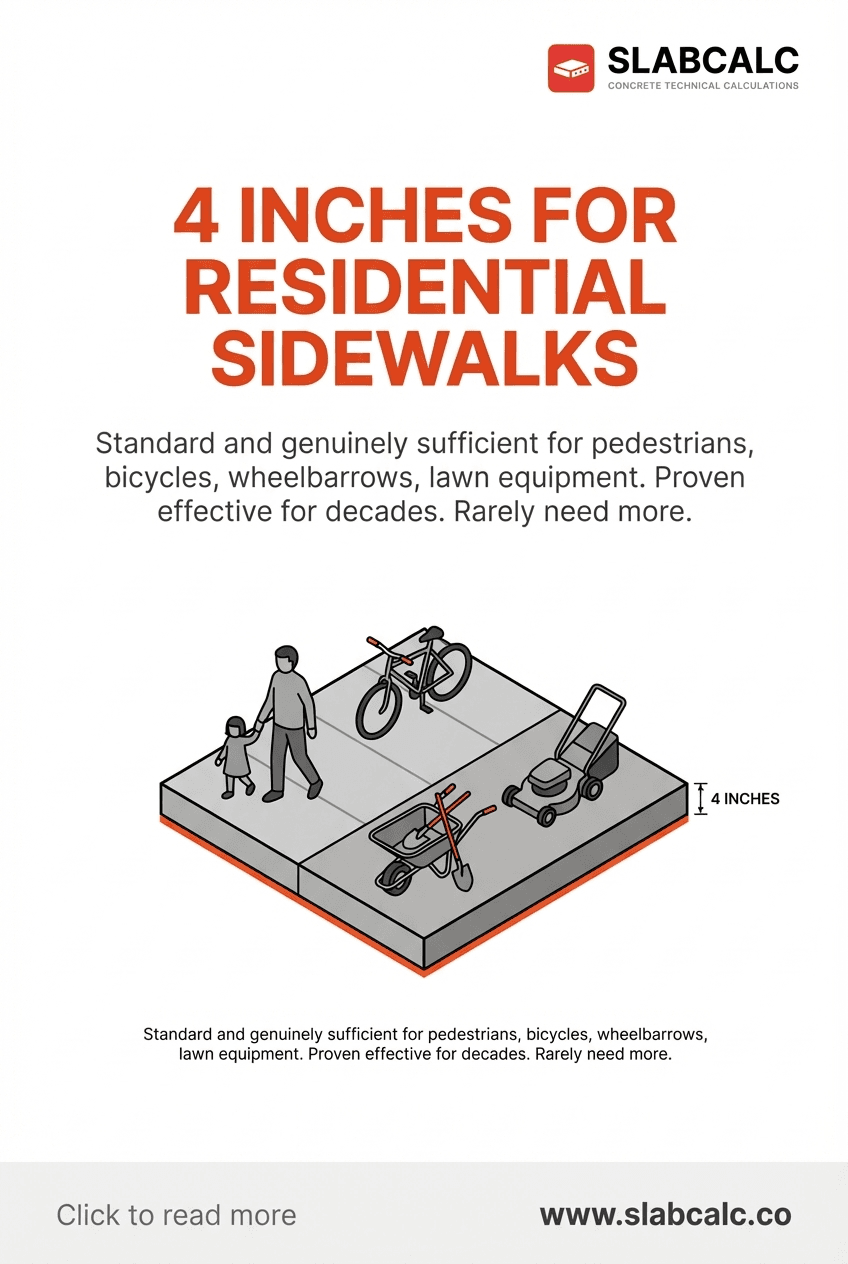
4 INCHES FOR RESIDENTIAL SIDEWALKS
The Magic Number: 4 Inches
4 inches is the standard, proven thickness for residential sidewalks. This is the number you'll find in building codes across the United States, and it's been the industry standard for over 60 years because it works reliably for what sidewalks actually carry.
What 4 Inches Actually Supports
A residential sidewalk handles a specific set of loads—none of them heavy by structural standards:
- Pedestrians: 150–250 lbs per person
- Bicycles with riders: 200 lbs combined
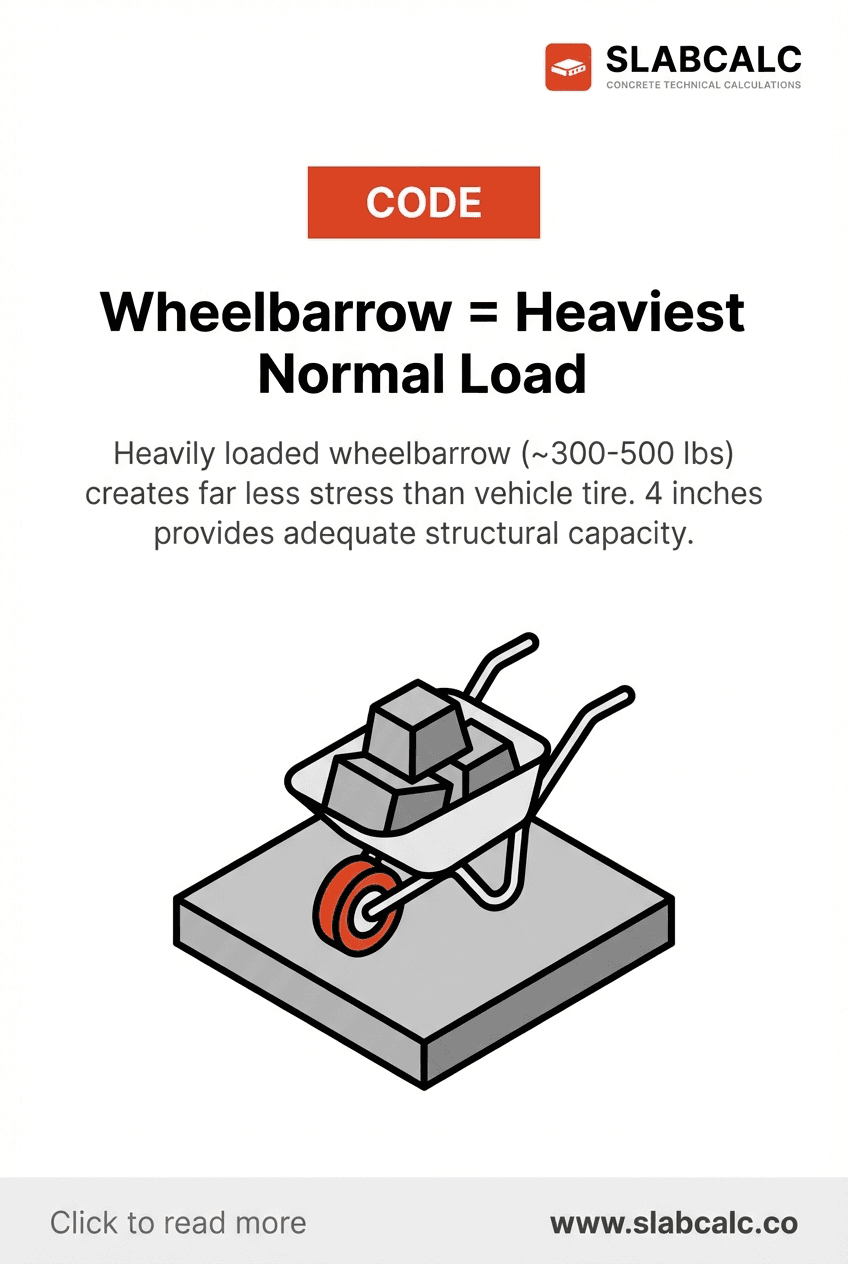
- Loaded wheelbarrows: 300–500 lbs
- Lawn mowers and garden equipment: 100–400 lbs
- Hand trucks: 200–400 lbs loaded
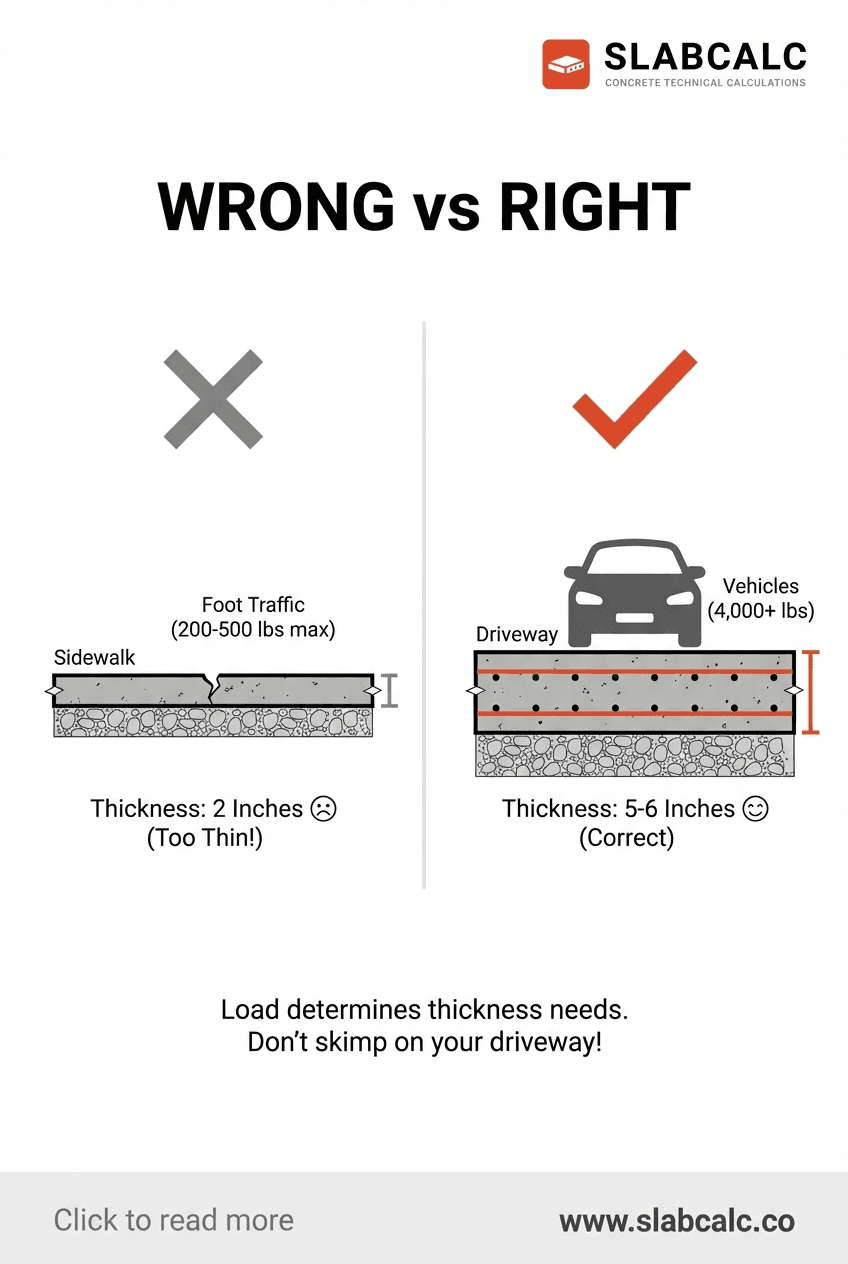
Compare this to your driveway, which supports a 4,000 lb car on tires covering just a few square inches. A sidewalk under a pedestrian distributes weight across a much larger footprint and at much lower intensity. 4 inches provides ample structural capacity with a comfortable safety margin for everything a homeowner will roll, push, or walk across their sidewalk.
The concrete industry proved this decades ago through repeated testing and real-world performance data. Unless vehicles will regularly cross your sidewalk, thicker is unnecessary and wastes money.
When 4 Inches Is Perfect
Standard 4-inch thickness is appropriate for:
- Front walkways leading to entries
- Side paths between house and backyard
- Garden or utility walkways around the property
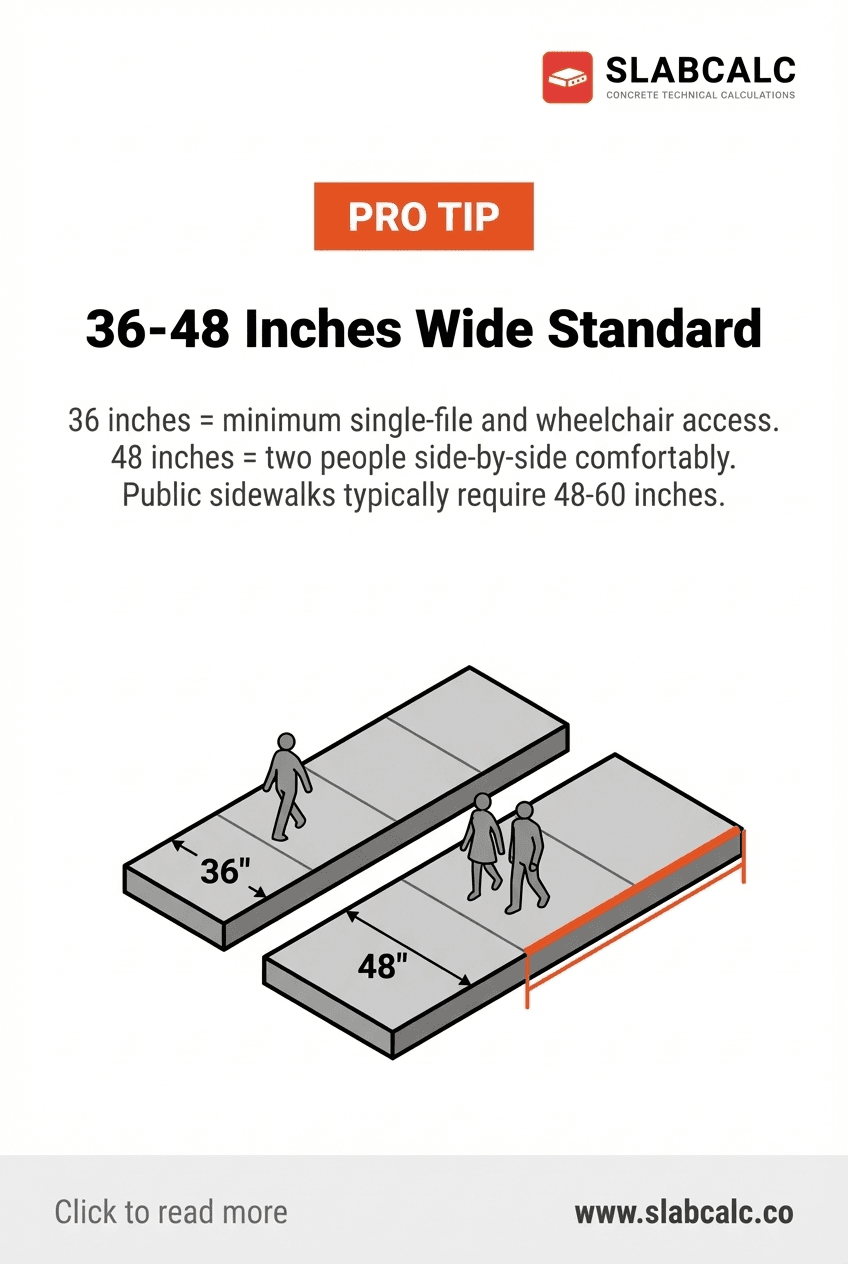
- Wheelchair-accessible routes (meets ADA at 36–48" width)
- Any area where foot traffic is the primary use
Pair your 4-inch thickness with a 36–48 inch width, and you have a sidewalk that's both code-compliant and genuinely useful. A 4-foot wide sidewalk easily accommodates two people walking side-by-side or a wheelbarrow being pushed.
When You Need More Than 4 Inches
Increase thickness to 5–6 inches in these specific situations:
- Vehicle crossing zones: Where a car, truck, or delivery vehicle might occasionally drive across the sidewalk to access a side yard or garage
- Heavy equipment routes: If contractors will regularly wheel machinery or concrete buggies across the area
- Municipal or public sidewalks: Check local codes—some require 5 inches for added durability under heavy foot traffic
Even then, the increase is modest. You're not building a driveway; you're adding a small safety cushion for occasional vehicle stress.
Practical Application
When planning your concrete sidewalk project, start with 4 inches as your baseline. If your sidewalk will experience vehicle traffic—even occasionally—bump it to 5 inches. Otherwise, 4 inches is sufficient, cost-effective, and proven.
Pair this thickness with proper base preparation (4 inches of compacted gravel), control joints every 4–5 feet, and a 1/4-inch-per-foot cross slope for drainage. These details matter far more than adding extra concrete thickness you don't need.
Bottom line: 4 inches has supported millions of residential sidewalks for generations. Your project will too.