
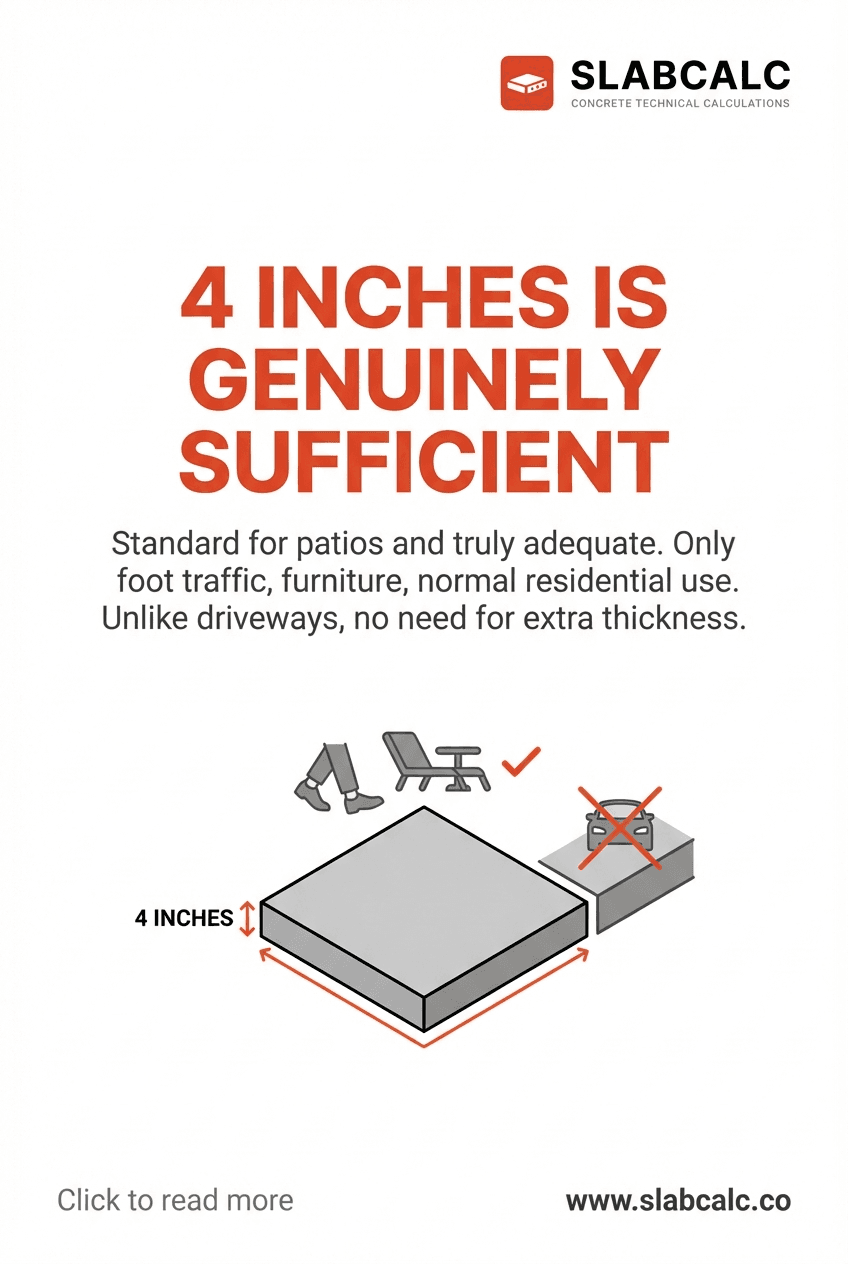
4 Inches Is Genuinely Sufficient
The Magic Number: 4 Inches Works
4 inches is the correct thickness for standard residential patios. This isn't arbitrary—it's the result of decades of real-world performance data. A 4-inch slab handles foot traffic, outdoor furniture, grills, and casual yard use without cracking or failing. You don't need 6 inches. You don't need reinforcement overkill. Stick with 4 inches and save money while getting a durable surface that will last 25+ years.
Why Patios Don't Need Driveway Thickness
The critical difference between patios and driveways comes down to load type and force concentration. A person weighing 200 pounds distributes that weight across two feet—roughly 100 pounds per square inch of contact. Even heavy patio furniture spreads weight across four or more legs. A 4-inch slab handles these distributed loads easily.
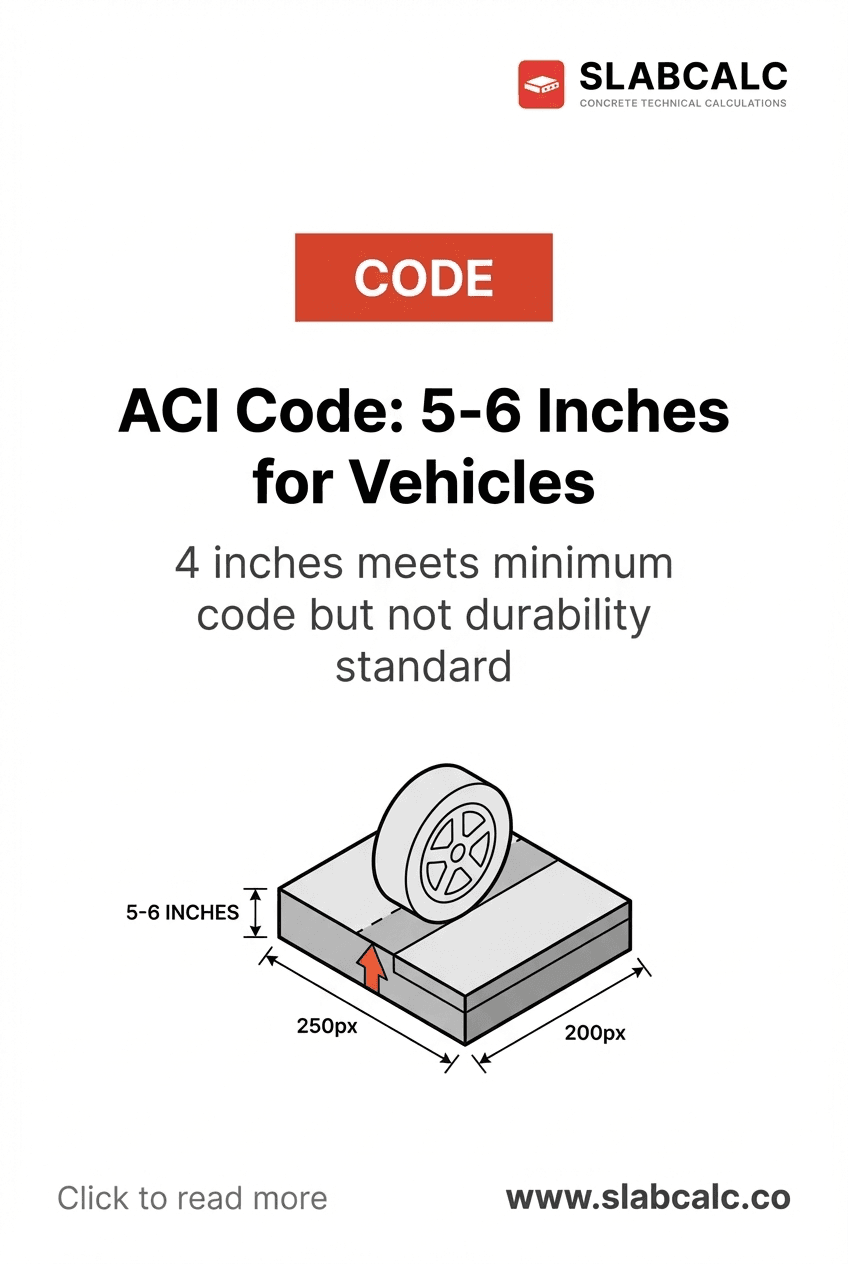
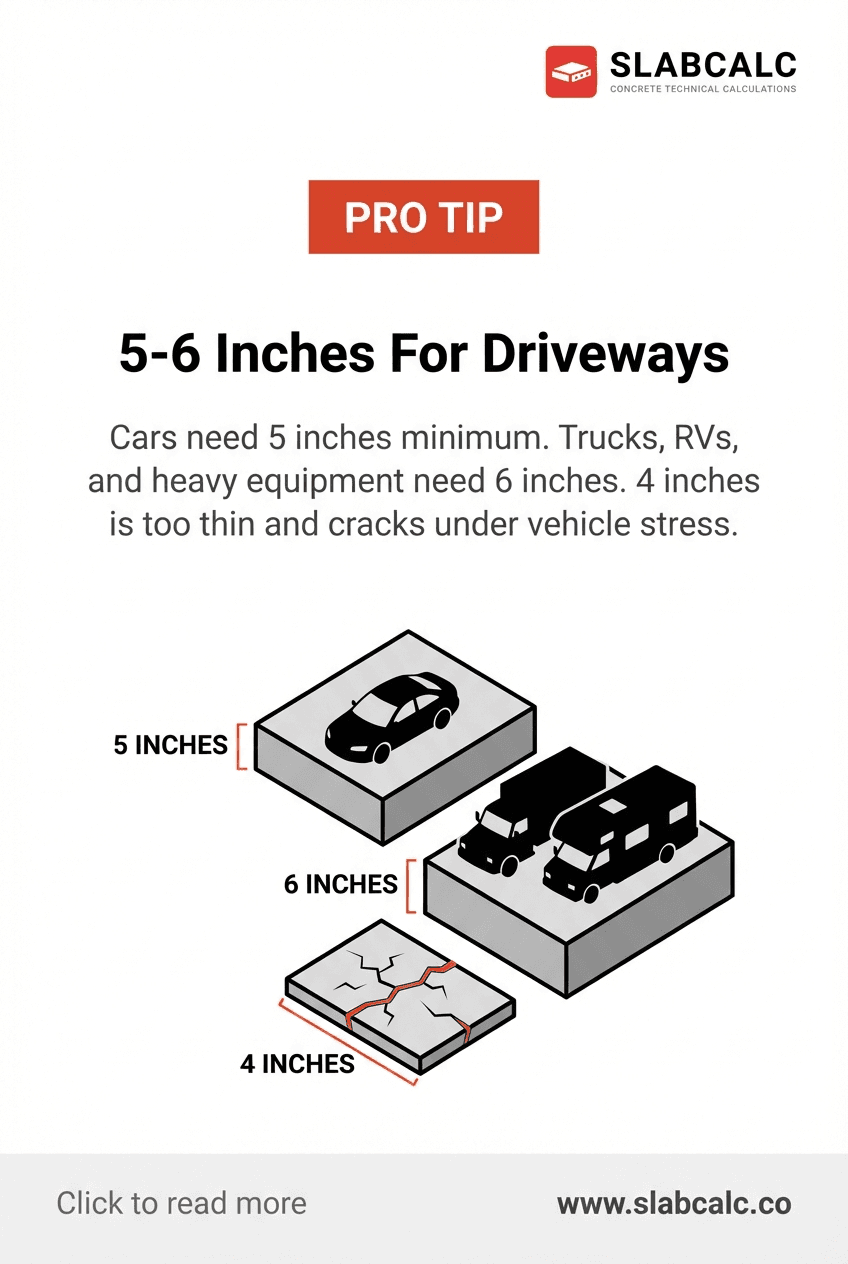
A vehicle is a different animal. A 4,000-pound car concentrates that weight through four tire contact patches, creating point loads of 1,000 pounds or more per tire. This concentrated force demands thicker concrete—typically 5-6 inches—to prevent cracking and surface deterioration. That's why driveway specs always exceed patio specs. If you're only seeing foot traffic and furniture, 4 inches is engineered-sufficient.
When to Consider Going Thicker
While 4 inches covers 95% of patio situations, three specific scenarios warrant thicker concrete:
Hot Tub Pads (4-6 inches)
A filled hot tub weighs 3,000-6,000 pounds concentrated in a small area. A standard 2-person tub needs 4-5 inches; 6-person and larger tubs need 5-6 inches. You can pour your main patio at 4 inches and create a reinforced 6-inch pad just where the tub sits. This hybrid approach saves money while protecting your investment.
Future Vehicle Access (5-6 inches)
If there's any possibility your patio becomes vehicle-accessible—expanding a parking area, adding an RV pad, or building a carport later—pour 5-6 inches now. Ripping out and replacing concrete costs $8-12 per square foot. Adding thickness upfront adds roughly $1-2 per square foot. The math is obvious.
Problem Soil Conditions (4-5 inches)
Clay soil, high water tables, or poor drainage warrant thicker concrete because movement and settling are more likely. A 5-inch slab provides extra safety margin.
Practical Application for Your Project
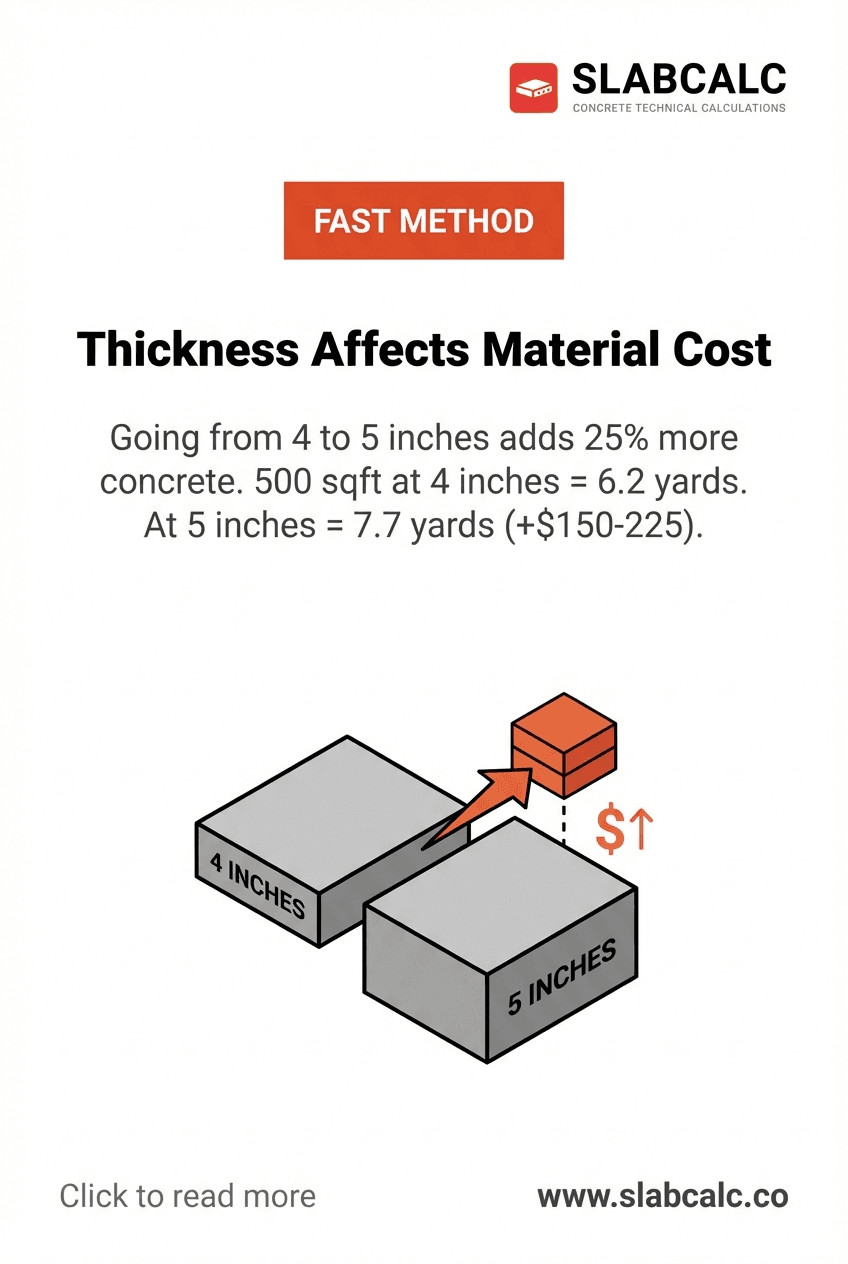
Calculate your patio square footage, stick with 4 inches as your base assumption, and adjust only if you fall into one of the three scenarios above. A 12×16-foot patio (192 sq ft) at 4 inches requires roughly 2.4 cubic yards of concrete. Moving to 5 inches adds only 0.3 cubic yards—minimal cost for future-proofing if uncertain.
Don't let concrete contractors or suppliers oversell you on unnecessary thickness. 4 inches is standard because it works. Build to code, trust the engineering, and invest your budget in finishing quality instead.