
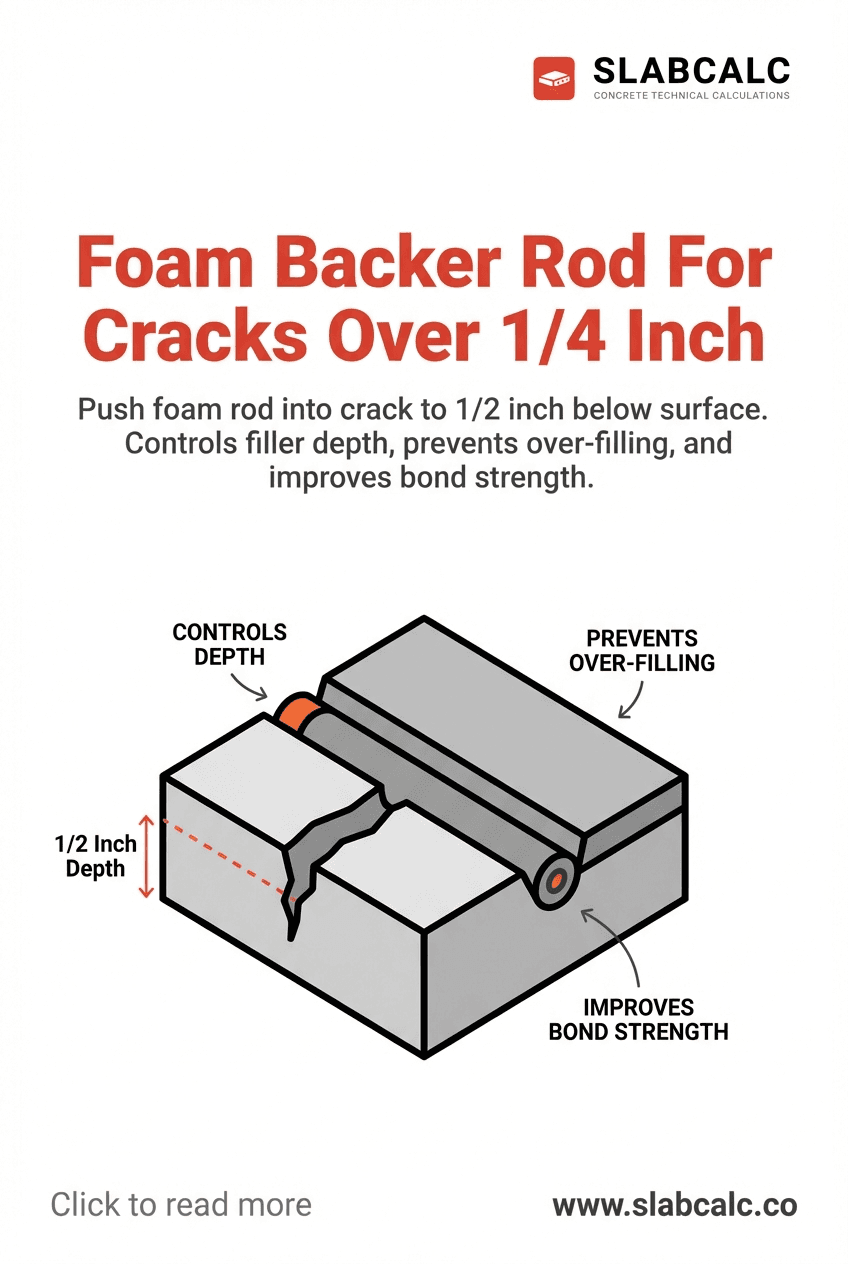
Foam Backer Rod For Cracks Over 1/4 Inch
The Consequence: Crack Filler Failure Within Months
You fill a quarter-inch crack with polyurethane caulk, smooth it flush with the surface, and within 6–8 weeks the sealant peels out in chunks. Water seeps back in. The crack spreads. You're right back where you started, but now frustrated and out the repair cost. This happens because you skipped a single $2 tool: foam backer rod.
Why This Happens: The Physics of Filler Bond
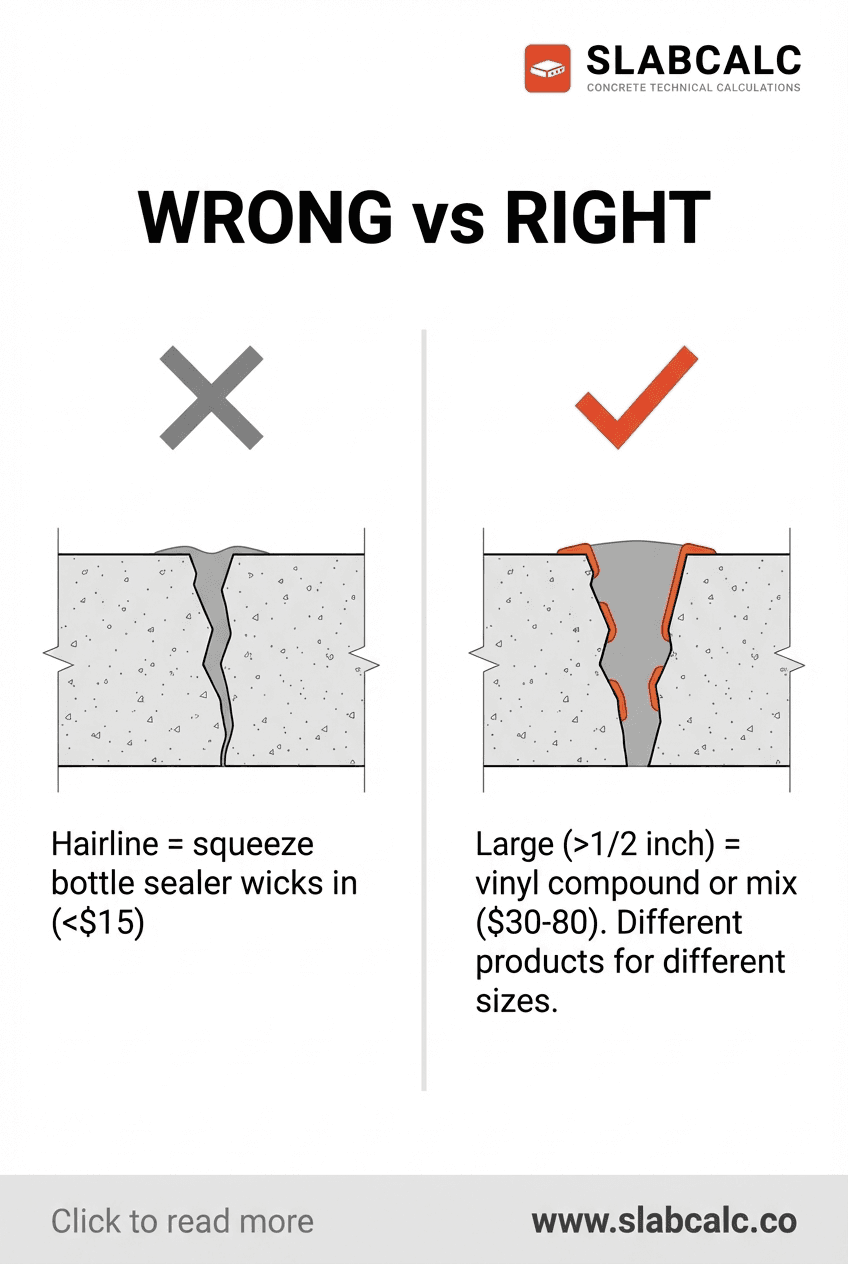
When you overfill a crack—pushing sealant all the way to the surface or slightly above—you create a mechanical problem. Caulk bonds strongest when it's sandwiched between two concrete surfaces with a specific thickness. Fill a wide crack with filler alone, and you've got a single column of material with minimal surface contact. As concrete slightly expands and contracts (which it always does), that column gets pulled and compressed. The bond breaks from the inside out, long before you see surface failure.
Additionally, too much filler depth means the material cures unevenly. The outer layer hardens first while the interior remains soft, creating a weak transition zone that fails under stress.
How to Identify If You're At Risk
Check your current or planned repair:
- Is the crack wider than 1/4 inch? (Measure with a coin—a dime is roughly 0.75mm, a quarter is 1.75mm)
- Are you planning to use polyurethane, silicone, or urethane caulk?
- Will the filled crack sit flush or slightly raised from the surface?
If you answered yes to all three, foam backer rod is non-negotiable.
The Foam Backer Rod Prevention Checklist
Materials needed:
- Foam backer rod (closed-cell polyethylene, 1/4-inch to 1/2-inch diameter depending on crack width)
- Concrete primer or bonding agent (if your sealant requires it—check the label)
- Your chosen sealant (polyurethane caulk is industry standard for cracks 1/4"–1/2")
Installation steps:
-
Clean the crack thoroughly — Wire brush, compressed air, and a shop vac remove all dust and debris. Dirty cracks bond poorly.
-
Insert foam rod to 1/2 inch below surface — This is the critical measurement. Push the rod down with a wooden dowel or plastic tool (don't use metal, which can tear the foam). The rod should sit centered in the crack.
-
Apply sealant over the rod — The foam is now your backing. The sealant sits on top of it, creating a shallow, strong bond line. This gives the filler just enough depth to cure properly without overfilling.
-
Smooth to surface level — A caulk tool or wet finger gives you a clean finish. The foam prevents you from going too deep.
Why this works: The rod limits filler depth to roughly 1/2 inch—the industry standard for maximum bond strength. You're not relying on filler alone; you're creating a sandwich: concrete-foam-sealant-concrete. This survives thermal cycling and minor movement.
Cost difference? Foam backer rod runs $3–5 per 50-foot roll. A failed repair costs $15–30 in wasted sealant plus your labor to redo it. Use the rod every time.