
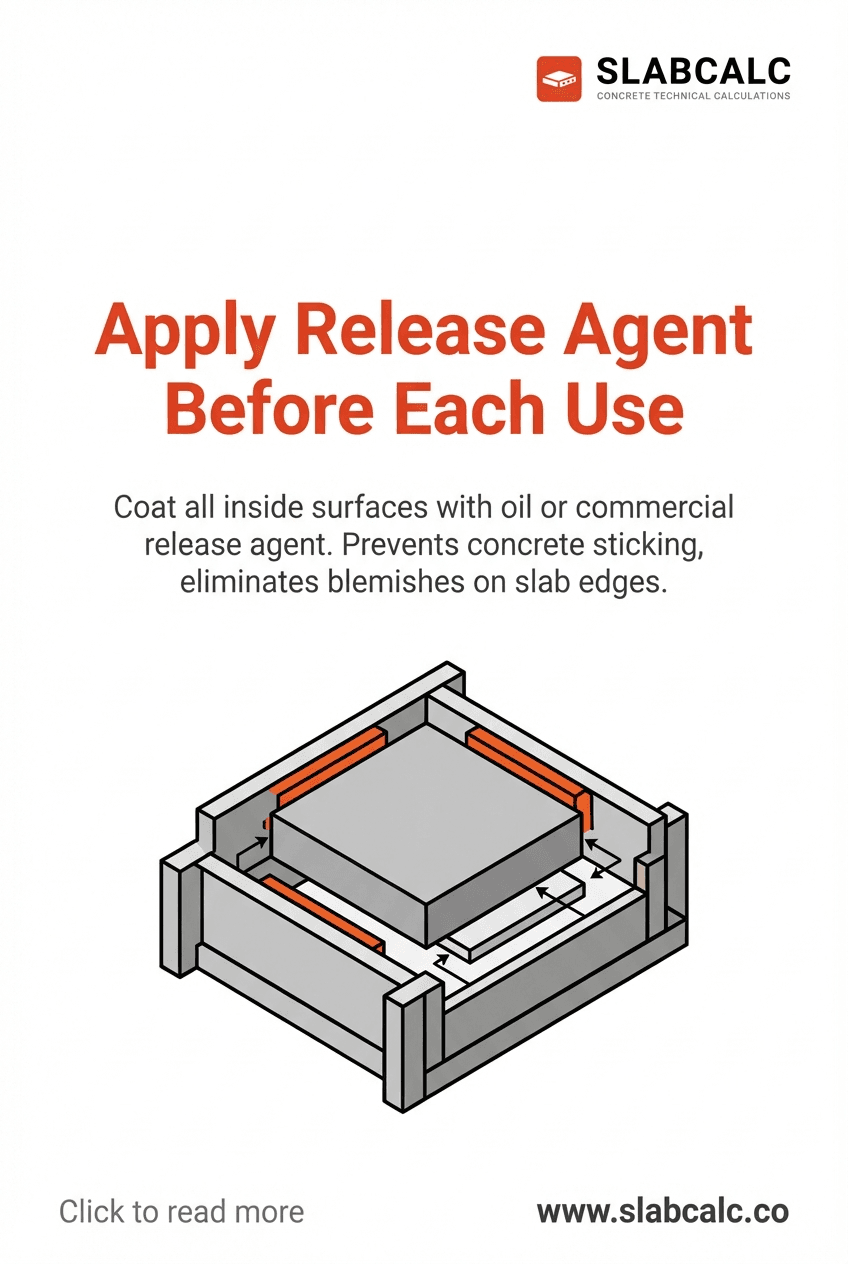
Apply Release Agent Before Each Use
The Material Spec: What You Need
Coat all inside surfaces of form boards with release agent before each concrete pour. Apply a thin, even layer to every board surface that will contact wet concrete—top, bottom, and sides. This single step prevents the concrete from bonding to your forms and eliminates the edge damage that occurs during removal.
Two product categories work well:
Oil-based release agents ($15–$30 per gallon) include motor oil, old crankcase oil, or commercial concrete release oils. These are the budget option and perform reliably on lumber forms. One gallon covers roughly 800–1,000 square feet with proper application.
Commercial water-based release agents ($25–$50 per gallon) are cleaner to handle, easier to wash off forms for reuse, and don't stain clothing. Popular brands include Quaker Homy and Concrete Maskants. They work faster on subsequent pours because they don't build up residue.
Why This Spec Matters for Your Slab
When concrete cures against untreated wood, capillary action bonds the surface layer to the form material. Pulling the form away literally tears the concrete's outer skin, leaving exposed aggregate, rough patches, and discoloration along every edge—exactly where everyone looks first.
Beyond aesthetics, edge damage weakens the concrete edge zone. That damaged layer is more porous and susceptible to spalling (flaking) from freeze-thaw cycles if your region experiences winter moisture. A properly released edge stays intact and lasts decades longer.
Release agent also saves labor. Without it, you'll spend 30 minutes per 100 linear feet scrubbing and prying at stuck concrete. With release agent, forms slide away cleanly in seconds.
Application Method
Timing matters: Apply release agent 2–4 hours before pouring, not the day before. Oil oxidizes and loses slickness if left sitting too long.
Coverage: Use a cheap paint brush or cotton rag. Don't oversaturate—you need a thin, uniform coat, not puddles. Excess oil runs onto subgrade and interferes with proper substrate preparation.
Recoating: If you're pouring multiple slabs over consecutive days, reapply after each removal. Forms that sit overnight outdoors may need a light recoat regardless.
Sourcing and Cost
Home Depot and Lowe's stock commercial release agents in the concrete section ($25–$40 per quart). For larger projects over 2,000 square feet, buy the gallon size—it's cheaper per unit and justifies the lower shelf cost of bulk purchase.
Motor oil works in a pinch (most homeowners have some), but commercial products are formulated to break down concrete's bond without leaving a residue that attracts dirt to your finished slab surface.
Pro tip: Mark your release agent container clearly. Mislabeling and accidentally using it as curing compound ruins your entire pour.
This single material specification—applied consistently—is the difference between a professional-looking slab edge and one you'll want to hide with a deck or shrubs.