
Gravel Drains Water Away
The Worst-Case Scenario
Your beautiful new patio or driveway looks perfect for the first year. Then winter arrives. Water that pooled beneath the slab freezes, expands by up to 9%, and heaves the concrete upward. By spring, you're staring at cracks spreading across 40% of the surface, uneven settling, and a $3,000–$8,000 replacement bill. This isn't a worst-case story—it's the #1 reason concrete fails prematurely in residential projects.
The culprit? No gravel base (or an inadequate one). Water has nowhere to drain, so it sits directly against the underside of your slab, waiting for the next freeze cycle.
Why Water Pooling Destroys Concrete
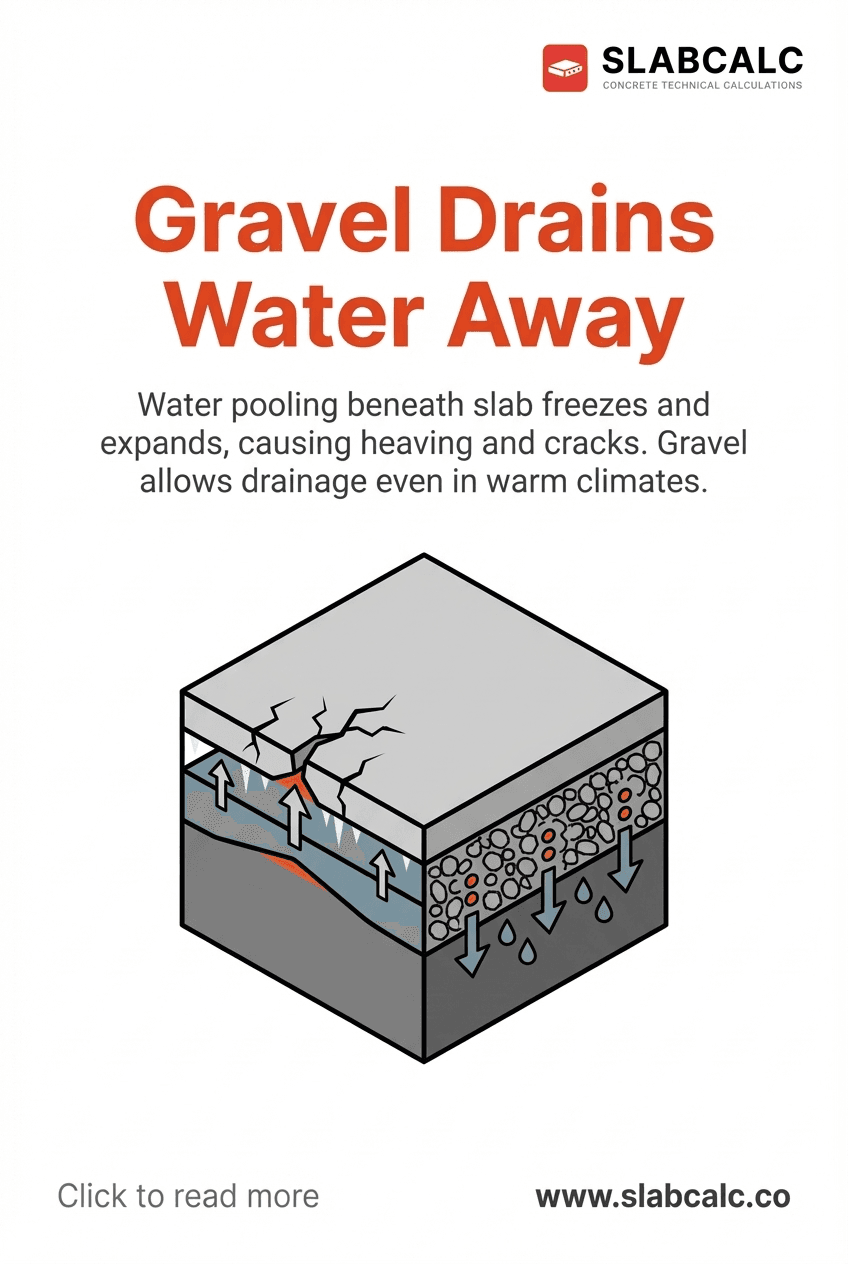
Concrete is porous. Without proper drainage underneath, water migrates into the soil below the slab and stays there. When temperatures drop below 32°F, that trapped water freezes. Ice takes up 9% more volume than liquid water—a phenomenon called frost heave. That expansion forces the concrete upward from below, creating cracks, spalling, and structural failure.
Even in warm climates where frost heave isn't a concern, standing water causes efflorescence (white powder staining), weakens the subgrade soil, and promotes mold growth beneath the slab. Gravel solves this by allowing water to percolate downward and away from the concrete.
Signs You've Skipped the Gravel Step
Catch this mistake before you pour. During site prep, check for:
- Soft or spongy soil when you walk across the excavated area
- Visible puddles or wet spots that don't drain within 24 hours of rain
- Clay or fine silt visible in the excavation (these trap water)
- No gravel layer visible when you look at the pit depth
If you've already poured without gravel, watch for these early warning signs: uneven settling, hairline cracks appearing within the first year, or slight heaving at the edges during freeze-thaw cycles.
The Prevention Checklist
Before ordering concrete, confirm:
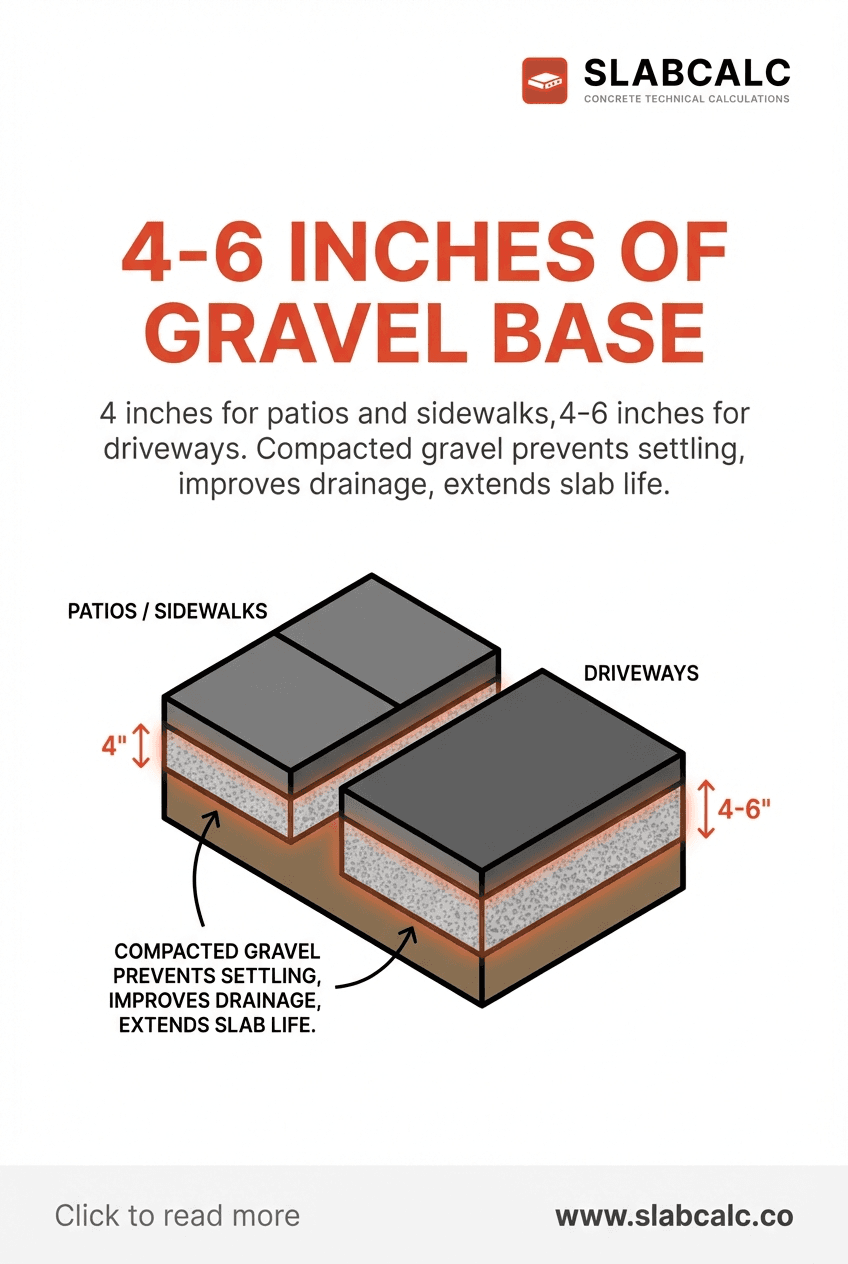
- Gravel depth: 4 inches for patios and sidewalks; 6 inches for driveways and garage floors
- Gravel type: Use clean crushed stone or gravel, ¾-inch diameter. Avoid fine sand or dirt
- Compaction: Tamp the gravel firmly so it doesn't compress further under the concrete's weight
- Drainage slope: The gravel base should slope slightly (1–2%) away from structures to encourage runoff
- Moisture check: Before pouring, the gravel should be damp but not puddled
Why This Matters for DIYers
Gravel costs $0.50–$1.50 per square foot. For a 400-square-foot driveway, that's $200–$600 in material and effort. Replacing a failed slab runs $1,500–$4,000. The math is undeniable: proper gravel drainage is the cheapest insurance you can buy for a concrete project.
Don't skip this step. Your future self will thank you when your slab is still flat and crack-free ten years from now.