
4-6 INCHES OF GRAVEL BASE
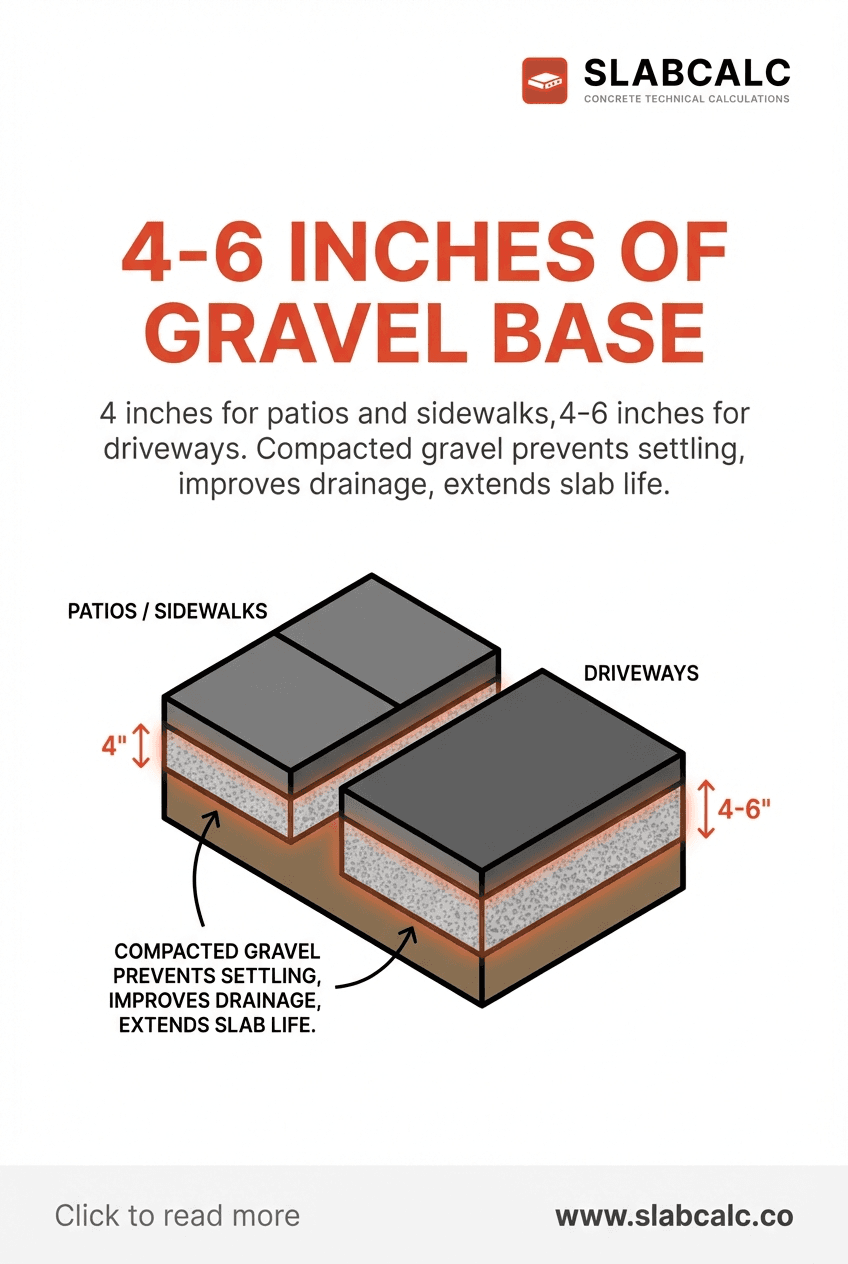
4 to 6 inches of compacted gravel is the difference between a concrete slab that lasts 30+ years and one that cracks, settles, and fails within a decade. This isn't a suggestion—it's a foundation requirement that directly impacts durability, drainage, and cost-effectiveness.
Why This Number Matters
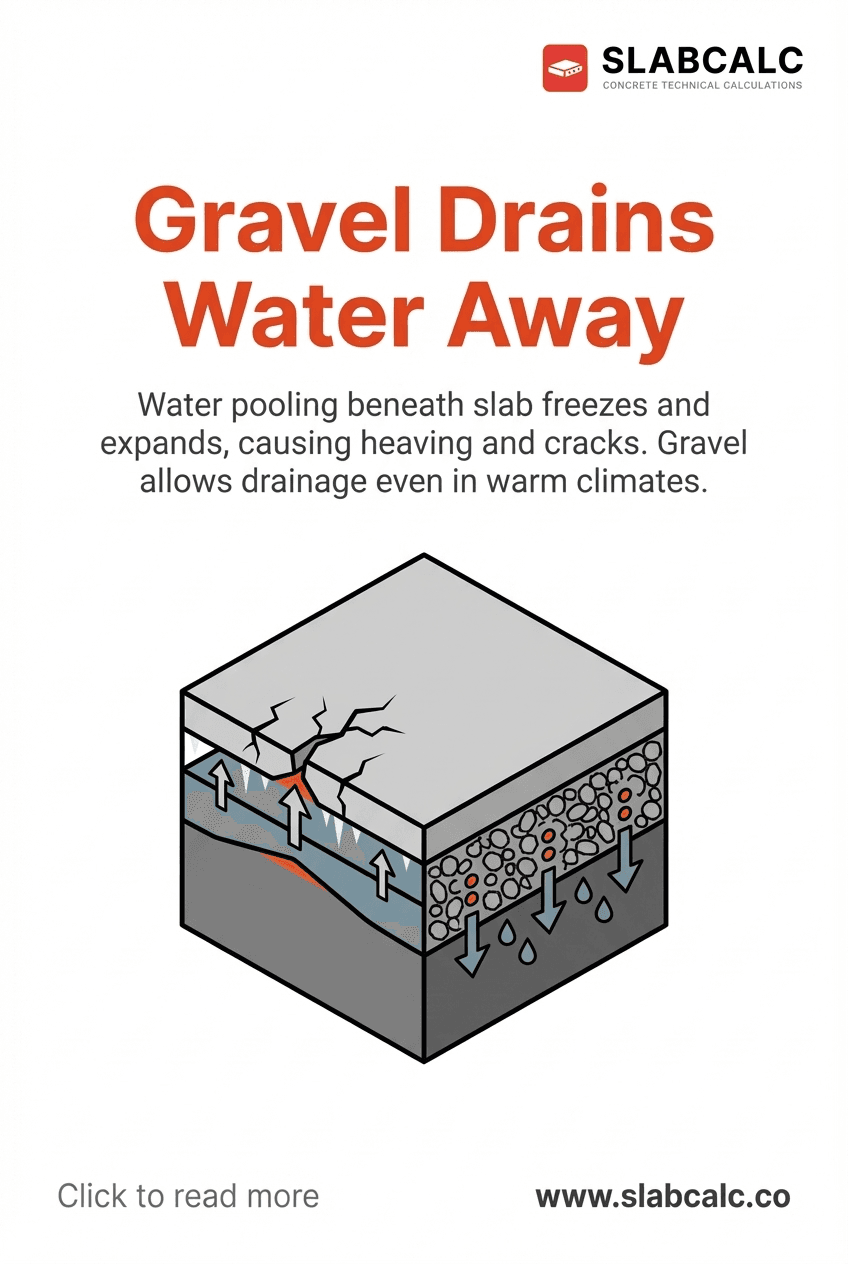
Concrete is strong under compression but vulnerable to what happens underneath. Water pooling beneath a slab causes freeze-thaw cycles in cold climates, pushing the concrete upward and cracking it from below. Even without freezing, standing water leads to erosion, efflorescence (white powder staining), and uneven settlement. Gravel solves this by creating a drainage layer that channels water away from your slab's underside.
Native soil is also inconsistent. Clay pockets, organic matter, and loose spots create uneven support. When your concrete sits directly on variable ground, different sections compress at different rates—causing differential settling and cracks. Compacted gravel creates a uniform, stable platform that distributes weight evenly and prevents further compression.
When to Use 4 Inches vs. 6 Inches
Use 4 inches for:
- Patios and decks
- Sidewalks and pathways
- Shed floors
- Light-duty residential areas
Use 4-6 inches for:
- Driveways (heavier vehicle loads)
- Garage floors
- Any area with heavy foot or vehicle traffic
- Regions with poor native soil conditions
- Properties with poor natural drainage
The extra 2 inches for driveways matters because vehicle weight concentrates force on a smaller surface. Trucks, SUVs, and repeated loading require additional gravel depth to prevent rutting and surface cracking over time.
What Type of Gravel Works Best
Use crushed stone or gravel, not sand. Sand compacts initially but shifts under load and doesn't drain as well. Crushed gravel (¾-inch diameter) locks together when compacted, creating a stable, interconnected base. Avoid dirt, clay, or pea gravel—these trap water instead of draining it.
Compact in 2-inch lifts. Lay gravel 2 inches deep, compact it with a hand tamper or plate compactor, then add another 2 inches and compact again. This staged approach ensures uniform density throughout the base.
Real-World Cost Impact
Gravel costs roughly $1.50–$3.00 per square foot installed. For a 400-square-foot driveway at 6 inches deep, expect $600–$1,200 in gravel work. Fixing a settled, cracked driveway costs $3,000–$8,000 in removal and replacement. Proper base preparation is one of the cheapest insurance policies in concrete work.
The Bottom Line
Skipping or skimping on gravel base is a false economy. This single step adds minimal cost to your project but multiplies your slab's lifespan and prevents expensive repairs. Whether you're pouring a patio or driveway, invest in the full 4–6 inches of compacted gravel. Your concrete will reward you with decades of solid performance.