
Apron Permits Often Required
The Hidden Cost of Skipping Apron Permits
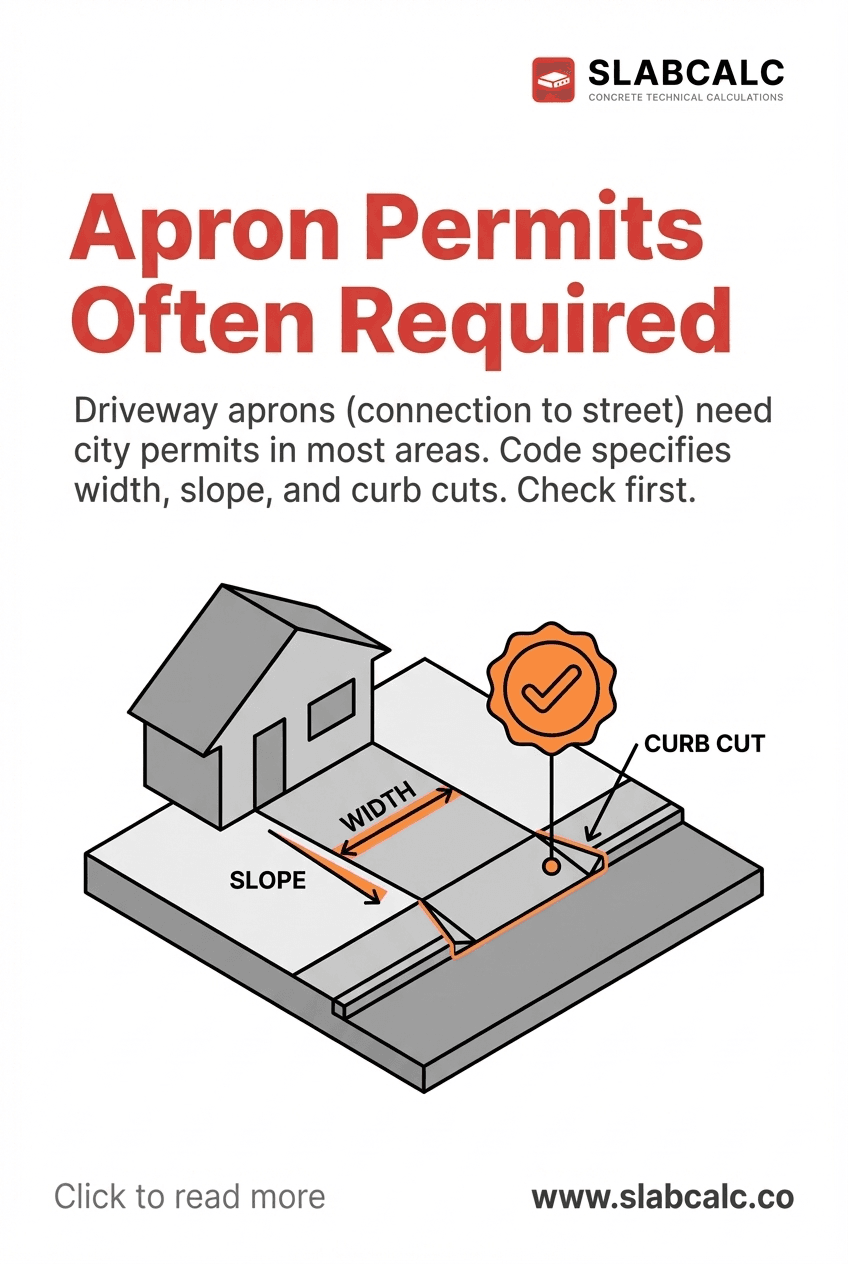
Your driveway doesn't end at your property line. The driveway apron—that transition section connecting your concrete to the street—is regulated by municipal code in virtually every U.S. jurisdiction. Overlooking this requirement can result in fines, forced removal and replacement, or a red tag that blocks your project entirely. Before you pour a single yard of concrete, you need a permit.
Why does this matter for durability? The apron handles the highest stress point of your entire driveway system. It bears edge loads from traffic entering your property and faces unique freeze-thaw cycling if you're in a cold climate. Proper specifications—correct width, slope, and curb cut—ensure water drains away instead of pooling and causing premature cracking.
Standard Code Specifications for Aprons
Municipal codes vary, but most follow similar baseline requirements:
Width: Most cities mandate aprons between 10 and 12 feet wide—matching standard residential driveway width. Some require it to extend the full width of your driveway plus 2 feet on each side.
Slope: A minimum 2% slope (¼ inch per foot) away from the street is standard. This prevents water from settling and freezing beneath the concrete. Some jurisdictions require up to 3% slope in freeze-thaw zones.
Thickness: Aprons typically must match or exceed your driveway thickness, usually 4 inches minimum. High-traffic areas or areas with clay soil may require 5 inches.
Curb Cut Requirements: Your city controls whether you can cut the existing curb and by how much. Standard cuts range from 12 to 18 inches wide. Some jurisdictions require you to replace full curb sections (20-30 feet) at your expense—a cost multiplier of $2,000–$5,000.
Setback Distance: Most codes specify the apron cannot extend into the street right-of-way beyond a marked line, typically 2–6 feet from the curb face.
How to Find Your Local Requirements
Contact your city/county planning or public works department before designing your pour. Request the specific ordinance for driveway aprons—not general concrete code. Many municipalities post standards online, but local amendments often supersede state-level guidance.
Ask specifically about:
- Minimum and maximum apron width
- Required slope percentage
- Curb cut restrictions and costs
- Whether a licensed engineer's stamp is required
- Inspection checkpoints during the pour
Getting these answers takes 30 minutes by phone but saves weeks of rework.
Material Spec That Prevents Failure
The concrete mix itself matters here. Use 4,000 PSI compressive strength minimum for aprons in freeze-thaw climates. Standard driveway mixes (3,500 PSI) crack faster at that stress boundary. Air entrainment (6–8% by volume) is non-negotiable in cold regions—it prevents spalling when salt and ice cycles expand concrete.
Reinforcement matters too. Most codes accept either 6x6 #10 wire mesh or 0.5-inch rebar on 24-inch centers. The extra cost ($0.50–$1.00 per square foot) prevents edge failure where the apron meets street.
The Bottom Line
Pulling a permit takes days, costs $50–$300, and adds minimal schedule impact. Fixing an unpermitted apron costs thousands and invites liability if someone is injured. Check local code first—before you buy materials or schedule the concrete truck.