
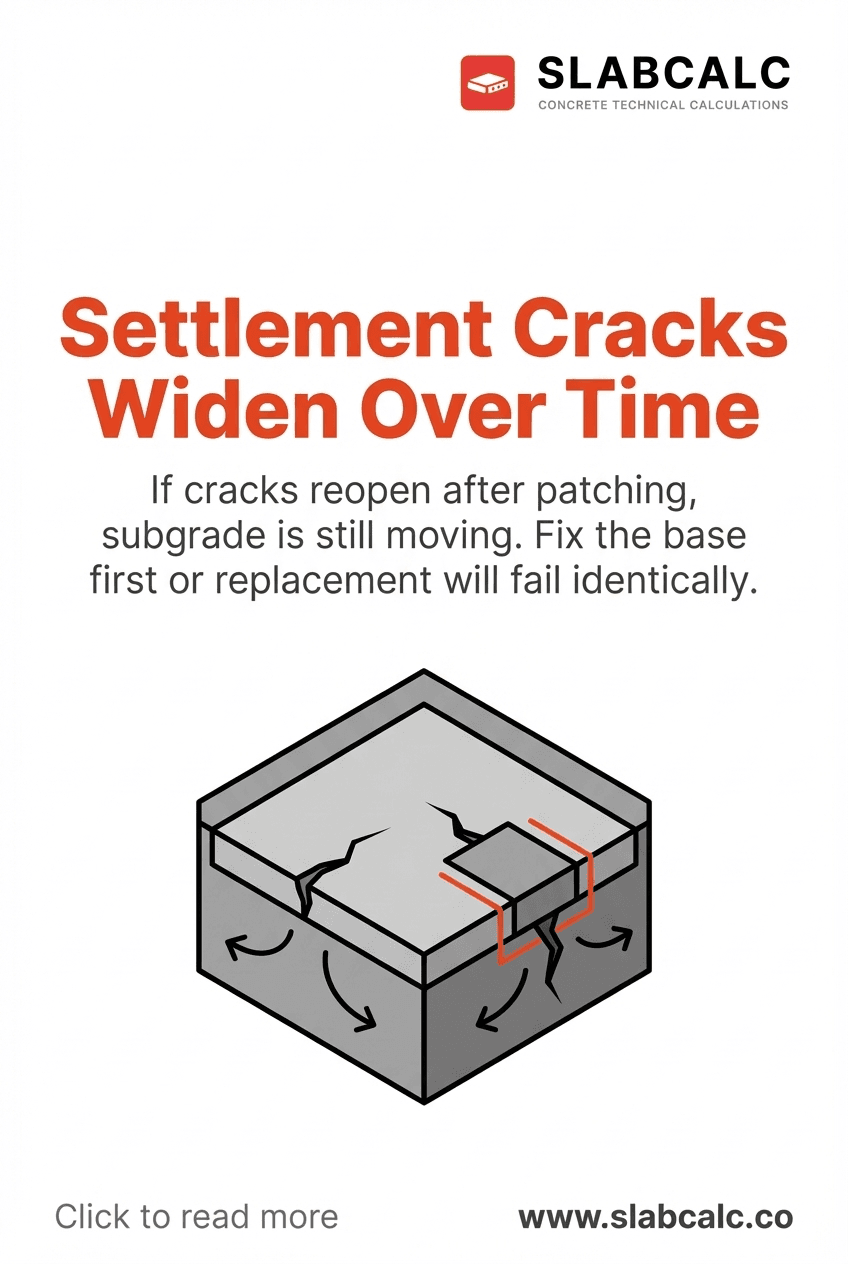
Settlement Cracks Widen Over Time
The Worst Outcome of Ignoring This
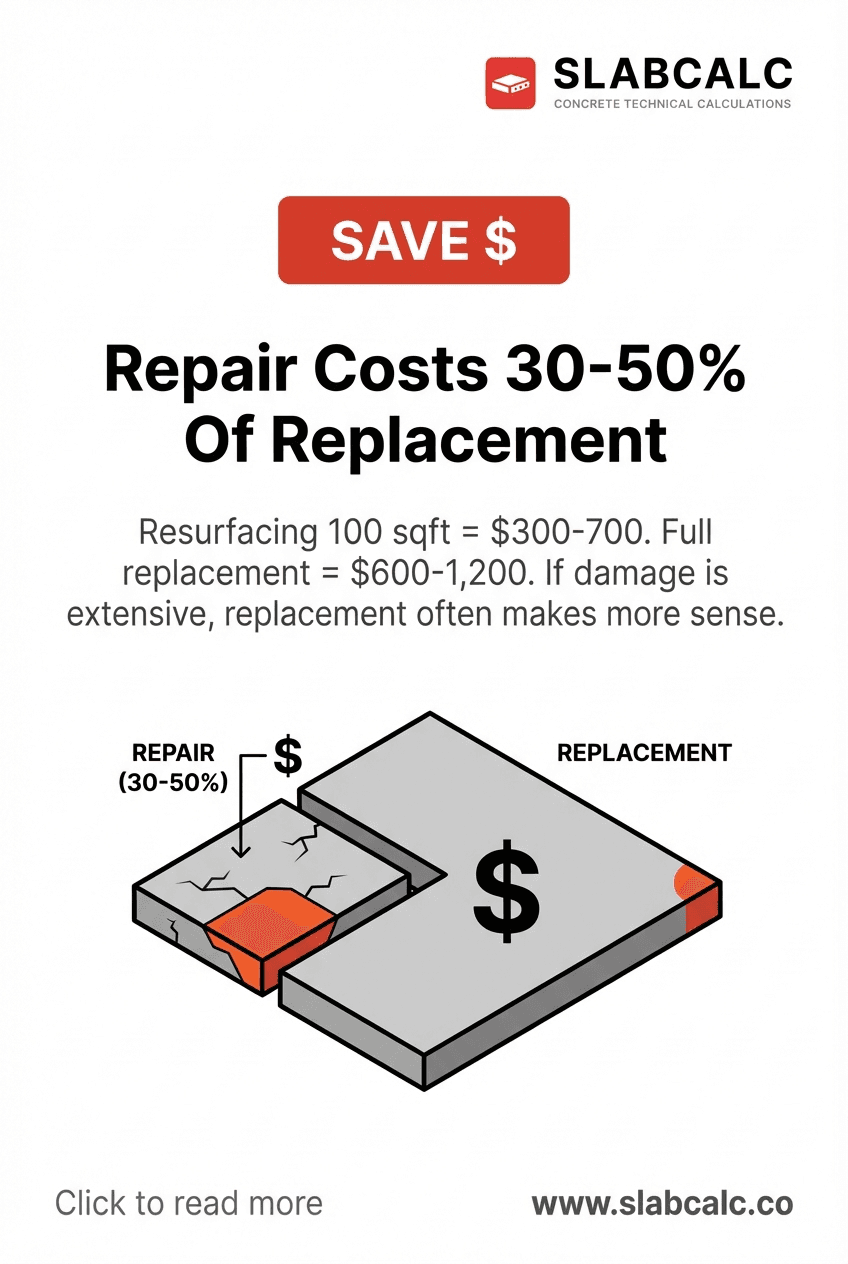
You patch a crack, it reopens within months. You patch it again. It cracks again. After three rounds of repairs costing $300–$600 each, you finally break down and replace the entire slab—a $1,500–$3,000 project that still fails identically because nobody fixed the foundation. The concrete isn't the problem. The ground beneath it is still moving.
Why Cracks Reopen: The Subgrade Story
Concrete is strong in compression, but it's brittle. It can't flex. When the soil underneath shifts, settles unevenly, or loses support, the slab follows—and cracks form. If you seal the crack without stabilizing the subgrade, you're treating a symptom while the disease spreads.
Settlement happens for four main reasons:
Inadequate base prep. Soil wasn't compacted properly before pouring. Loose, fluffy soil compresses under the weight of the slab, dropping one section lower than the next. The concrete above is forced to bridge the gap, and it cracks.
Poor drainage. Water collects beneath the slab, softening the soil and causing differential settlement. A 4-inch drop in one corner can generate tensile stress that cracks concrete across 8–10 feet.
Tree roots or subsurface voids. Roots grow and push upward, or soil erodes into underground voids. The slab loses support at that point and sinks.
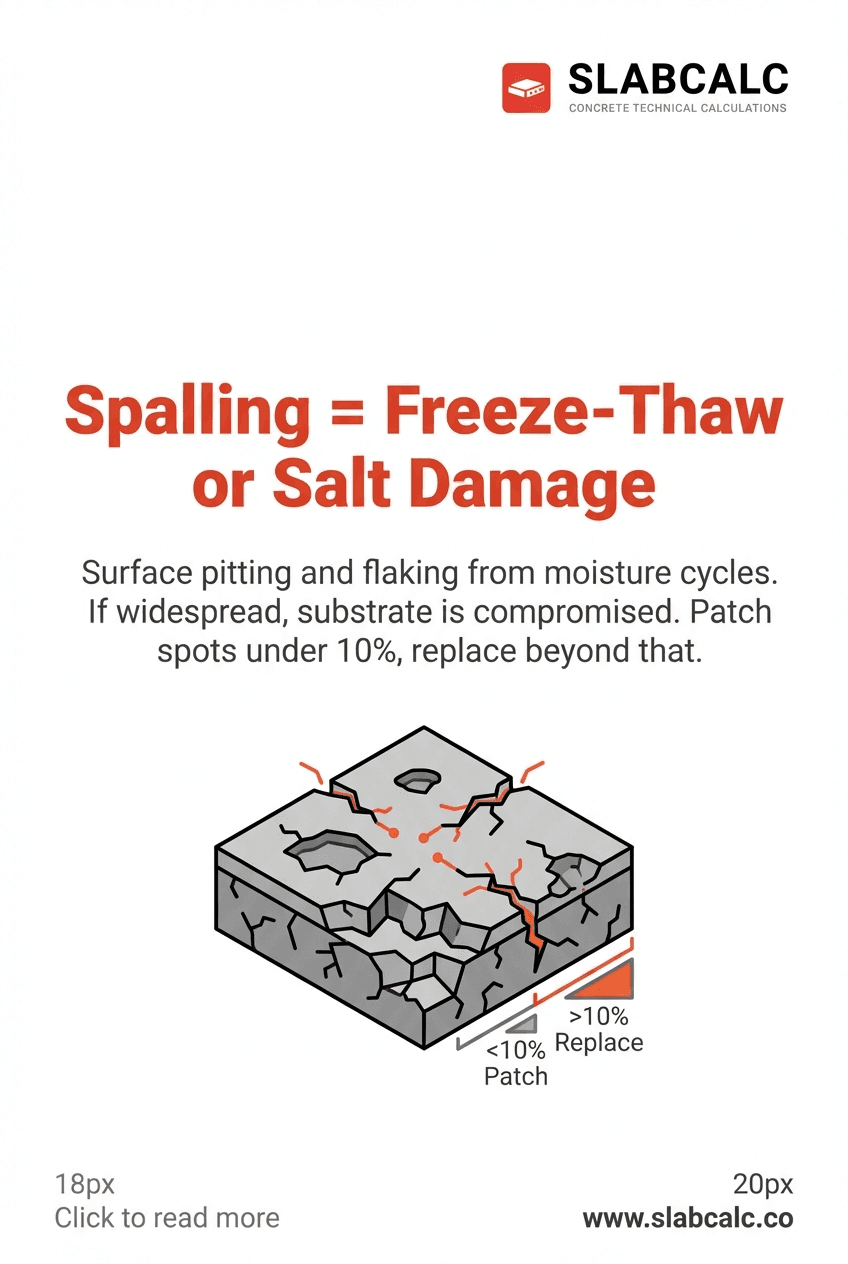
Freeze-thaw cycles. In cold climates, moisture in the subgrade freezes and expands, heaving the slab upward. When it thaws, settling resumes. Repeated cycles widen cracks progressively each year.
How to Identify Active Settlement Early
Look for these warning signs:
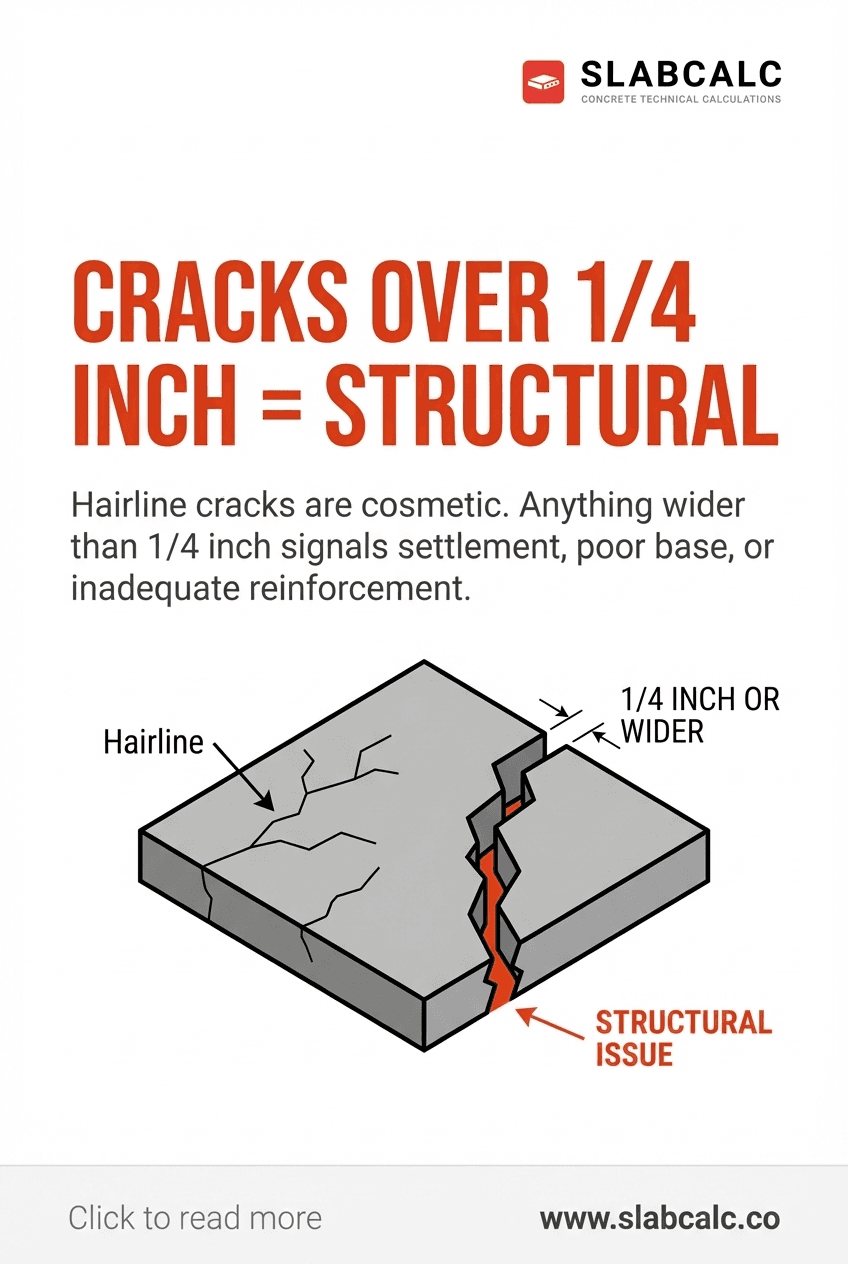
- Cracks that widen visibly month to month. Measure the crack width with calipers or a ruler at 30, 60, and 90 days. Widening = active movement.
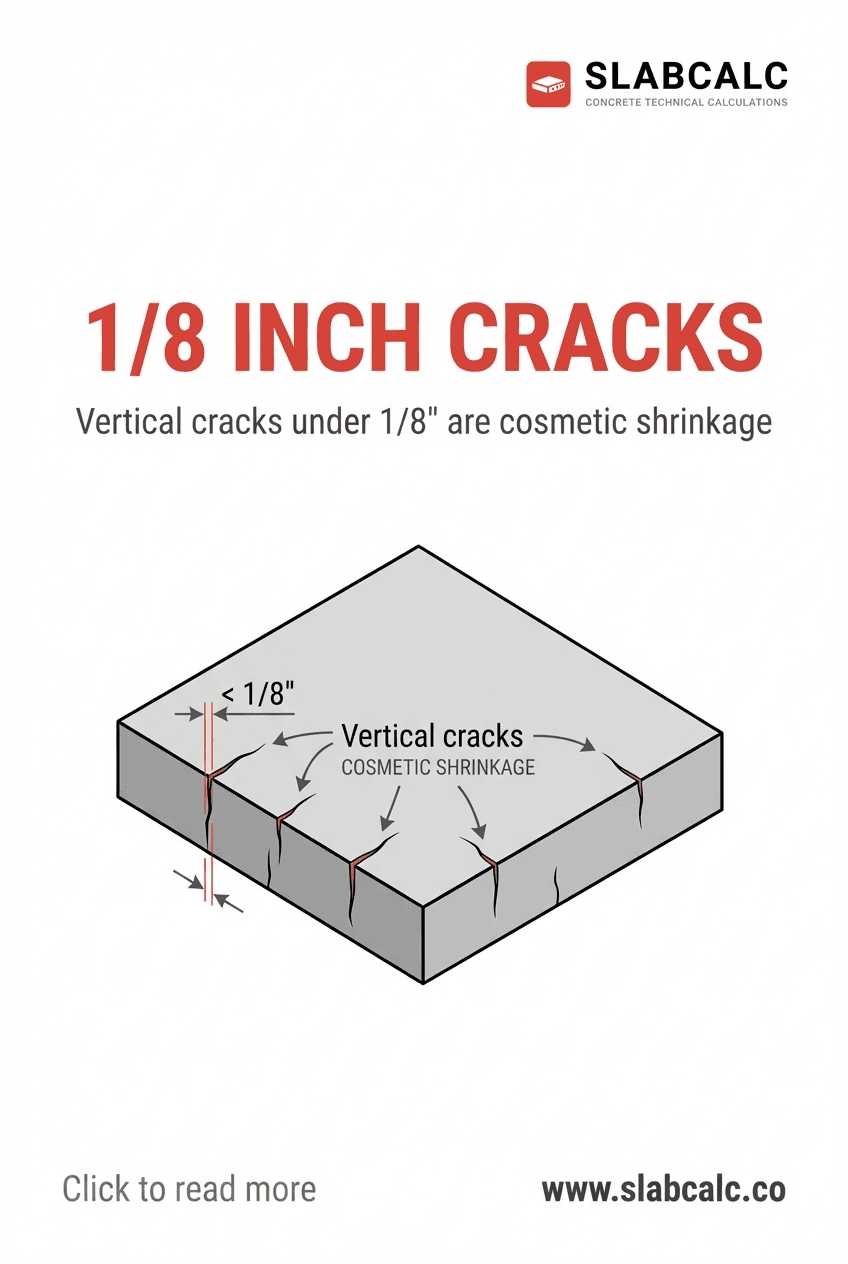
- Vertical displacement. One side of the crack is slightly higher than the other. Run a straightedge across the crack; if you see a step of 1/8 inch or more, the slab is tilting.
- Water pooling or soft spots. Press a flat shovel blade into the soil near the slab edge; if it sinks easily, compaction is poor.
- Cracks that reopen after patching. This is definitive proof the subgrade is still moving.
The Prevention Checklist Before Pouring
Before you pour a new slab or repair this one:
✓ Compact the subgrade to 95% Proctor density using a plate compactor. Don't skip this.
✓ Add 4–6 inches of gravel base as a drainage and compaction buffer.
✓ Slope the grade away from the slab at 1 inch per 10 feet to shed water.
✓ Inspect for roots, voids, and soft spots across the entire footprint.
✓ Consider a vapor barrier in damp climates to prevent moisture from destabilizing the base.
✓ Use a concrete calculator to ensure proper slab thickness—4 inches minimum for residential slabs, 5–6 inches for load-bearing areas.
The Bottom Line
Patching concrete over a moving subgrade is like fixing a leaky roof without finding the hole. The real fix starts underground. Spend the time and money stabilizing the base now, and your repair will last 20+ years. Skip it, and you'll be buying concrete again in 18 months.