
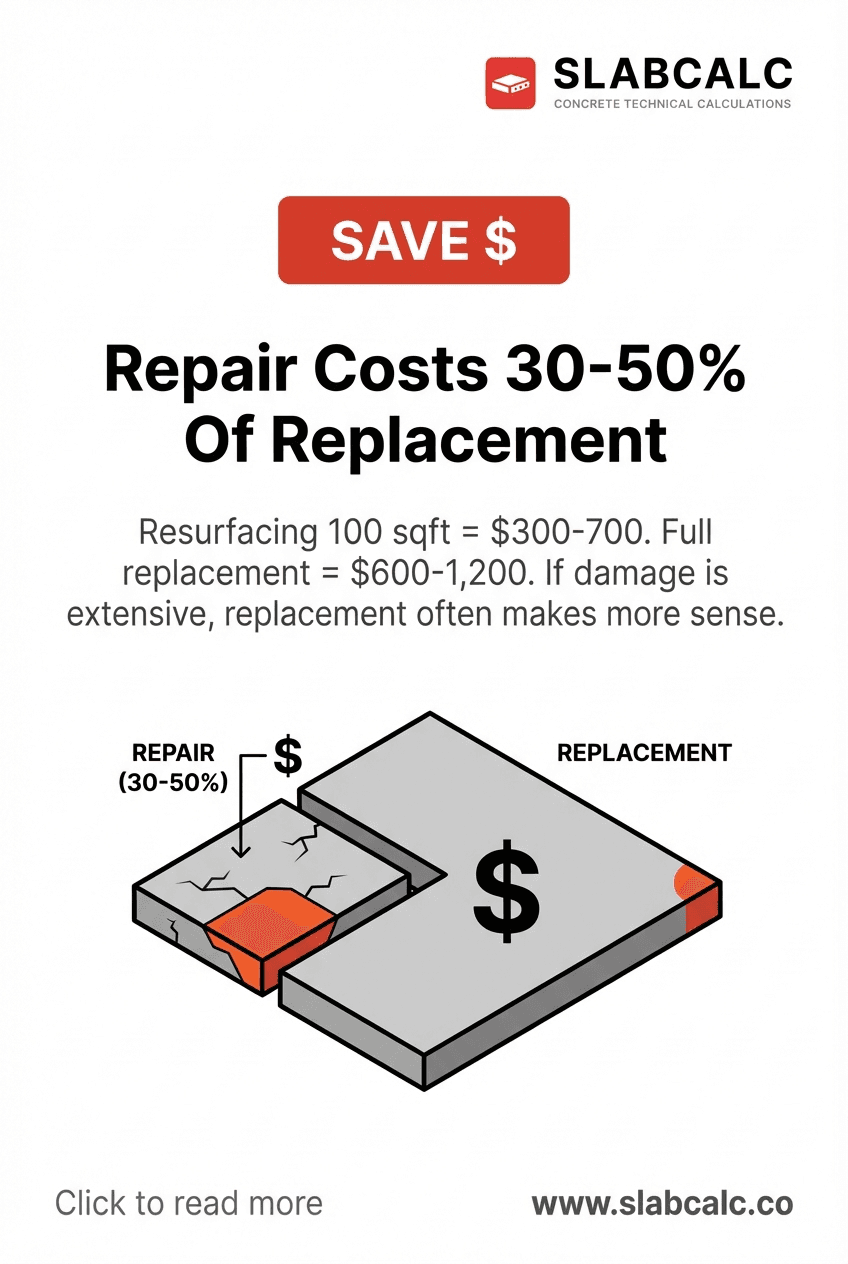
Repair Costs 30-50% Of Replacement
When concrete fails, your first instinct might be to tear it out and start over. But before you call the excavator, understand the numbers. Resurfacing a 100-square-foot slab runs $300–$700, while full replacement costs $600–$1,200 for the same area. That's a 30–50% savings opportunity—if the damage justifies a repair approach.
The Math: Repair vs. Full Replacement
Let's break down real costs for a typical 10-by-10-foot driveway section:
Resurfacing option:
- Concrete overlay (2 inches): $3–$7 per square foot
- 100 sqft × $5 (mid-range) = $500 total
- Materials: bonding agent, overlay mix, sealer
- Labor (DIY): 6–8 hours of prep and finishing
Full replacement option:
- Removal and haul-away: $1–$2 per square foot
- New base prep: $0.50–$1 per square foot
- New concrete pour (4 inches): $6–$8 per square foot
- 100 sqft × $9 (mid-range) = $900 total
- Plus equipment rental costs ($200–$400)
- Labor (DIY): 16–24 hours over multiple days
Your savings with repair: $400–$600 per 100 square feet.
When Repair Actually Works
Repair makes financial sense only when the structural failure is isolated to the surface layer. This includes:
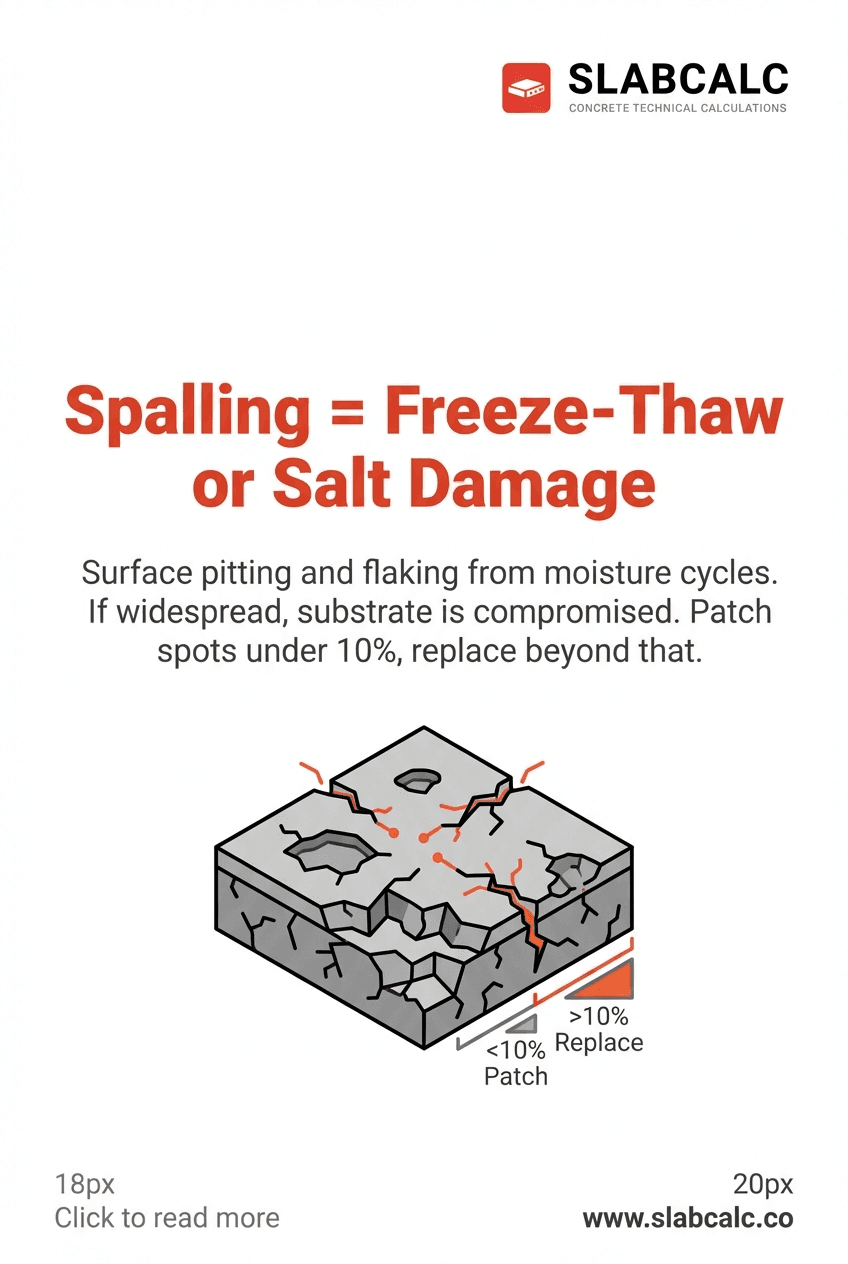
- Scaling and spalling (surface peeling): An overlay bonds directly over damaged concrete and seals it permanently.
- Discoloration and staining: Resurfacing creates a uniform, cosmetically new top layer.
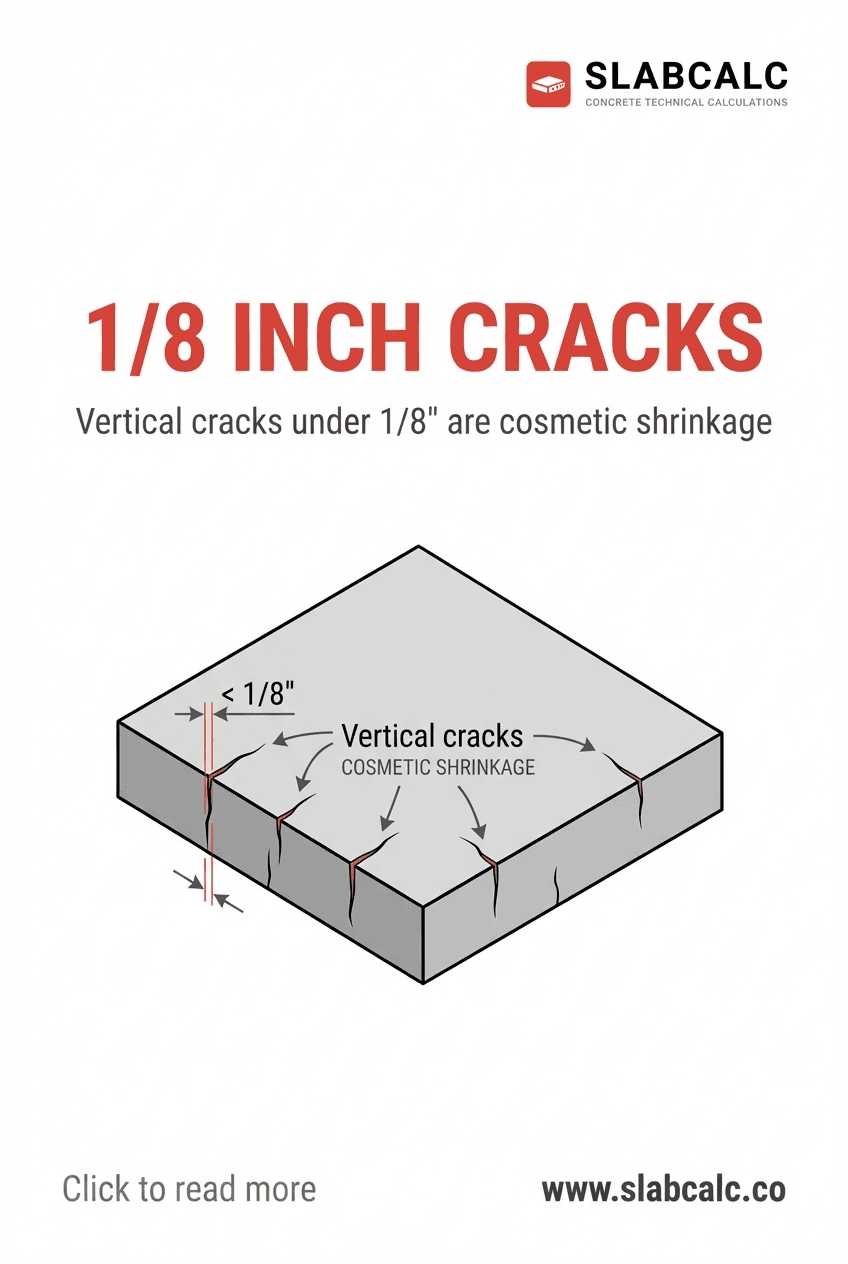
- Minor surface cracks (under 1/4 inch): These can be sealed and covered by an overlay.
- Rough, uneven finishes: A concrete overlay levels the surface for new use.
In each case, the underlying slab is still structurally sound. The overlay adds 2–3 inches of fresh concrete bonded with a polymer primer, effectively creating a new wearing surface.
When Replacement Becomes the Better Choice
Stop considering repair if you find:
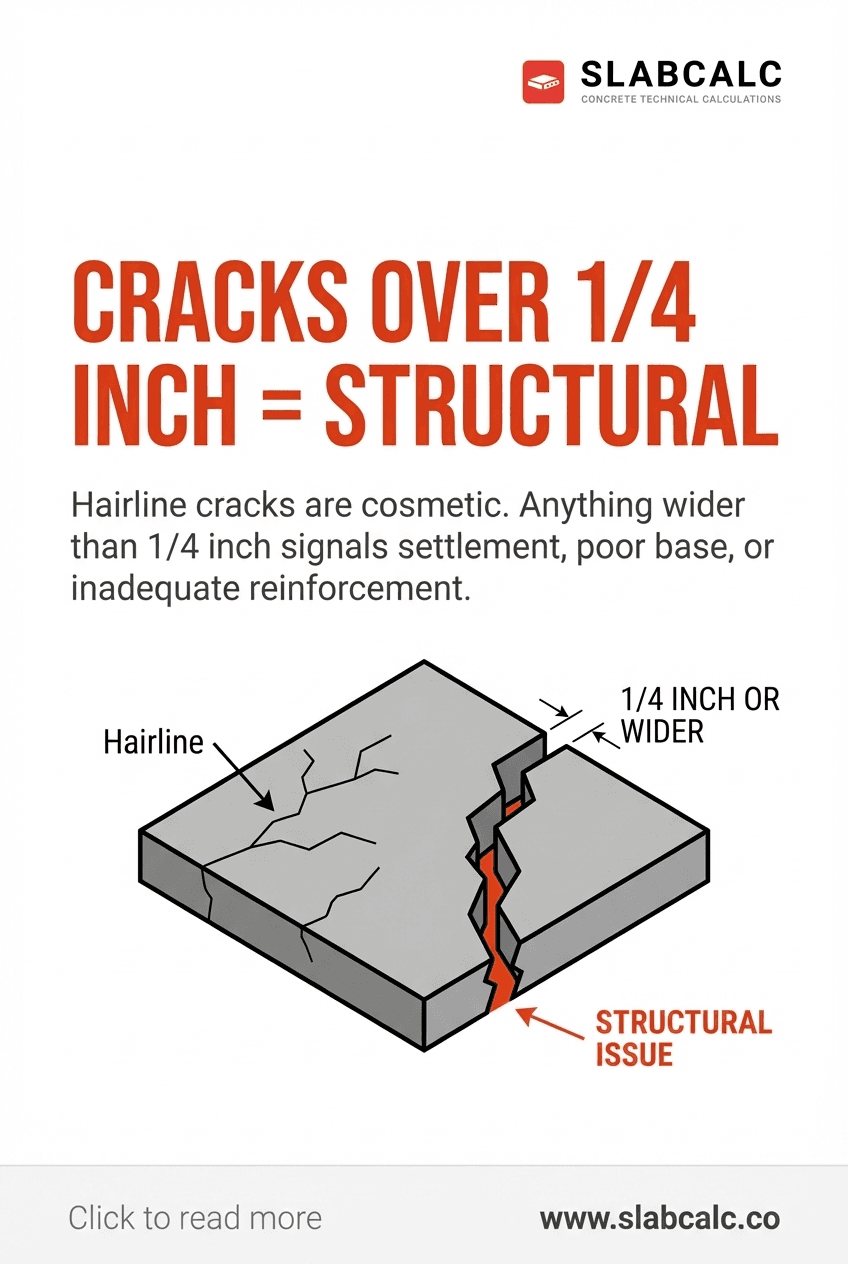
- Deep or widening cracks: Cracks over 1/4 inch wide or those that continue to grow suggest structural movement. An overlay won't stop failure underneath.
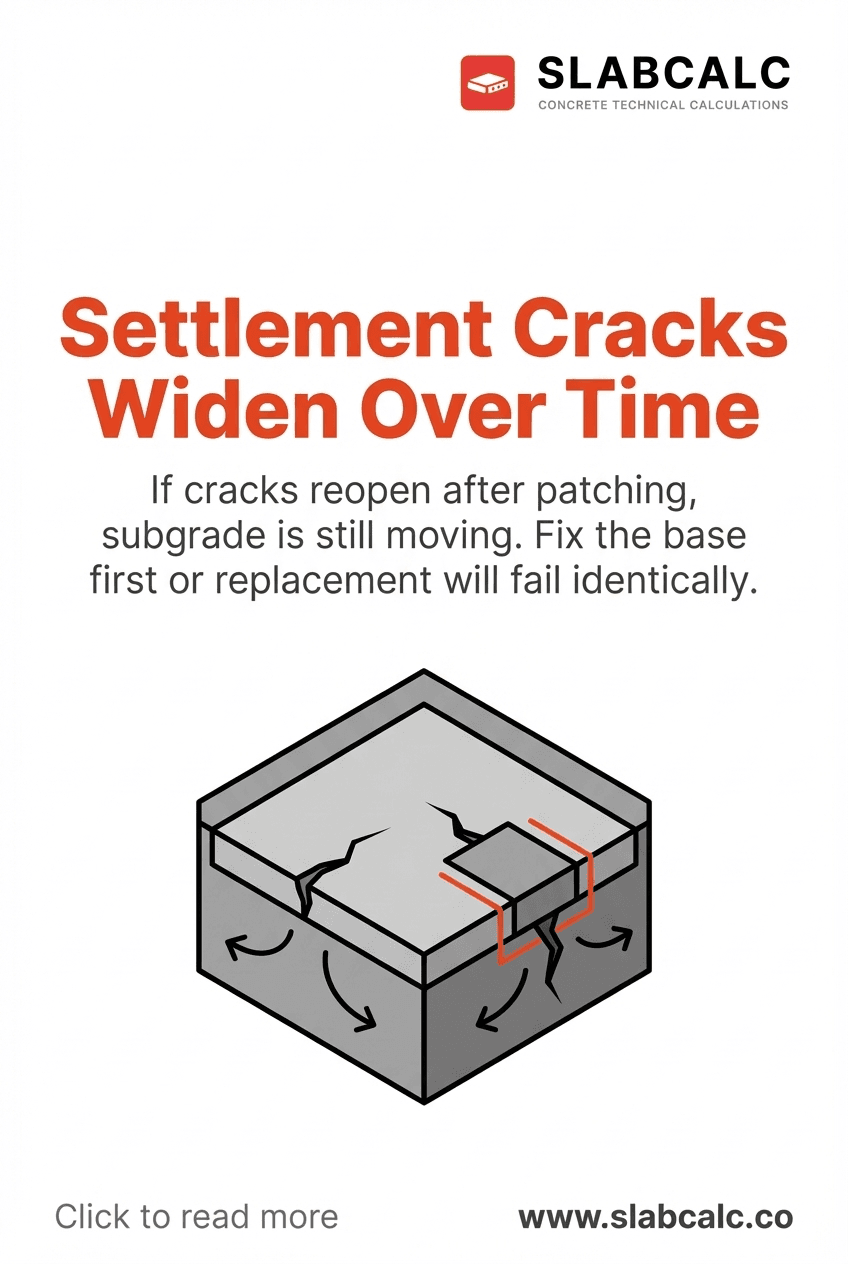
- Settlement or sinking: If the slab has dropped or tilted, the subgrade has failed. No overlay will fix that.
- Slab thickness below 3 inches: Thin slabs are already near the breaking point. Repair won't restore structural capacity.
- Extensive spalling (more than 30% of the surface): When damage covers most of the slab, replacement is actually faster and produces a better long-term result.
- Repeated failures: If the same slab has failed twice, the root cause (poor drainage, weak subgrade, freeze-thaw cycles) hasn't been addressed. Repair masks the problem temporarily.
The Decision Framework
Ask yourself these three questions:
- Is the damage confined to the top 2–3 inches? If yes, repair works.
- Is the underlying concrete still solid? Use a hammer test—sound concrete rings clearly; failed concrete sounds hollow.
- Will the repaired slab meet my needs for 10+ more years? If you doubt it, replacement pays dividends long-term.
For most homeowners, resurfacing a cosmetically damaged but structurally sound slab delivers excellent value. But if structural failure runs deep, spending an extra $300–$500 on replacement buys you a fresh 20–30 year lifespan instead of 5–7 years of temporary fixes.