
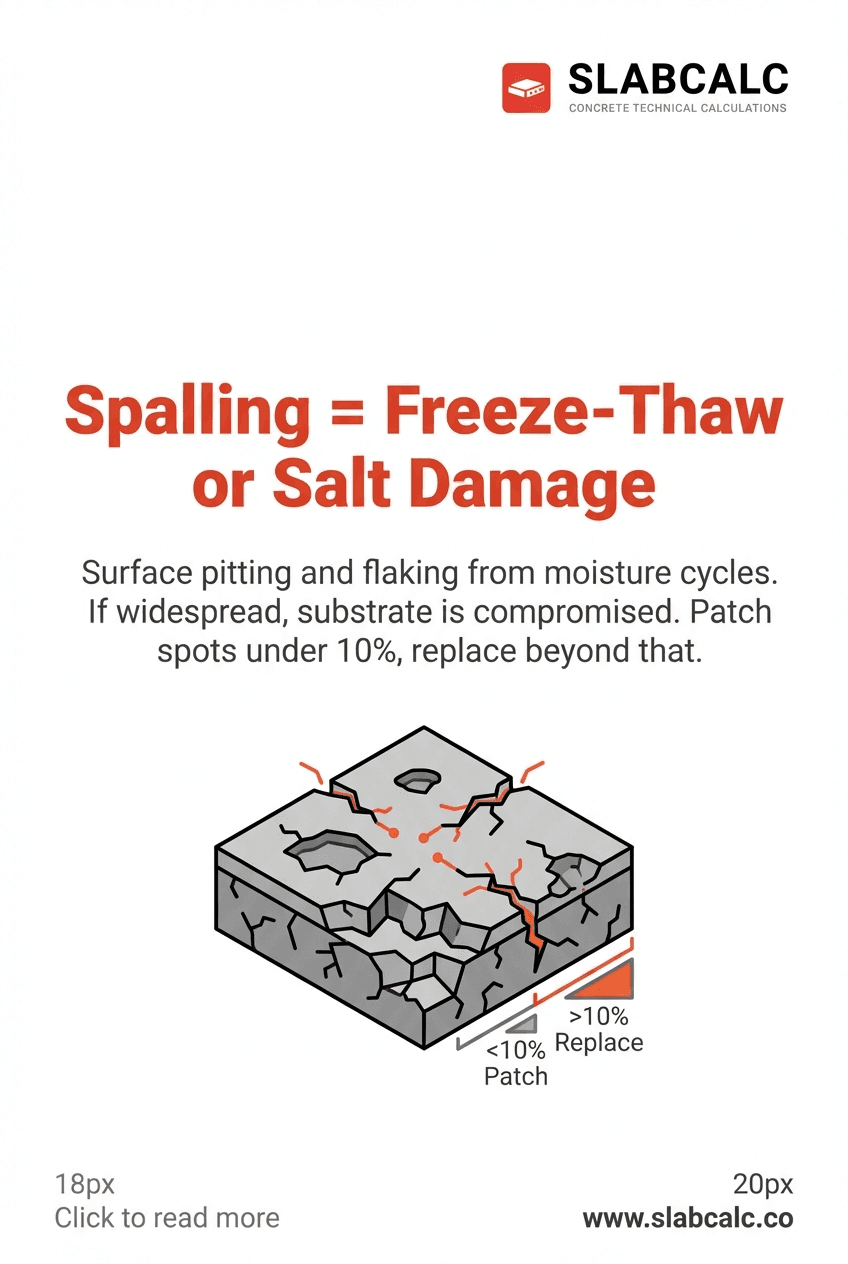
Spalling = Freeze-Thaw or Salt Damage
What Is Concrete Spalling?
Spalling is the breakdown of concrete surface layers—small pits, flakes, and chips that peel away. Unlike a single crack, spalling is widespread surface deterioration. It typically appears as a rough, pockmarked texture that worsens each year. The culprit is usually moisture cycling combined with freeze-thaw stress or road salt exposure, which corrodes the concrete from the inside out.
The damage accelerates because water penetrates the weakened surface, freezes, expands, and breaks away more material. In warm climates, salts crystallize beneath the surface and push the top layer off. Either way, once spalling starts, it spreads.
Why Material Specification Matters
The original concrete mix design determines how resistant your slab is to spalling. Air-entrained concrete—which contains tiny intentional air bubbles—resists freeze-thaw damage 10 times better than standard concrete. The air pockets give water somewhere to expand when it freezes instead of cracking the paste.
For slabs in climates with winter temperatures below 32°F or areas where deicing salt is applied, you need:
- Air entrainment: 4–7% of total volume (measured and verified at the concrete plant)
- Water-cement ratio: 0.45 or lower (tighter mix = fewer capillaries for water to travel through)
- Minimum 4-inch thickness (thin slabs spall faster under traffic and freeze stress)
- Proper slope and drainage (standing water accelerates damage by 300%)
If your existing slab lacks these specs, repair is temporary. Replacement is the only permanent fix for heavy spalling.
Repair vs. Replace Decision
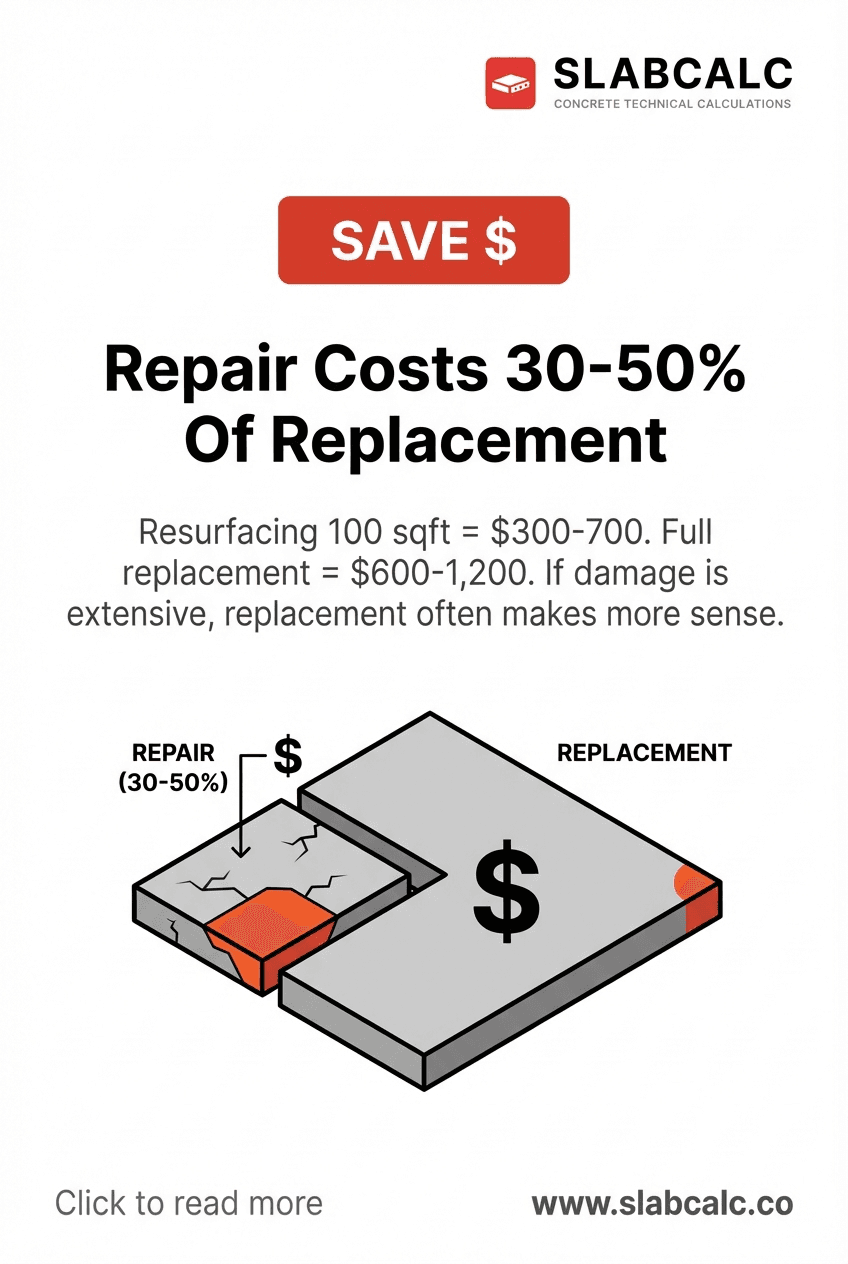
Patch if spalling covers less than 10% of the slab. Use a hydraulic cement repair compound rated for freeze-thaw cycles (brands like Sakrete Concrete Resurfacer or Quikrete Self-Leveling cost $12–18 per bag). Clean out all loose material with a wire brush and chisel, dampen the area, apply bonding adhesive, then trowel the patch flush. This typically costs $50–150 per job and lasts 5–7 years.
Replace if spalling covers more than 10% or affects the substrate. When pitting goes deeper than 1/2 inch, the structural integrity is compromised. Patching will fail repeatedly. Plan for full slab replacement using air-entrained concrete (minimum 6 bags of cement per cubic yard, 4–6% entrained air).
Preventing Future Spalling
Order concrete from a supplier that documents air entrainment on the delivery ticket. Request 4–7% air content explicitly. Install proper drainage—slope at 1/8 inch per foot minimum. Avoid applying deicing salts; use sand or calcium chloride alternatives instead. Seal your new slab every 2–3 years with a penetrating sealer to block water infiltration.
A properly specified and maintained concrete slab resists spalling for 20+ years. Cut corners on the mix design, and you'll be patching within 3–5 years.