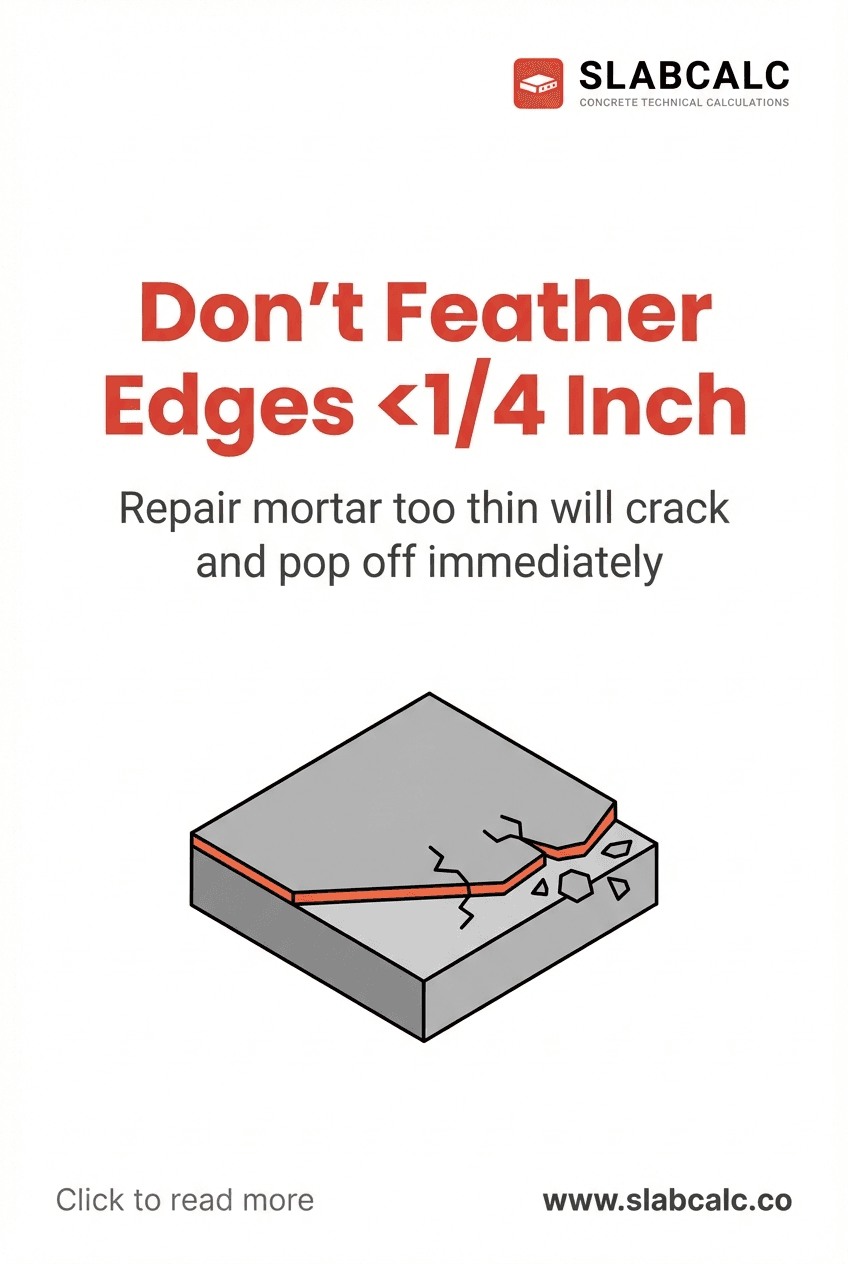
Don't Feather Edges Under 1/4 Inch
The Material Spec That Stops Failure
Minimum repair mortar thickness: 1/4 inch (6 mm). Never go thinner.
Feathering—tapering repair mortar to a paper-thin edge—seems logical. It looks smoother and blends visually. But this is the #1 reason concrete step repairs fail within weeks. Thin mortar dries too fast, shrinks unevenly, and bonds weakly to existing concrete. The result: cracking, popping, and chunks falling off faster than the original damage.
Why Thickness Matters
Repair mortar needs thickness to develop strength and bond. Polymer-modified mortars (the right choice for step repairs) rely on sufficient material depth to:
- Cure properly. Thin sections dry in hours; proper sections take 24–48 hours. Rapid drying causes shrinkage cracks before the material even hardens.
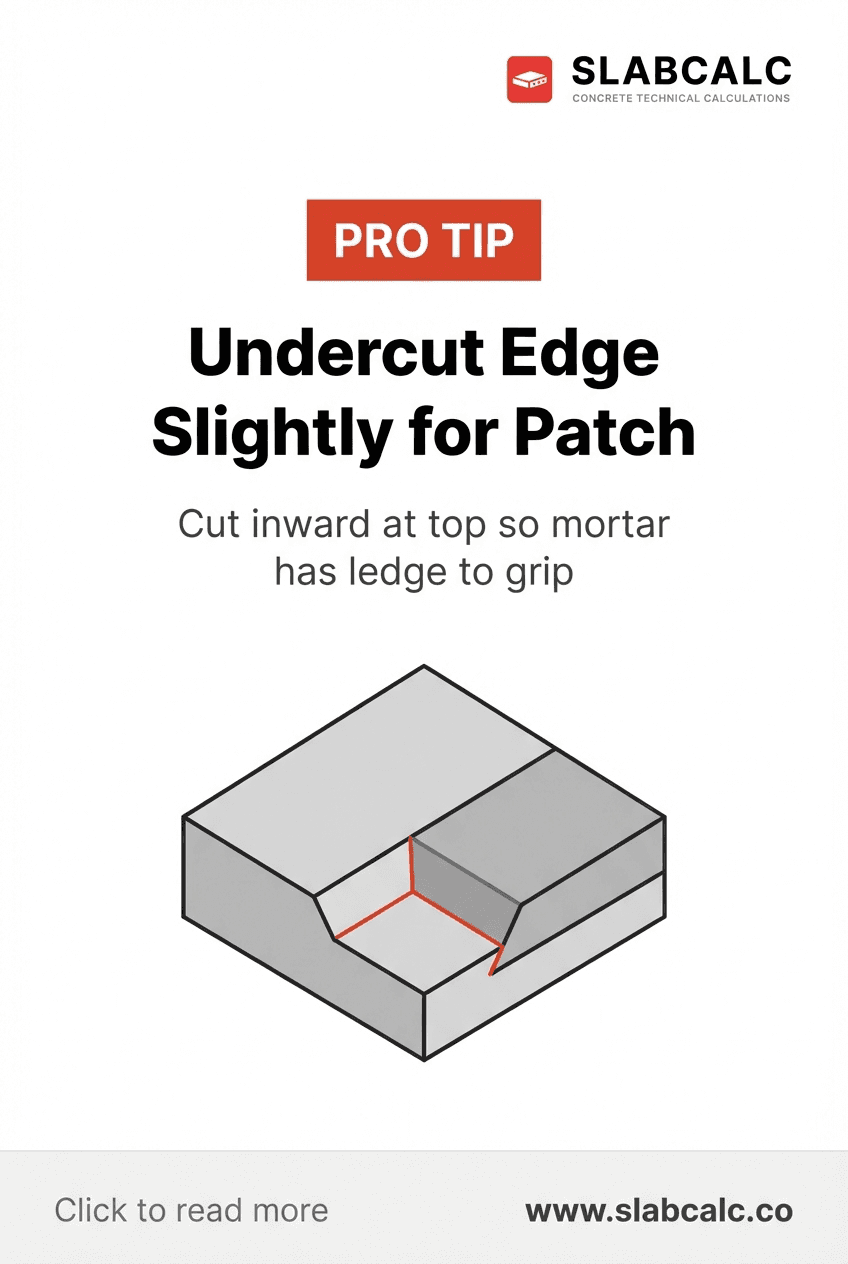
- Bond mechanically. The mortar needs depth to grip the existing concrete surface and the repair area's vertical walls. A 1/16-inch coating cannot anchor—it sits on top and peels.
- Flex with temperature. Concrete moves 1/8 inch per 100 feet in temperature swings. Thick mortar absorbs this movement. Thin mortar shatters.
- Resist impact. Step edges absorb boot heels and furniture legs. A 1/4-inch minimum provides structural cushion. Anything thinner breaks immediately.
Comparison: Feathered vs. Proper Thickness
Feathered edge (1/16–1/8 inch):
- Fails in 2–8 weeks
- Costs: $50 material, $200+ labor, $300+ replacement repair
- Common on DIY jobs and quick contractor work
Proper thickness (1/4 inch minimum, 3/8 inch ideal):
- Lasts 10+ years
- Costs: $60 material, $250 labor, one repair
- Professional standard
The cost difference is negligible. You're spending the same time and labor either way. Adding 1/8 inch more mortar costs pennies per repair but buys years of durability.
How to Execute the Spec
Preparation: Clean the damaged edge with a wire brush. Remove all loose concrete, dust, and debris. Dampen (not saturate) the repair area with water 30 minutes before application.
Application: Use a putty knife or trowel to pack mortar firmly into the repair area. Push from the bottom up. Overfill slightly—you'll feather the visible surface down to match the surrounding step, but the bulk of the repair stays at full thickness.
Profile: The hidden interior should be solid mortar at least 1/4 inch thick. Only the outer 1/16 inch tapers to blend with the step surface. This gives you both durability and appearance.
Material Selection
Use polymer-modified concrete repair mortar, not standard Portland cement mortar. Products like Quikrete Vinyl Concrete Patcher or Sakrete Top 'N Bond include acrylic polymers that improve bonding and crack resistance. Cost: $12–18 per 10-pound bag. You'll need 1–2 bags for typical edge repairs.
Standard mortar cracks and separates. The polymer is worth the $6 upgrade—it's the difference between a repair that lasts months and one that lasts years.