
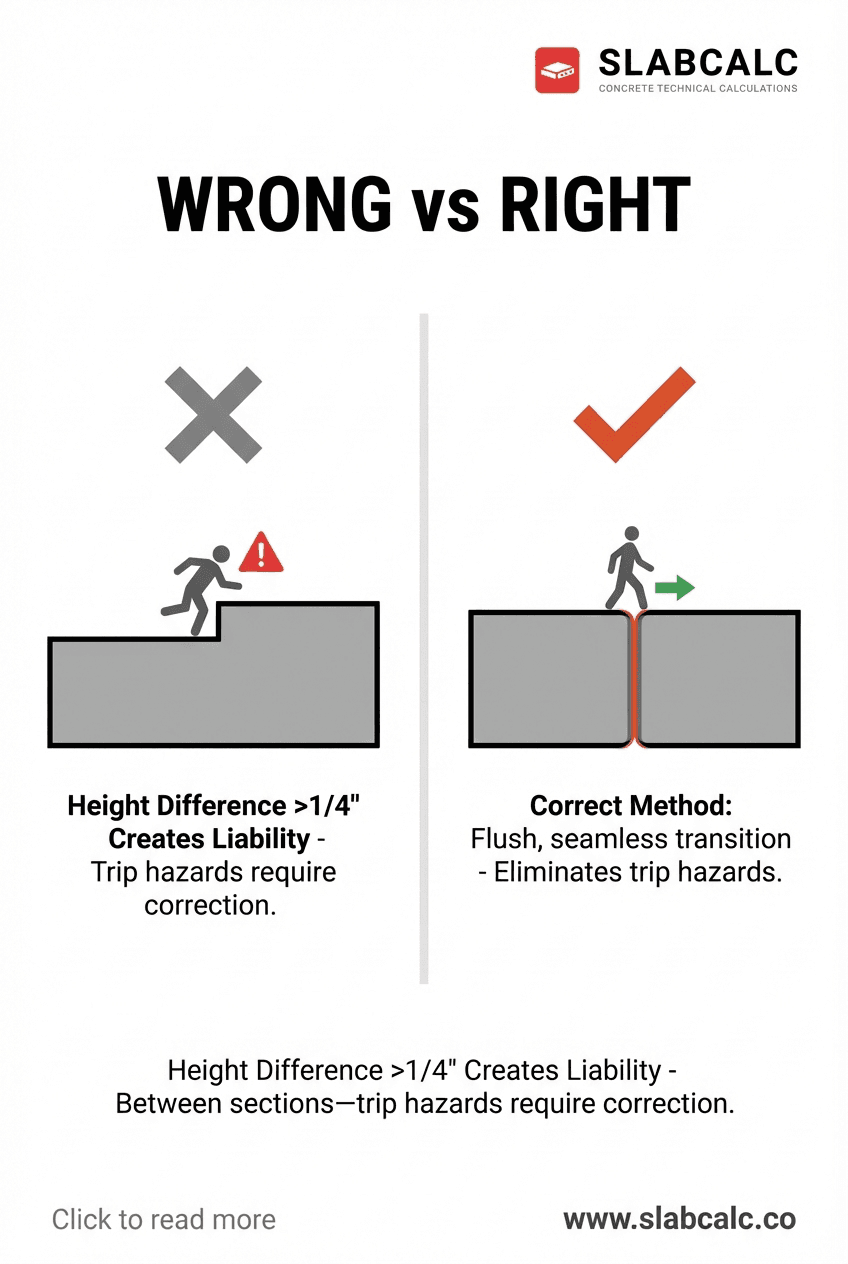
Height Difference Over 1/4 Inch Creates Liability
The Liability You Can't Ignore
A trip hazard above 1/4 inch (6mm) between concrete sections isn't just an aesthetic problem—it's a legal one. If someone falls on your property because of uneven concrete, you're potentially liable for medical bills, pain and suffering, and lost wages. Most homeowner insurance policies require you to maintain safe premises. Height differences exceeding 1/4 inch violate the Americans with Disabilities Act (ADA) and many local building codes. Ignoring this warning means risking a lawsuit that could cost $50,000 to $500,000 or more.
Why Concrete Settles Unevenly
Concrete doesn't sink uniformly. One section drops while adjacent areas remain stable, creating that dangerous lip. The most common culprits are poorly compacted fill soil, water erosion beneath the slab, decomposing organic material, and clay soil shrinkage during droughts. When a utility trench was backfilled improperly or a downspout drains directly next to your patio, the supporting soil underneath erodes or compacts unevenly over months to years. By the time you notice it, the damage is already done.
Spotting the Problem Early
Don't wait until someone trips. Inspect concrete joints quarterly. Use a straightedge (a 6-foot level works) placed across seams—if you slide a marble and it rolls freely between sections, your height difference exceeds 1/4 inch. Look for:
- Visible lips or edges where one section sits higher than the next
- Cracks radiating from seams caused by stress from uneven support
- Crumbling concrete at the joint where pedestrians catch their feet
- Water pooling along seams, which accelerates settling
Any of these signals demand action.
Prevention Checklist Before Your Next Pour
Before concrete is ever placed, eliminate settling risk:
- Compact fill soil in 4-inch lifts using a plate compactor or jumping jack—this prevents soil consolidation later
- Install 4-6 inches of gravel base and compact it thoroughly; native soil alone doesn't provide stable support
- Grade away from the slab so water runs away, not under it
- Reroute downspouts at least 6 feet away from concrete
- Remove all organic material (roots, stumps, debris) from the excavation area before backfill
- Use control joints every 4-6 feet in poured concrete to direct cracks away from high-traffic zones
When to Call a Pro
If your height difference is already above 1/4 inch, you have two options: mudjacking (pressure-injecting material under the slab to lift it, costing $300–$800 per section) or removal and replacement ($8–$12 per square foot). Mudjacking works only if the underlying cause—poor compaction or soil erosion—is first identified and corrected. Otherwise, you're just delaying the next settlement.
Document the hazard with photos and measurements before calling a contractor. Your liability reduces once you've documented the issue and taken corrective steps.