
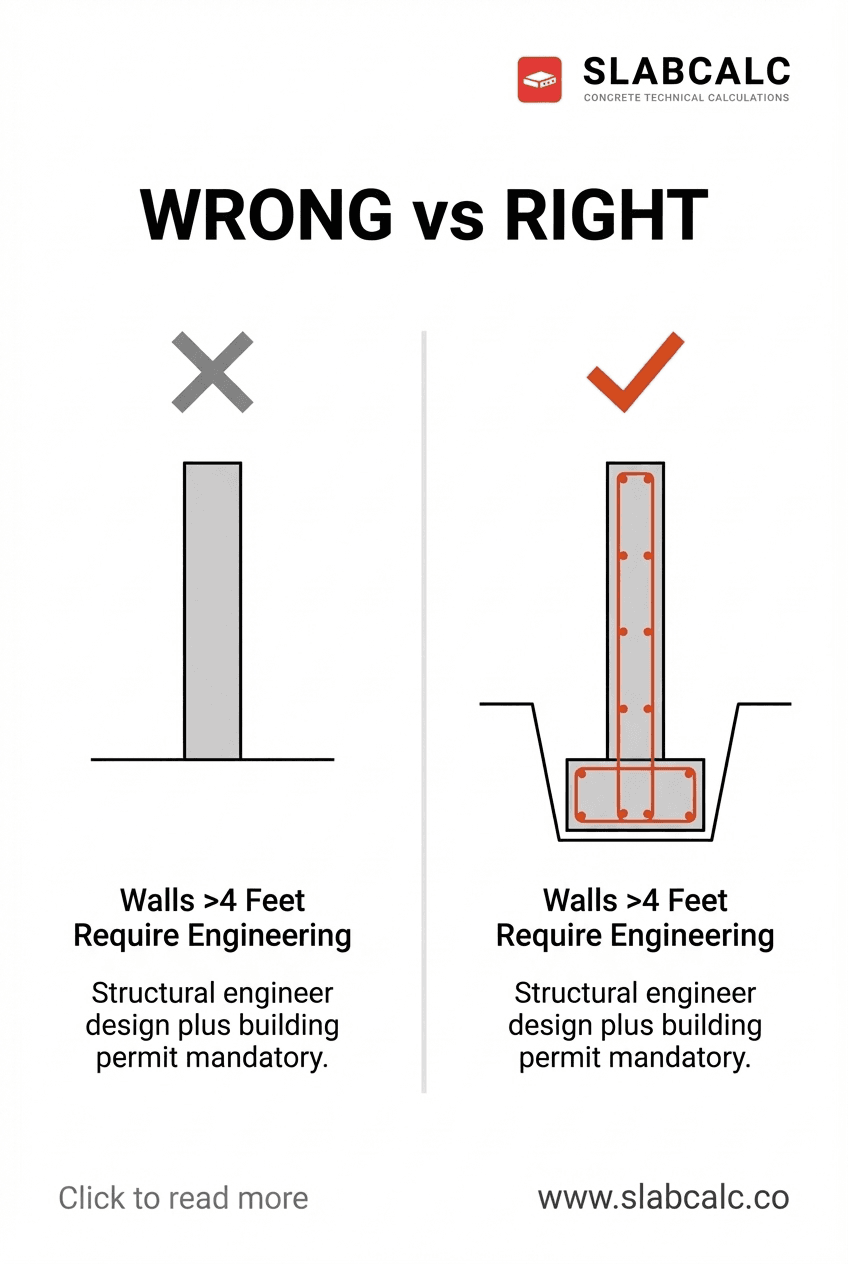
Walls Over 4 Feet Require Engineering
The Real Cost of Skipping Engineering
A wall that fails doesn't just damage your property—it can destroy your neighbor's house, injure someone, and land you with six-figure liability bills. A 6-foot retaining wall failure in Colorado Springs resulted in $180,000 in damage claims and a lawsuit. The homeowner had built it without permits or engineering. The wall bowed outward after two years of freeze-thaw cycles and soil saturation, spilling thousands of tons of earth into the adjacent property.
This isn't rare. It's predictable failure from ignoring a single rule: walls over 4 feet need a licensed structural engineer.
Why Height Changes Everything
The forces acting on a retaining wall increase exponentially with height, not linearly. A 3-foot wall experiences manageable lateral earth pressure. A 6-foot wall experiences roughly 4 times the pressure, not twice.
Here's the physics: soil pressure increases with depth. At 3 feet, you're dealing with maybe 300 pounds per square foot at the base. At 6 feet, it's closer to 1,200 pounds per square foot. That's why a wall that works at 3 feet will collapse at 6 feet using the same design.
Add water infiltration, frost heave in cold climates, or a driveway loading the top of the wall—and the failure becomes inevitable within 2–5 years.
How to Identify This Risk Early
Check these three things before you buy materials:
1. Measure your retained height. From the bottom of your footing (below grade) to the top of the retained soil. If it's over 4 feet, stop here.
2. Check your local building code. Most jurisdictions require engineered design for walls exceeding 4 feet. Some require it at 3 feet. A quick call to your city or county building department takes 10 minutes and saves months of rework.
3. Look for surcharge loads. Is there a driveway, deck, fence, or building within 3 feet of the wall top? These add weight that magnifies lateral pressure. They almost always push a wall into the engineering-required category.
The Prevention Checklist
Before breaking ground on any retaining wall:
- ☐ Measure retained height (grade to grade, not wall height)
- ☐ Call your city building department and confirm permit requirements
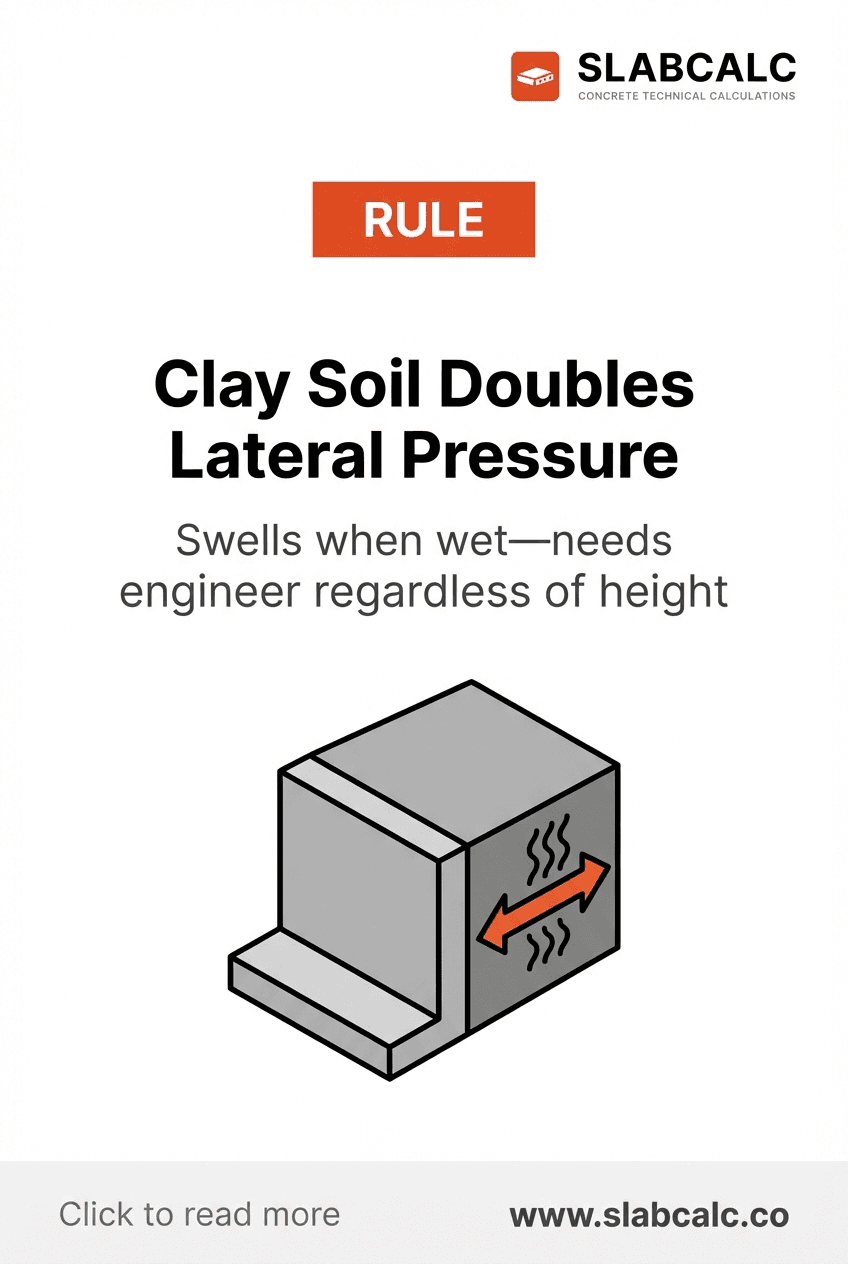
- ☐ Take photos and note soil type (clay, sand, silt)
- ☐ Identify all surcharge loads within 5 feet of the wall
- ☐ If height exceeds 4 feet OR surcharges exist, contact a structural engineer
- ☐ Budget $600–$1,500 for engineer drawings (far cheaper than failure)
- ☐ Obtain the building permit before ordering concrete
- ☐ Have the engineer inspect the footing before pouring
Structural engineering isn't a luxury—it's insurance. A permit-and-engineer approach adds 2–3 weeks to your timeline but eliminates catastrophic risk. The alternative is a wall that fails, neighbor conflict, and potential lawsuits that dwarf the cost of doing it right.