
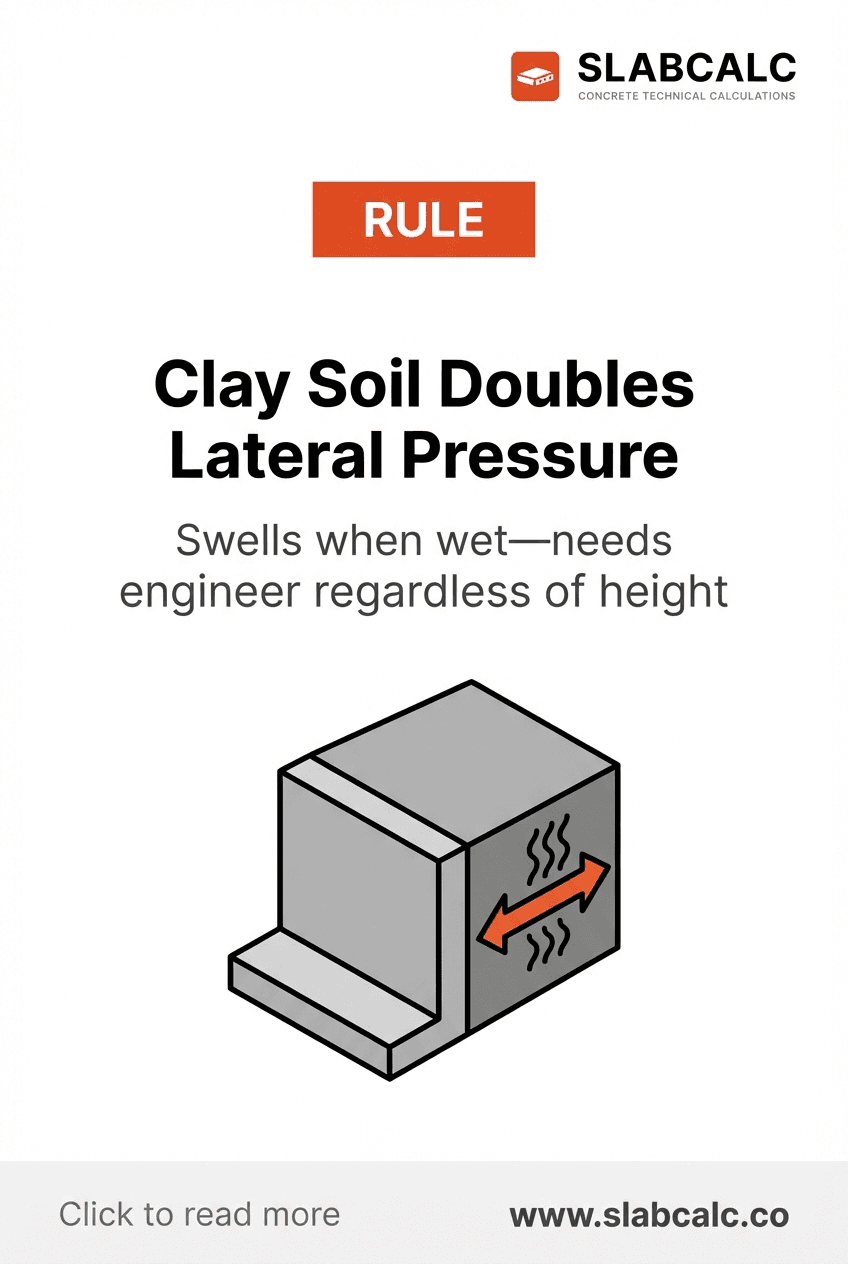
Clay Soil Doubles Lateral Pressure
The Decision Tree
If your retained soil is clay AND you're building any height wall → Get a structural engineer. Period. Don't skip this step thinking a 2-foot wall is "too small to matter." Clay soil changes the game entirely.
If your soil is sandy loam or gravel AND your wall is under 4 feet AND there's no surcharge load → You may proceed as a DIYer (with proper footing depth and drainage).
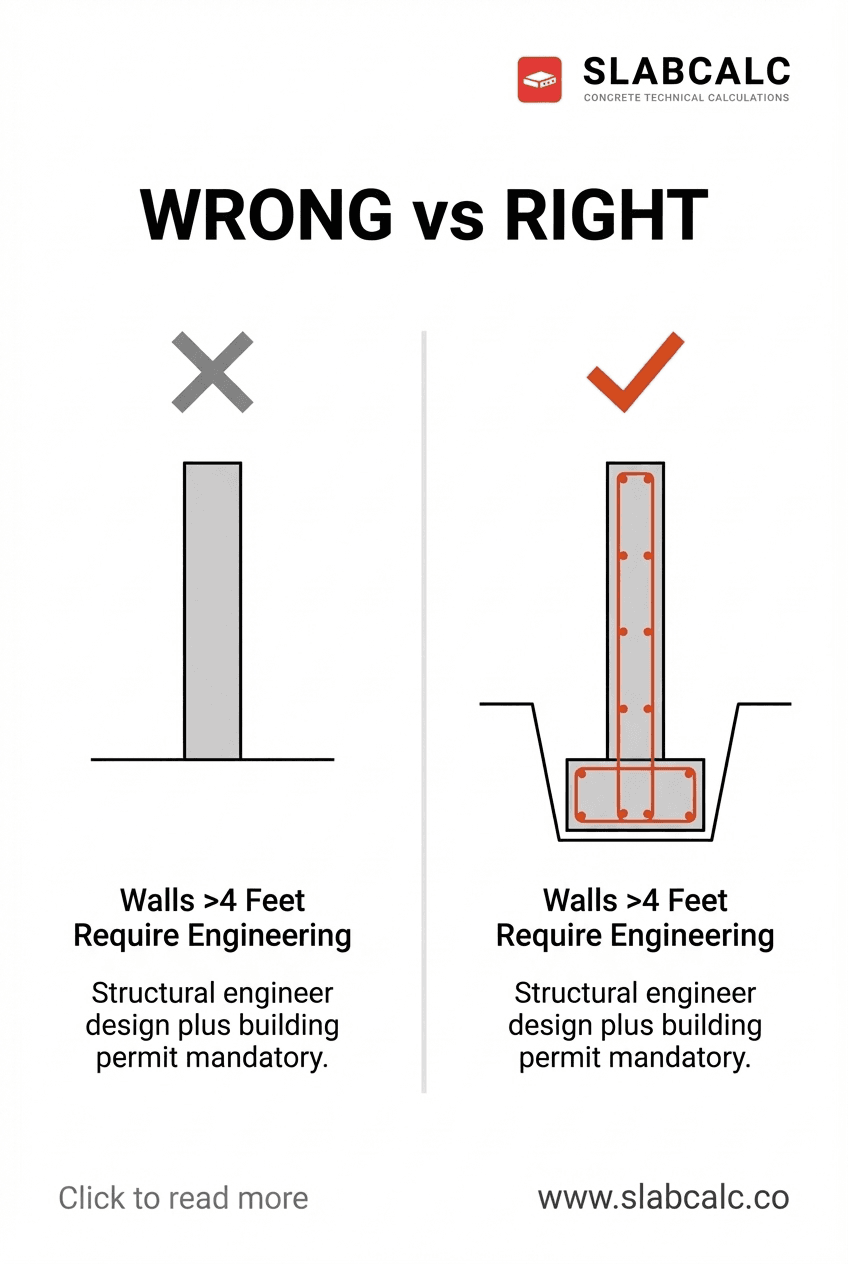
If your soil is clay AND your wall is over 4 feet → Engineer is mandatory by code in virtually all jurisdictions.
The critical detail most homeowners miss: clay soil doesn't just sit there. It swells when wet—expanding by 5–10% or more depending on clay content—and this expansion creates lateral (sideways) pressure on your wall. That pressure can double or triple compared to granular soils at the same height.
Why Clay Is Different
Standard retaining wall design assumes relatively stable soil with predictable lateral pressure. Lateral pressure increases with depth, and engineers calculate it using the soil's angle of internal friction and unit weight. Sandy soils have friction angles around 30–35°. Clay? Closer to 15–25°, and that's when it's dry.
When clay gets wet—which it will, because water always finds a way behind walls—it swells and loses shear strength. A wall that felt stable in September can be under exponentially greater stress by spring after snowmelt or heavy rain. The swollen clay pushes outward like an invisible hand, and if your wall's footing and thickness weren't designed for that load, cracking or failure follows.
Real costs: A failed 3-foot clay-backed wall can cost $8,000–$15,000 to demo and rebuild properly. An engineer's fee? $400–$800. The math is obvious.
How to Identify Clay Soil
- Feel test: Squeeze moist soil in your hand. Clay forms a ball that holds its shape. Sandy soil crumbles.
- Digging test: Clay is sticky and hard to dig. It clings to your shovel.
- Local knowledge: Ask neighbors or call the county extension office. They know what's in the ground.
- Soil boring report: For walls over 4 feet, a geotechnical engineer will do this anyway.
The Engineer's Fix
When an engineer designs a clay-backed wall, they'll typically specify:
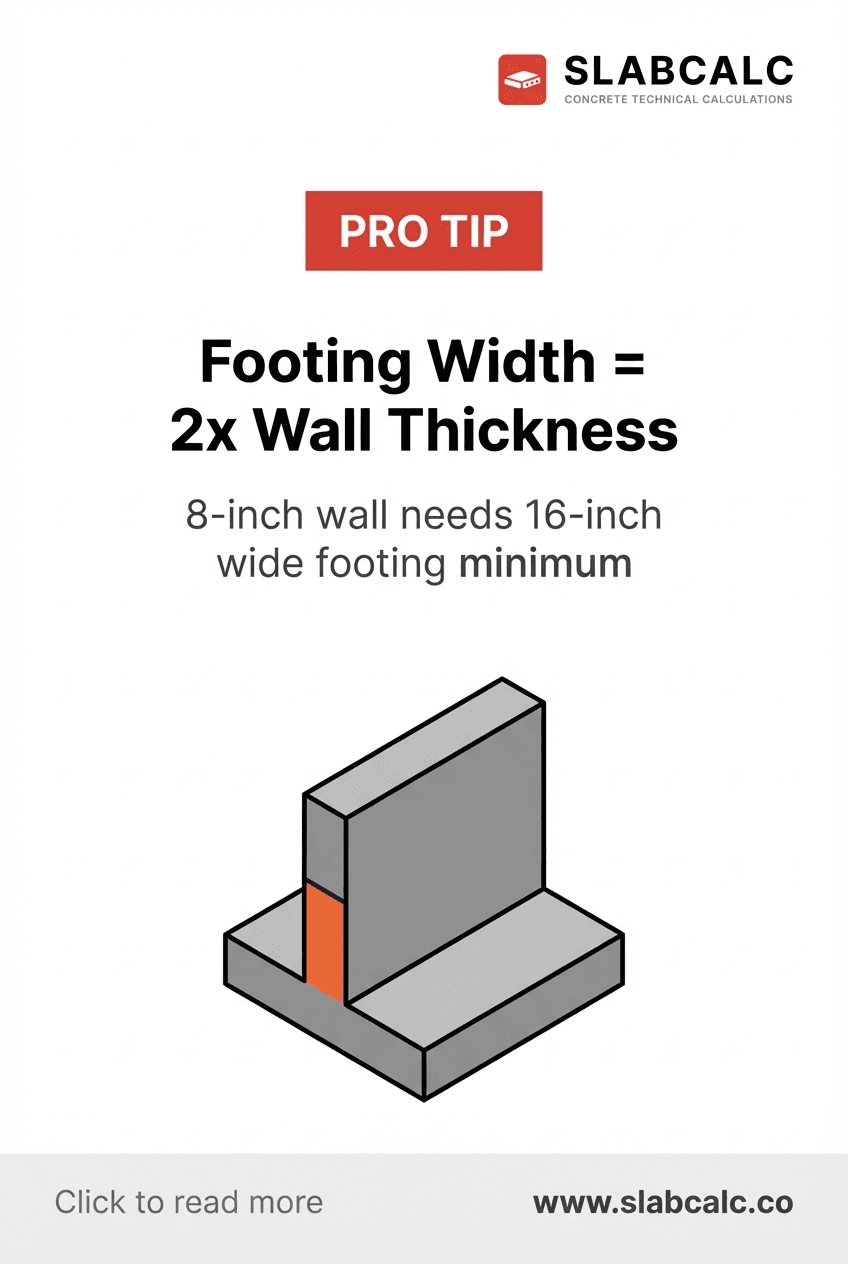
- Thicker footing (often 18–24 inches instead of 12)
- Deeper footing (below frost line, often 36–48 inches in cold climates)
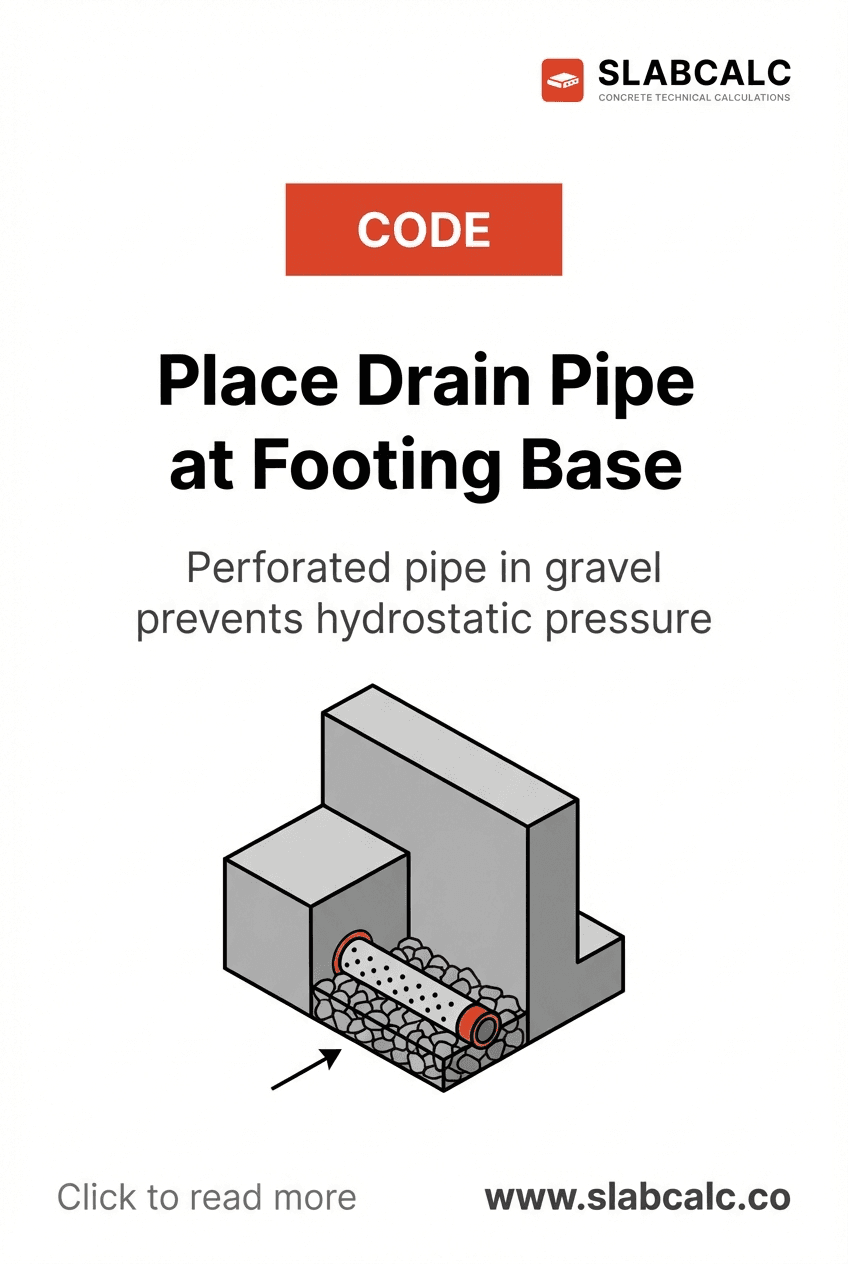
- Better drainage: A perforated drain pipe and gravel backfill behind the wall to keep water away from clay
- Taller wall (extending higher above grade to account for soil expansion pressure)
These adjustments cost more upfront but eliminate the risk of catastrophic failure.
The Bottom Line
If your retained soil contains clay, do not attempt a retaining wall without an engineer's stamp, regardless of height. Clay's expansion behavior under moisture isn't predictable enough for trial-and-error construction. An engineer costs a few hundred dollars. A failed wall costs thousands and liability. Use our footing calculator to estimate concrete volume, then get professional soil analysis and design before you buy materials.