
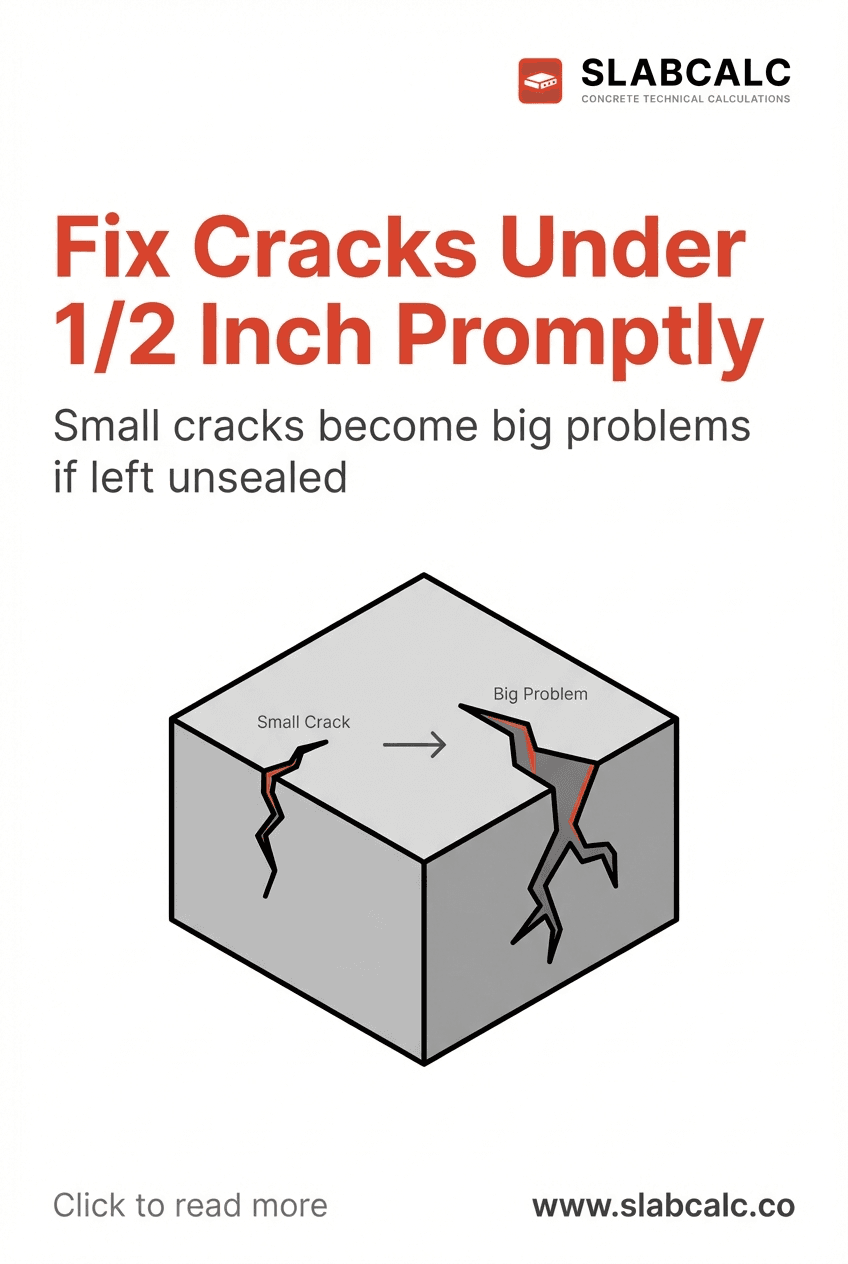
Fix Cracks Under 1/2 Inch Promptly
The Material Spec: Concrete Crack Sealant
For cracks under 1/2 inch wide, use a polyurethane or silicone caulk rated for concrete. Specifications that matter:
- Width capacity: Minimum 1/4 inch to 1/2 inch (check product label)
- Cure time: 24–48 hours before water exposure
- Flexibility: At least 25% movement accommodation after curing
- Adhesion: Must bond to bare concrete without primer (most commercial products do)
Cost range: $8–16 per 10 oz cartridge. A standard caulking gun applies one cartridge to roughly 50 linear feet of 1/4-inch cracks. That's $0.16–0.32 per linear foot—far cheaper than watching the crack expand into a $500+ repair.
Avoid cheap acrylic caulk. It hardens brittle and fails when concrete expands or contracts with temperature changes. Polyurethane and silicone stay flexible year-round.
Why Small Cracks Matter
A 1/4-inch crack doesn't seem urgent—until winter arrives. Here's the physics: water enters the crack, freezes below 32°F, expands roughly 9%, and applies outward pressure on the concrete. After 5–10 freeze-thaw cycles, that hairline crack widens to 1/2 inch or more. Unsealed cracks also let water reach rebar or sub-base materials, triggering spalling (surface chunks breaking away) and structural deterioration.
Real cost comparison:
- Sealing a small crack today: $0.16–0.32 per linear foot
- Repairing a 6-foot spalled section in 3 years: $300–600
- Replacing a cracked driveway (1,000 sqft): $8,000–15,000
Maintenance is 20–50 times cheaper than replacement. A 30-minute inspection twice yearly (spring and fall) catches problems before they compound.
Application Technique
Successful sealing requires three steps:
1. Prepare the crack – Vacuum out debris or use a wire brush. Blow compressed air through to remove dust. A clean surface is essential for caulk adhesion. If the crack has loose concrete, chisel it out first.
2. Apply caulk evenly – Load a caulk gun and apply a steady bead along the crack. Hold the gun at a 45-degree angle and move slowly. Overfill slightly—the caulk will shrink as it cures.
3. Tool the surface – Wet your finger and smooth the bead into the crack. This pushes caulk deeper and creates a concave surface that sheds water better than a convex bead.
Sourcing Tips
Home Depot and Lowe's stock standard polyurethane caulks for $8–12. For larger projects (50+ feet of cracks), buy contractor-grade tubes from concrete supply shops—these often cost less per unit and cure faster. Read reviews for products used specifically in your climate zone; UV-resistant formulations matter in sunbelt states, while freeze-thaw flexibility is critical in northern regions.
Don't skip this step. Five minutes of sealing now prevents weeks of damage repair later.