
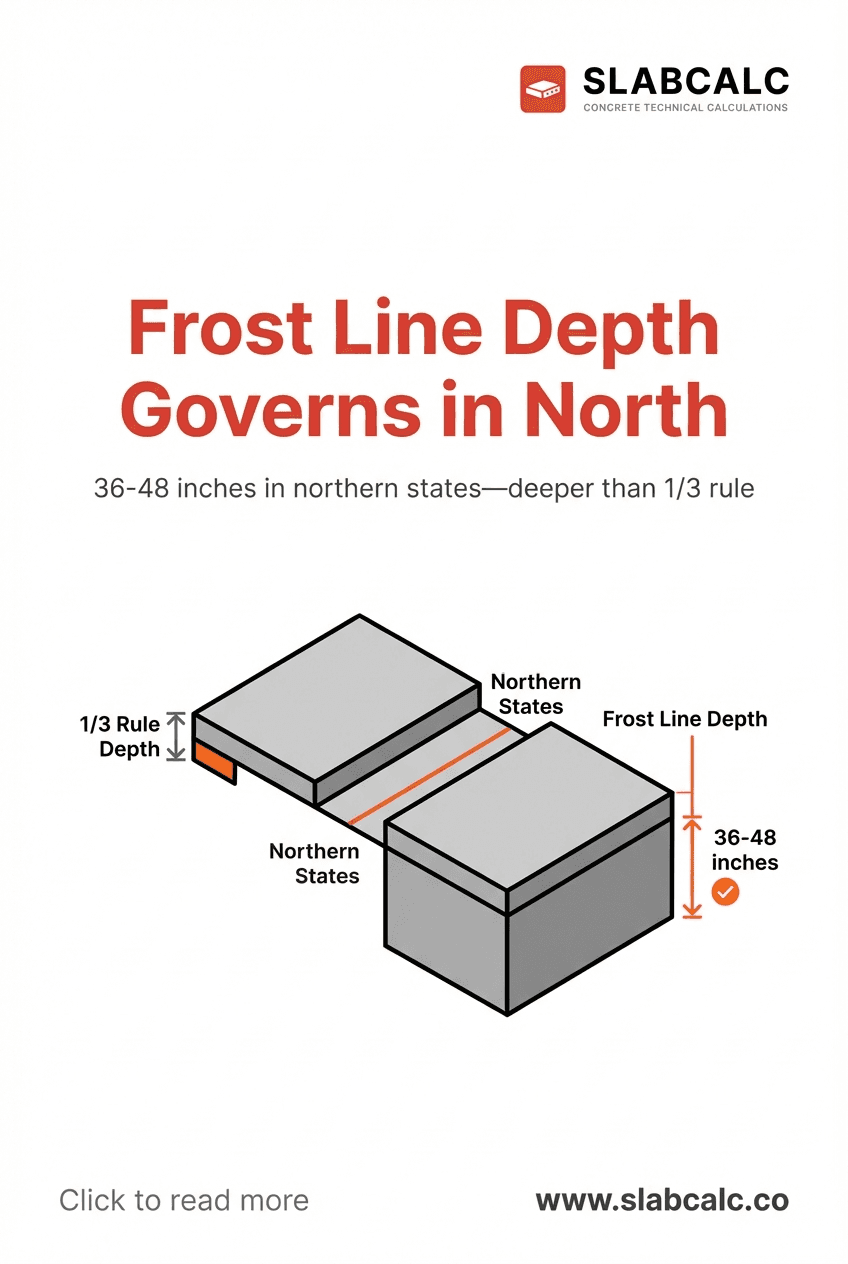
Frost Line Depth Governs in North
The Worst Outcome: Heaving and Fence Collapse
Frost heave is a silent killer of fence projects. When you bury a concrete post foundation above the frost line, winter freeze-thaw cycles force the soil to expand upward. Concrete doesn't move with it—the post lifts, cracks, and leans. By spring, your $2,000 fence leans 6 inches out of plumb. By year three, posts snap at ground level. You're replacing sections of fence that should have lasted 20 years.
This is not a cosmetic problem. A leaning fence loses structural integrity. Wind loads concentrate stress on failing posts. Gates jam. Panels separate. The repair bill often exceeds the cost of doing it right the first time.
Why the 1/3 Rule Isn't Always Enough
Homeowners and many DIY guides cite a simple rule: bury one-third of your post underground. For an 8-foot post, that's roughly 2.5 feet. This rule works fine in Florida, Louisiana, and coastal Texas where frost lines sit at 6-12 inches. But it fails in northern climates.
The real requirement is that the bottom of your concrete footer must sit below the frost line—the depth where soil doesn't freeze seasonally. In Minnesota, Wisconsin, and the northern tier states, that's 42-48 inches. In the Upper Midwest and Canada, it can exceed 48 inches. The 1/3 rule gives you only 24-30 inches, leaving 12-18 inches of vulnerable concrete above the frost line.
Your concrete expands and contracts with soil movement. That's the root cause of heave. The solution is simple: go deeper.
Identify Your Frost Line Before You Dig
Your local building code specifies exact frost line depth. Contact your county building department or city inspector—this number is free and mandatory. Don't guess or average nearby states. Frost lines vary by 6-12 inches within the same state based on soil type and elevation.
Search online for "[Your County] frost line depth" or check the International Building Code (IBC) maps, which list frost lines by region. Write it down. Print it. Use it.
Your Prevention Checklist
- Get your local frost line depth in writing from the building department before you order concrete
- Use the deeper measurement: Compare 1/3 of post length versus frost line depth. Choose whichever is deeper
- Adjust hole depth accordingly: A 4x4 post in Minnesota might need 42 inches underground instead of 24 inches
- Recalculate concrete volume: A deeper hole means more bags of concrete. Use our post hole calculator with the correct depth to avoid short-ordering materials
- Mark frost line depth on your post before installation as a visual reference
- Compact soil at the bottom of the hole before pouring to prevent settlement
Northern fence failures are preventable. One phone call to your building inspector takes 5 minutes and saves thousands in repairs. Your fence will stand plumb and strong for decades.