Crown Below Ground Level
Crown Below Ground Level
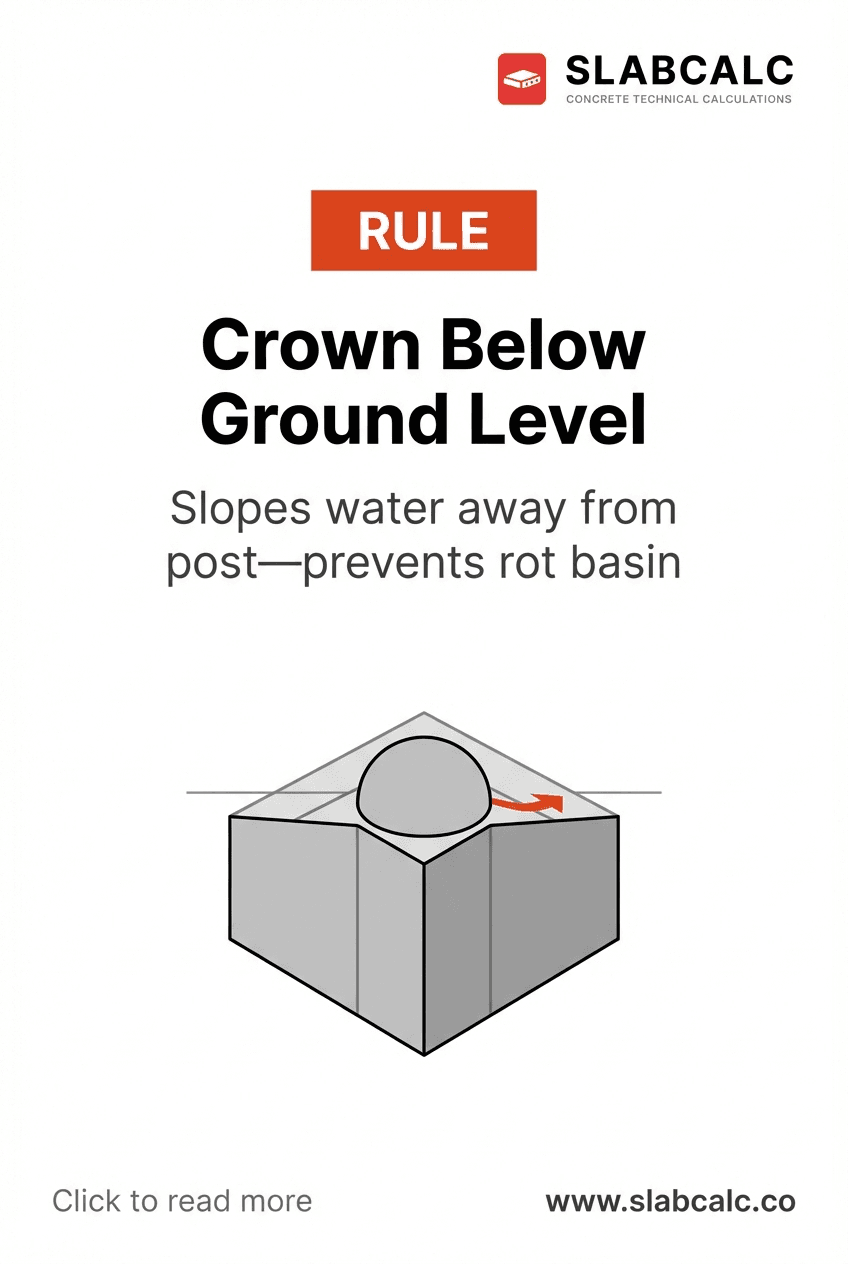
Most DIYers pour fence post concrete flat or even slightly recessed—a costly mistake. Water pools at the base, wicks into wood, and triggers rot within 5-7 years. Crowning your concrete 2-4 inches below ground level slopes water away and can extend post life by 10+ years.
The Decision Tree
If your post is pressure-treated 4x4 and you're in a humid climate (Southeast, Pacific Northwest, Midwest), then crown is essential—concrete pooling water accelerates decay even through treatment.
If your post is cedar or redwood (naturally rot-resistant but pricey), then crown saves you from replacing $150+ posts prematurely.
If you live in a dry climate (Southwest, high plains) with infrequent standing water, then crown matters less, but still costs nothing to do correctly.
If your fence will see years of leaf debris and shadow, creating moisture traps, then crown becomes non-negotiable.
The bottom line: Always crown, regardless of climate. It requires zero extra concrete, costs nothing, and eliminates the rot basin entirely.
Why Post-Concrete Pooling Destroys Wood
When concrete is poured flat or dips below grade, a shallow basin forms around the post. This catches rain, snow melt, and irrigation water. Even with pressure-treated wood, continuous moisture at the base saturates the grain. Decay fungi activate. Within 3-4 years, you notice soft spots near the concrete line. By year 7, the post fails at the exact interface where it bears the most load—the frost line zone.
Crowned concrete slopes water outward at a 1-2% grade, creating a natural runoff path. Water sheds away instead of settling. The post stays dry at the critical soil interface.
How to Crown Correctly
Pour your concrete 2-4 inches above the grade line. The crown doesn't need to be dramatic—a gentle slope over 12 inches radius is enough. If your hole is 10 inches diameter, slope the concrete surface up to a 1-inch peak at the post center.
Use a finishing trowel in a circular motion as the concrete begins to set (45-60 minutes after pour). You're aiming for a subtle dome, not a pyramid. Overkill crowns look poor and can shed concrete chunks in freeze-thaw cycles.
Measurement check: Mark your post 4 inches above grade before pouring. Pour concrete to that line, then trowel the final 2 inches into a crown. This gives you the visual guarantee that water will drain.
The Overlooked Edge Case
If you live where frost heave is extreme (Minnesota, upstate New York, Canada), a too-tall crown can create stress as the post shifts with ground movement. Keep your crown moderate—2 inches maximum. The modest slope is enough; you don't need it to look like a volcano top.
Final Recommendation
Crown every single post, every time. It's the one detail that separates a 15-year fence from a 25-year fence. You'll already be mixing concrete and setting posts—the crown takes 30 seconds per hole and zero extra material. Your future self will thank you when your fence is still solid while your neighbor replaces theirs.