
Place 3-4 Inches Gravel First
The Code Requirement
The ACI 332 (Residential Code) and most state IRC building codes explicitly mandate a drainage layer beneath concrete footings. Specifically, Section R401.4.1 requires a minimum 4-inch gravel or crushed stone base for any post hole that will experience water exposure. Many local jurisdictions enforce this as a frost protection and drainage requirement before concrete is poured.
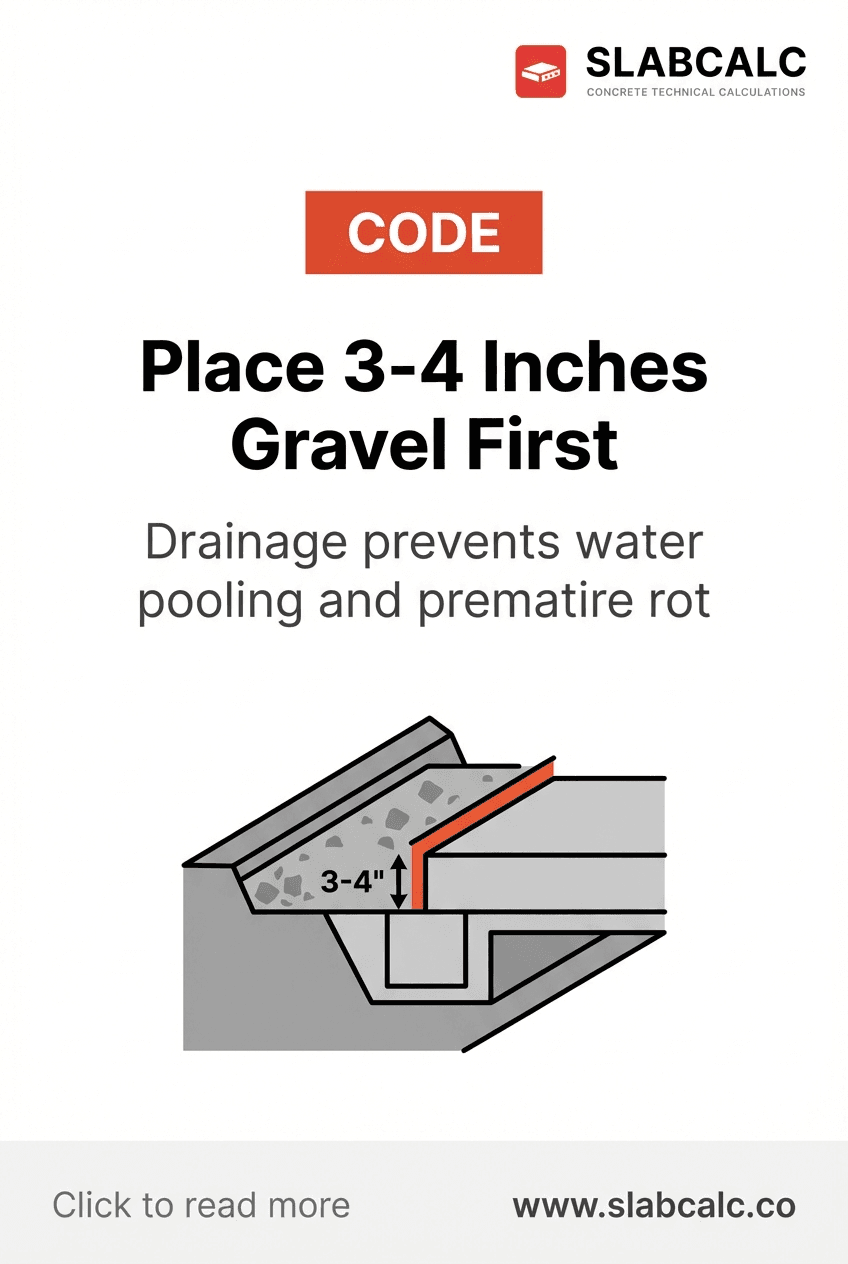
In plain language: you must place 3–4 inches of coarse gravel (crushed stone, ¾-inch to 1½-inch diameter) at the bottom of your post hole before pouring concrete. This is not optional if you want your fence to last 15+ years.
Why Drainage Matters for Fence Posts
Water is the enemy of concrete longevity and wood fence posts. Without a gravel base, rainwater and groundwater collect directly under your concrete footing. Over months and years, this standing water:
- Accelerates concrete degradation through freeze-thaw cycles (water expands when frozen, cracking the concrete from the inside)
- Promotes rot in wooden posts by wicking moisture up into the wood where it meets the concrete
- Causes frost heave in cold climates, lifting the post upward as soil expands in winter
- Weakens the concrete bond at the critical base, where shear stress is highest
A gravel layer creates an air gap and allows water to drain away laterally instead of pooling directly under the footing. Even in mild climates, this extends post life from 10–12 years to 20+ years.
How to Install the Gravel Base Correctly
Step 1: Dig your post hole to the required depth (typically 24–36 inches for an 8-foot residential fence post, depending on your frost line).
Step 2: Pour 3–4 inches of coarse gravel (crushed stone, not sand or topsoil) into the bottom of the hole.
Step 3: Tamp the gravel lightly with a hand tamper or shovel handle to compact it—do not over-compact, as some void space is essential for drainage.
Step 4: Place your 4x4 or 6x6 post in the center, keeping it plumb with a level.
Step 5: Pour concrete around the post, filling the hole to grade level or slightly above.
Common Violations
Most DIYers skip the gravel layer entirely, assuming concrete alone provides adequate drainage. Others use sand or garden soil instead of coarse gravel—both trap water instead of shedding it.
Inspectors flag this violation frequently in residential fence permits. If your project requires a building permit (check your local jurisdiction), a missing gravel base will fail inspection and require costly remediation.
The Small Investment, Big Payoff
A bag of crushed gravel costs $3–$5 and covers roughly 2–3 post holes. For a 20-post fence, you'll spend $30–$50 on material—less than the cost of replacing two rotted posts years down the line.
Bottom line: The 3-4 inch gravel base is not a contractor shortcut; it's a building code requirement that directly prevents water damage, frost heave, and premature post failure. Include it in every fence post hole you dig.