
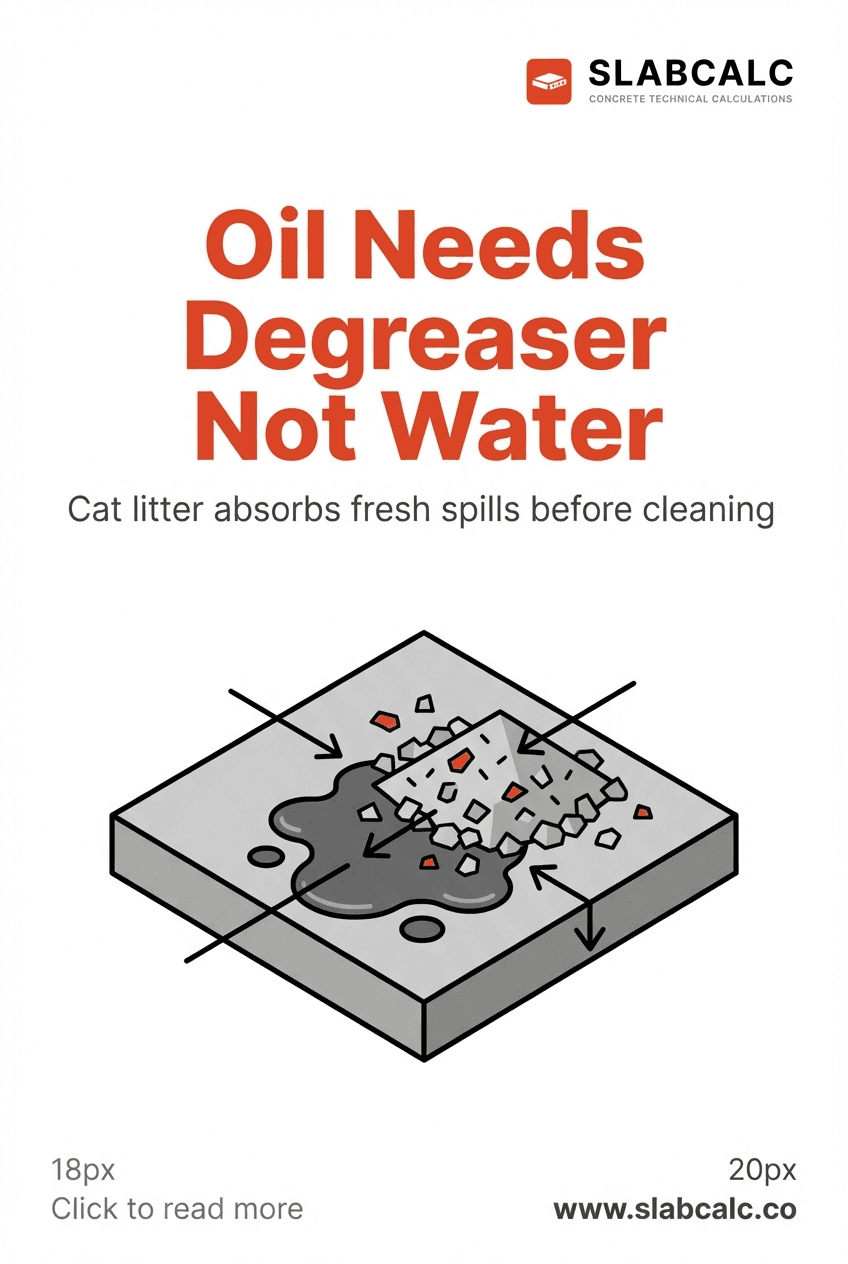
Oil Needs Degreaser Not Water
Why Water Won't Cut It
Water and oil don't mix—that's basic chemistry, but it's critical for concrete cleanup. When you spray water on an oil-stained slab, the water beads up and rolls away, leaving the oil molecules behind embedded in the concrete's pores. Worse, water can actually push fresh oil deeper into the surface, making the stain larger and harder to remove later. A concrete degreaser works because it contains surfactants—chemical compounds that break the bonds between oil and concrete, allowing you to actually lift the contamination away.
Material Specification: Concrete Degreaser
Type: Alkaline-based or citrus-based degreaser (pH 8–12)
Best for: Fresh and set-in oil stains on driveways, garage floors, and commercial slabs
Cost: $15–$45 per gallon (covers 100–200 sq ft depending on stain severity)
Application: Spray or brush onto stain, let sit 15–30 minutes, scrub with stiff brush, rinse thoroughly
Avoid generic dish soap—it's too weak for concrete oil penetration. Industrial-strength degreasers outperform budget options because they contain higher surfactant concentrations (typically 5–15% vs. 1–3% in lighter cleaners).
Fresh Spill Protocol: Cat Litter First
The moment oil hits your concrete, grab cat litter—not sand or sawdust. Cat litter's absorption rate is superior because it's designed to trap liquids quickly. Pour a generous layer (½ to 1 inch thick) over the entire spill and let it sit for 2–4 hours. For severe spills, replace the saturated litter halfway through. This step removes 60–70% of the oil before you even apply degreaser, cutting cleanup time and chemical costs significantly.
Dispose of used cat litter in a sealed bag—never let it wash into storm drains.
Set-In Stains: The Degreaser Method
Step 1: Sweep away debris and loose dirt.
Step 2: Apply degreaser generously. Soak older stains (more than 1 week old) for 30 minutes.
Step 3: Scrub with a stiff-bristled brush using firm, circular motions for 3–5 minutes.
Step 4: Pressure wash at 2500–3000 PSI to rinse away the degreaser and loosened oil.
Step 5: Allow 24 hours to dry completely before inspecting results.
For stubborn stains, repeat steps 2–4 or try a poultice—mix degreaser with sawdust or diatomaceous earth to create a paste, apply it thickly, let it sit overnight, then scrub and rinse.
Sourcing Tips
Home Depot, Lowe's, and Amazon stock brands like Oil Eater and ACT concrete degreaser for quick delivery. For heavy-duty jobs or large areas (over 500 sq ft), buy concentrate formulas—they cost 40% less per square foot than ready-to-spray bottles.
Always wear nitrile gloves and ensure ventilation when applying degreasers. Oil stains reappear less often on sealed concrete—consider applying a water-based acrylic sealer after successful removal to protect your investment.