
3-12 MONTHS
Why 3-12 Months Matters
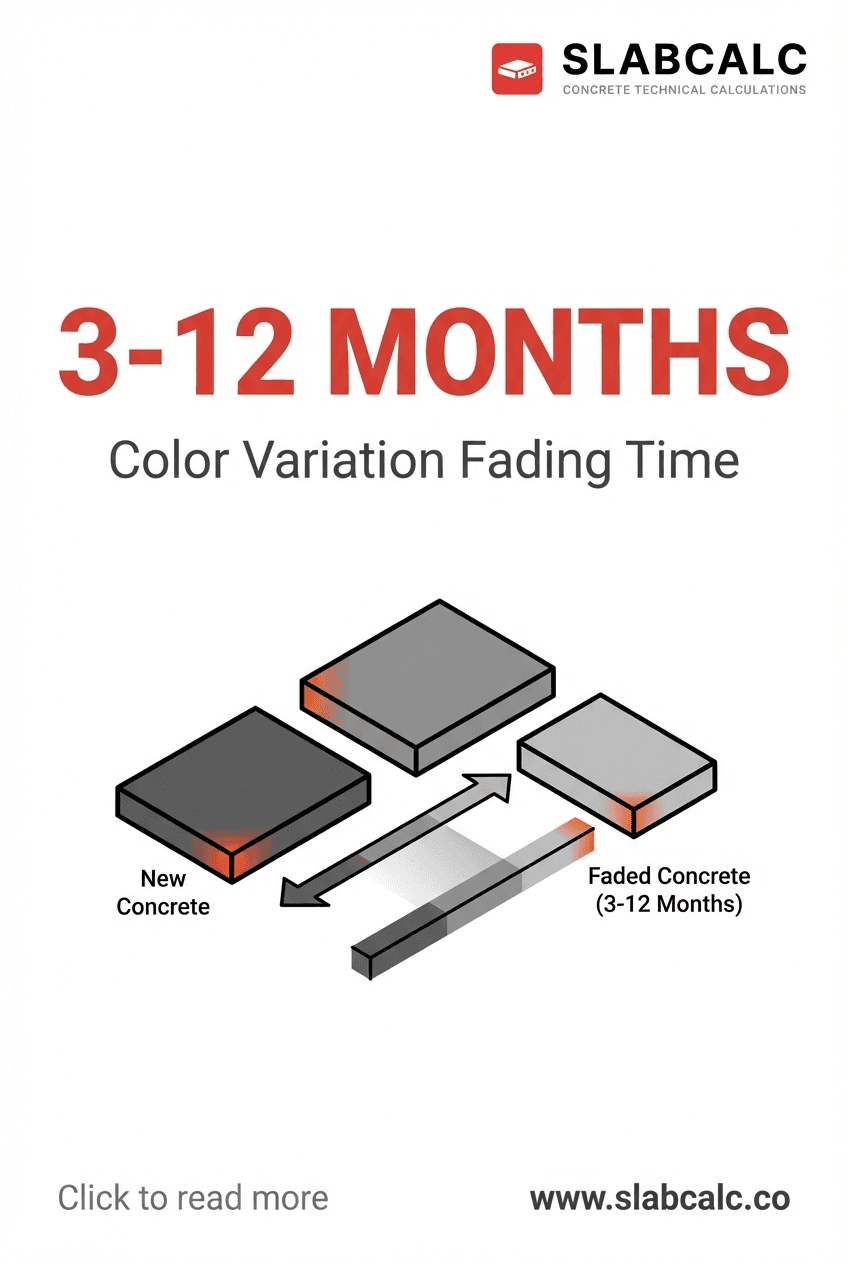
New concrete won't look uniform in color right away—and that's normal. Most concrete discoloration fades within 3 to 12 months of installation. Understanding this timeline prevents unnecessary panic and costly repairs on a slab that's simply going through its natural curing phase.
During this window, your concrete is completing hydration (the chemical process that hardens it). Moisture evaporates unevenly, salts migrate to the surface, and the color stabilizes as the slab fully cures. Knowing this happens helps you distinguish between temporary color variation and genuine problems requiring intervention.
When the 3-12 Month Rule Applies
This timeline is most relevant for efflorescence—the white, powdery deposits that appear on new concrete. Efflorescence occurs because water moves through the slab, dissolving calcium salts from the concrete mix. As water evaporates at the surface, it leaves white crystalline deposits behind.
The good news: efflorescence is purely cosmetic and almost always disappears naturally. You may see it within the first month and watch it fade over the following months. No structural damage occurs, and the slab remains sound.
This rule also applies to minor discoloration patterns from:
- Uneven moisture evaporation
- Dust settling during curing
- Inconsistent weather during placement
- Normal variations in cement color from batch to batch
When It Doesn't Apply
Some stains won't fade on their own and require action:
Rust stains from metal furniture, fertilizer, or corroding rebar don't disappear with time. If orange or reddish-brown stains appear and persist beyond 3 months, treat them with oxalic acid-based rust removers or commercial degreasers.
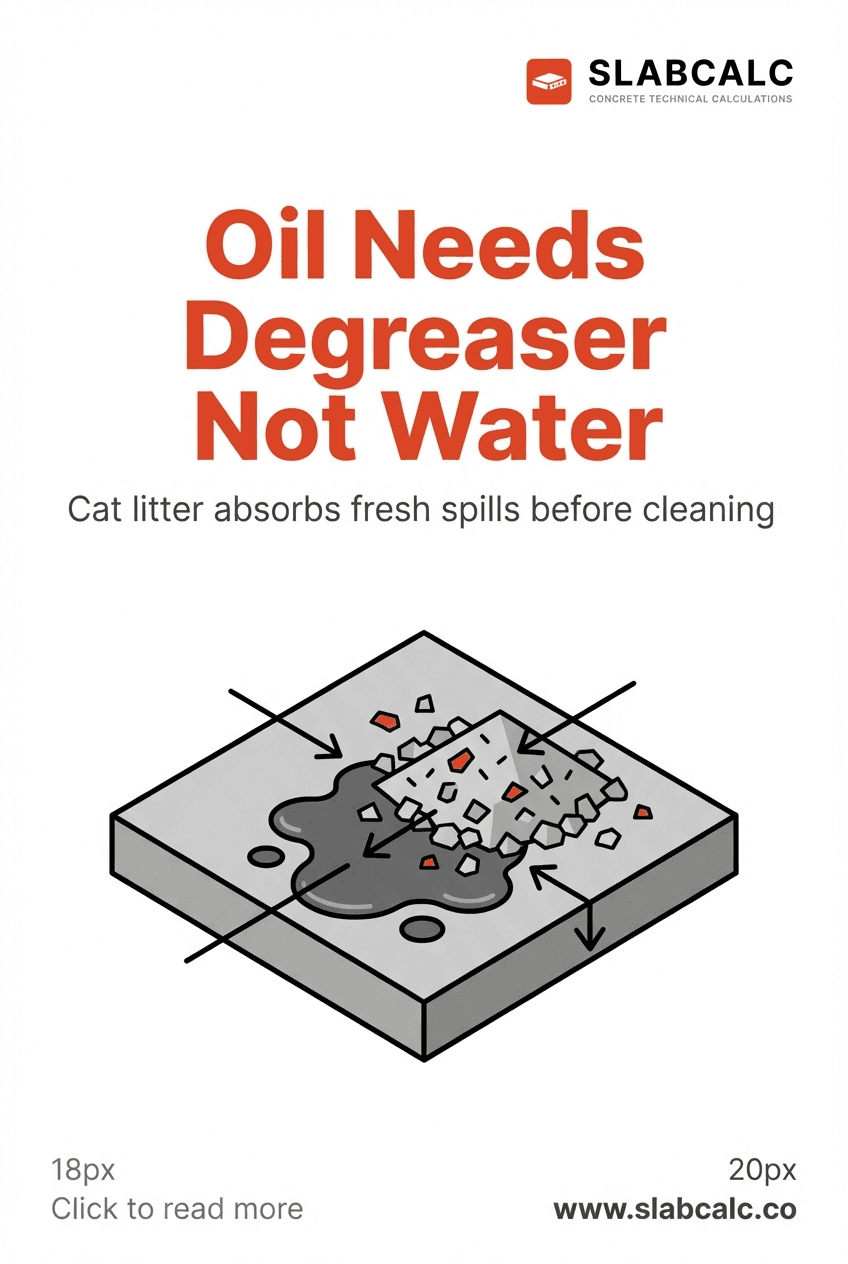
Oil and grease stains won't fade naturally—they require degreasing agents and scrubbing. Fresh stains respond better than stains that have had months to penetrate the surface.
Organic stains from leaves, mold, or algae indicate ongoing moisture or shade problems. These require removal plus prevention (better drainage, airflow, or sealing).
Severe discoloration in streaks or patches that appear after the 3-month mark may signal rebar corrosion, water infiltration, or structural issues needing professional evaluation.
Practical Steps During the Window
Don't clean or seal aggressively during the first 3 months. Let your concrete finish curing naturally. If you must clean:
- Use only water and a stiff brush for the first month
- Avoid harsh acids or sealers until month 3
- Never pressure wash below 3,000 PSI in the first 2 months—this can damage immature concrete
After month 3, if efflorescence persists, apply a concrete sealer to prevent future salt migration. A quality sealer costs $0.50–$1.50 per square foot and extends your concrete's life significantly.
Track your slab's appearance monthly. Document photos help you identify whether discoloration is fading (normal) or worsening (needs treatment). By month 6, your concrete should show its true, final color.