

Use Mixed Concrete Fast
The 10-15 Minute Rule
Mixed concrete has a hard deadline: use it within 10 to 15 minutes of combining water and dry mix. This is not a suggestion—it's a material specification that directly affects your slab's strength and workability. Once you start mixing, your clock is running. Delay means poor consolidation, weaker strength, and a frustrating pour.
Why the rush? Concrete hydration begins immediately when water contacts cement particles. As hydration progresses, the mixture stiffens and becomes harder to place, finish, and consolidate into forms. Pour too late, and you'll have pockets of air, weak spots, and a surface that's difficult to level. The difference between pouring at minute 5 and minute 20 can reduce final strength by 5-15%.
How Heat and Humidity Shrink Your Window
Temperature is concrete's enemy during mixing and placement. In hot weather (above 85°F), your working time collapses to 20-30 minutes total—and that includes mixing time. Humidity below 50% accelerates evaporation and set time even further.
Here's what happens:
- Hot, dry conditions: Cement hydrates faster. Slump (consistency) drops noticeably within 10 minutes.
- Cool conditions (50-70°F): You gain 30-45 minutes of workability.
- Cold weather (below 40°F): Hydration slows; you get 1-2 hours, but strength development is delayed overall.
On a 90°F summer day, mixing in a wheelbarrow and walking 30 feet to your forms might push you past the window. Plan accordingly.
Pre-Pour Checklist: Beat the Clock
Preparation is everything. Before you mix a single bag:
Forms and site ready?
- Forms secured and level
- Strike-off board in place
- Subgrade compacted and damp
- No obstructions between mixer and pour zone
Team assembled?
- At least two people (one mixing, one placing/finishing)
- Tools staged: shovels, rakes, screeds, floats
- Water source nearby (for adjusting mix if needed)
Weather conditions noted?
- Temperature, humidity, wind speed
- Shade available? (cooling slows set)
- Time of day (early morning pours in summer are smarter)
Practical Mixing Strategy
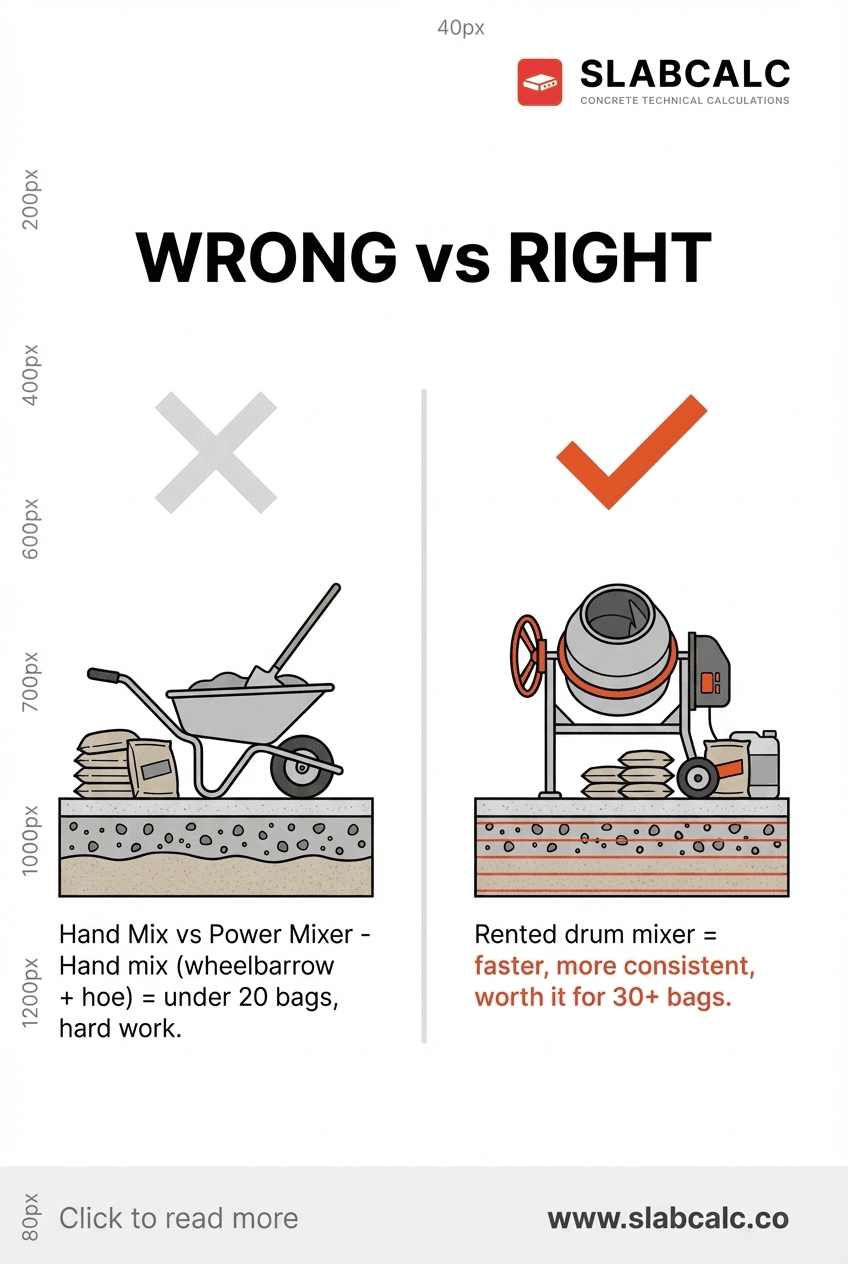
For small residential slabs (under 50 sq. ft.), hand-mixing in a wheelbarrow is practical if you work quickly.
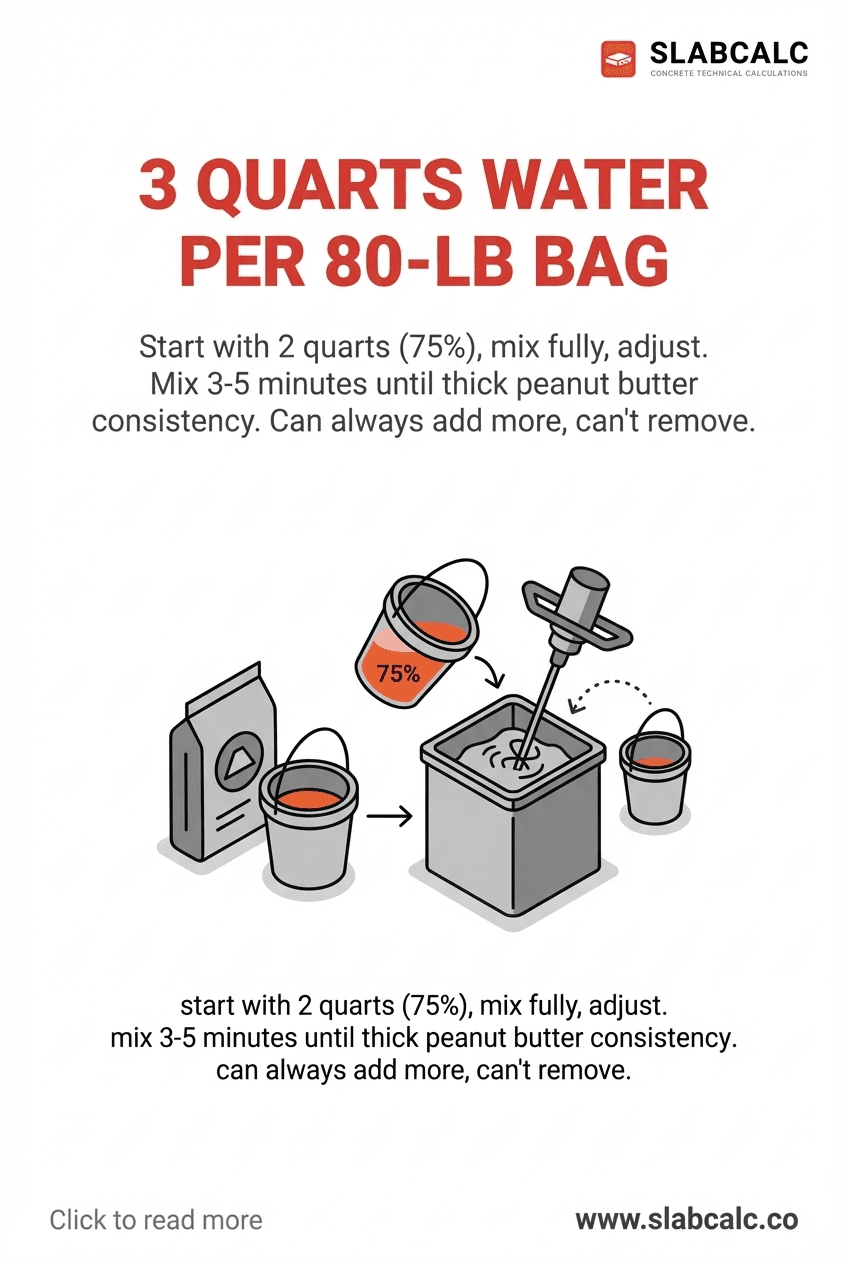
- Measure water first: Use a 1-gallon bucket to control the water-to-cement ratio precisely. This is non-negotiable—too much water weakens the final slab by 10-40%.
- Mix location: Position your wheelbarrow as close to the pour site as safely possible. Every 10 feet adds 30-60 seconds to your timeline.
- Single batch discipline: Mix only enough for one pour cycle (usually one 80-lb bag at a time for a solo builder). Mixing multiple bags and stockpiling them defeats the purpose.
- Pour continuously: Don't let mixed concrete sit in the wheelbarrow. Begin placement immediately after the consistency test confirms proper slump.
When to Call a Ready-Mix Truck
For slabs larger than 100 sq. ft., hand-mixing is impractical and risky. Ready-mix concrete is delivered at proper temperature and consistency, and the truck holds the batch until you're ready. You eliminate the scramble and gain consistent quality. Cost runs $150-300 per cubic yard, plus a small pump or labor fee, but it's worth the guarantee that your concrete won't stiffen before placement.
Bottom line: Respect the 10-15 minute window. Prep thoroughly, mix fresh, and pour fast. Your slab's strength depends on it.