
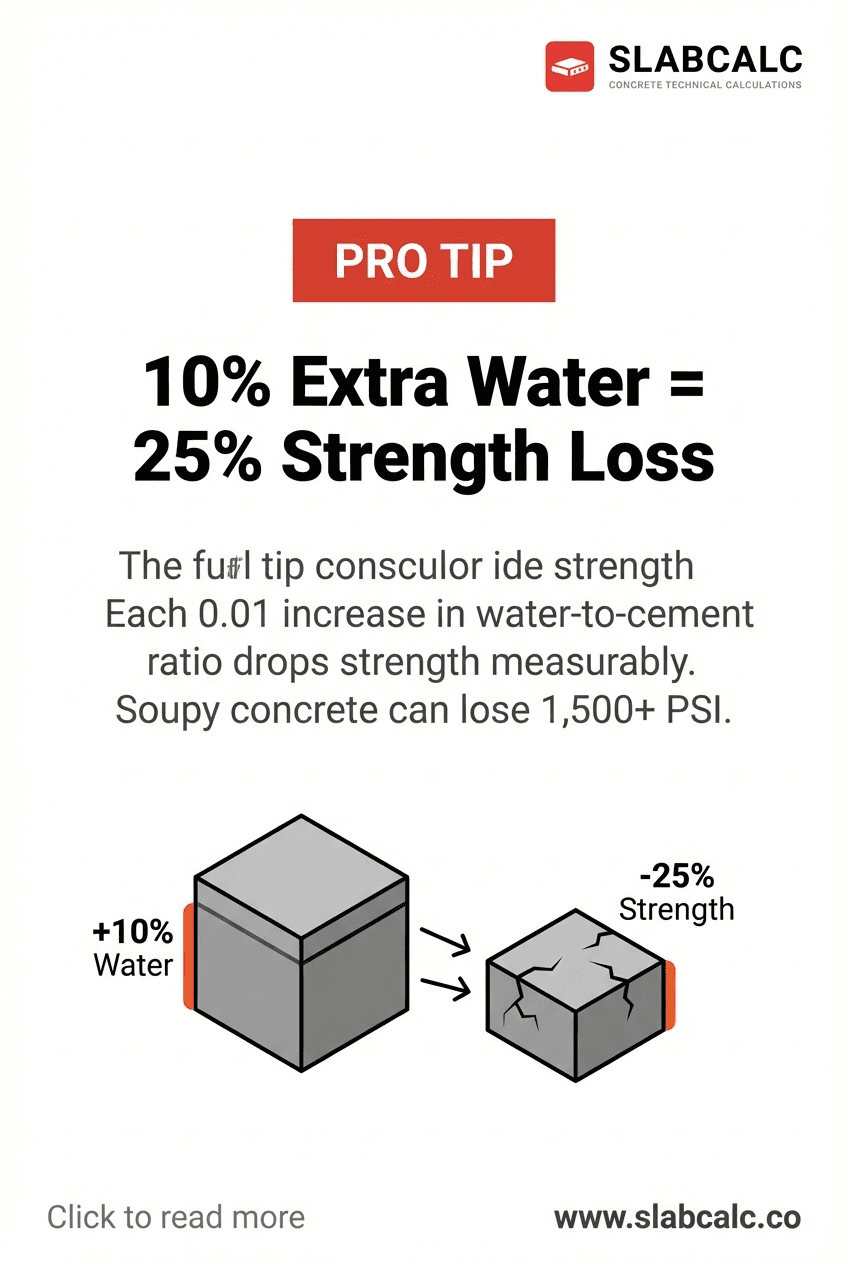
10% Extra Water = 25% Strength Loss
The Mistake Everyone Makes
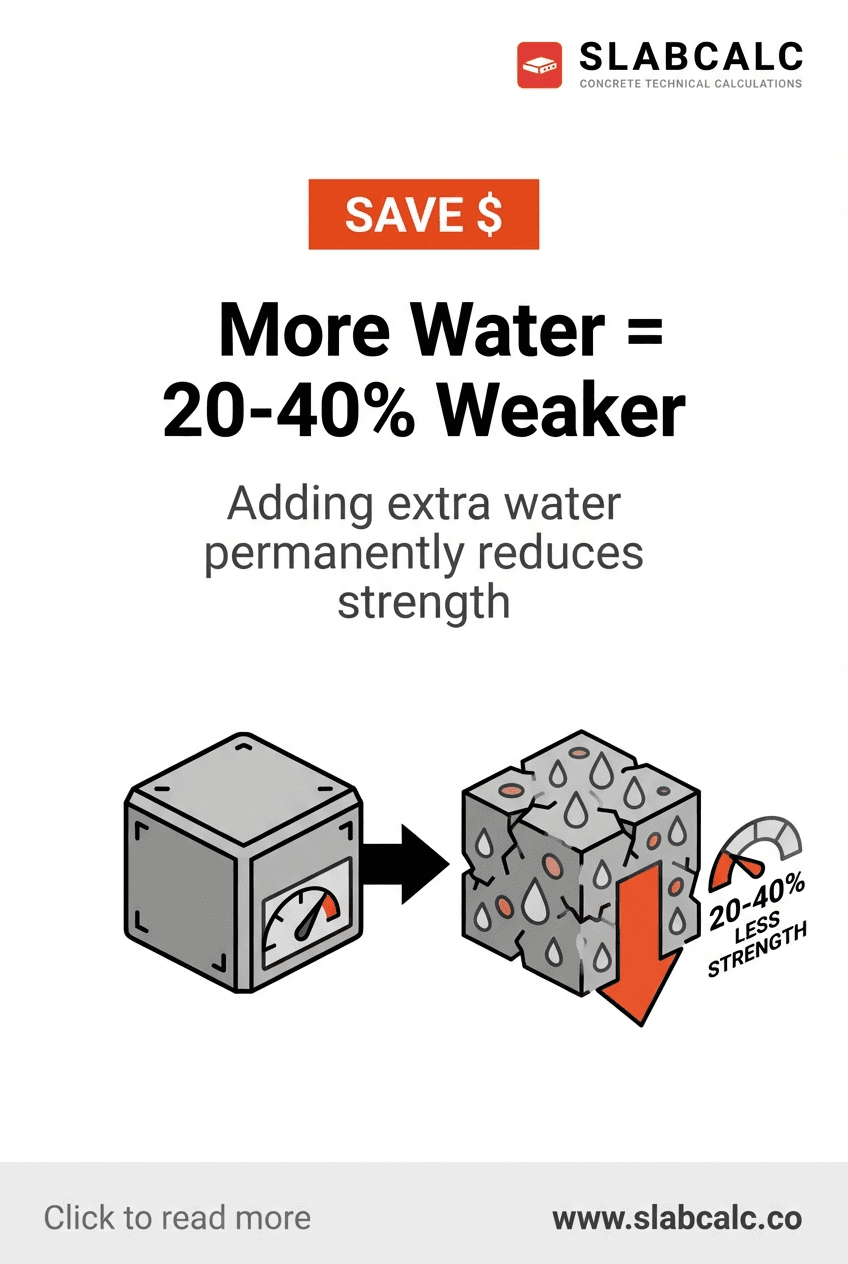
You've mixed concrete before. The bag says 3.8 quarts of water for an 80-lb bag. So you dump in 4 quarts to be safe, or you add extra because the mix looks a little stiff. It feels easier to work with, spreads smoother, and finishes faster. But here's what's actually happening: every 0.01 increase in the water-to-cement ratio drops compressive strength by roughly 80–100 PSI. Add just 10% extra water, and you're looking at a 25% strength loss—potentially dropping from 4,000 PSI to 3,000 PSI or lower.
For a driveway or patio that needs to last 20 years without spalling or cracking, that's the difference between a solid pour and one that fails prematurely.
Why Water Destroys Strength
Concrete doesn't set because water evaporates. It sets through hydration—a chemical reaction between cement and water. Extra water seems harmless, but it creates excess voids in the concrete matrix. More water = more space left behind when hydration completes. Those voids become weak points where cracks start and freeze-thaw damage accelerates.
Professional contractors understand this so well they'll reject a batch that's even slightly too wet. A soupy mix might lose 1,500+ PSI compared to the proper consistency—that's the difference between structural-grade concrete and something that crumbles under stress.
The Pro Technique: Start Low, Add Slow
Professionals follow a simple ritual that takes 10 minutes instead of rushing it in 2 minutes:
Step 1: Calculate your actual starting water. For an 80-lb standard Quikrete bag, the label says 3.8 quarts. Start with 3 quarts instead—that's 75% of the target.
Step 2: Add all the dry mix. Blend for 2–3 minutes to fully incorporate the dry cement and aggregate. Don't judge the consistency yet.
Step 3: Add remaining water in quarter-cup splashes. Mix for 30 seconds between each addition. You're looking for a consistency that holds together but isn't mushy.
Step 4: Test with a trowel. The concrete should clump slightly when you scoop it. If you can see water pooling on top, you've gone too far.
This method accounts for humidity, ground moisture, aggregate dampness, and temperature—all variables that shift how much actual water the mix needs.
The Right Consistency Matters
Proper concrete should look like thick peanut butter, not pancake batter. It should hold a footprint for 1–2 seconds without flowing. If you can squeeze water from a handful, it's too wet. If it won't flow into corners without vibrating, it might be slightly too dry—but that's better than wet.
One batch of over-watered concrete on a 500-square-foot patio means years of regret. Follow the professional ratio discipline, and your pour will outlast your expectations.