
Pour When 50-60°F
The Temperature Decision Tree
If air temperature is 50–60°F → Pour concrete normally. This is your ideal window.
If temperature is 60–85°F → Pour, but increase water management (more frequent misting, shade cloth). Concrete sets faster; evaporation accelerates.
If temperature drops below 50°F → Delay the pour or use additives. Cold slows hydration dangerously.
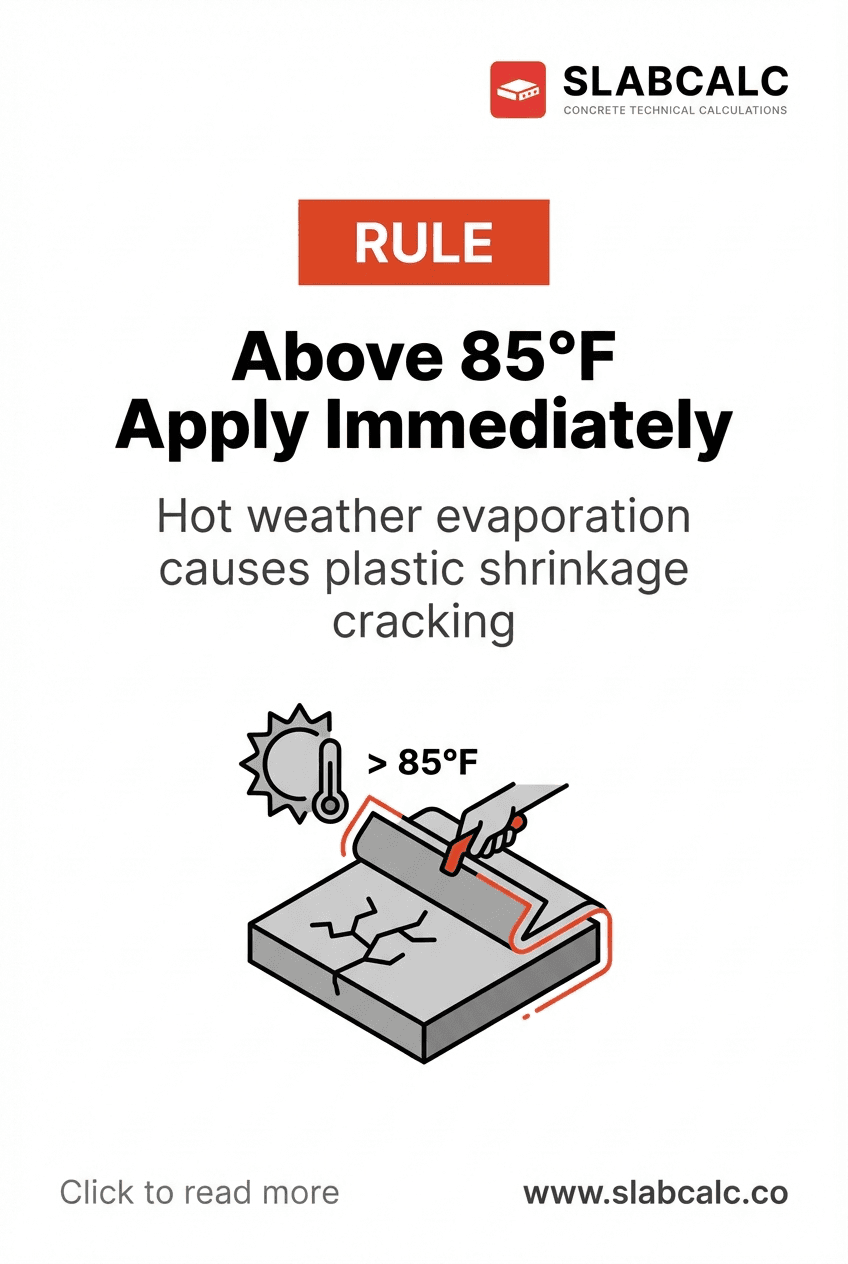
If temperature exceeds 85°F → Pour early morning only, use ice in the mix, and plan aggressive curing. Heat causes rapid moisture loss and weak surfaces.
Why 50-60°F Works Best
Concrete strength develops through a chemical reaction called hydration. This reaction works best in a narrow temperature band—roughly 50-60°F—where water molecules activate cement particles at an optimal rate. Outside this range, hydration either stalls or accelerates unpredictably.
At 50-60°F, you get:
- Slower, controlled curing (7-10 days to usable strength)
- Even strength development throughout the slab
- Minimal surface cracking from rapid moisture loss
- Better workability while finishing
Below 50°F, hydration nearly stops. At 40°F, strength development slows by 50%. At freezing, concrete won't cure properly for weeks—and frost can shatter weak surfaces before full strength develops.
Above 85°F, water evaporates so rapidly that concrete dries instead of cures. The surface hardens while the interior remains soft, creating a weak, dust-prone finish. You'll also pay extra for cooling admixtures and labor to mist the surface constantly.
Spring and Fall: Your Best Windows
Spring (April–May): Daytime temperatures reach 60-70°F, nighttime holds at 50-55°F. Ideal. Rainfall is common but manageable.
Early Fall (September–October): Same conditions in reverse. Consistent cool nights prevent thermal cracking from day/night temperature swings.
Avoid Summer (June–August): Even "cool" 75°F days demand active cooling strategies. A 4-inch slab in 80°F heat can lose 1-2 inches of moisture per week.
Avoid Late Fall/Winter: Variable freezing risk. A pour at 45°F that drops to 32°F overnight can develop internal stress before initial set.
The Overlooked Factor: Overnight Lows
Many DIYers focus on daytime temperature and miss the critical detail: concrete needs 48 hours of consistent temperatures above 50°F to develop usable strength.
Check the forecast for the full week, not just pour day. A single freezing night within 72 hours of pouring can compromise strength by 20-30% and cause surface damage.
The Money Truth
Pouring outside the 50-60°F window costs more. Winter pours require heated enclosures and curing blankets ($200-500). Summer pours need water trucks, ice additives, and shading ($150-400). Spring and fall pours need minimal intervention.
Bottom line: Pick a mild week in April or September. Check the 10-day forecast. Avoid extremes. Your slab will cure stronger, faster, and cheaper.