
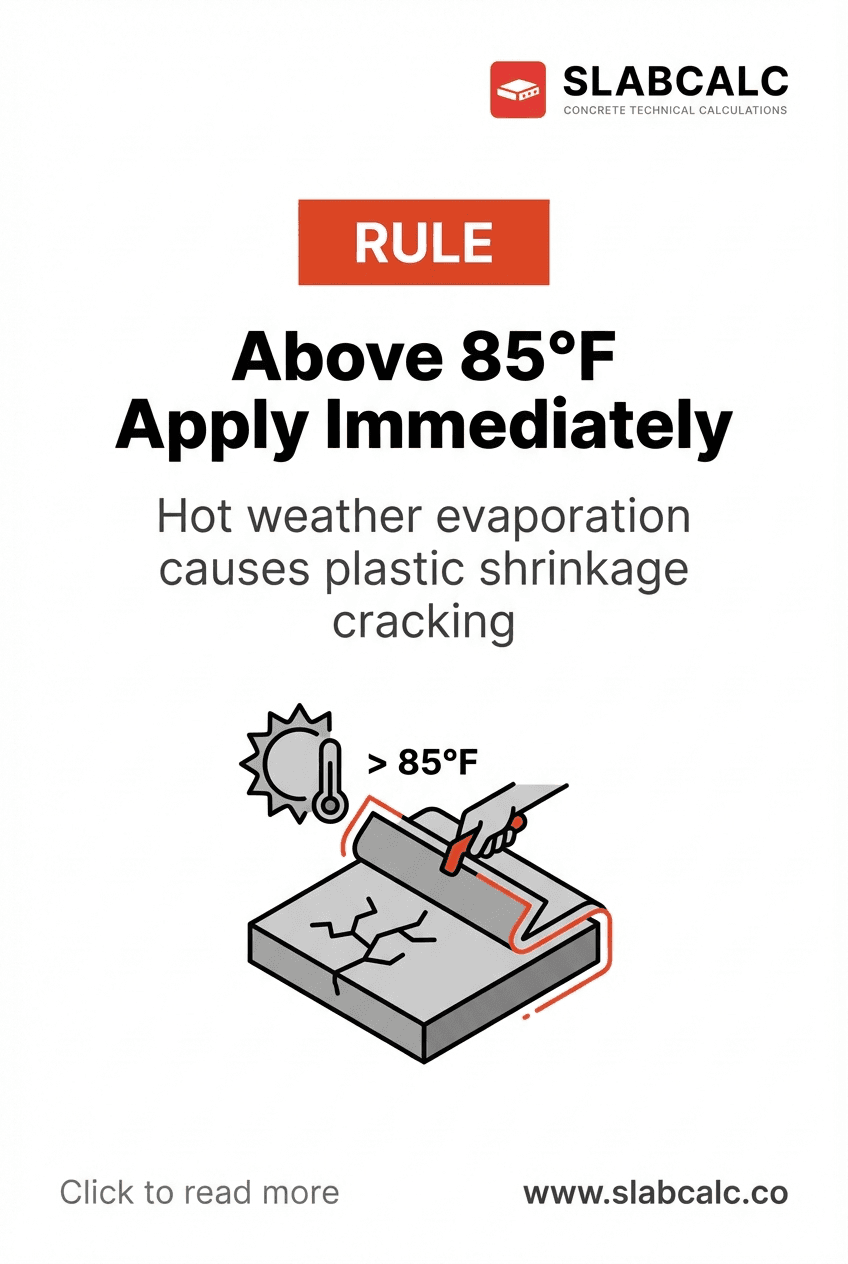
Above 85°F Apply Immediately
The 85°F Rule: When Temperature Becomes Your Enemy
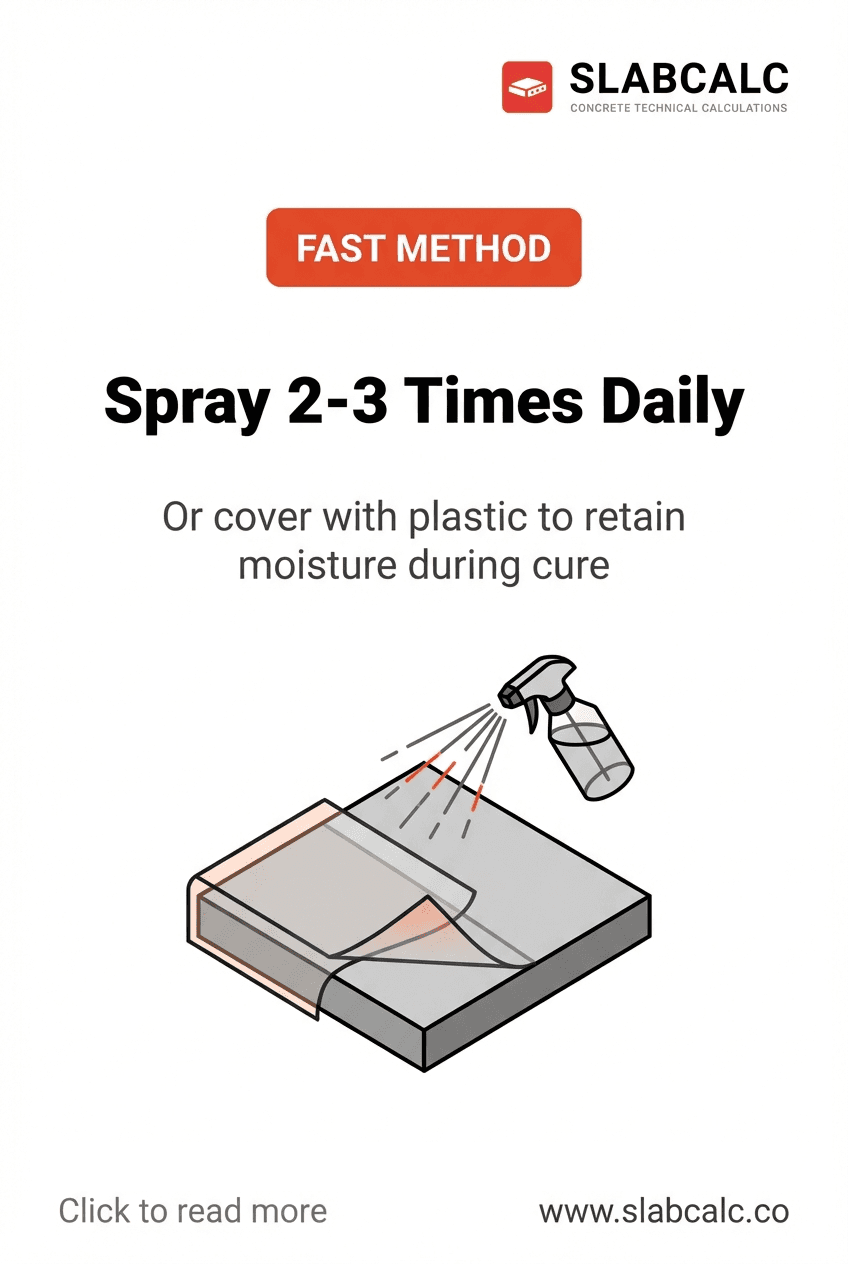
If ambient temperature is above 85°F then apply your curing method within 30 minutes of finishing. If temperature will exceed 95°F then apply curing compound or wet covering immediately—before the concrete is fully set. If you cannot begin curing within 1 hour then postpone the pour to cooler conditions or use accelerated curing compound designed for hot weather.
This isn't overcautious. At 85°F and above, surface evaporation outpaces water migration from below, creating a moisture gradient that the concrete cannot overcome through normal hydration. The top 1–2 inches dry out while the interior remains plastic, generating internal tensile stress that ruptures the surface into random cracks within hours or days. These aren't cosmetic—they're stress paths that invite water infiltration, spalling, and early failure.
Why Hot Weather Breaks the Rules
Concrete strength development depends on continuous hydration. Every degree above 75°F increases evaporation rate by roughly 5%. At 95°F, surface moisture loss can reach 2–3 pounds per 100 square feet per hour. A 400-square-foot residential slab can lose 800–1,200 pounds of surface water in a single 8-hour workday without active curing.
The problem compounds because hot concrete sets faster, appearing finished before it's actually strong. A mix that finishes workably in 4 hours at 72°F may become unfinishable in 2.5 hours at 90°F. Contractors and DIYers often stop working and assume the slab is ready for curing—but the concrete is still in its most vulnerable phase.
Additionally, hot pours generate higher internal temperature gradients. The top surface cools while the interior remains hot, creating differential shrinkage that pulls the surface inward. Combined with rapid evaporation, this is the perfect recipe for plastic shrinkage cracking.
Decision Tree for Hot Weather Pours
Temperature 85–89°F: Use spray-on curing compound within 1 hour. Cost is $15–$30 per 400 square feet, and effectiveness is 90–95% of design strength at 28 days.
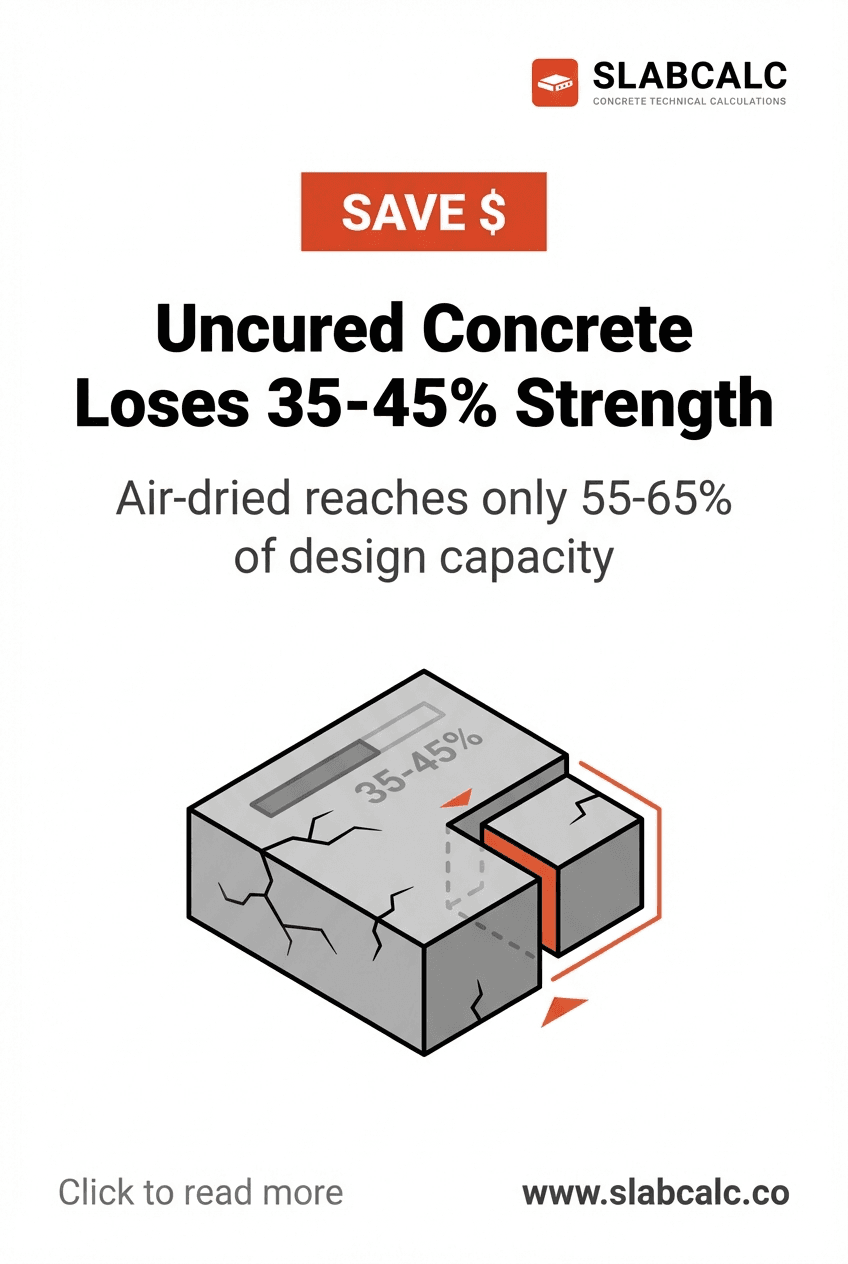
Temperature 90–94°F: Deploy wet burlap under plastic sheeting immediately after finishing. This method retains 95–100% moisture and costs $40–$80 but requires 15–20 minutes of setup. The return investment is massive: a 4,000-PSI slab reaches 3,800+ PSI at 28 days instead of dropping to 3,000–3,200 PSI with air drying.
Temperature 95°F or above: Reschedule if possible. If you must pour, use cool water (below 60°F), add ice to the mix, and apply curing compound within 15 minutes. Many contractors add water-reducing admixtures to delay set and lower internal temperature.
Night pours (65–75°F): These are your advantage. Schedule hot-weather projects for late afternoon, finishing after sunset when evaporation drops 60–70%. This single decision eliminates most plastic shrinkage risk.
The Overlooked Factor: Wind Speed
Evaporation doesn't depend only on temperature. Wind speed multiplies it. A 10-mph breeze at 80°F creates evaporation equal to still air at 95°F. Check the forecast before deciding on your curing strategy, and adjust upward if wind is predicted. Temporary windbreaks (plywood screens) cost $20–$40 and prevent thousands in repair bills.
Final Recommendation
Above 85°F, treat curing as critical infrastructure, not an afterthought. The $30–$80 you spend on materials is insurance against a $2,000–$5,000 resurface in year three. Start curing before you finish troweling.