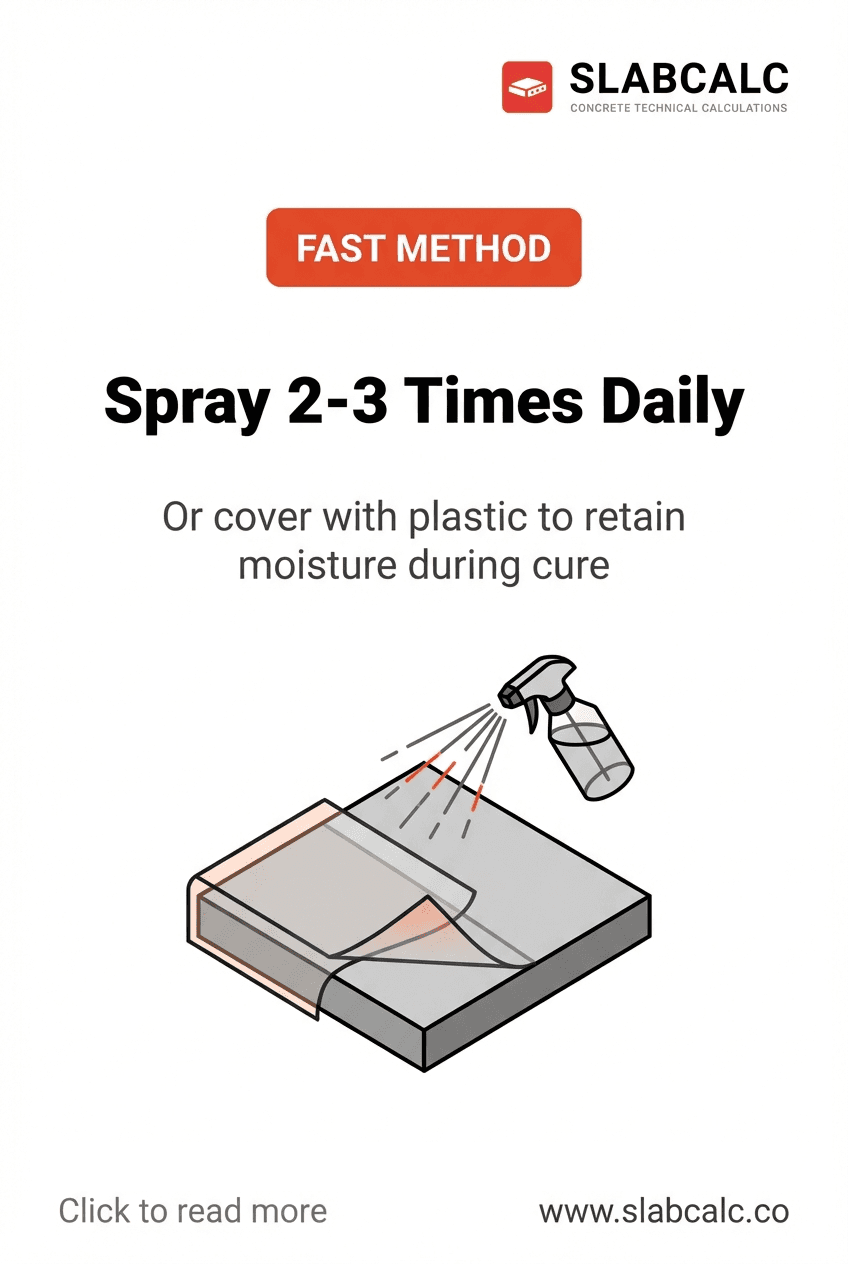
Spray 2-3 Times Daily
The Time Difference: Neglect vs. Strategy
Leaving concrete to cure without moisture management takes 7–14 days before you can walk on it safely. Active curing through spraying or plastic covering cuts that timeline to 3–5 days and produces a stronger, more durable slab.
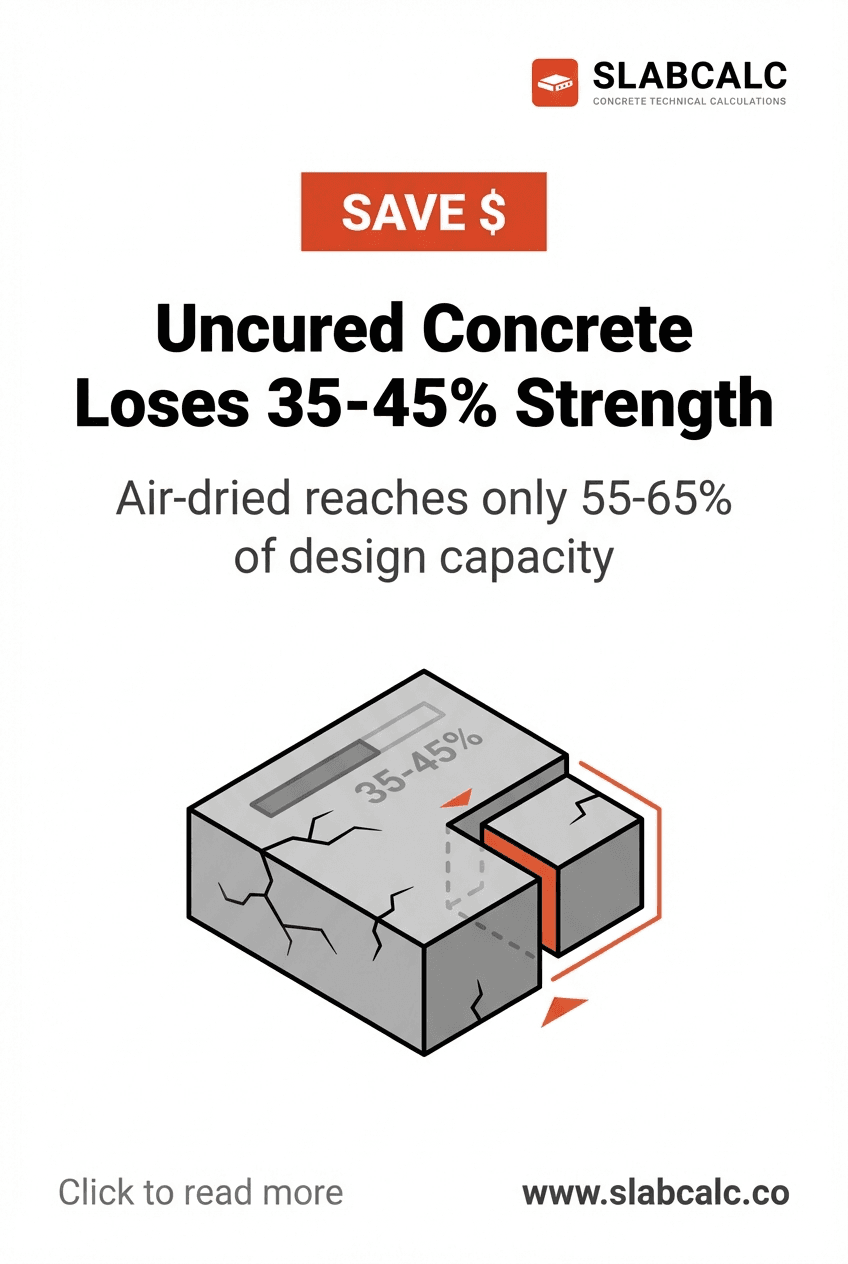
The difference comes down to hydration. Concrete needs water to complete its chemical transformation from paste to stone. When the surface dries out too quickly, the outer layer hardens while the interior is still curing, creating weak spots and surface cracking. Consistent moisture keeps the entire slab curing evenly.
The Spray Method: 2–3 Times Daily
This is the most hands-on approach and works best for smaller projects like patios or garage slabs.
How it works: Starting 24 hours after pouring, mist your slab with clean water using a garden hose on low pressure. The goal is a fine mist, not a soaking—think light rain, not heavy downpour. Spray once in early morning, once around midday, and once in late afternoon. Keep the surface consistently damp but not pooling.
Timing benchmarks:
- After 24 hours: Begin first spray cycle
- Days 2–4: Maintain 2–3 daily sprays (5–10 minutes each)
- Day 5: Reduce to once daily
- Day 7: You can typically remove foot traffic restrictions
Tools you'll need:
- Standard garden hose with adjustable nozzle ($20–$40)
- Spray attachment for mist setting ($10–$15)
- Moisture meter (optional, $15–$30) to verify dampness
Cost: Roughly $30–$85 one-time investment, plus minimal water use.
Plastic Covering: Set and Forget
For larger slabs or if your schedule is unpredictable, plastic sheeting is simpler and equally effective.
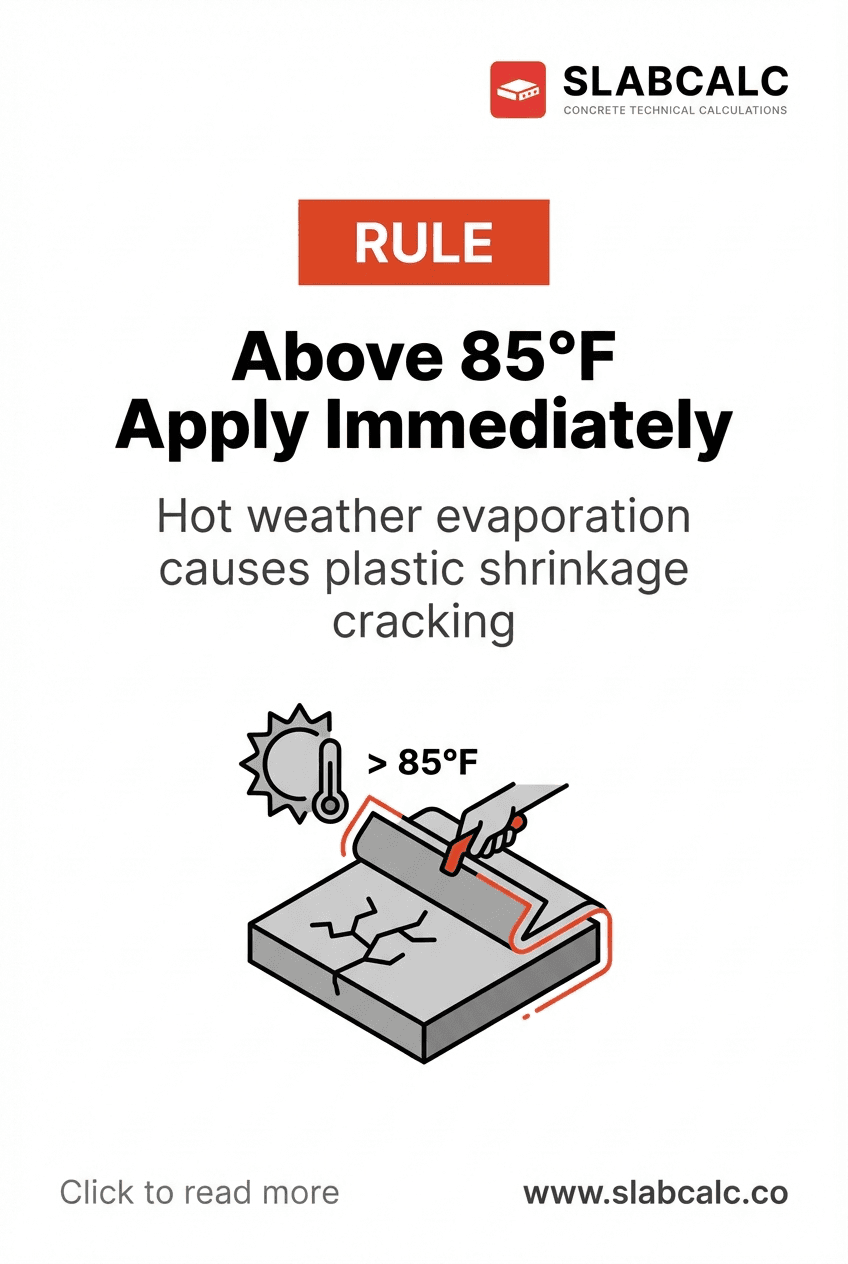
How it works: After 24 hours, cover your entire slab with 6-mil clear polyethylene plastic sheeting. Weight down the edges with concrete blocks, bricks, or soil to prevent wind from lifting it. The plastic creates a moisture barrier, allowing the concrete to retain its internal water and cure slower but more uniformly.
Timing benchmarks:
- After 24 hours: Install plastic cover completely
- Days 2–7: Leave undisturbed (plastic does the work)
- Day 7: Remove plastic and allow 24 hours of air drying before foot traffic
Tools you'll need:
- 6-mil polyethylene sheeting ($20–$50 for a standard driveway)
- Concrete blocks or bricks for weights (reusable)
- Duct tape for sealing edges ($5–$10)
Cost: $25–$60 one-time, zero ongoing effort.
Which Should You Choose?
Choose spraying if: You're home during the week, have a small slab, and prefer hands-on control. You'll achieve slightly faster strength gain.
Choose plastic if: You work long hours, have a larger project, or want a truly passive solution. Results are equally strong with zero daily effort.
Both methods beat neglect by years in terms of durability and appearance. Your concrete will thank you with fewer cracks, better color consistency, and stronger compressive strength—worth every few minutes of spraying or dollars spent on plastic.