
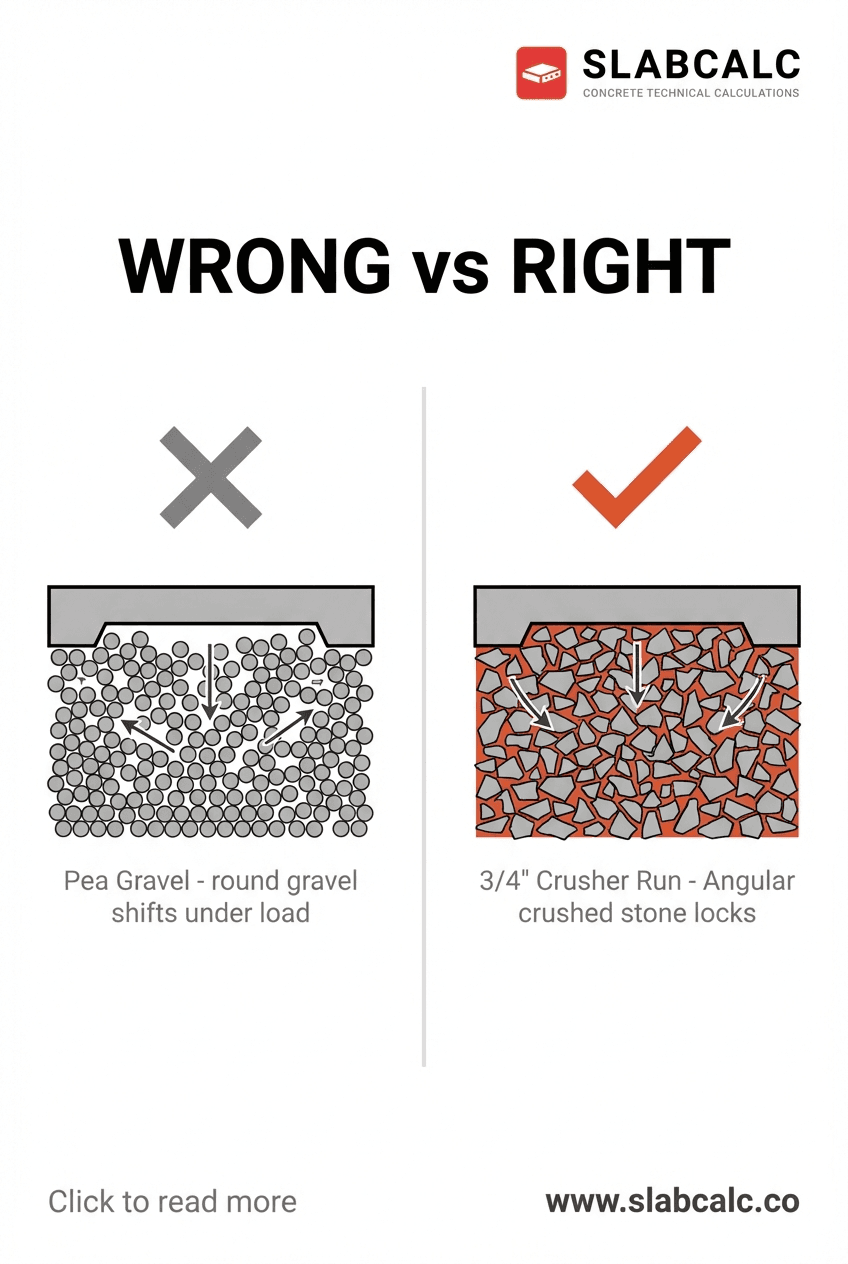
3/4 Inch Crusher Run vs Pea Gravel
The Worst-Case Scenario
Your slab looked perfect for the first year. Then cracks appeared—diagonal, spreading, getting worse every season. By year three, sections are heaving and settling unevenly. The culprit? Pea gravel shifting under the weight of the concrete. Fixing this costs $2,000–$5,000 to remove and re-pour. This mistake is 100% preventable.
Why Pea Gravel Fails
Pea gravel and crusher run look similar at first glance, but their behavior under load is completely different.
Pea gravel consists of smooth, round stones—typically 3/8" to 3/4" in diameter. When a 5-ton concrete slab sits on top, these round particles roll past each other like ball bearings. There's nothing to lock them in place. Over time, freeze-thaw cycles, foot traffic, and vehicle weight compact the gravel unevenly, creating voids. The concrete slab settles into these gaps, causing cracks, edge breaks, and water infiltration.
3/4" crusher run (also called crushed stone, recycled asphalt, or quarry process) has sharp, angular edges. These jagged edges interlock mechanically when compacted. The material creates a rigid, load-bearing base that doesn't shift under pressure. Crusher run is specifically engineered for this job—quarried, crushed, and sized for maximum compaction.
The difference in performance is dramatic: pea gravel compacts to roughly 85% density. Crusher run reaches 95%+ density when properly tamped.
How to Spot This Problem Early
Before pouring concrete:
- Run your hand over the base material. Crusher run feels rough and catches your skin. Pea gravel is smooth.
- Test compaction: walk the prepared base in your work boots. Your foot should not sink noticeably. If it does, the material isn't compacting properly—it's likely pea gravel.
- Check the invoice. Verify you ordered "crusher run," "quarry process," or "recycled asphalt"—not "pea gravel" or "marble chips."
After pouring (first 12 months):
- Inspect for hairline cracks in a starburst or alligator pattern near the slab edges.
- Look for minor settlement where the slab meets the perimeter forms.
- Check for water pooling in low spots after rain—a sign the base is settling unevenly.
Prevention Checklist
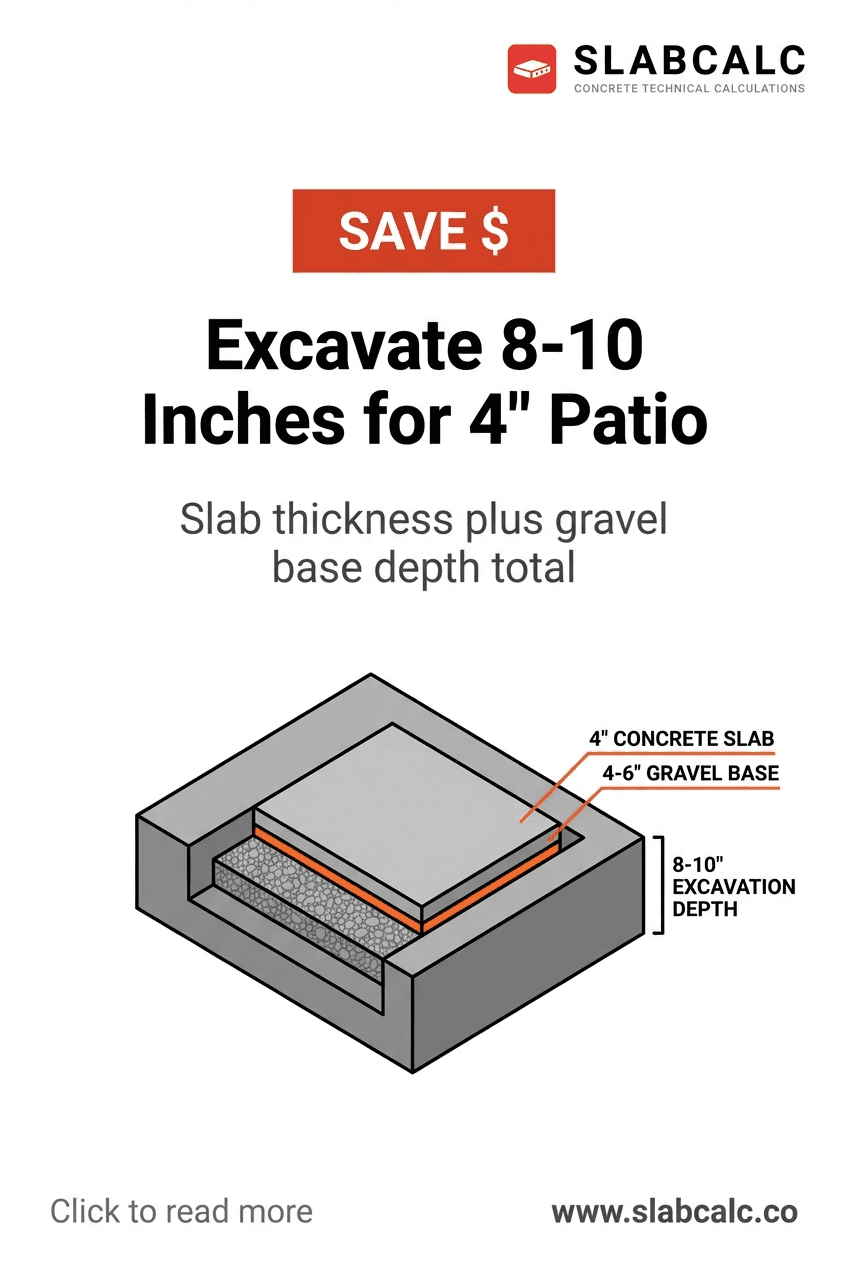
- ✓ Order 4–6 inches of 3/4" crusher run (not pea gravel)
- ✓ Confirm the supplier's material specs before delivery
- ✓ Compact in 2-inch lifts with a hand tamper or plate compactor (minimum 95% density)
- ✓ Test compaction by walking the surface—minimal foot impression
- ✓ Verify the base is level or properly sloped (1/8" per foot for drainage)
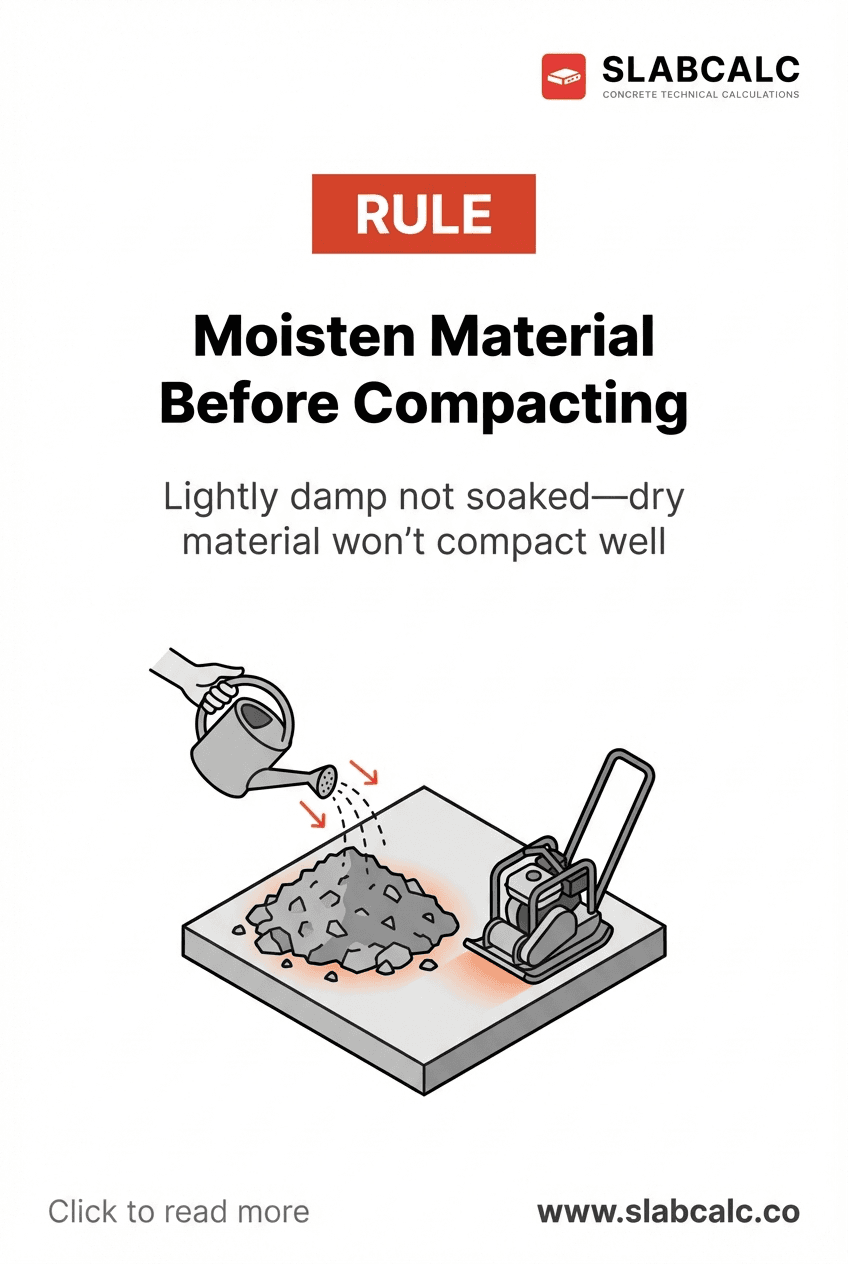
- ✓ Keep the base slightly moist during compaction (not muddy, not bone-dry)
- ✓ Allow 24 hours for the base to settle before placing concrete
The bottom line: Crusher run costs about $0.50–$0.75 per square foot. Pea gravel costs $0.30–$0.50. Saving $50 on base material and then spending $4,000 to fix a failed slab is the definition of false economy. Use the right material from the start.