
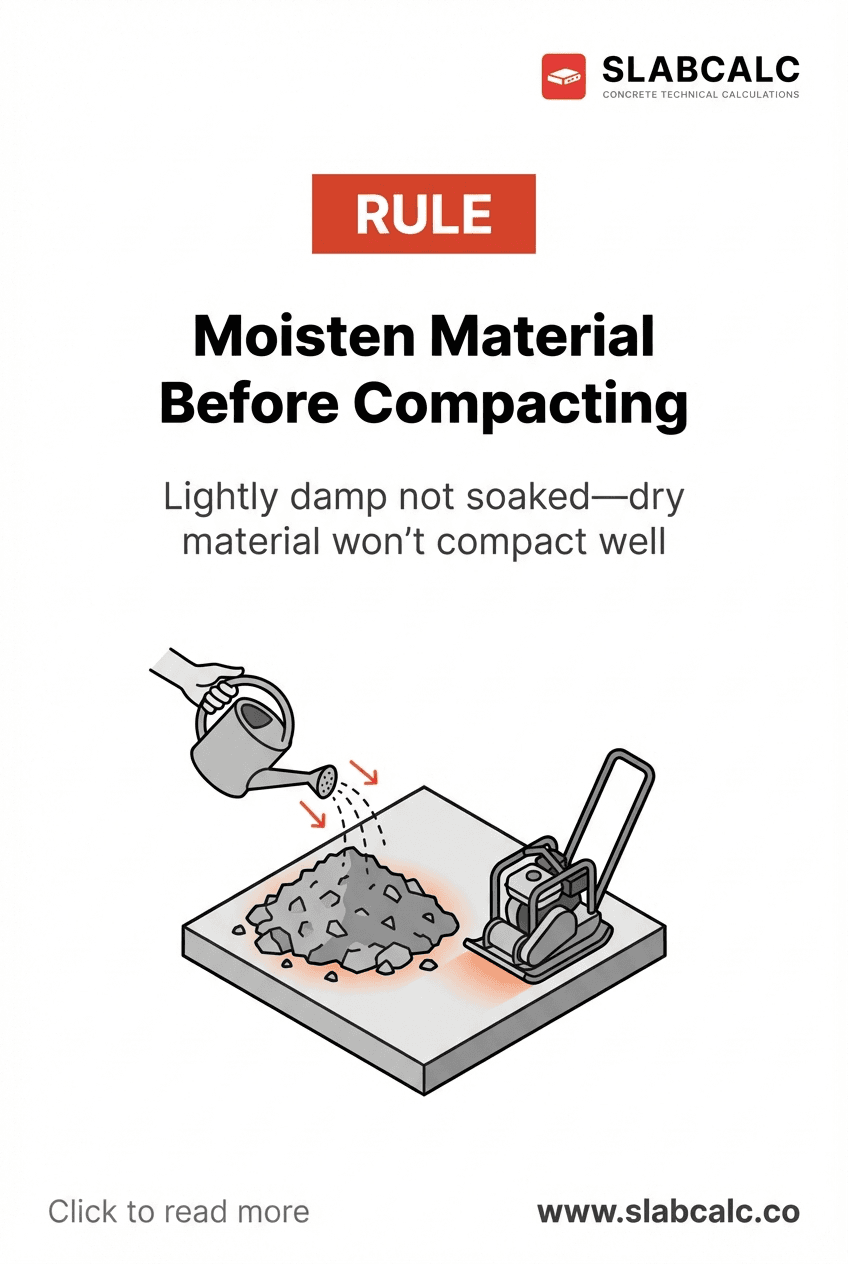
Moisten Material Before Compacting
The Moisture Decision Tree
If your base material is bone-dry: Add water before compacting. Dry gravel, sand, and crushed stone won't lock together; particles will shift under the weight of wet concrete, causing the slab to crack and settle unevenly within 6–12 months.
If your material is lightly damp (feels like a wrung-out sponge): You're in the ideal zone. Compact immediately. This is the sweet spot for 95% of residential projects.
If your material is soaking wet or pooling water: Stop and wait. Overly saturated material compacts poorly because the water fills the void spaces instead of acting as a binder, creating a weak, squishy base that later drains unpredictably.
Why Moisture Matters for Compaction
Concrete doesn't just sit on your subgrade—it bonds to it through friction and weight distribution. A properly compacted base transfers loads evenly. An improperly compacted base creates valleys and soft spots where concrete can flex, crack, and fail.
The physics is straightforward: water acts as a lubricant at the molecular level, allowing particles of gravel or sand to slide into tighter arrangements. A 4-inch layer of properly moistened gravel compacts to roughly 6–8% denser than the same material completely dry. That density difference directly extends your concrete slab's lifespan by 10–15 years on average.
Checking Your Moisture Level
Use the squeeze test: grab a handful of your base material and squeeze it firmly.
- Too dry: The material crumbles apart immediately. You need to wet it down.
- Just right: It holds a loose ball shape but crumbles if you poke it. This is what you want.
- Too wet: It compacts into a tight ball and doesn't crumble at all. Spread it out, let it drain for a few hours, then test again.
For a standard 4-inch gravel base covering 500 square feet (like a small patio), expect to use a garden hose for 15–30 minutes, depending on your soil's existing moisture. In dry climates, plan longer. In spring or after rain, you might need no additional water.
Common Overlooked Factors
Seasonal timing matters. Avoid compacting in heavy rain or immediately after. The material will shed water, but compacting while drainage is ongoing creates weak spots.
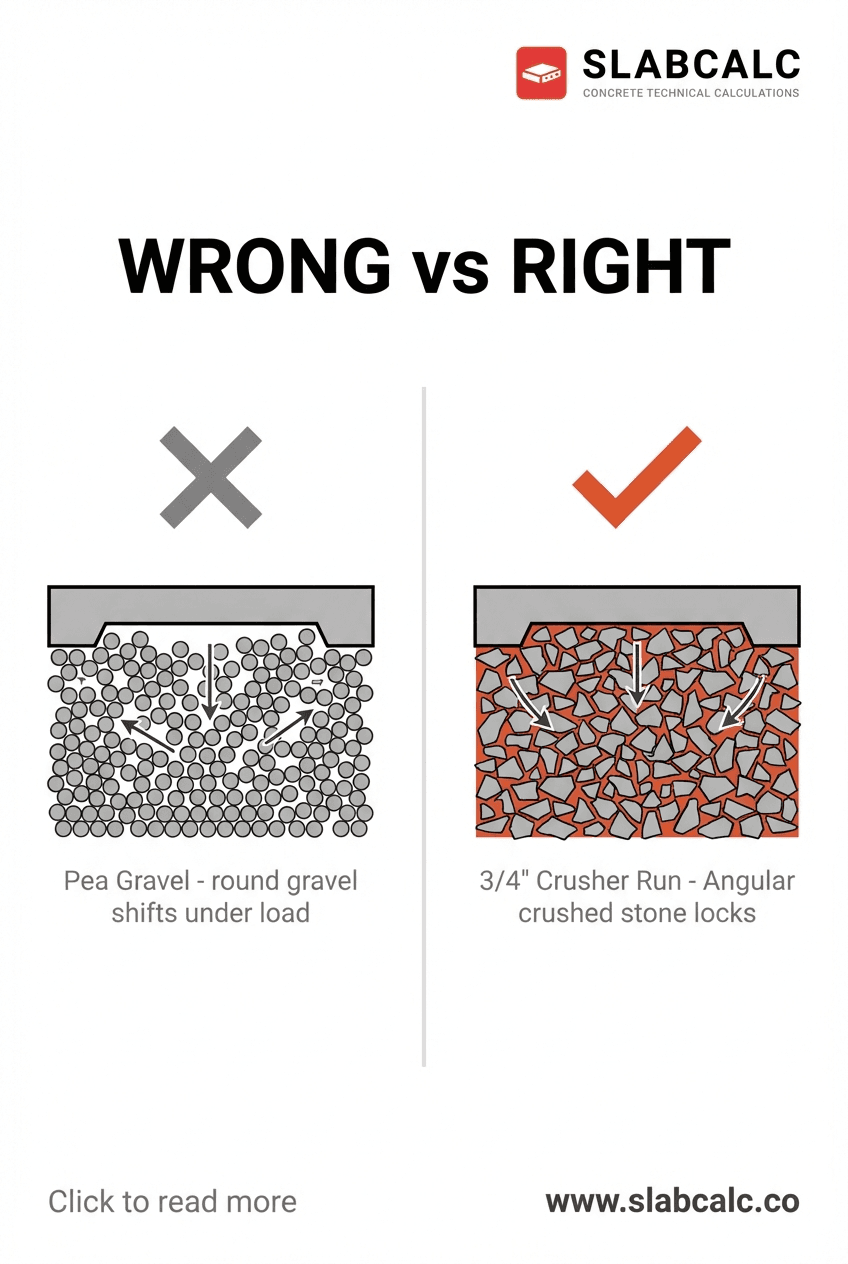
Material type changes the equation. Crushed limestone and angular gravel compact better than rounded pea gravel or river rock. If your supplier delivered the wrong type, compaction will be harder regardless of moisture level—consider replacing it.
Equipment weight is critical. A hand tamper only compacts 3–4 inches effectively. For deeper layers, rent a plate compactor (4-8 HP). Without proper equipment, moisture alone won't achieve necessary density.
The Clear Recommendation
Before you compact, always moisten your base material to the squeeze-test standard: damp but crumbly. Spend an extra 30 minutes wetting it down. This single step prevents 80% of concrete settling problems and costs nothing. It's the highest-ROI preparation step you can take.