
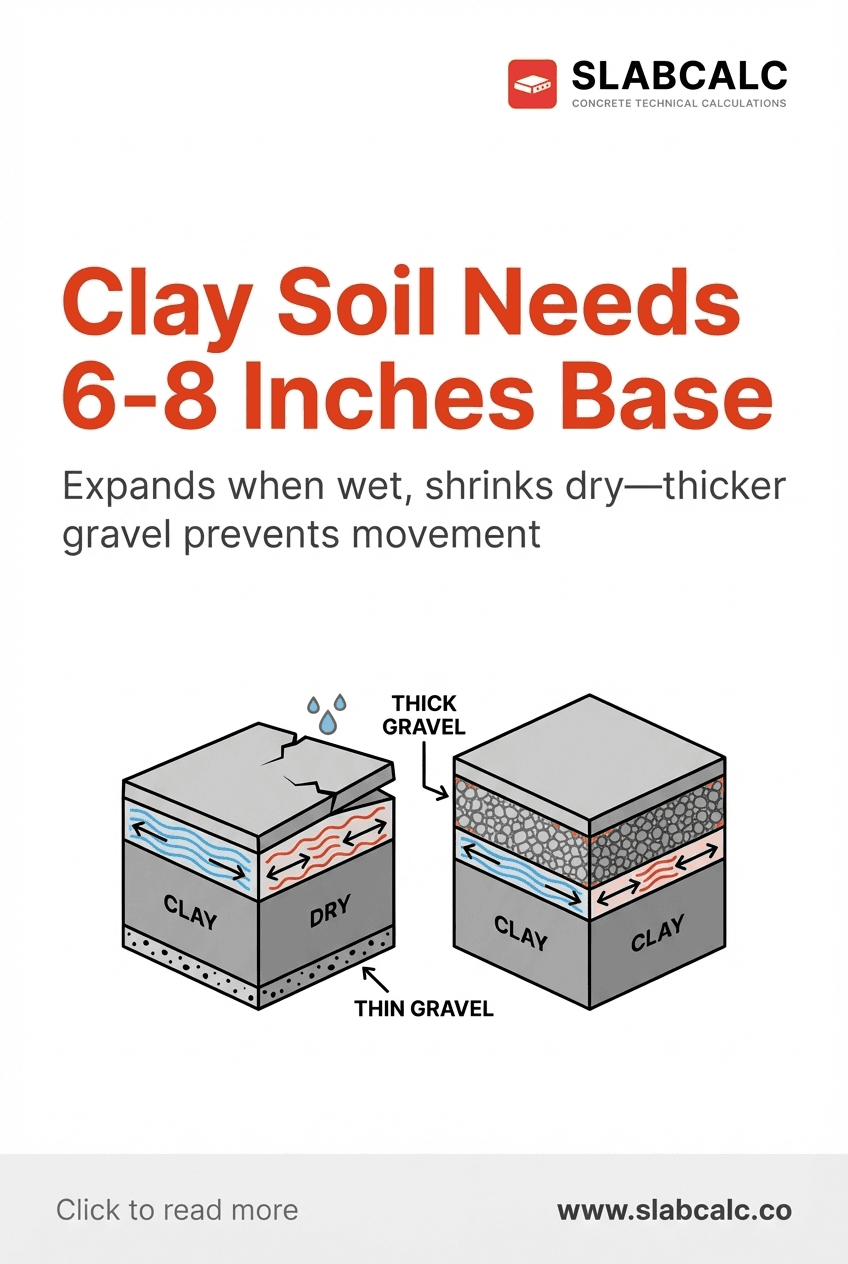
Clay Soil Needs 6-8 Inches Base
The Clay Problem: Movement You Can't See Coming
Clay soil is the enemy of concrete slabs. Unlike sandy or rocky soil that stays relatively stable, clay expands when it absorbs water and shrinks when it dries out—sometimes by 10–15% in volume. This constant shifting cracks concrete, breaks joints, and creates settled low spots that pool water. If you pour directly on clay or use only 4 inches of base, you're guaranteeing future problems within 2–5 years.
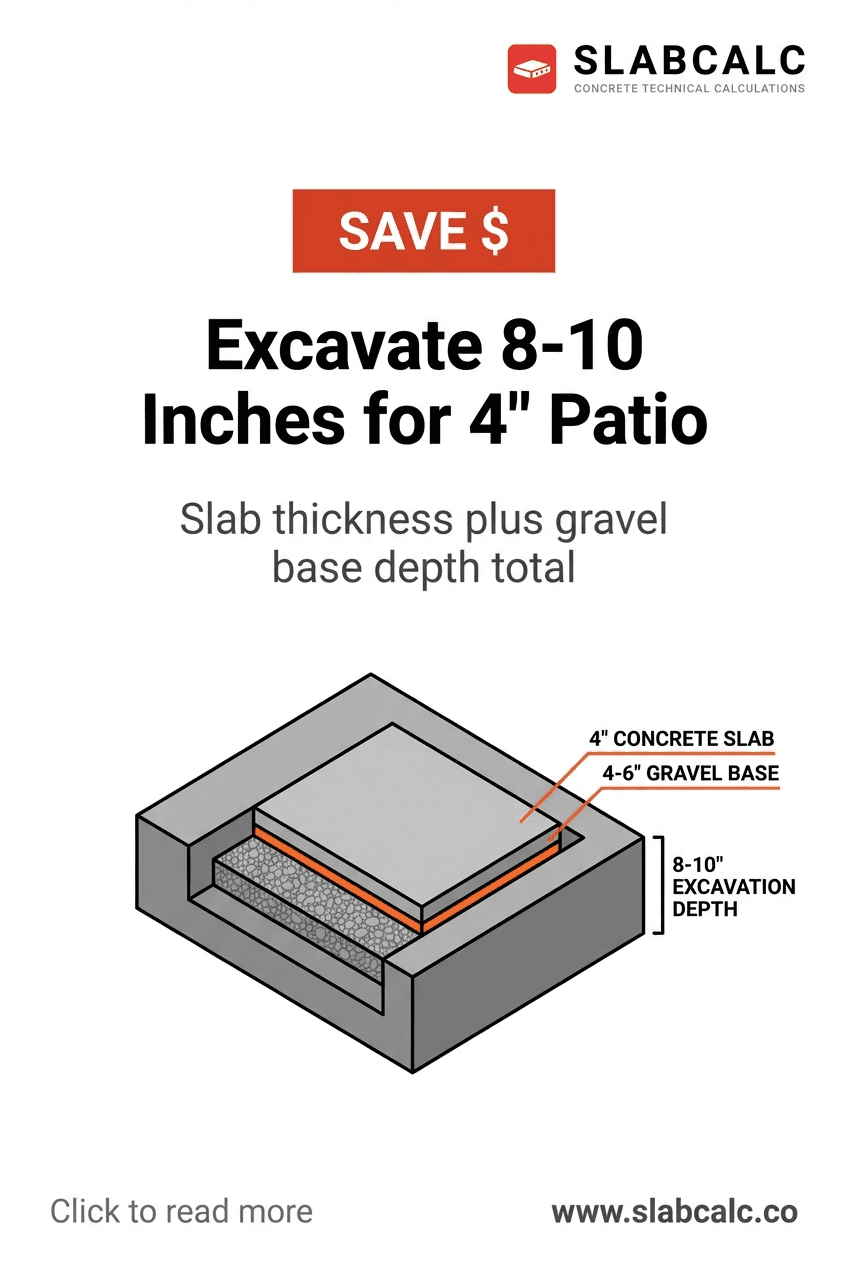
The solution is simple but non-negotiable: use 6–8 inches of compacted gravel base over clay soil. This thickness provides a stable, permeable buffer that isolates your concrete slab from clay's movement.
Why 6–8 Inches Works
A thick gravel base works in three ways:
Drainage: Gravel lets water permeate through instead of pooling at the clay interface. Dry clay doesn't expand. A proper base prevents water from accumulating directly under your slab.
Isolation: The 6–8 inch layer physically separates the slab from clay soil movement. Even if clay shifts below, the gravel acts as a cushion, distributing stress evenly across the concrete.
Compaction stability: At 6–8 inches, you can compact gravel in 2-inch lifts using a hand tamper or plate compactor, achieving 95% standard Proctor density. This creates a nearly rigid foundation. Thinner bases don't compact as effectively.
The Numbers Matter
- 4-inch base on clay: High risk of failure. Barely worth doing.
- 6-inch base on clay: Minimum acceptable for patios and light-use areas.
- 8-inch base on clay: Recommended for driveways, garage floors, and any heavy-traffic slab.
For a typical 20×20 foot patio (400 sq. ft.), the difference between 4 and 8 inches of gravel is about 6 cubic yards—roughly $75–$150 in material costs. Compare that to $3,000–$5,000 to remove and replace a failed slab in 3 years. The math is obvious.
Sourcing and Installation Tips
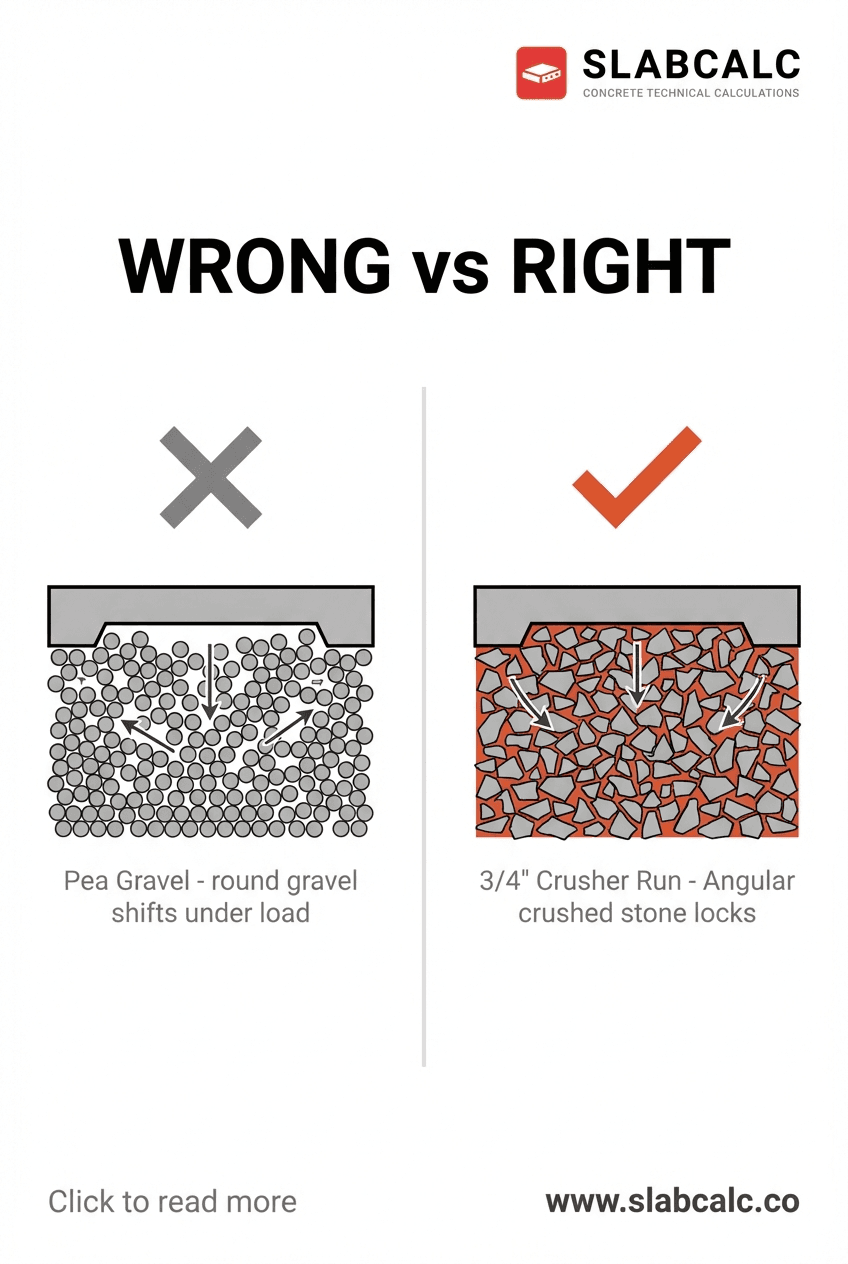
Material grade: Order "crusher run" or "crushed limestone" (not river rock or pea gravel). Crusher run has angular particles and dust that compact together. Round river rock never locks tight and won't provide stability.
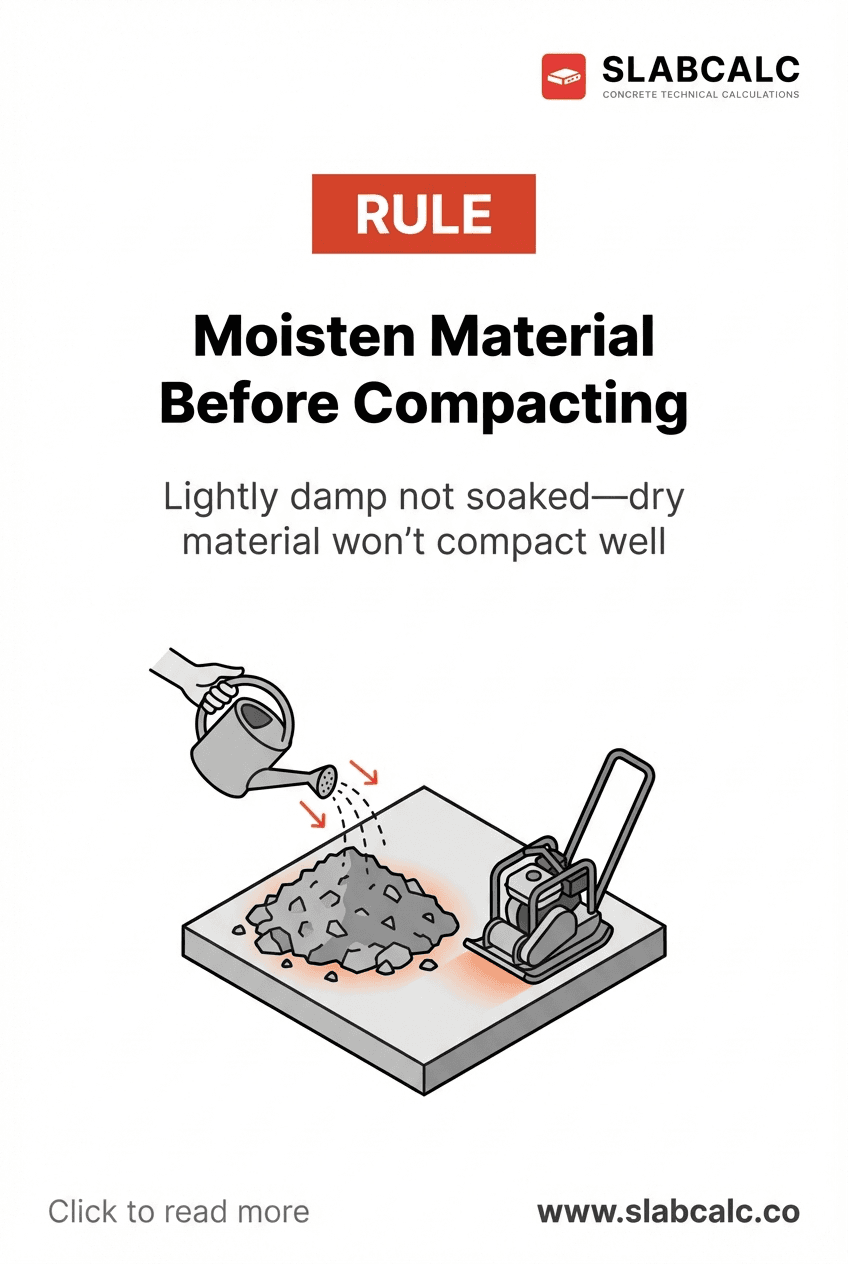
Compact in lifts: Spread 2 inches at a time, compact with a 200-pound plate compactor or hand tamper until no boot prints remain. This is non-negotiable for clay.
Check local codes: Some municipalities require fabric underlayment under gravel in clay zones. Call your building department before ordering materials.
Cost estimate: For a 400 sq. ft. slab with 8-inch base, budget $100–$200 for crusher run delivered. Rental compactor: $50–$75 per day.
What About Alternatives?
Geotextile fabric under gravel can help prevent clay from mixing into the base, but it doesn't replace proper thickness. Some contractors use sand—don't. Sand drains poorly and compacts inconsistently. Stick with crusher run.
If your clay layer is deeper than 12 inches and extremely poor-draining, consider digging it out entirely and replacing it with fill material. This costs more upfront but eliminates future risk.
Bottom line: Clay soil demands respect. Invest the extra $100 and labor now for 6–8 inches of gravel base, compact it properly, and your concrete slab will last 30+ years instead of 3.