
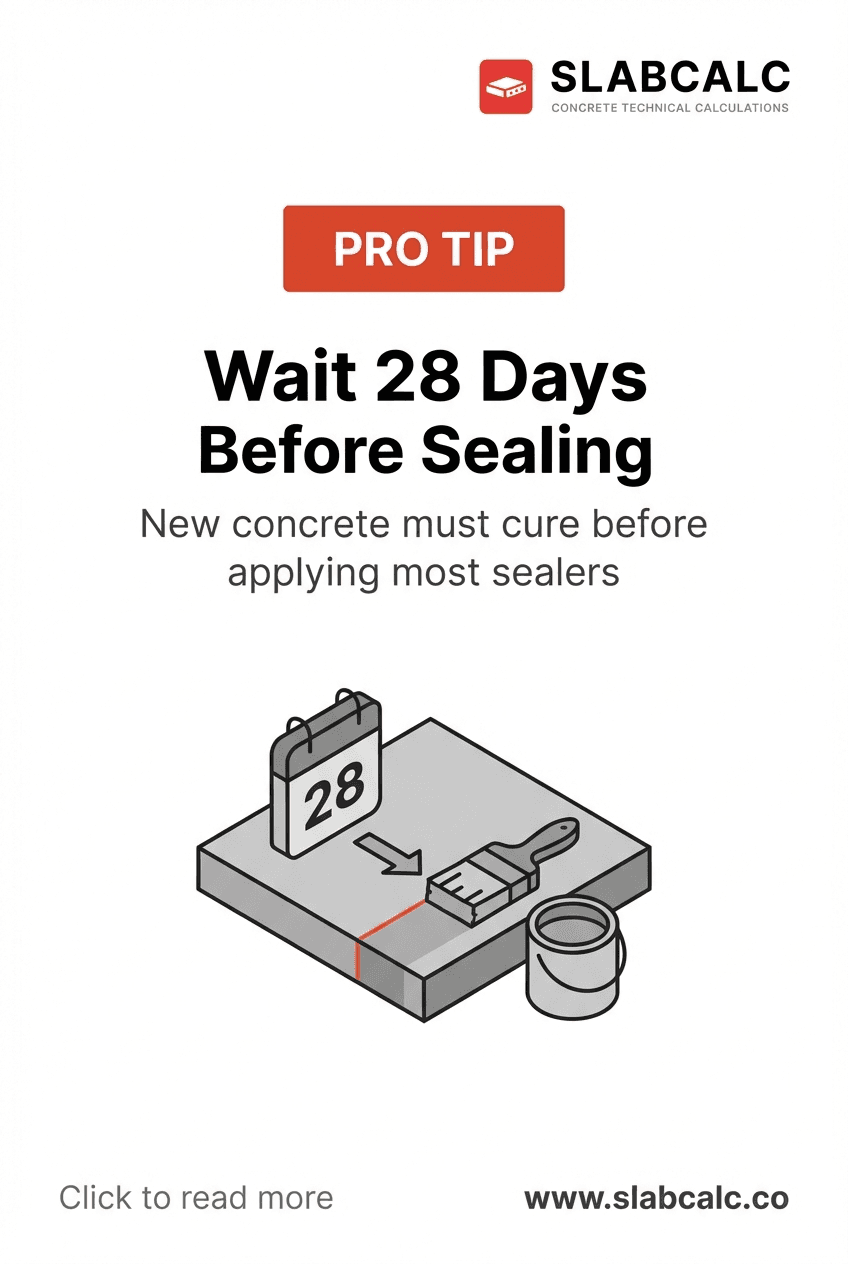
Wait 28 Days Before Sealing
The Mistake That Costs Thousands
Most homeowners seal their concrete too early—sometimes within days of the pour. The logic seems sound: protect your new investment immediately. But premature sealing is one of the fastest ways to damage concrete and waste money on sealant that won't adhere properly.
When you apply a sealer to concrete that hasn't fully cured, you trap moisture inside. As water continues to evaporate from the concrete's interior, it gets blocked by the sealer film, creating hydrostatic pressure that causes spalling (surface flaking), blistering, and peeling. You'll end up stripping the sealer, repairing the concrete, and resealing—a costly cycle that could have been avoided by simply waiting.
Why 28 Days Matters
Concrete reaches approximately 90% of its designed compressive strength at 28 days. This is the industry standard for "fully cured" concrete, and it's when the concrete has released most of its internal moisture. The 28-day benchmark exists because concrete doesn't cure uniformly—the surface dries first, but the interior continues to release moisture for weeks.
Most concrete sealers require the concrete's moisture content to be below 8-10% for proper adhesion. Applying sealer too early guarantees failure, regardless of product quality. Even "fast-curing" concrete mixes benefit from the full 28-day window.
The Professional Timeline
Days 1–7: Concrete reaches initial set (won't break under foot traffic). Still curing rapidly. Keep traffic minimal, avoid sealing.
Days 8–27: Strength continues to develop. Some moisture is released, but internal moisture levels remain high. Do not seal yet.
Day 28+: Concrete has cured sufficiently. Perform a moisture test if you want certainty (calcium chloride test will show moisture levels). Most professionals seal starting on day 28.
Days 30–60: Ideal window for sealing. The concrete is fully cured, and you still have time before winter or heavy weather.
Testing Before You Seal
Don't guess. Use a calcium chloride moisture meter (available for $15–40 at home centers) to check moisture levels before sealing. The target is below 8% for most topical sealers and below 10% for penetrating sealers. This 5-minute test prevents thousands in rework.
Weather Considerations
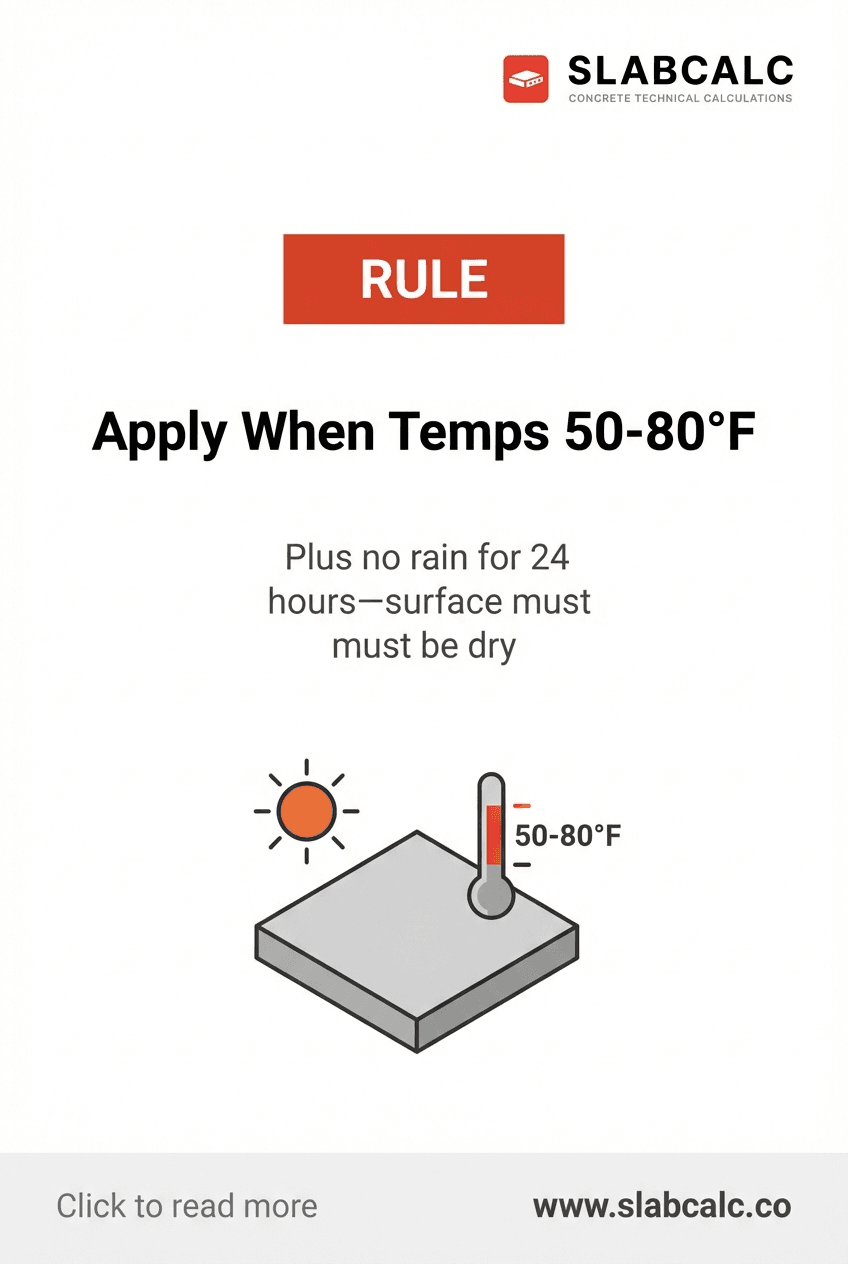
If your concrete cures during cold or rainy weather, the timeline extends. Cold slows hydration; excess moisture from rain extends cure time. Add 5–7 days for every 15°F drop below 50°F. Rain adds 3–5 days. In wet, cool climates, waiting 35–40 days is safer than rushing at exactly 28 days.
Bottom Line
The 28-day rule isn't arbitrary—it's the result of decades of concrete science. Waiting costs nothing but time. Sealing too early costs repairs, resealing, and frustration. Professional contractors never seal before day 28, and neither should you. Mark your calendar, perform a moisture test, and seal confidently when the concrete is truly ready.