
Apply When Temps 50-80°F
The Temperature & Moisture Decision Tree
If it's below 50°F or above 80°F then do not apply sealer today—wait for better conditions.
If the surface is wet or rain fell within the last 24 hours then postpone application until the concrete dries completely.
If temperature is 50–80°F and the surface has been dry for at least 24 hours then proceed with application.
This simple rule prevents the majority of sealer failures. Ignoring it costs money: failed seals require stripping and reapplication, adding $0.30–$0.50 per square foot to your project.
Why Temperature Matters
Concrete sealer cures through evaporation and chemical cross-linking. Both processes require specific conditions.
Below 50°F: Sealer hardens too slowly. The film remains tacky, traps dust, and never achieves full hardness. You'll see adhesion failure and peeling within months.
Above 80°F: Sealer dries too fast, especially penetrating types like silane. Surface layers cure before deeper penetration occurs, leaving pores unsealed and defeating the entire purpose. Topical sealers dry so rapidly that they become uneven—thick in some spots, thin in others—creating visible lap marks.
The sweet spot of 50–80°F gives you 6–8 hours of workable time and predictable curing. Most sealer manufacturers print these exact limits on the can for a reason.
The Hidden Moisture Problem
Dryness is not the same as absence of rain. Concrete is porous and holds moisture for days after rain stops, especially in shaded areas, under eaves, or on north-facing surfaces.
Test before you seal: Place a clear plastic sheet (24" × 24") flat on the concrete and tape all four edges. Wait 24 hours. If moisture beads form on the underside of the plastic, the concrete still holds water and is not ready.
Sealing over damp concrete traps moisture underneath, creating a barrier that prevents vapor release. Within weeks, water pressure pushes the sealer film away from the surface—it delaminates and peels in sheets. Replacement cost: $0.50–$0.75 per square foot.
The 24-hour rule is conservative but safe. In humid climates or after heavy rain, wait 48 hours. In direct sun with low humidity, 12–18 hours may suffice, but err on the side of caution.
Overlooked Factors
Time of day: Apply in early morning when temperature is rising, not late afternoon when it will drop below 50°F overnight. The sealer needs 6–8 hours of optimal temperature to cure properly.
Shade patterns: If your driveway or patio has large trees overhead, sealed areas in shade may cure 2–3 hours slower. Plan application for maximum sun exposure.
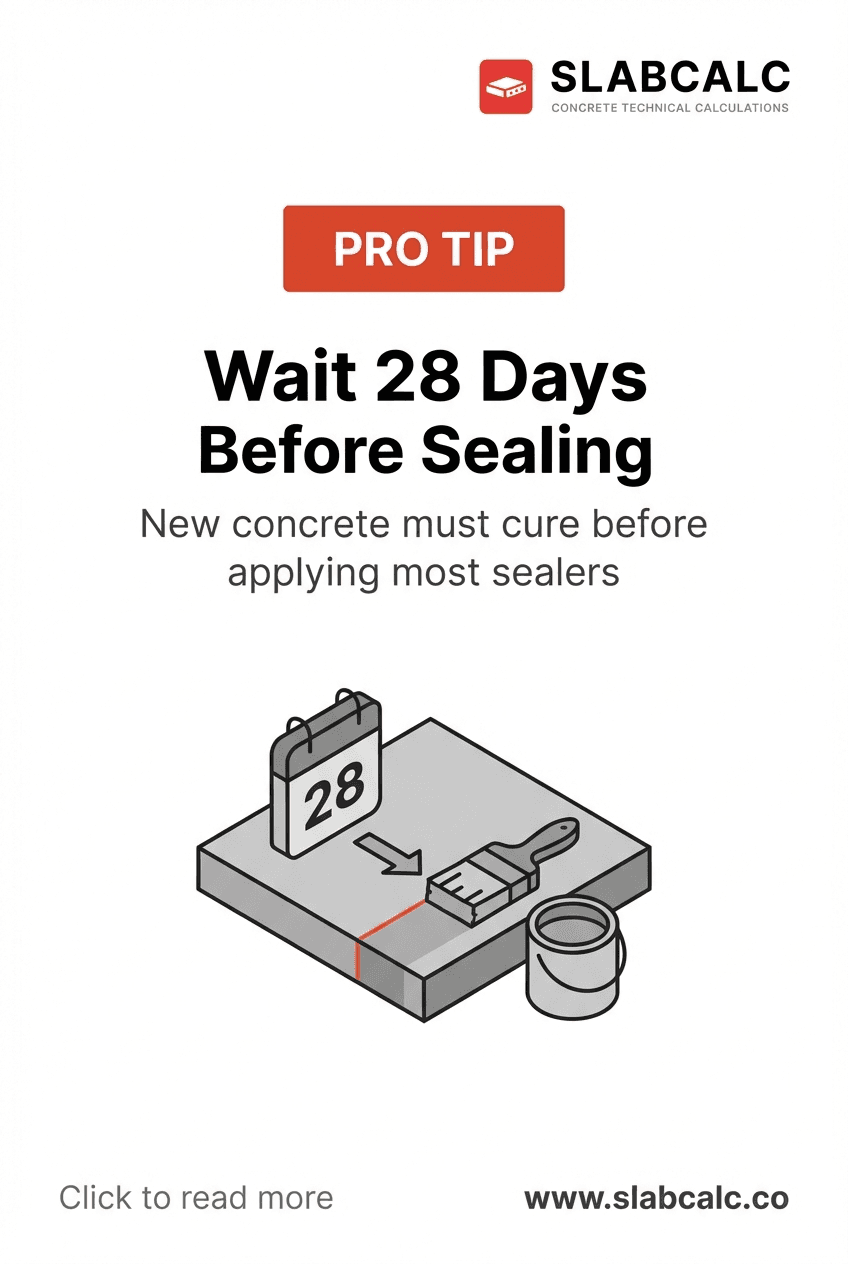
Concrete age: New concrete (less than 28 days old) holds water longer. Follow the concrete cure time before testing moisture, or wait the full 28 days when possible.
Clear Recommendation
Check the weather forecast. Pick a day when temperatures will stay between 50–80°F for at least 12 hours after application. Confirm zero precipitation for at least 24 hours before sealing. Test for surface moisture. Then apply with confidence. This discipline takes 15 minutes of planning and saves hundreds in rework.