
Fast-Setting For Time-Sensitive Repairs
The Time Difference That Matters
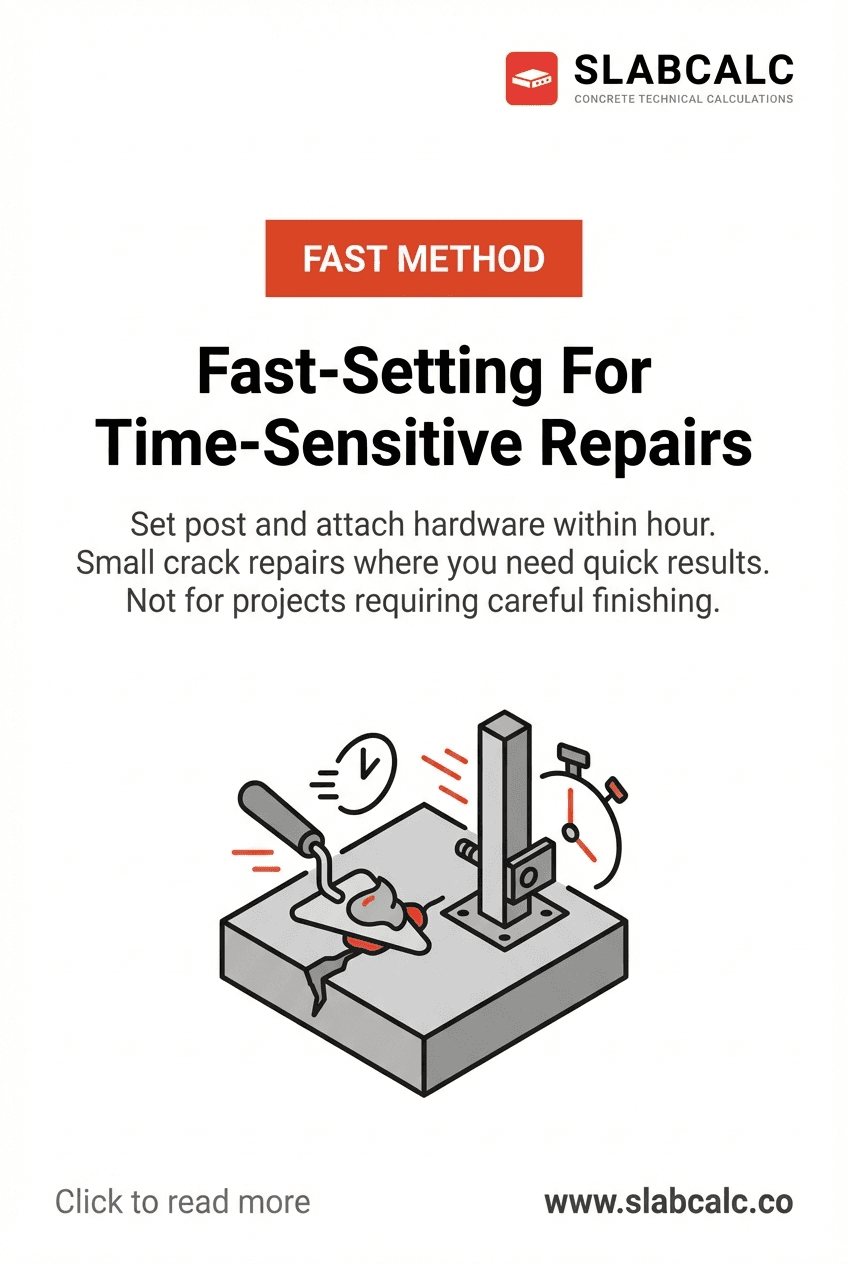
Standard concrete takes 24 to 48 hours before you can safely attach hardware or remove bracing. Fast-setting concrete accomplishes the same job in 20 to 40 minutes—and you can typically attach a mailbox arm or set a fence post within 60 minutes total.
That's the difference between planning your weekend around concrete cure time versus completing the job and moving on. For homeowners with tight schedules or weather concerns, this speed advantage is genuinely valuable.
When Fast-Setting Concrete Is Worth the Cost
Fast-setting mixes cost $2–4 more per 50-pound bag than standard concrete (roughly $6–8 versus $3–5). That premium makes sense for specific applications but wastes money on large pours.
Ideal uses:
- Fence or deck posts – Set the post, brace it, and attach rails within an hour
- Mailbox or sign posts – No waiting to install the hardware
- Small crack repairs – Patch a sidewalk crack and resume foot traffic quickly
- Cold-weather projects – Fast-setting mixes work better in temperatures below 50°F
- Emergency repairs – Temporary structural fixes that can't wait a day
Not ideal for:
- Pouring a patio or driveway (use standard or high-strength instead)
- Large flatwork requiring careful finishing and troweling
- Projects where cost is the primary concern
The Setup Process: Tools and Timing
Fast-setting concrete demands a methodical approach because the working window is tight.
What you'll need:
- Fast-setting concrete mix (Quikrete FastSet or Sakrete Maximizer Fast-Setting)
- 5-gallon bucket
- Drill with mixing paddle
- Tape measure
- Level
- Wheelbarrow (for larger jobs)
- Wooden braces or stakes
The timing breakdown:
- Minutes 0–5: Measure water and mix concrete in the bucket (follow package ratios carefully—too much water weakens the bond)
- Minutes 5–10: Place the post or fill the crack, work quickly but don't rush quality
- Minutes 10–20: Position the post perfectly level using braces; check alignment twice
- Minutes 20–40: Initial set occurs; the concrete thickens and becomes tacky
- Minutes 40–60: Remove braces and carefully attach lightweight hardware (gates, mailbox arms)
Critical Technique Detail
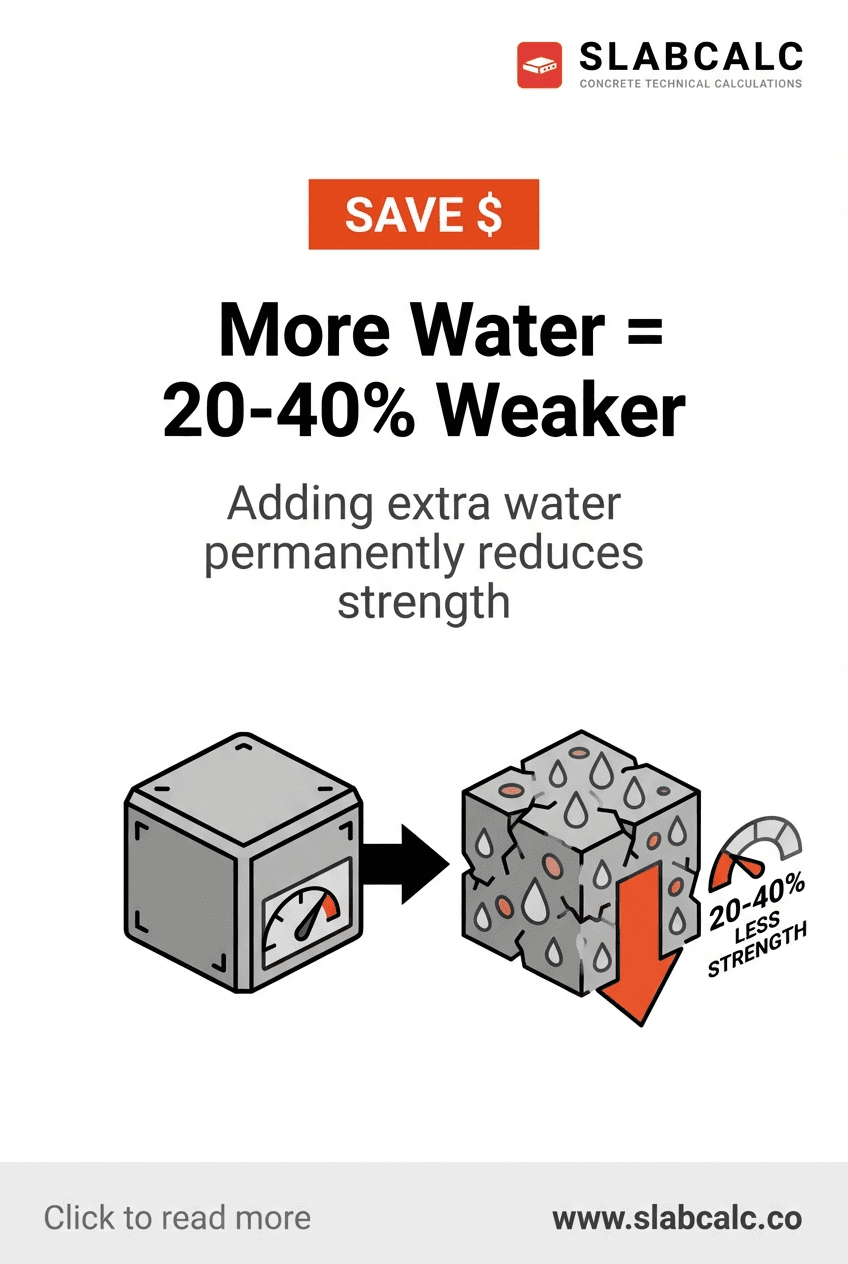
The key difference from standard concrete is dosage precision. Fast-setting mixes contain accelerators that activate rapidly. Adding extra water to make it easier to work won't help—it actually delays setting and weakens the final strength (which is still 3,000–4,000 PSI, adequate for posts).
Mix only what you can use in 5 minutes. Leftover concrete in the bucket hardens fast and becomes waste.
Strength Expectations
Don't confuse "fast-setting" with "high-strength." Fast-setting concrete achieves standard strength—suitable for posts and small repairs but not for driveway traffic loads. If you need both speed and maximum durability, combine fast-setting with structural applications carefully and consult load requirements for your specific project.