
1 Cu Yard Per Minute Pour Rate
The One-Yard-Per-Minute Rule
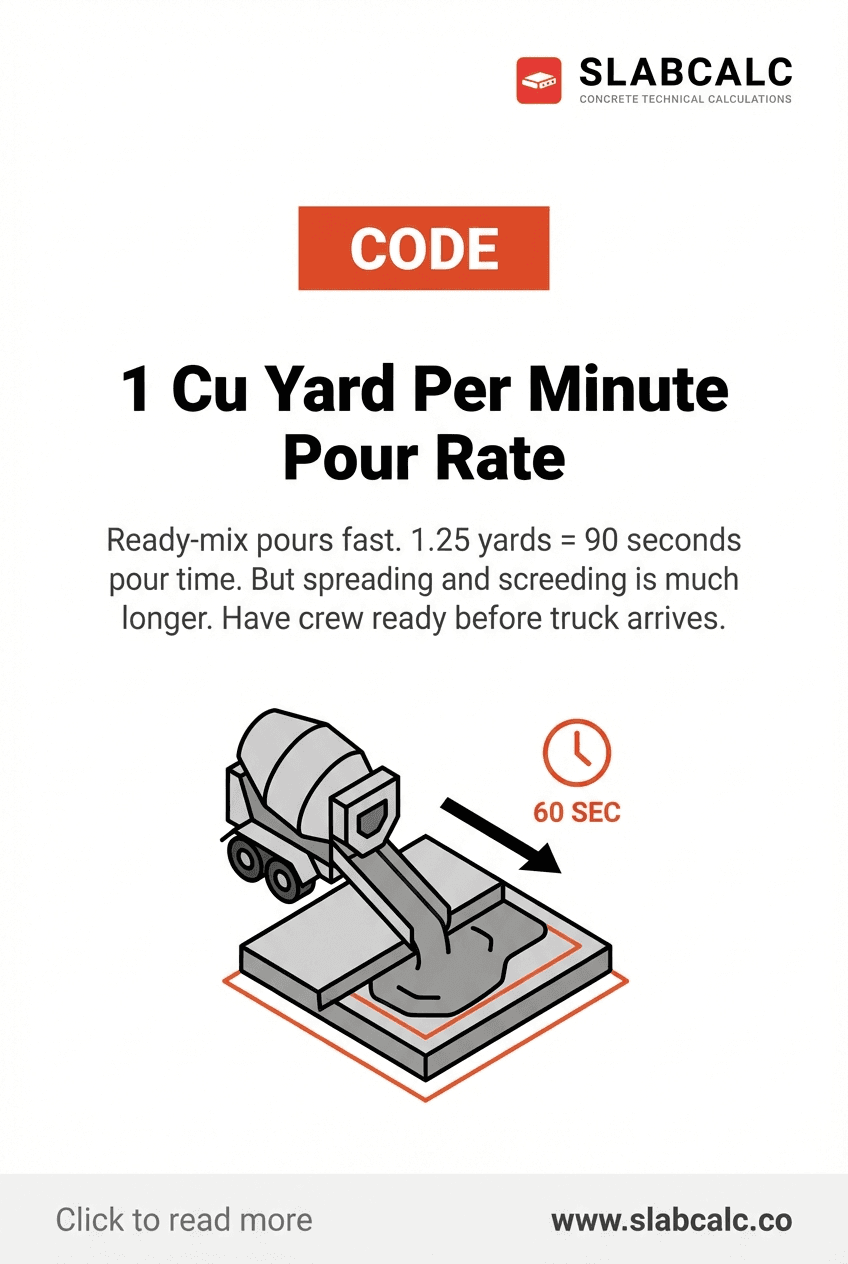
Ready-mix concrete trucks discharge approximately 1 cubic yard every 60 seconds. This means a typical 10-yard load empties completely in about 10 minutes. Sounds fast, right? It is—but this is where most DIYers and inexperienced crews get into trouble.
The ACI 301 (Specifications for Structural Concrete) and IRC (International Residential Code) don't explicitly mandate crew size, but they require that concrete be placed, consolidated, and finished before initial set begins. Initial set occurs 2–4 hours after mixing, depending on temperature and admixtures. The real constraint isn't the truck's discharge rate; it's your crew's ability to spread, level, screed, and finish the concrete as it arrives.
The Time Trap: Pour vs. Finish
Here's the disconnect most homeowners miss: a 1.25-yard pour takes only 90 seconds from truck chute to ground. But spreading that same 1.25 yards across a 10-foot by 12-foot area, screeding it level, vibrating out air pockets, and finishing the surface takes 45 minutes to 2 hours with an average crew.
If your truck arrives and you don't have:
- Two to four workers physically present and ready
- Spreaders, rakes, and screeding boards positioned within arm's reach
- A clear path from discharge point to final placement
- Wheelbarrows or pump equipment if the slab is far from the truck
…you'll get behind immediately. The concrete begins stiffening while you're scrambling to organize. This leads to cold joints (weak seams between sections), poor consolidation, and reduced concrete strength.
Practical Crew Requirements
For a typical residential driveway (3–4 yards), allocate at least 3–4 people:
- 1 person directing the truck driver and managing discharge
- 1–2 people spreading and moving concrete with shovels and rakes
- 1 person screeding and leveling with a straight edge or screed board
- 1 person consolidating with a vibrator (if available)
For a 10-yard slab, you need 5–6 experienced workers minimum. Smaller crews working larger pours face joint problems, inconsistent consolidation, and visible imperfections.
Pre-Pour Checklist: Avoid Delays
Before the truck arrives:
- Verify subgrade moisture and compaction (dry or saturated subgrades affect set time)
- Position all tools and equipment within 10 feet of the slab perimeter
- Confirm crew members are present and briefed on their roles
- Test your pump or wheelbarrow system if concrete won't be discharged directly into place
- Have concrete delivered at the coolest part of the day (morning pours in summer extend workability by 30–45 minutes)
Temperature Impact on Your Timeline
Concrete sets faster in hot weather. A summer pour (90°F+) gives you 2–3 hours of workability. A cool spring morning (50–60°F) extends this to 4–5 hours. Plan crew size and timing accordingly—summer pours demand faster crews or smaller loads per delivery.
Understanding pour rate teaches a critical lesson: ready-mix speed is an asset only if your team is organized to handle it. The truck's minute-per-yard pace is useless without adequate labor standing by, ready to move, spread, and finish before the window closes.