
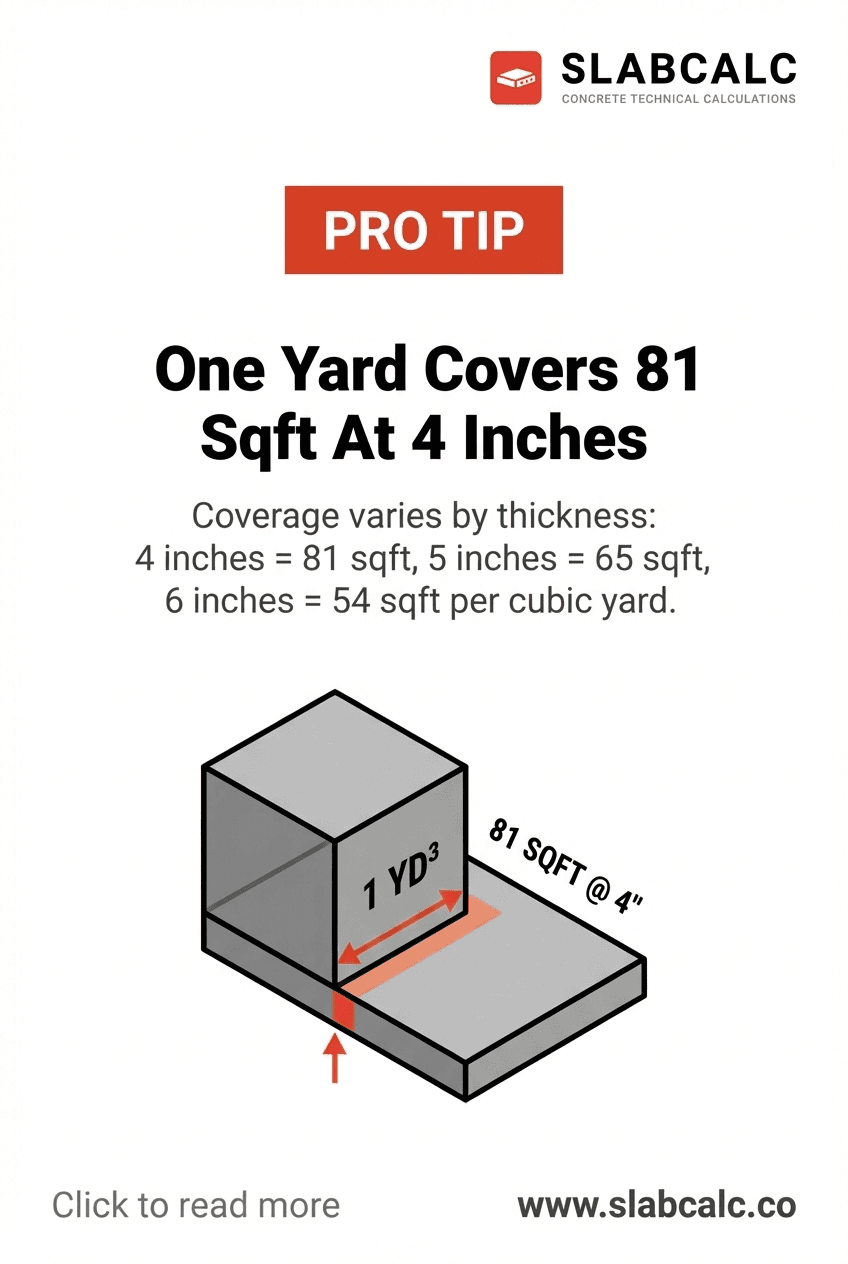
One Yard Covers 81 Sqft At 4 Inches
The Mistake Everyone Makes
Most DIYers calculate their concrete project size, then jump straight to ordering without accounting for thickness. They'll measure a 20×20 patio, see it's 400 square feet, and assume they know how much to order. Then the concrete truck arrives and they're either scrambling for more material or stuck with thousands of dollars in waste.
The problem? Thickness isn't a luxury—it's the variable that determines everything.
The Professional Secret: Thickness-Based Coverage
Here's what contractors know: one cubic yard of concrete doesn't always cover the same square footage. The coverage depends entirely on how thick you pour it.
At 4 inches: 1 cubic yard covers 81 square feet
At 5 inches: 1 cubic yard covers 65 square feet
At 6 inches: 1 cubic yard covers 54 square feet
Notice the pattern? Every extra inch of thickness reduces coverage by roughly 20%. A 20×20 patio at 4 inches needs 4.9 cubic yards. The same patio at 5 inches needs 6.2 cubic yards. That's an extra 1.3 yards—or about $130-$180 depending on your region.
Why Thickness Matters (And Why You Can't Cheat It)
Thickness isn't negotiable. It's determined by what your slab must support:
- Patios and sidewalks: 4 inches minimum
- Driveway for cars: 5 inches minimum
- Driveway for trucks/RVs: 6 inches minimum
- Garage floors: 4-6 inches depending on vehicle weight
Pour too thin and your slab cracks under load within 2-3 years. Pour too thick and you've wasted material and money. Pros use these standards because they balance durability with cost.
Step-by-Step: Calculate Your Exact Order
Step 1: Find your project dimensions
Measure length and width in feet. For a patio: 16 feet wide by 14 feet long.
Step 2: Choose the correct thickness
A residential patio requires 4 inches.
Step 3: Use the coverage formula
Divide your square footage by the coverage rate for your thickness.
400 sq ft (16 × 14) ÷ 81 sq ft per yard = 4.9 cubic yards
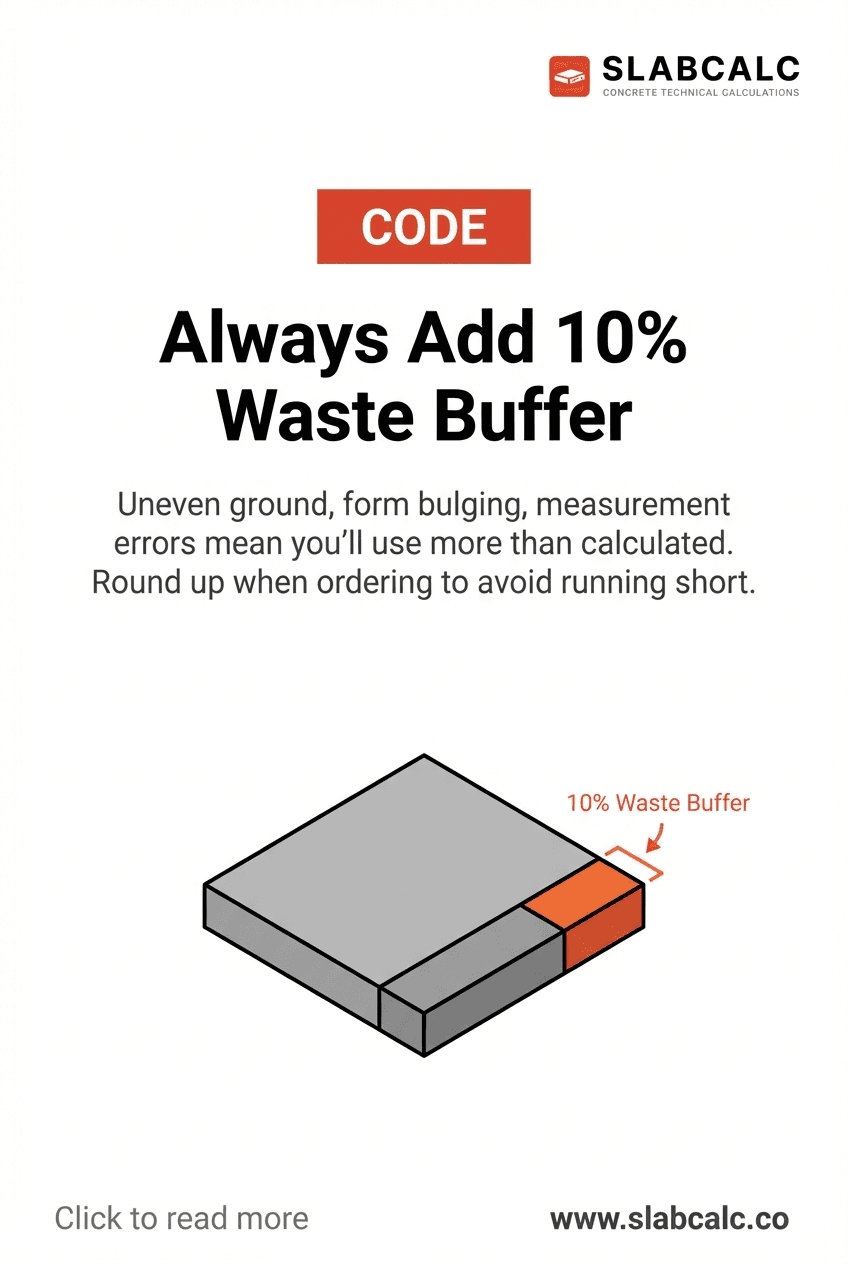
Step 4: Add 10% for waste and spillage
4.9 × 1.10 = 5.4 cubic yards → Order 5.5 cubic yards
Alternative: Use the quick math
Length (ft) × Width (ft) × Thickness in feet ÷ 27 = Cubic yards
16 × 14 × 0.33 (4 inches) ÷ 27 = 2.7 cubic feet ÷ 27 = 2.7 cubic yards per 100 sq ft. Scale up from there.
The Real Payoff
Knowing the cubic yard-to-coverage relationship prevents two expensive mistakes: ordering too little (project stops mid-pour, seams form, quality suffers) or ordering too much (wasted material sitting in your driveway). Even better, it helps you compare quotes fairly. Two contractors might suggest different thicknesses—now you can calculate the actual cost difference and decide what's worth paying for.
Professionals don't guess. They calculate based on thickness. Neither should you.