
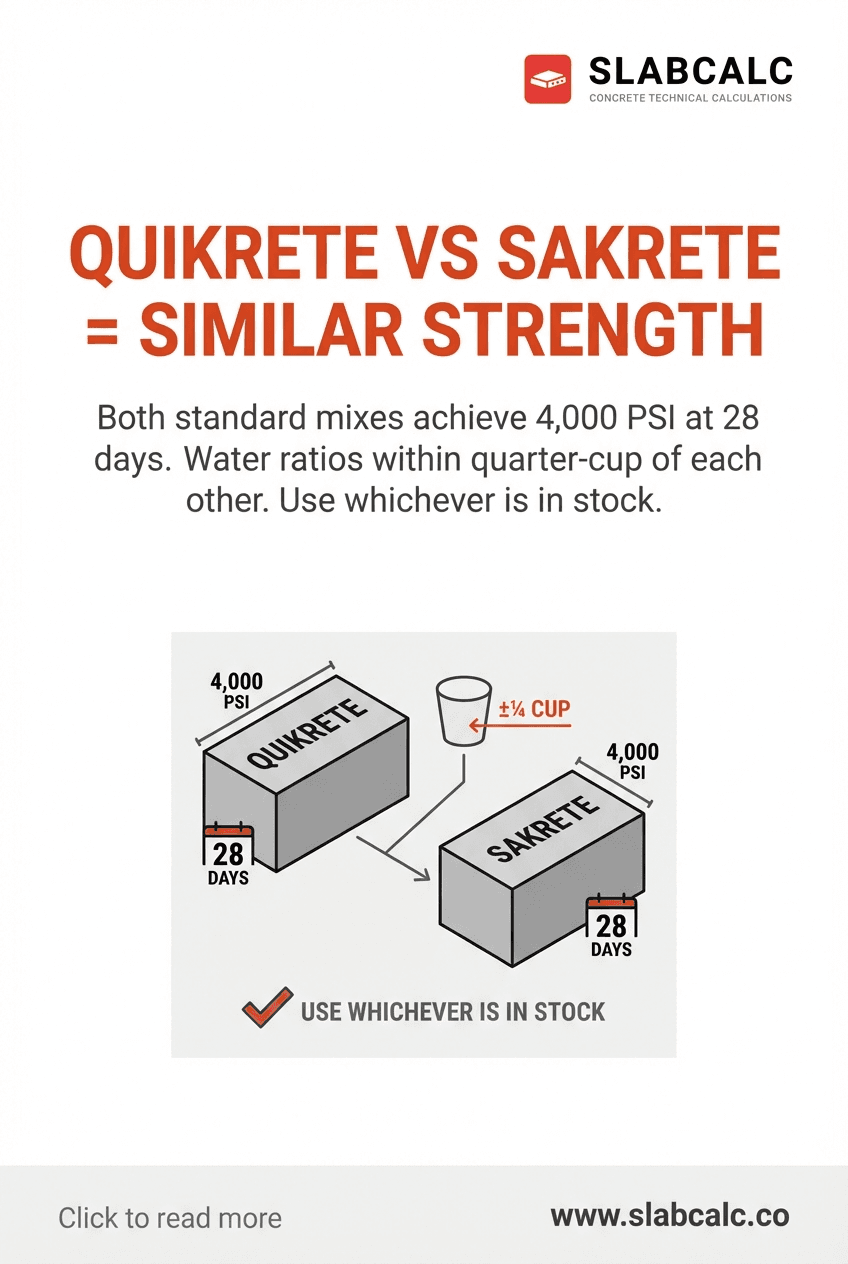
QUIKRETE VS SAKRETE = SIMILAR STRENGTH
The Key Number: 4,000 PSI at 28 Days
Both Quikrete Concrete Mix and Sakrete Concrete Mix deliver 4,000 PSI (pounds per square inch) at 28 days—the standard industry measurement for concrete strength. This is the number that matters most for driveways, patios, shed foundations, and general-purpose slabs. If you're a homeowner or DIYer, this single fact should guide your decision: use whichever brand is in stock at your local supplier.
Why 4,000 PSI Matters for Your Project
PSI measures how much weight your cured concrete can withstand before failing. For residential applications, 4,000 PSI is the sweet spot—strong enough for all typical uses, cost-effective, and widely available.
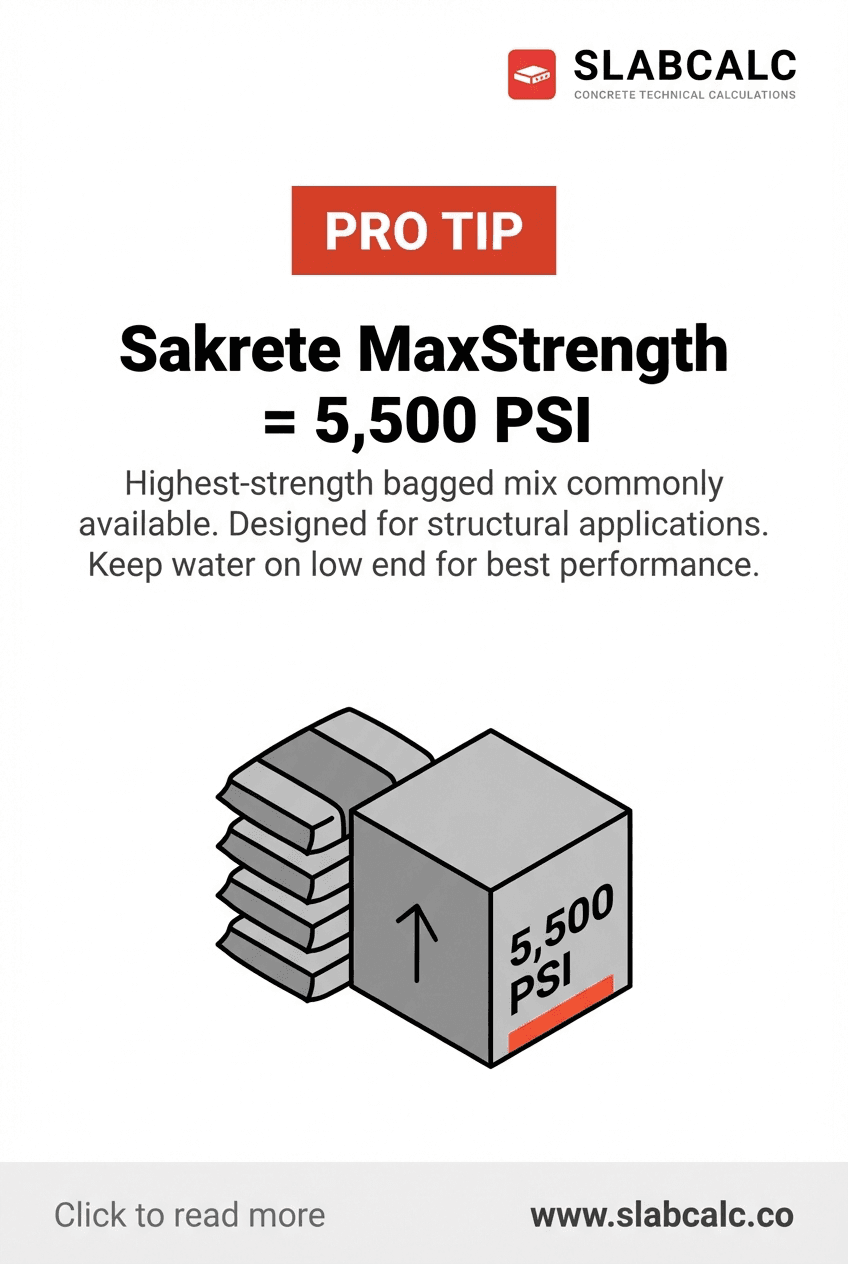
A 4-inch-thick concrete slab with 4,000 PSI strength can safely support a loaded pickup truck, heavy machinery, or years of foot traffic. Building codes for residential driveways typically require 3,500–4,000 PSI, so hitting 4,000 means you're above standard without overspending on premium 5,000 PSI mixes.
The 28-day timeframe is critical: this is when concrete reaches full design strength. At 7 days, you're at roughly 70% strength. At 14 days, around 85%. By day 28, you've hit the rated PSI and can rely on it for load calculations.
When This Applies (And When It Doesn't)
This applies to:
- Standard residential driveways
- Patios and walkways
- Small shed or deck footings
- Garage floors
- General-purpose outdoor slabs
This does NOT apply to:
- High-traffic commercial slabs (often require 5,000+ PSI)
- Areas with freeze-thaw cycles where air entrainment is critical (check mix composition, not just PSI)
- Structural elements like beams or load-bearing walls
- Salt-exposure environments (durability varies by formulation, not just PSI)
Water Ratio: Nearly Identical
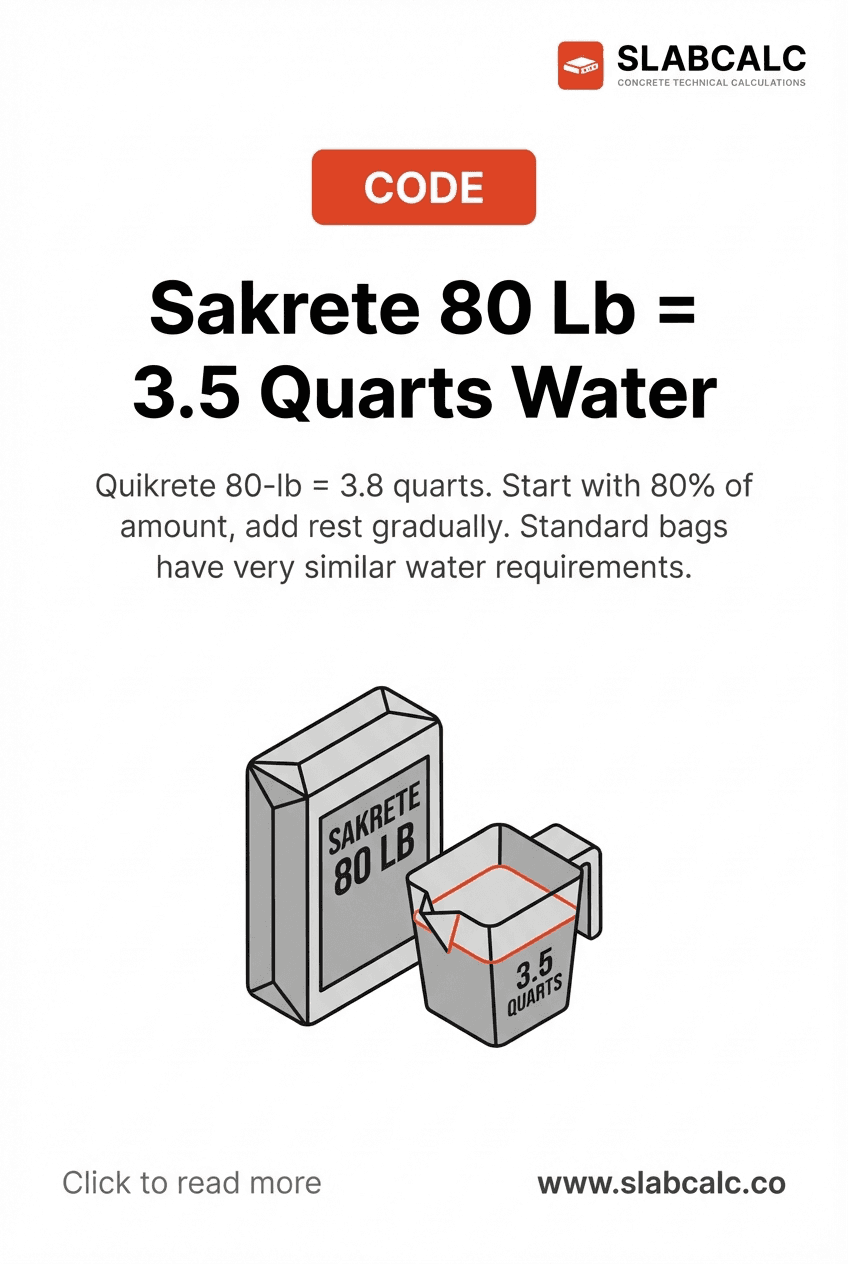
Both brands recommend roughly the same water-to-concrete ratio—within a quarter-cup per 80-pound bag. Quikrete typically calls for about 1.5 quarts; Sakrete asks for roughly 1.5–1.75 quarts. This small variation reflects different aggregate compositions, not quality differences.
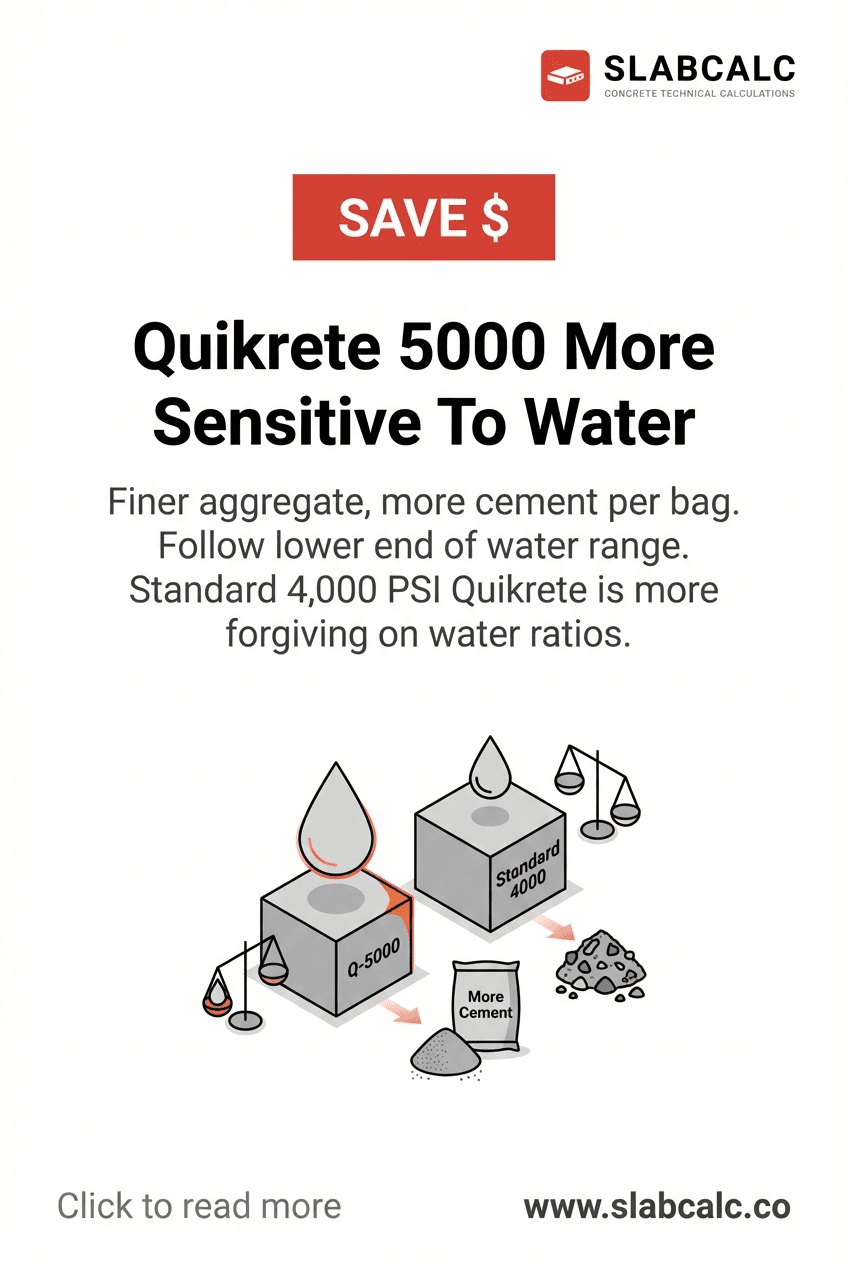
The practical takeaway: Follow the bag instructions precisely. Too much water weakens concrete; too little makes it unworkable. Use a measuring cup or scale, not a guess.
The Real Difference: Availability and Price
Visit your local Home Depot, Lowe's, or Menards on any given week, and one brand may be in stock while the other is out. Prices fluctuate seasonally and by location, but they're consistently within 5–10% of each other.
Spend your mental energy on mix selection (standard vs. high-strength), water ratios, and curing time—not brand loyalty. Both Quikrete (founded 1940) and Sakrete (founded 1936) have over 80 years of proven performance.
Bottom line: Buy what's available and reasonably priced. Your concrete's success depends on proper mixing, water control, and curing—not the label on the bag.