
Quikrete 5000 Water Sensitivity
Save $200+ By Understanding Quikrete 5000's Water Demands
A typical driveway mistake costs money. When a homeowner overmixes Quikrete 5000 with too much water, the batch fails: strength drops 15–20%, surface spalling occurs within months, and you're buying replacement concrete at $150–$200 per bag plus labor. The fix is simple—but few DIYers know it.
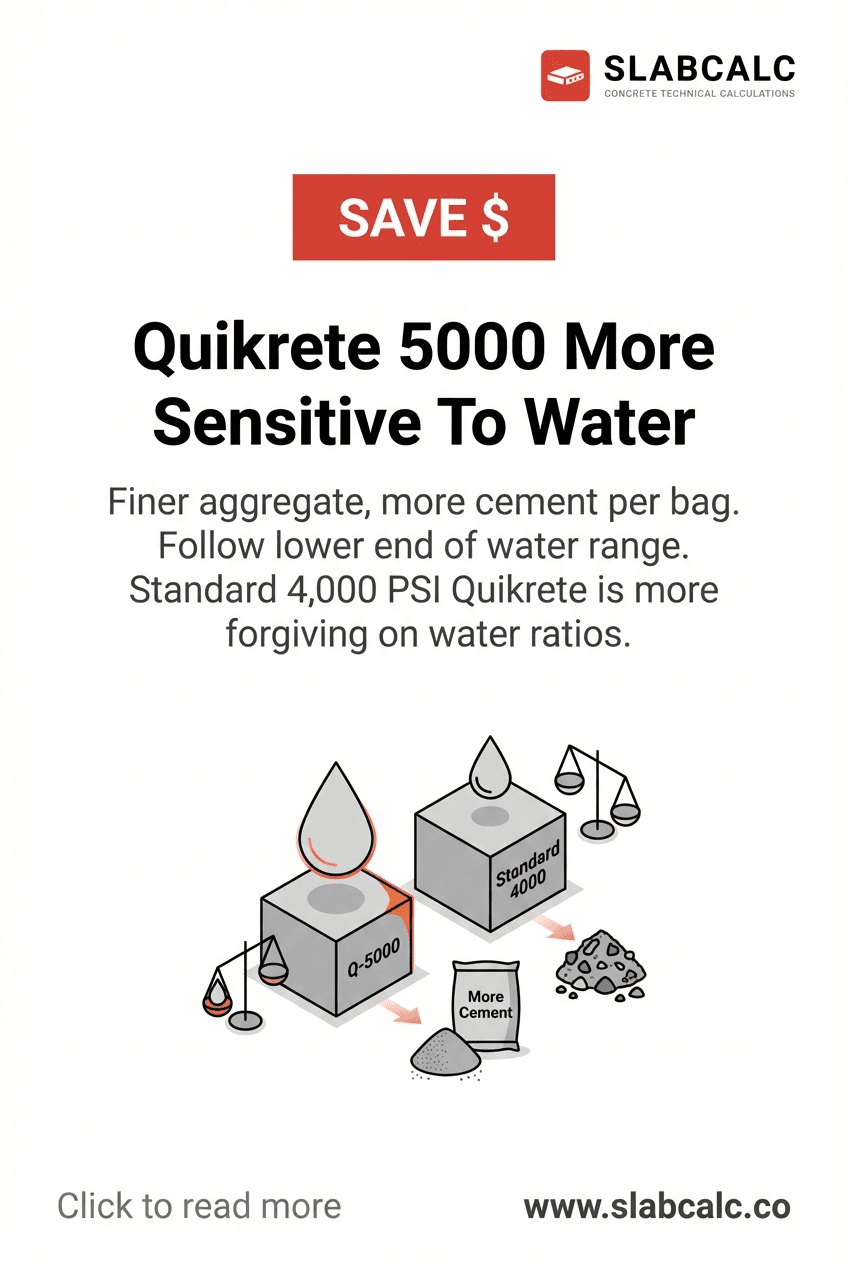
Quikrete 5000 is fundamentally different from standard 4,000 PSI Quikrete. The 5000-grade contains finer aggregate particles and more cement per 80-pound bag. This chemistry makes it less forgiving. Add 2 extra ounces of water beyond the bag's recommendation, and you're looking at a weaker slab.
The Water Ratio Math That Changes Everything
Standard 4,000 PSI Quikrete Concrete Mix:
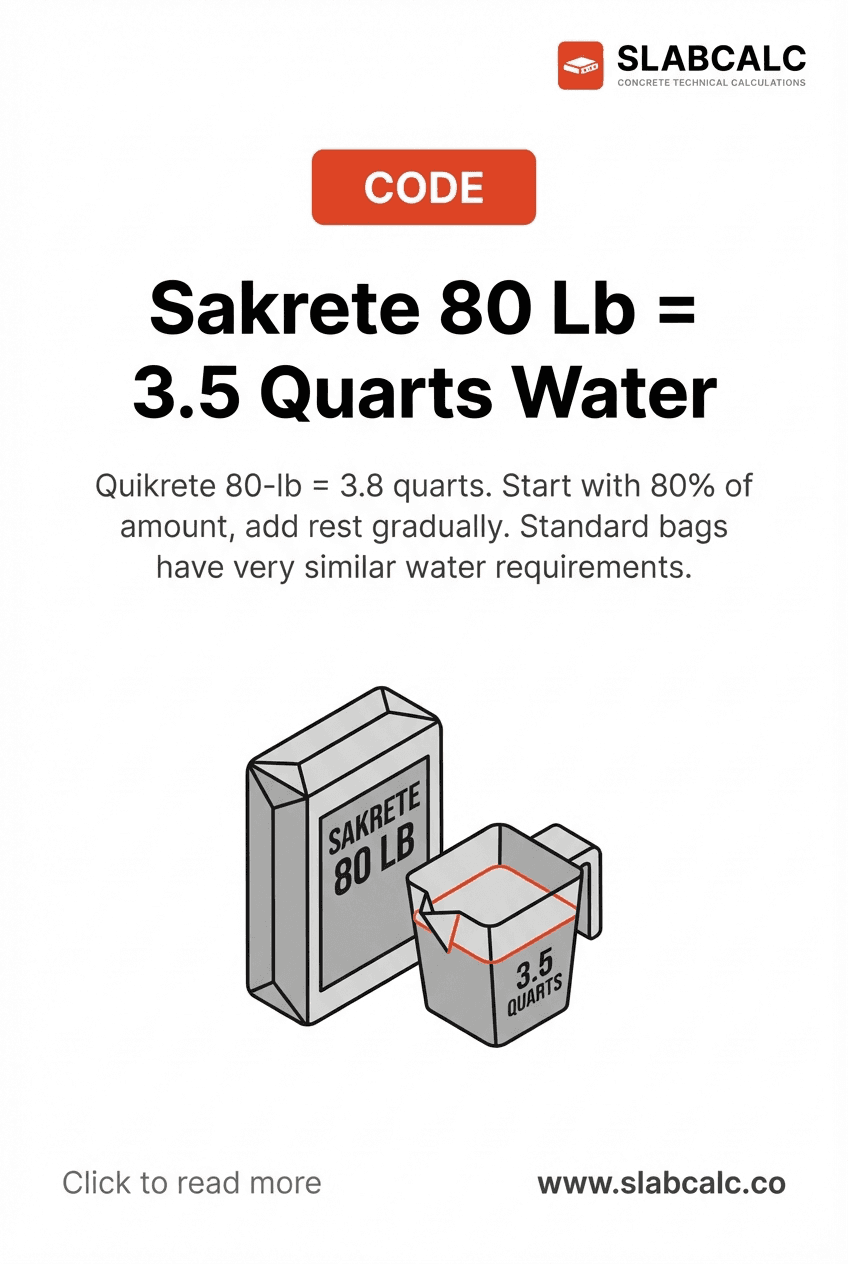
- Recommended water range: 1.0 to 1.5 quarts per 80 lb bag
- Forgiveness window: 0.5 quarts of wiggle room
- Cost impact if wrong: Minimal strength loss (5–10%)
Quikrete 5000 High-Strength Mix:
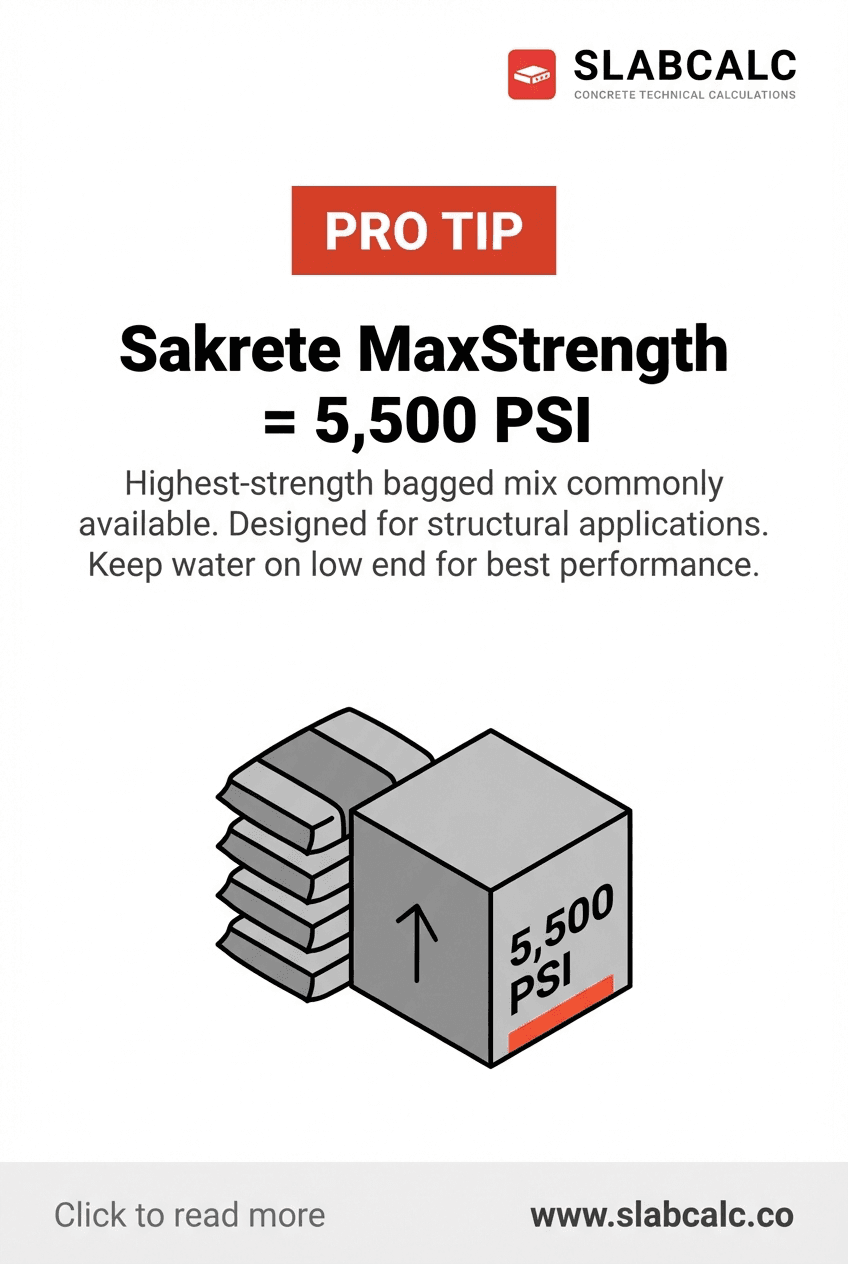
- Recommended water range: 0.8 to 1.0 quarts per 80 lb bag
- Forgiveness window: 0.2 quarts (much tighter)
- Cost impact if wrong: 15–20% strength loss, surface deterioration in 1–2 years
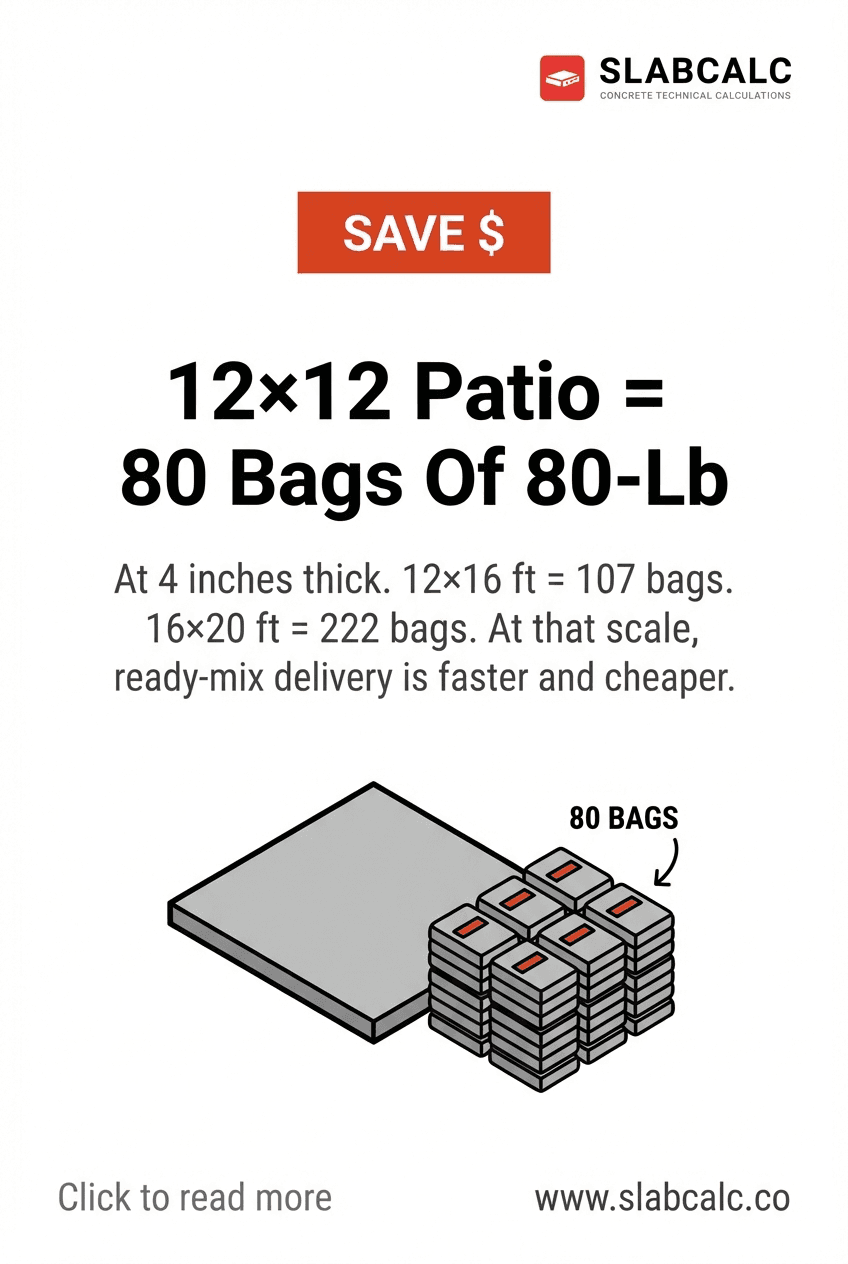
The difference isn't academic. If you're pouring a 100-square-foot driveway and use 40 bags of concrete, overshooting the water ratio by just 0.3 quarts per bag means adding 12 extra quarts (3 gallons) to your entire slab. That's a $200+ mistake.
Why Professional Grade Requires Precision
Quikrete 5000 is designed for structural applications—basement floors, high-traffic driveways, patios in freeze-thaw climates. The finer cement particles and aggregate matrix demand exact water-to-cement ratios to achieve the advertised 5,000 PSI strength.
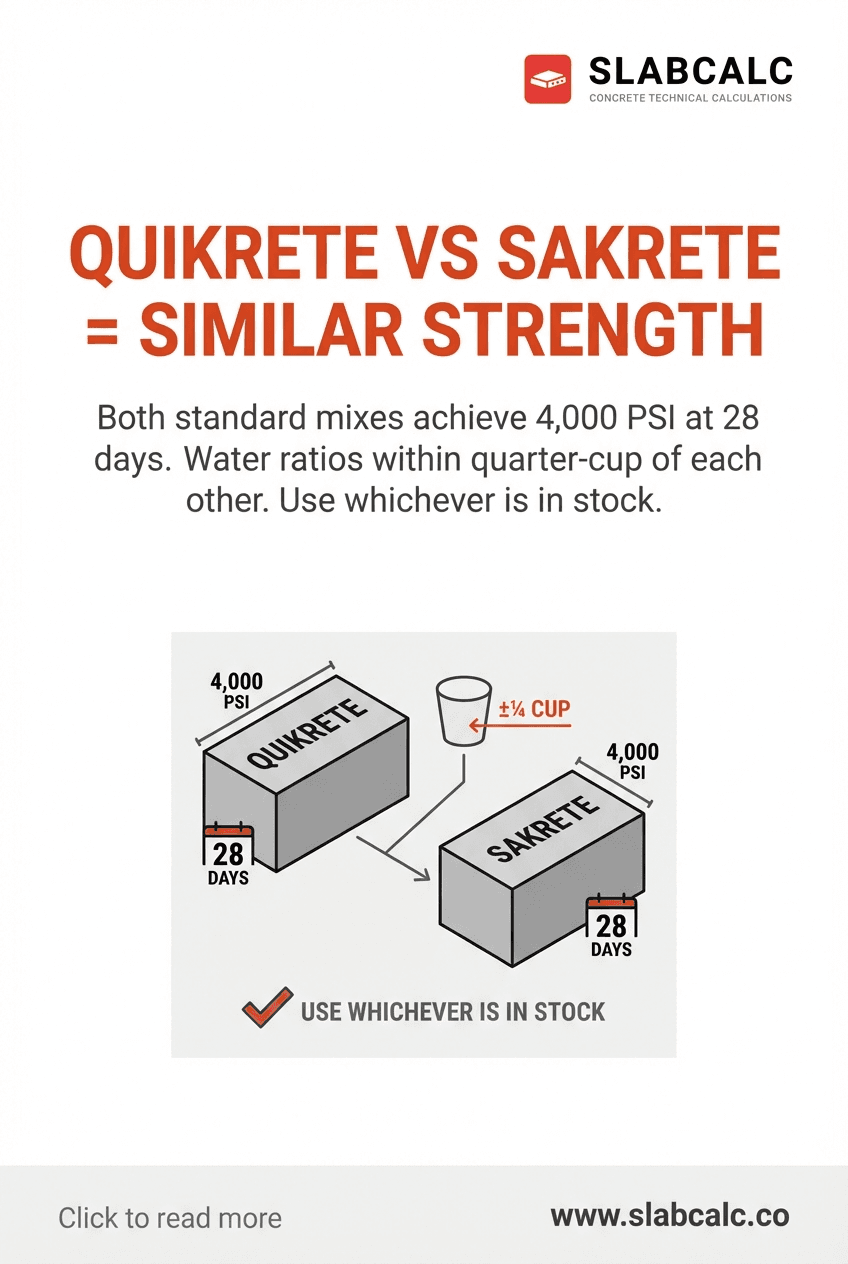
Compare this to standard Quikrete 4,000. Its coarser aggregate and lower cement content are more tolerant. A contractor who adds slightly too much water might still achieve 3,800 PSI—not ideal, but functional for light use.
With 5000-grade, that same mistake lands you at 3,200 PSI. Your driveway fails. Concrete spalls. Water infiltrates and freezes, cracking the surface.
Measure Water Like You Measure Concrete
Stop eyeballing water. Here's the framework:
- Use a measuring cup or marked bucket — not a hose. One hose-nozzle pull can be 1–3 quarts.
- Follow the lower end of the range — For Quikrete 5000, aim for 0.8–0.9 quarts per 80 lb bag, not 1.0.
- Account for aggregate moisture — If your sand or gravel is damp, reduce water by 10–15%.
- Mix in a concrete mixer — Hand mixing leads to uneven water distribution and weak spots.
- Test the first batch — Pour a 1-foot cube and observe. If it's too stiff, add water in small amounts (2 tablespoons) to the next batch.
The Decision Framework
Choose standard Quikrete 4,000 if: Your project is a patio, shed pad, or low-traffic surface. You want forgiving ratios. You're comfortable with 4,000 PSI strength.
Choose Quikrete 5000 if: You're pouring a driveway, basement floor, or structural surface. You can measure water precisely. You're willing to spend 10–15% more per bag ($3–$5 extra per 80 lb bag) for durability.
The $200 savings comes from avoiding a failed batch. Respect 5000's water sensitivity, and your concrete lasts 30+ years instead of 5.