
DIY vs Contractor Decision
The biggest mistake homeowners make isn't choosing the wrong contractor—it's deciding to DIY a project that needs professional hands. Here's how to decide before you rent equipment or commit time and money.
The Quick Decision Tree
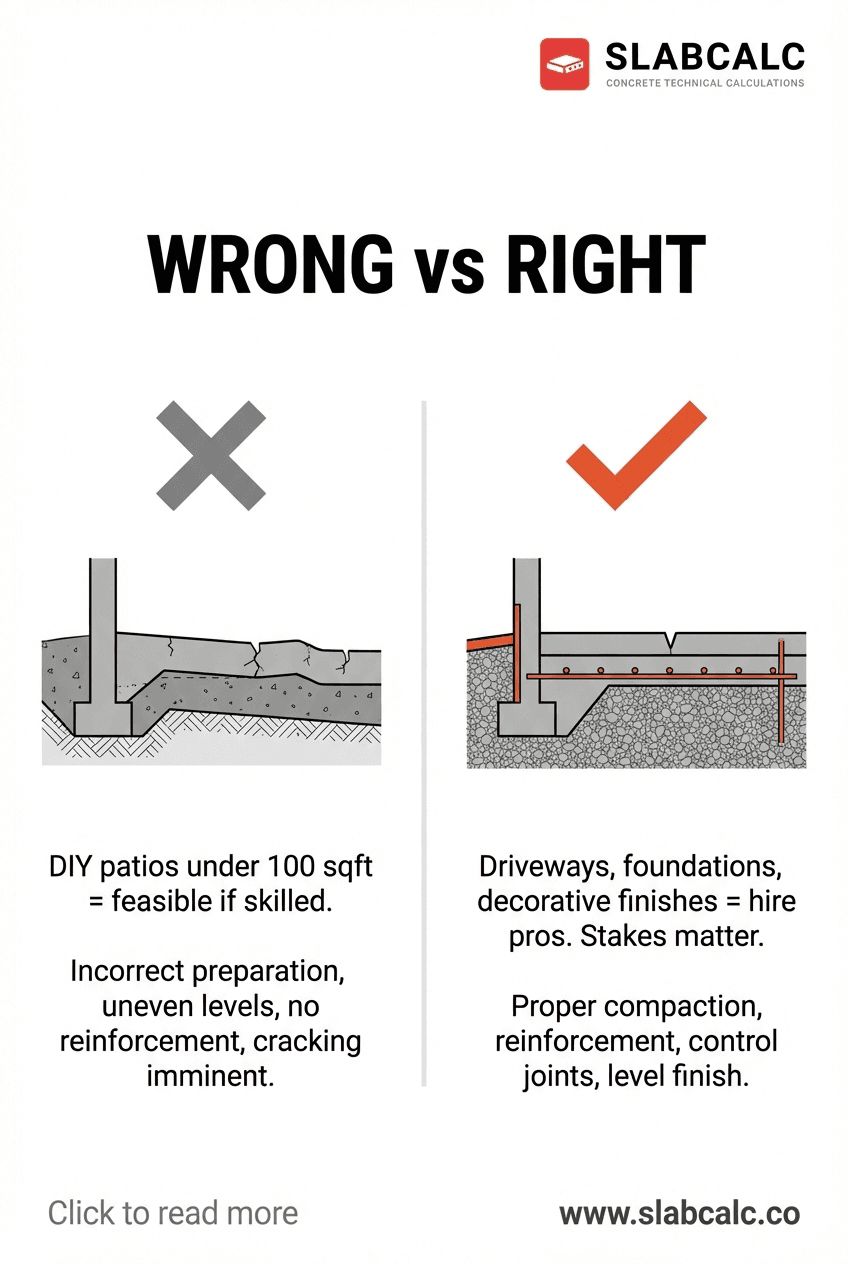
If your project is under 100 square feet AND you have concrete finishing experience, DIY is feasible. Otherwise, keep reading.
- Small, simple patios (under 100 sq ft, flat, no decorative work): DIY-capable
- Driveways (structural load, slope requirements, finishing): hire a pro
- Foundations: hire a pro (code compliance, settlement risk)
- Decorative finishes (stamping, staining, exposed aggregate): hire a pro
- Repairs or patches on existing concrete: depends on scope
Why Size Matters Less Than You Think
A 60-square-foot patio isn't automatically DIY territory. A 120-square-foot driveway isn't automatically pro-only. The deciding factors are complexity, site conditions, and your actual skill level—not square footage alone.
Two overlooked realities:
Concrete cures on a schedule, not yours. Weather, temperature, and humidity don't wait. If rain hits during your finishing window (roughly 4–8 hours after pour), you've wasted materials and time. Pros have backup plans and equipment to manage this.
Tool costs add up fast. Renting a concrete mixer ($60–$80/day), vibrator ($40–$50/day), and finishing tools ($100+) for a small project can exceed $250. Add that to material costs, and the savings shrink quickly.
The Skill Test You Can't Fake
Before committing to DIY, ask yourself honestly:
- Have you finished concrete before (not just poured it)?
- Do you understand slope, drainage, and grading?
- Can you work in a team or solo when timing is critical?
- Do you own or have access to a power mixer?
If you answered "no" to two or more, hire a contractor. A botched finish—uneven surface, poor drainage, premature cracking—costs $1,500–$5,000 to repair.
The Hidden Costs of DIY
Material waste runs 10–15% on first-time pours. Rental equipment adds 15–25% to your budget. If you make mistakes requiring rework, you're adding 50%+ to total cost and doubling your labor hours.
For a simple 80-square-foot patio:
- DIY: ~$400–$600 materials + $250 equipment rental + your time
- Pro: ~$1,200–$1,800 total
The gap shrinks when you factor in mistakes, failed finishing, and your time valued at even $20/hour.
When to Absolutely Hire a Pro
Any project involving structural load (driveways, garage slabs), code compliance (foundations, retaining walls), or decorative finishes (stamping, staining, exposed aggregate) requires licensed contractors. These aren't about cost savings—they're about liability and longevity.
Driveways, for example, need precise slope (1/8 inch per foot) for drainage and proper base preparation (4–6 inches compacted gravel). Miss either, and you'll have pooling water and premature failure within 3–5 years.
The Bottom Line
DIY a small, flat, simple patio if you have concrete experience. Hire a pro for everything else. The cost difference between DIY success and DIY disaster is smaller than you think, and a professional guarantee beats a gamble every time.