
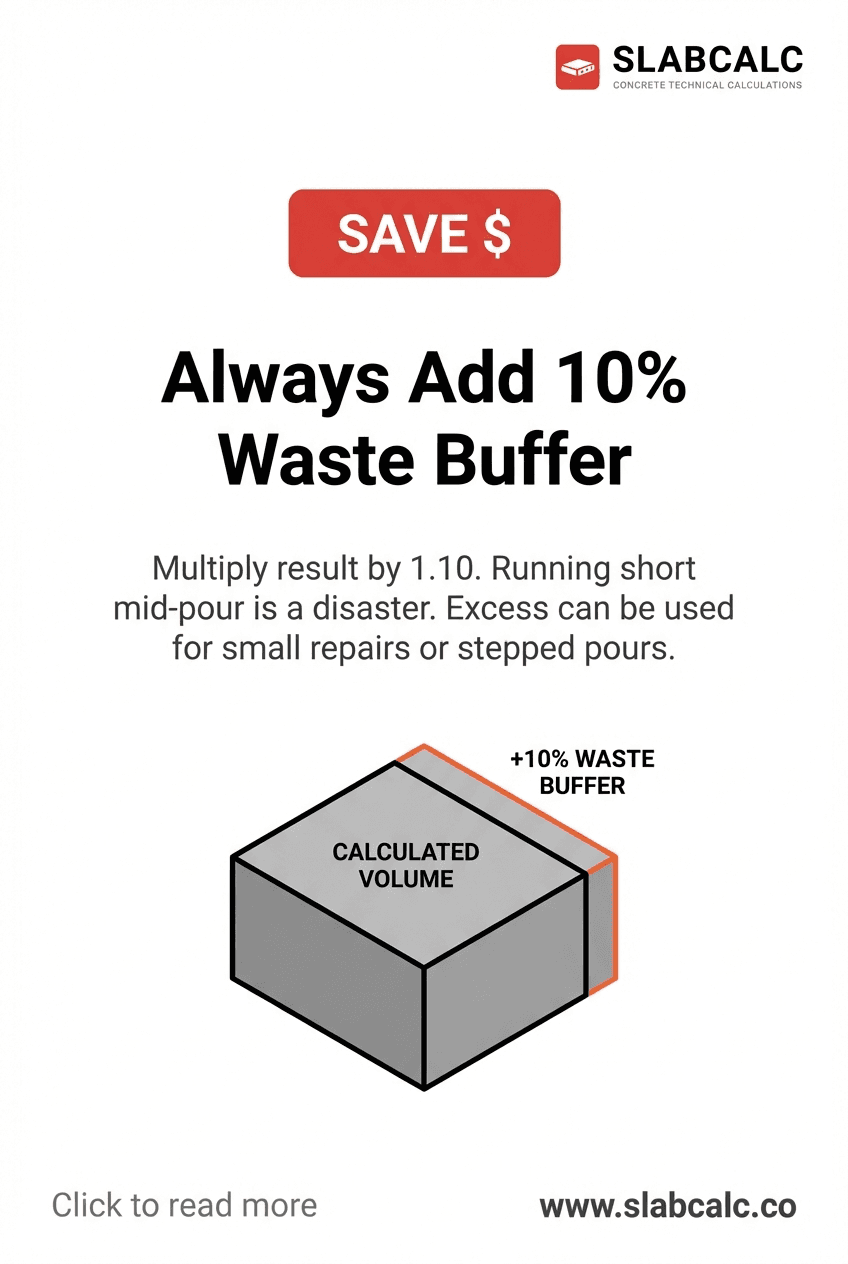
Always Add 10% Waste Buffer
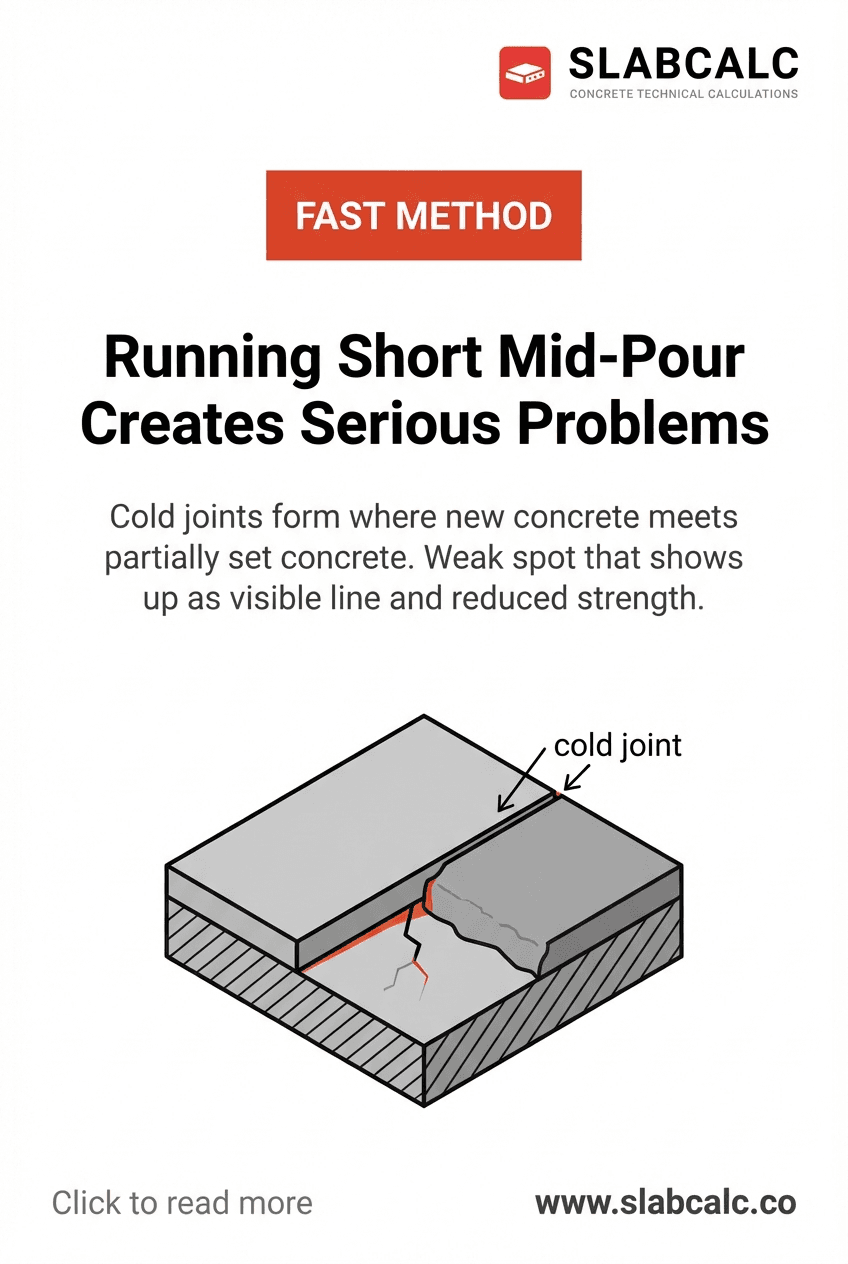
Running short on concrete mid-pour costs $300–$800 in emergency delivery fees, lost labor time, and potential cold joints that weaken your slab. Yet the solution is simple: multiply your calculated volume by 1.10 before ordering. This 10% buffer typically adds only $30–$50 to your total bill—a fraction of what you'd lose stopping mid-project.
The Real Cost of Cutting It Close
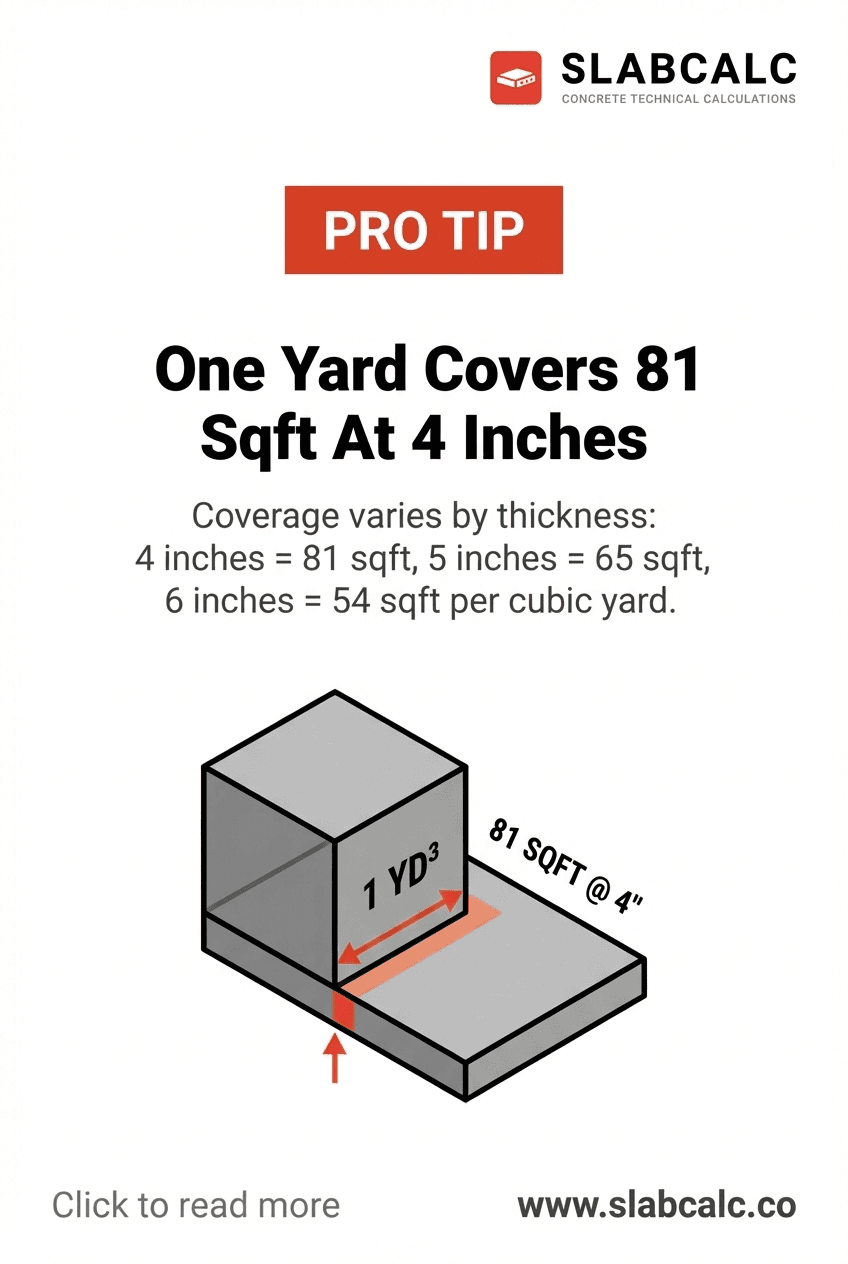
Let's say you calculate you need 5 cubic yards for a 20 × 15 foot patio at 4 inches thick. Concrete costs $150–$180 per cubic yard, so your base material is $750–$900. You order exactly 5 yards to save money.
But your excavation has a 1-inch low spot. Uneven ground, form flex, and spillage consume an extra 0.4 cubic yards you didn't budget for. You're 0.4 yards short with concrete already set in the truck. Now you either:
- Pay for emergency delivery ($500–$800) for a small load
- Leave an unfinished section and pour later, creating a weak cold joint
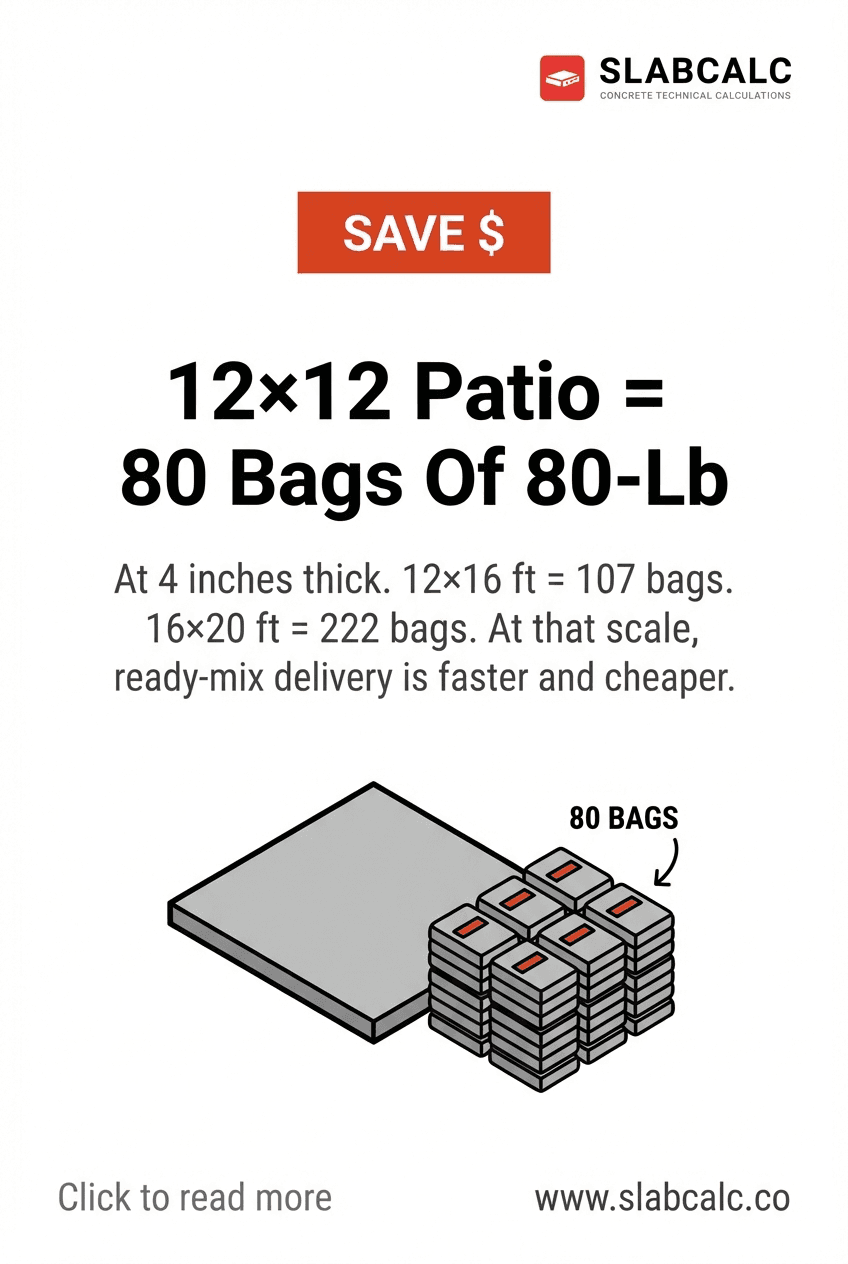
- Finish with inferior material (bagged concrete, which is weaker and slower)
All three options cost more than the $40–$50 you'd have spent adding that 10% buffer upfront.
The 10% Math Is Simple
Take your calculated cubic yards and multiply by 1.10:
Your calculation: 5 cubic yards With 10% buffer: 5 × 1.10 = 5.5 cubic yards Added cost: 0.5 × $165 (mid-range price) = $82.50
Compare this to the consequences:
- Emergency delivery surcharge: $500+
- Extra labor (waiting, remobilizing): $200+
- Structural risk from cold joints: Priceless
The math overwhelmingly favors the buffer.
Where That Extra Concrete Actually Goes
The 10% isn't waste—it's insurance. Here's where it gets used:
Uneven ground: Most homeowners dig by eye, not laser level. Even a 0.5-inch average variation across a 400 sq ft slab adds 0.6 cubic yards of volume.
Form deflection: Wood forms flex under 100+ pounds of pressure per linear foot. A 60-foot perimeter might deflect 0.25 inches on average, consuming 0.3 cubic yards.
Spillage and finishing: Screeding (striking off excess) and troweling push material outside the forms. You'll lose 2–5% just to normal finishing work.
Measurement error: Your tape measure might be off by 2 inches on a 60-foot pour. That's enough to short you 0.2–0.3 yards.
Added together, you're looking at 0.5–1.5 cubic yards of legitimate consumption beyond your calculated amount.
The Smart Ordering Strategy
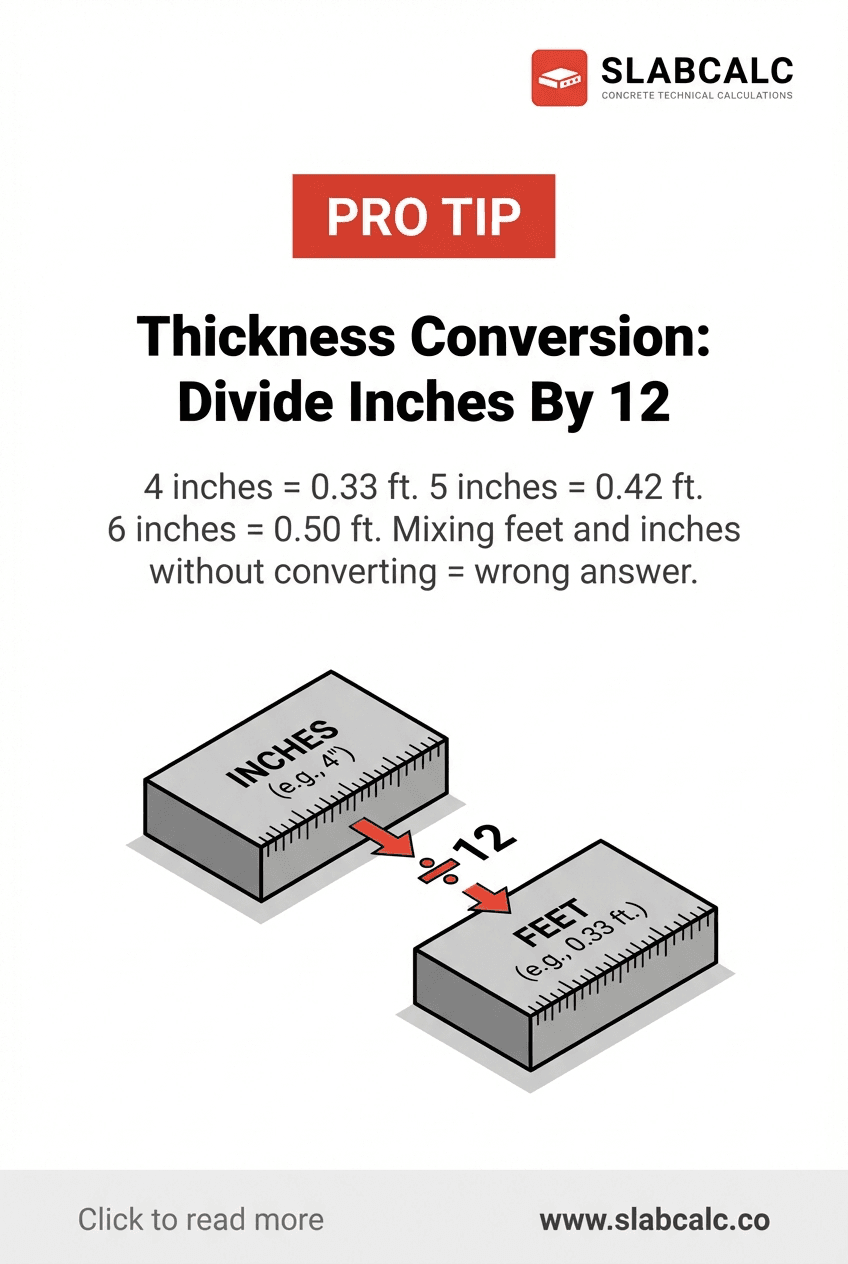
- Calculate your volume precisely using your measurements in feet (convert inches first)
- Multiply by 1.10 before placing your order
- Round up to your supplier's minimums (most sell in 0.5 or 1-yard increments)
- Use excess for repairs, stepping stones, or future projects—concrete doesn't expire
A 10% buffer isn't padding the estimate. It's accounting for reality. Every professional concrete contractor builds this in automatically. The difference between a DIYer and a pro isn't always skill—it's knowing where problems hide.