

How to Mix a Small Batch of Concrete By Hand
For projects that need 1–3 bags of concrete — a fence post, a small patch, a set of stepping stones — hand mixing in a wheelbarrow is faster, cheaper, and just as effective as renting a mixer. You don't need much technique: add water first, add the dry mix, work a concrete hoe for 5 minutes, and check consistency. This guide walks through the process step by step.
This guide walks through the process step by step.
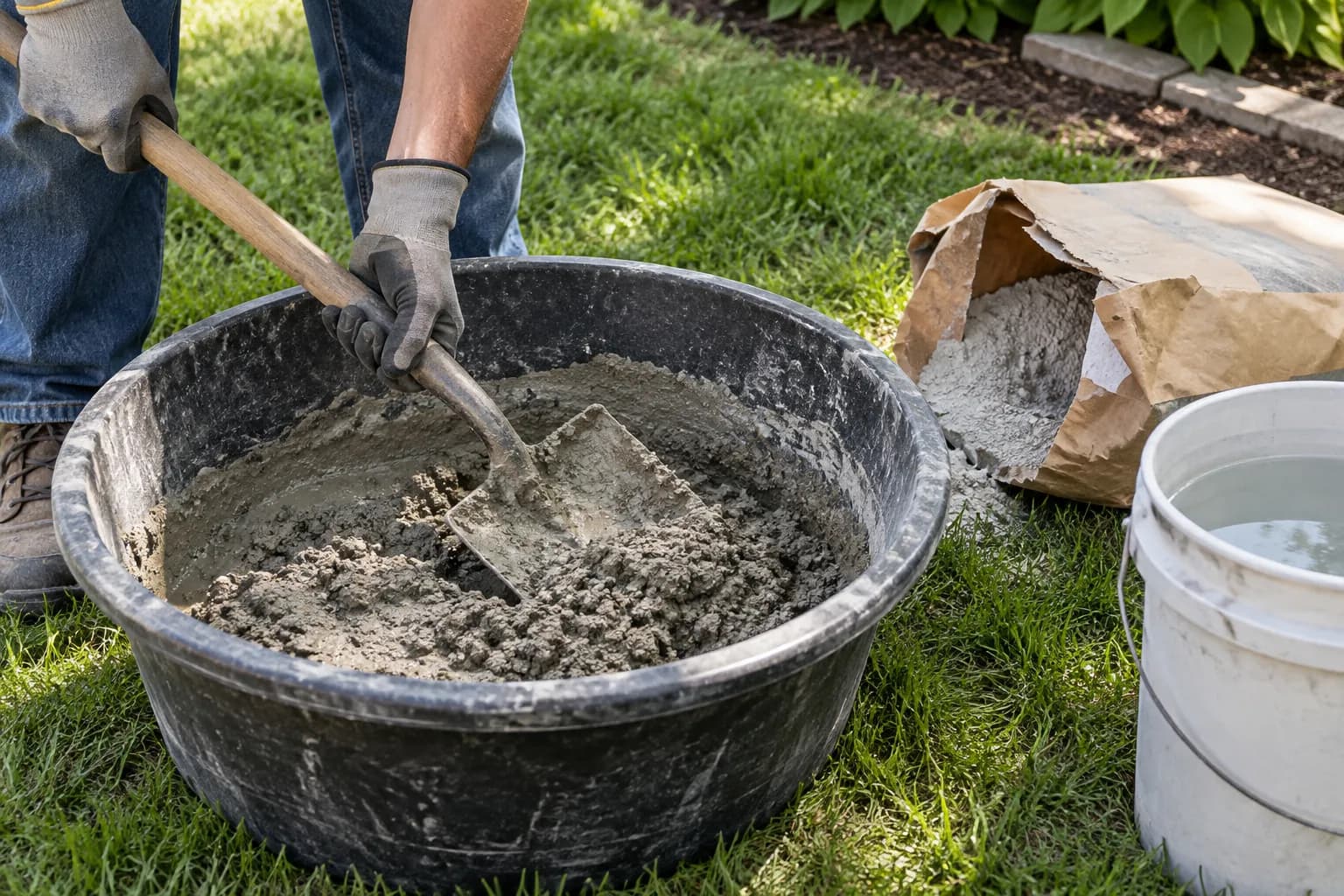
When Hand Mixing Makes Sense
| Bags Needed | Recommended Method |
|---|---|
| 1–3 bags | Hand mix in wheelbarrow |
| 4–10 bags | Rent electric mixer |
| 10+ bags | Order ready-mix concrete |
Hand mixing is practical for small batches because it requires no equipment rental, setup, or cleanup beyond the wheelbarrow. For bigger projects, see how to mix concrete for mixer options and ready-mix guidance.
What You Need
- Wheelbarrow (6 cubic feet capacity recommended)
- Concrete hoe (not a garden hoe — see concrete tools for beginners)
- Bucket for measuring water
- Bagged concrete mix (standard or fast-setting)
- Garden hose with adjustable nozzle
- Work gloves, safety glasses, dust mask
Step-by-Step: Hand Mixing in a Wheelbarrow
Step 1: Measure Your Water
Check the bag label for water per bag. It's usually expressed in quarts or pints for an 80-lb bag (typically 2.5–3.5 quarts). Measure it into a bucket — don't eyeball it for your first batch.
Pro tip: Use cool water. On hot days, cold water extends your working time by 5–10 minutes.
Step 2: Add Water to the Wheelbarrow First
Pour 3/4 of the measured water into the empty wheelbarrow. Don't add all of it yet — you'll adjust at the end.
Adding water first is the most important technique tip for hand mixing. Concrete that starts wet at the bottom mixes far more easily than starting dry.
Step 3: Add the Dry Concrete Mix
Open the bag and pour the dry mix into the water. Do it slowly — dumping the whole bag at once creates a dust cloud and dry chunks that are hard to break up.
Step 4: Start Mixing From the Bottom
Use the concrete hoe with a pulling motion (not pushing) to pull the mix from the bottom of the wheelbarrow up and through itself. Work around all edges and into the corners.
Goal: incorporate all the dry material before adding more water. You'll see a thick, somewhat crumbly mix at this point — that's correct.
Step 5: Add Remaining Water Gradually
Once the dry mix is incorporated, add the remaining water in two or three small additions. Mix thoroughly after each addition and check consistency.
The finished mix should:
- Hold its shape when squeezed in a gloved hand
- Have a slight sheen from cement paste
- Not drip or flow when you pick up a handful
If it seems too stiff after adding all the recommended water, you can add a small additional amount — a tablespoon at a time — until it's workable. If it's too wet, add small amounts of dry mix.
Step 6: Mix for 3–5 More Minutes
Continue mixing for at least 3 minutes after the water is fully incorporated. Hand mixing requires more time than machine mixing to get the cement fully distributed.
Test for consistency one more time: grab a handful, squeeze, and look for the right texture (not too wet, not crumbling).
Step 7: Pour Immediately
Don't let mixed concrete sit more than 5–10 minutes before placing it. Once you start seeing the surface stiffen, you've used up working time. Move quickly after the mix is ready.
Mixing in a Bucket (Half-Bag or Less)
For very small amounts:
- Add water to the bucket first (about 1/2 the recommended amount for the portion of bag you're using)
- Add dry mix
- Use a drill with a mixing paddle at low speed (600–800 RPM)
- Mix 3–4 minutes, scraping sides occasionally
- Add remaining water as needed
A 5-gallon bucket holds about half an 80-lb bag comfortably. For a full bag, use the wheelbarrow.
Mixing Multiple Batches for a Larger Project
If your project needs more than 3 bags total but you're mixing by hand:
- Mix and pour one batch at a time
- Clean the wheelbarrow between batches (remove any hardened concrete with a hoe strike before it fully sets)
- Work quickly — you have the same working time for each batch
Calculate how many bags you need before you start:
Includes 10% waste factor
Open the full Concrete Slab Calculator →
Cleanup
Rinse all tools immediately after the final batch — concrete rinses off easily when fresh. A hoe or trowel with hardened concrete requires a wire brush or concrete dissolver.
Let any remaining mixed concrete in the wheelbarrow harden completely, then pop it out as a solid disc — much easier than trying to wash wet concrete out.
Related Guides
- How to Mix Concrete — Larger batches, mixer rental, ready-mix guidance
- How to Read a Concrete Bag — Water amounts and label information
- DIY Concrete Stepping Stones — A great first project for hand-mixing practice