

Alkali-Silica Reaction (ASR) in Concrete: Identification, Testing & Management Guide
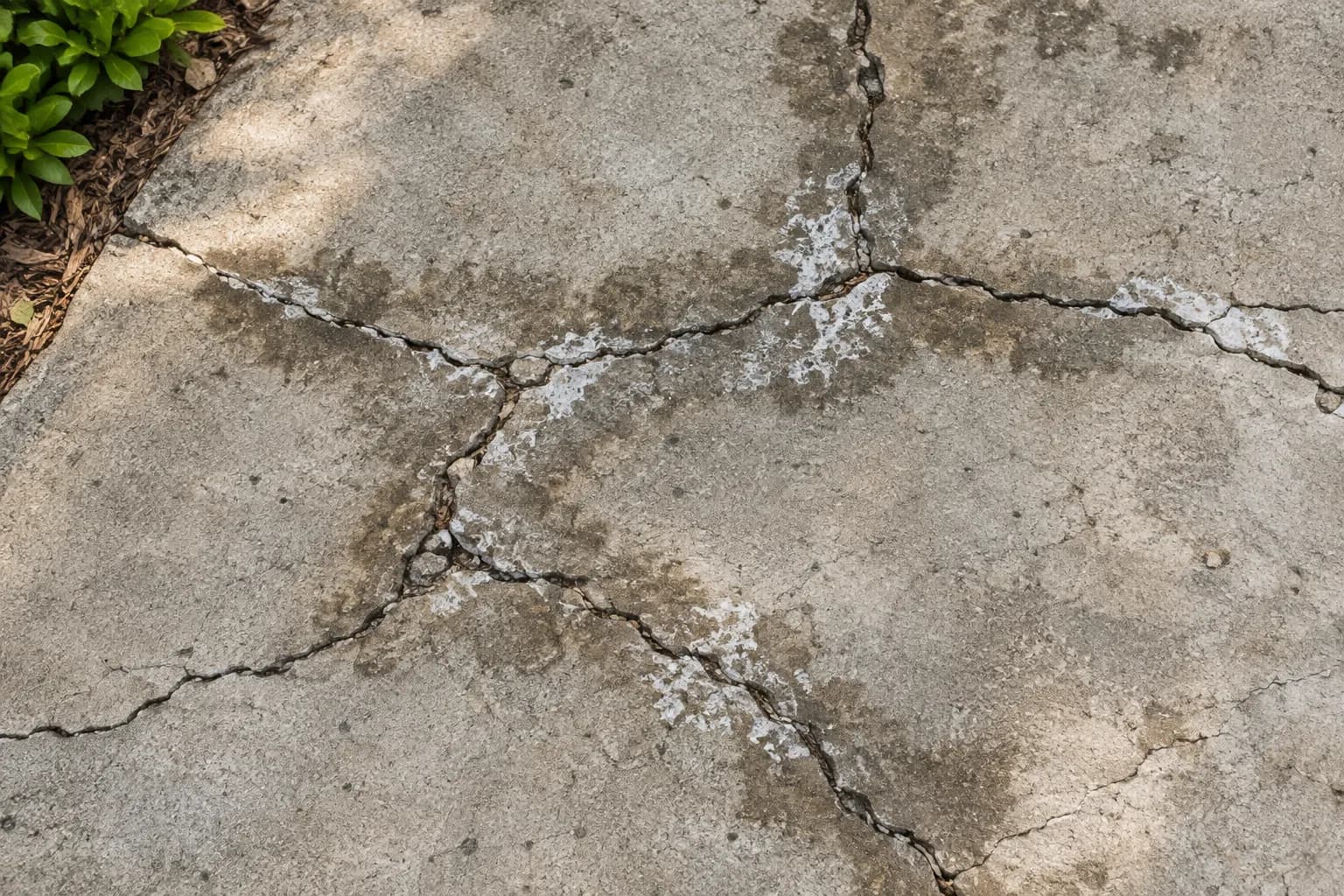
Alkali-silica reaction (ASR) is a slow but progressive chemical reaction between reactive silica minerals in the aggregate and alkali hydroxides in the cement paste. It produces a hygroscopic gel that absorbs water and expands, generating internal pressures that crack the concrete from within. ASR cannot be stopped once underway — only slowed. The hallmark signs are map cracking across the entire surface and white or translucent gel deposits at crack edges.
What Is Alkali-Silica Reaction?
Alkali-silica reaction (ASR) is a deleterious chemical reaction between alkali hydroxides in Portland cement paste and reactive forms of silica present in certain aggregates. The reaction produces an alkali-silica gel — an amorphous, hygroscopic sodium-calcium silicate hydrate (approximately Na₂SiO₃·nH₂O) — that absorbs water from the surrounding paste, swells, and generates internal pressures that exceed concrete's tensile capacity of roughly 300–500 PSI. The result is progressive cracking that initiates internally and propagates outward over years to decades.
Thomas Stanton of the California Division of Highways first identified and documented ASR in 1940, attributing the deterioration of several California highway structures to reactive opaline silica in locally sourced aggregates. Since Stanton's discovery, ASR has been recognized worldwide as one of the most damaging chemical deterioration mechanisms in concrete. ACI 221.1R ("Report on Alkali-Aggregate Reactivity") and the Portland Cement Association (PCA) estimate that ASR affects concrete infrastructure on every continent, with repair and replacement costs running into billions of dollars annually.
The reaction timeline is characteristically slow. Visible surface damage typically appears 5–30 years after placement, depending on the reactivity of the aggregate, the alkali loading of the cement, the moisture exposure conditions, and the ambient temperature. Warmer, wetter environments accelerate the reaction — ASR progresses roughly twice as fast at 100 degrees F as at 70 degrees F. Once the gel has formed in sufficient quantity and absorbed enough water to generate expansive pressure, cracking is inevitable and irreversible. The concrete cannot heal itself, and no treatment can reverse the gel formation or close existing cracks. Management strategies focus entirely on slowing the rate of future expansion and extending the service life of the structure.
The gel itself is not inherently harmful in small quantities. Many concretes contain trace amounts of alkali-silica gel that never produce visible damage because the gel fills available voids and pore space without generating significant pressure. ASR becomes destructive only when the volume of expansive gel exceeds the concrete's capacity to accommodate it — a threshold that depends on the porosity of the paste, the availability of void space, and the restraint conditions. This is why ASR damage is often non-uniform within a single structure: areas with higher moisture exposure, different aggregate batches, or greater restraint may deteriorate while adjacent areas remain sound.
What Causes ASR?
ASR requires three conditions to occur simultaneously. If any one condition is absent, the reaction does not proceed. This is the basis of all prevention strategies — eliminate one leg of the triad, and ASR is prevented entirely.
Reactive Aggregate
The aggregate must contain minerals with reactive forms of silica — meaning silica with a disordered or poorly crystalline atomic structure that is susceptible to attack by alkali hydroxides. Specific reactive minerals include opaline silica, strained quartz (quartz grains showing undulatory extinction under polarized light microscopy), chert, chalcedony, volcanic glass (obsidian, perlite, pumice), tridymite, and cristobalite. These minerals dissolve in the high-pH pore solution of concrete (pH 13–14) and recombine with sodium and potassium ions to form the expansive gel.
Not all siliceous aggregates are reactive. Well-crystallized, unstrained quartz (the most abundant silica mineral in nature) is essentially non-reactive under normal conditions. The distinction between reactive and non-reactive silica is a matter of crystal structure, not chemical composition — both are SiO₂, but the disordered forms dissolve far more readily in alkaline solution.
The "pessimum proportion" is a critical concept in ASR. For many reactive minerals, maximum expansion occurs at a specific proportion of reactive to non-reactive aggregate — not at the highest reactive content. For opaline silica, the pessimum proportion is typically 2–5% by weight of total aggregate. At very high reactive contents (above 15–20%), the alkali is consumed before enough gel forms to cause damage. This counterintuitive behavior means that diluting a reactive aggregate with non-reactive material can sometimes make ASR worse rather than better.
Two standardized tests screen aggregates for ASR reactivity before use in concrete. ASTM C1260 (Accelerated Mortar Bar Test) exposes mortar bars containing the test aggregate to 1N NaOH solution at 176 degrees F for 16 days and measures expansion. Expansion exceeding 0.10% at 16 days indicates potentially deleterious reactivity. ASTM C1293 (Concrete Prism Test) is the definitive long-term test — concrete prisms are stored at 100 degrees F and high humidity for one to two years. Expansion exceeding 0.04% at one year confirms deleterious reactivity. ASTM C1293 is more reliable but impractical for routine quality control due to its long duration.
Alkali Content
The cement must supply sufficient alkali hydroxides — sodium hydroxide (NaOH) and potassium hydroxide (KOH) — to drive the reaction. Alkali content is expressed as "Na₂O equivalent" (Na₂O + 0.658 × K₂O) as a percentage of cement weight. ASTM C150 defines low-alkali cement as having Na₂O equivalent at or below 0.60%. Using low-alkali cement is one of the oldest and simplest ASR prevention measures, dating to recommendations by Stanton himself in the 1940s.
However, alkali content alone is not a reliable predictor of ASR risk. Total alkali loading — the product of cement alkali content and cement content per cubic yard — is what matters. A concrete mix with 0.55% Na₂O equivalent cement at 700 lb/yd3 delivers more total alkali (3.85 lb Na₂O eq. per yd3) than a mix with 0.65% cement at 500 lb/yd3 (3.25 lb Na₂O eq.). ACI 301 limits total concrete alkali to 4.0 lb Na₂O equivalent per cubic yard for ASR-sensitive applications.
External alkali sources can also feed the reaction after placement. Sodium chloride (NaCl) from de-icing salts, seawater exposure, or alkali-rich groundwater can migrate into the concrete and elevate the pore solution pH sufficiently to initiate or accelerate ASR. This is why bridge decks, highway pavements, and marine structures are disproportionately affected — they face both high moisture and external alkali exposure.
Moisture
The alkali-silica gel must absorb water to expand. Without sufficient moisture, the gel remains in a non-expansive, viscous state within the paste pore structure. Research consistently shows that ASR expansion is negligible at internal relative humidity (RH) below 80%. Above 80% RH, expansion increases sharply with increasing moisture content.
This moisture dependence is the basis of the most effective post-construction management strategy: moisture reduction. Indoor concrete slabs in climate-controlled buildings rarely develop ASR damage even when the aggregate and cement chemistry are susceptible, because the internal RH stays below the 80% threshold. Exterior flatwork, foundations in contact with soil moisture, and structures exposed to precipitation or standing water are at highest risk.
How to Identify ASR
ASR has a distinctive visual signature that distinguishes it from other cracking mechanisms, but definitive diagnosis requires laboratory confirmation. The surface signs alone are suggestive, not conclusive.
| Feature | ASR | Shrinkage Cracking | Freeze-Thaw Spalling |
|---|---|---|---|
| Pattern | Map cracking, entire surface | Map cracking or parallel | Surface flaking/pitting |
| Key marker | White/translucent gel at cracks | None | Exposed aggregate |
| Surface | Pop-outs, mottled appearance | Smooth | Rough, scaled |
| Timing | 5–30 years after pour | First 28 days | Seasonal (winter) |
| Depth | Throughout section | Hairline; can be full depth (no offset) | Surface to 1 inch |
| Progression | Continuous, accelerating | Stops after cure | Cyclic, seasonal |
Three unique markers distinguish ASR from all other cracking mechanisms.
Gel deposits are the most diagnostic visual indicator. White, translucent, or glassy deposits at crack edges and on exposed surfaces are a near-certain sign of ASR. The gel may appear wet or sticky when fresh, drying to a white crystalline residue. No other common concrete deterioration mechanism produces these deposits. When visible, gel deposits alone are sufficient to warrant a petrographic examination.
Uniform pattern cracking distinguishes ASR from other forms of map cracking. Shrinkage cracking is also a map pattern, but it is confined to the surface and typically appears within the first month. ASR map cracking is full-depth, develops years or decades after placement, and covers the entire exposed surface with a remarkably uniform network. The cracks often follow aggregate outlines at the surface — a phenomenon called "peripheral cracking" — as the gel expands at the aggregate-paste interface.
Pop-outs are conical surface defects where an individual aggregate particle has been pushed upward and outward by gel expansion, leaving a shallow crater with the bottom of the aggregate visible. Pop-outs from ASR are typically 1–3 inches in diameter and are scattered randomly across the surface. While freeze-thaw cycling can also cause pop-outs, ASR pop-outs often show gel residue in the crater.
Not sure what's causing your concrete damage? Upload a photo to the AI crack analyzer →
Severity Assessment
ASR in concrete registers at severity 3–5 on the standard concrete damage scale. Even early-stage ASR that has produced visible cracking represents a moderate to serious condition because the reaction is progressive and irreversible.
| Severity | Visual Signs | Expansion | Structural Impact | Action | Est. Cost |
|---|---|---|---|---|---|
| 3 | Map cracking, minor gel | <0.04% | Minimal strength loss | Seal + monitor | $500–$2,000 |
| 4 | Dense cracking, pop-outs, visible gel | 0.04–0.12% | Measurable strength loss (20–40% compressive) | Treatment + engineering | $2,000–$15,000 |
| 5 | Severe cracking, structural deformation | >0.12% | Major degradation (40%+ loss) | Replace or major structural intervention | $10,000–$50,000+ |
Severity 3 represents early-stage ASR with visible map cracking and minor gel deposits. Cracks are typically 1/32 to 1/16 inch wide. The concrete's compressive strength remains largely intact at this stage, though tensile strength and elastic modulus may be reduced by 10–20%. The aggregate-paste bond is beginning to degrade but has not yet compromised overall integrity. This is the optimal stage for intervention — moisture reduction through sealing and drainage can slow progression significantly and extend service life by decades.
Severity 4 indicates moderate to advanced ASR with dense map cracking (crack spacing less than 6 inches), numerous pop-outs, and clearly visible gel deposits at crack edges and on surfaces. Expansion has reached 0.04–0.12%, which translates to measurable structural impact: compressive strength reduced by 20–40%, flexural strength reduced by 30–50%, and elastic modulus reduced by 30–50%. At this stage, structural elements (foundations, beams, columns) require engineering assessment to evaluate remaining load capacity. Flatwork at severity 4 is approaching the end of its functional service life, though sealing and lithium treatment can still extend it.
Severity 5 represents advanced ASR with severe cracking, visible structural deformation (bowing, misalignment of adjacent elements), and extensive gel exudation. Expansion exceeds 0.12% — the threshold at which most structural elements are considered significantly compromised. Compressive strength loss exceeds 40%, and the concrete may exhibit a characteristic "mushy" or "punky" texture when cored. At this stage, replacement is typically the only viable option for flatwork, and structural elements require comprehensive engineering intervention including possible load redistribution, external strengthening, or demolition and reconstruction.
Full 1–5 severity scale explained →
Testing and Diagnosis
Visual inspection provides a preliminary assessment, but petrographic examination is the only definitive diagnostic test for ASR. The following table summarizes the available testing methods, their purposes, and costs.
| Test | Standard | What It Measures | Cost | Timeline |
|---|---|---|---|---|
| Visual inspection | — | Surface signs | $0 (DIY) | Immediate |
| Petrographic examination | ASTM C856 | Microstructure, gel, reactive aggregate | $500–$1,500 | 2–4 weeks |
| Mortar bar expansion | ASTM C1260 | Aggregate reactivity (new mixes) | $300–$600 | 16 days |
| Concrete prism test | ASTM C1293 | Long-term expansion potential | $500–$1,000 | 1–2 years |
| Uranyl acetate fluorescence | ASTM C856 (supplement) | Gel identification in UV light | Included in petro | Same day |
| Core compressive test | ASTM C42 | Remaining strength | $200–$400 | 1–2 weeks |
Petrographic examination (ASTM C856) is the gold standard. A trained petrographer examines thin sections of a core sample under polarized light microscopy, identifying the reactive aggregate minerals, the presence and distribution of alkali-silica gel within cracks and voids, the extent of microcracking through aggregate particles and paste, and the overall condition of the cement paste matrix. The report will confirm or rule out ASR, identify the specific reactive mineral, and characterize the severity of the reaction. Most commercial concrete testing laboratories offer petrographic examination — expect results in 2–4 weeks at a cost of $500–$1,500 per core sample.
Uranyl acetate fluorescence testing is a supplemental technique often performed as part of the petrographic examination. A freshly broken or cut core surface is treated with uranyl acetate solution, which binds to alkali-silica gel. Under shortwave ultraviolet light, the gel fluoresces bright greenish-yellow, making even trace amounts of gel visible. This method is particularly useful for confirming ASR in cases where visual gel deposits are absent but microstructural damage is present.
ASTM C1260 and ASTM C1293 are aggregate screening tests used before construction — they evaluate whether an aggregate source is likely to cause ASR in new concrete. They are not diagnostic tests for existing structures. However, if you are planning to replace ASR-affected concrete, specifying that the replacement aggregate must pass C1260 (expansion below 0.10% at 16 days) or C1293 (expansion below 0.04% at one year) ensures the new concrete will not develop the same problem.
Core compressive testing (ASTM C42) measures the remaining compressive strength of existing concrete by extracting 4-inch diameter cores and crushing them in a laboratory press. For ASR-affected concrete, this test quantifies the strength loss relative to the original design strength. It is essential for structural elements where load capacity must be evaluated. A single core test costs $200–$400 and returns results within 1–2 weeks.
Management and Treatment Options
ASR cannot be repaired — the gel that has formed cannot be removed, and the cracks that have opened cannot be fully healed. All intervention strategies focus on slowing the rate of future expansion and extending the remaining service life of the concrete. The term "management" is deliberate: ASR is a chronic condition that requires ongoing monitoring, not a one-time fix.
| Strategy | Mechanism | Cost | Effectiveness |
|---|---|---|---|
| Silane/siloxane sealer | Reduces moisture ingress by 80–95% | $0.50–$1.50/sq ft | Slows progression significantly |
| Lithium nitrate treatment | Chemically suppresses gel expansion | $3–$8/sq ft | Most effective non-replacement option |
| Improved drainage | Reduces water contact | $500–$5,000 | Essential complement to sealing |
| Topical crack sealing | Prevents water entry through cracks | $1–$3/linear ft | Cosmetic + moisture reduction |
| Full replacement | Removes reactive concrete entirely | $8–$15/sq ft | Definitive — specify non-reactive aggregate |
Silane/siloxane sealers are the first-line treatment for ASR-affected concrete. These penetrating sealers chemically bond within the concrete pore structure and create a hydrophobic barrier that reduces liquid water absorption by 80–95% while remaining vapor-permeable (allowing the concrete to dry outward). Since ASR gel expansion requires water above 80% internal RH, reducing moisture ingress directly slows the reaction rate. Silane sealers penetrate 2–6 mm into the concrete surface and last 5–10 years before reapplication. Application is straightforward — a pump sprayer or roller — and costs $0.50–$1.50 per square foot for materials and labor. For a 500-square-foot driveway, total cost runs $250–$750. This is a practical DIY project for accessible flatwork.
Lithium nitrate (LiNO₃) treatment is the most effective chemical intervention for ASR. Lithium ions substitute for sodium and potassium in the gel, forming a non-expansive lithium-silica product that does not absorb water or swell. The Federal Highway Administration (FHWA) and AASHTO PP-65 ("Standard Practice for Determining the Reactivity of Concrete Aggregates and Measuring the Properties of Concrete Made with Reactive Aggregates Using the Lithium Method") have established protocols for lithium treatment of both new and existing concrete. For existing structures, a 30% lithium nitrate solution is applied topically and penetrates into the concrete by absorption. Multiple applications may be needed to achieve adequate penetration depth. Contractor-applied lithium treatment costs $3–$8 per square foot — significantly more expensive than sealing alone, but appropriate for high-value elements such as foundations, structural walls, and bridge components where replacement cost would be far higher.
Improved drainage addresses the moisture condition at the source. Regrading around foundations to direct surface water away from the concrete, installing French drains, repairing leaking downspouts, and removing soil contact from foundation walls all reduce the moisture available to drive ASR. Drainage improvements cost $500–$5,000 depending on scope and are an essential complement to surface sealing — a sealer alone cannot compensate for concrete that is constantly saturated from below or from standing water.
Full replacement is the definitive solution when the concrete has deteriorated beyond practical management — typically at severity 5, or at severity 4 for flatwork where the cost of ongoing treatment approaches replacement cost. When specifying replacement concrete, it is essential to address the root cause: use non-reactive aggregate tested per ASTM C1260 or C1293, specify low-alkali cement (Na₂O equivalent below 0.60%), and incorporate supplementary cementitious materials (SCMs) as described in the prevention section below. Replacement cost for residential flatwork runs $8–$15 per square foot including tear-out, disposal, subbase preparation, and new pour.
DIY vs. Professional
Professional diagnosis is non-negotiable for ASR. No amount of visual inspection can definitively confirm ASR — petrographic examination of a core sample per ASTM C856 is the only reliable diagnostic test, and it requires a trained petrographer with specialized equipment. Attempting to self-diagnose ASR based on surface appearance risks confusing it with other map-cracking conditions (shrinkage, freeze-thaw, DEF) that require entirely different management approaches.
What a homeowner can do:
- Photograph and document surface conditions with a ruler for scale
- Apply silane/siloxane sealer to accessible flatwork (same process as sealing any exterior concrete)
- Improve drainage around affected areas
- Monitor crack progression with pencil marks and dated photographs at 6-month intervals
What requires a professional:
- Core extraction and petrographic examination (concrete testing lab)
- Lithium nitrate treatment (specialty contractor with AASHTO PP-65 experience)
- Structural capacity assessment (licensed structural engineer, PE)
- Expansion monitoring with embedded gauges (instrumentation specialist)
- Replacement concrete — full slab tear-out and pour (concrete contractor)
For residential flatwork (driveways, patios, sidewalks), the typical professional engagement consists of a single petrographic exam ($500–$1,500) to confirm the diagnosis, followed by homeowner-applied sealer and drainage improvements. Structural elements — foundations, retaining walls, load-bearing slabs — require a structural engineer's involvement from the outset.
Prevention (for New Construction)
ASR is entirely preventable in new concrete through proper materials selection. The prevention strategies target one or more legs of the three-condition triad — reactive aggregate, alkali content, and moisture. Industry guidance is well-established in ACI 301, AASHTO PP-65, and ASTM C1778 ("Standard Guide for Reducing the Risk of Deleterious Alkali-Aggregate Reaction in Concrete").
Use non-reactive aggregate. Test proposed aggregate sources per ASTM C1260 (16-day mortar bar test, expansion limit 0.10%) and, for critical structures, ASTM C1293 (one-year concrete prism test, expansion limit 0.04%). If a reactive aggregate must be used (sometimes unavoidable due to local availability and transportation economics), combine it with sufficient SCMs as described below.
Specify low-alkali cement. ASTM C150 defines low-alkali cement as Na₂O equivalent at or below 0.60%. Additionally, limit total concrete alkali to 4.0 lb Na₂O equivalent per cubic yard per ACI 301. This simple specification eliminates ASR risk for all but the most highly reactive aggregates.
Use supplementary cementitious materials (SCMs). This is the most reliable and widely used prevention strategy. SCMs — fly ash, slag cement, and silica fume — consume alkali hydroxides through their own pozzolanic reaction, reducing the pH of the pore solution below the threshold needed to attack reactive silica. ACI 211 and AASHTO PP-65 recommend the following minimum replacement levels:
- Fly ash (Class F): 25–35% replacement of cement by weight. Class F fly ash with less than 10% CaO is most effective; high-calcium Class C fly ash may itself contribute alkali and requires higher replacement levels or testing.
- Slag cement (GGBFS): 40–50% replacement. Slag is highly effective at suppressing ASR and also improves sulfate resistance and reduces heat of hydration.
- Silica fume: 7–10% replacement. Silica fume is the most potent ASR suppressor per unit weight but is expensive and makes the mix more sensitive to placement and curing practices.
- Combinations: Ternary blends (cement + fly ash + silica fume, or cement + slag + silica fume) are common in high-performance concrete and provide redundant ASR protection.
Lithium admixtures for new mixes. Lithium nitrate or lithium carbonate can be added to fresh concrete to prevent ASR in mixes that must use reactive aggregate and high-alkali cement. The dosage is calibrated to the alkali content and reactivity level. This approach is primarily used in infrastructure and transportation projects where aggregate alternatives are limited.
ASR in Different Climates and Regions
ASR risk varies significantly across the United States, driven primarily by two factors: the availability of reactive aggregate sources and the moisture conditions that sustain the reaction.
Highest-risk regions include the Northeast (particularly New England, where glacially deposited aggregates frequently contain strained quartz and chert), the Mid-Atlantic states (reactive greywacke and argillite aggregates), the Pacific Northwest (volcanic aggregates including obsidian and pumice), and portions of the Midwest and Great Plains (aggregates derived from Cretaceous-age formations containing opaline shale and chalcedony). Parts of the Southeast with alluvial aggregate sources — river gravels containing mixed reactive lithologies — also present elevated risk.
Moderate-risk regions include the Gulf Coast, Central Plains, and Mountain West. These areas have some reactive aggregate sources but generally lower ambient moisture conditions that limit ASR progression. However, structures with high moisture exposure — bridge decks, foundations, retaining walls, and any concrete in contact with soil or water — remain at risk regardless of regional climate.
Lower-risk regions include the arid Southwest, where the combination of limited reactive aggregate sources and very low ambient humidity creates conditions unfavorable for ASR. Even in these areas, irrigated landscape areas, pool decks, and structures with direct water exposure can develop ASR if the aggregate and cement chemistry are susceptible.
The geographic distribution of ASR risk is not static. As high-quality local aggregate sources are depleted and concrete producers source material from wider areas, reactive aggregates can appear in regions where they were historically absent. Specifying aggregate testing per ASTM C1260 for any new project — regardless of location — is the only reliable way to verify that the aggregate is non-reactive.
Cost Estimates
The following table summarizes typical costs for ASR diagnosis, treatment, and replacement for residential and light commercial concrete.
| Item | Cost | Notes |
|---|---|---|
| Petrographic examination (ASTM C856) | $500–$1,500 per core | Definitive diagnostic test |
| Core compressive test (ASTM C42) | $200–$400 per core | Remaining strength assessment |
| Silane/siloxane sealer application | $0.50–$1.50/sq ft | DIY or contractor; reapply every 5–10 years |
| Lithium nitrate treatment | $3–$8/sq ft | Contractor-applied; may need multiple applications |
| Drainage improvements | $500–$5,000 | Regrading, French drains, downspout extensions |
| Topical crack sealing | $1–$3/linear ft | Prevents water entry through existing cracks |
| Structural engineering assessment | $500–$2,500 | Licensed PE evaluation of load capacity |
| Full slab replacement (flatwork) | $8–$15/sq ft | Includes tear-out, disposal, subbase prep, new pour |
| Structural element repair/strengthening | $10,000–$50,000+ | FRP wrapping, external post-tensioning, or reconstruction |
For a typical 500-square-foot residential driveway diagnosed with severity 3 ASR, the total management cost is approximately $1,000–$2,500: $500–$1,500 for diagnosis, $250–$750 for sealing, and $0–$500 for minor drainage improvements. This investment can extend the slab's functional service life by 10–20 years. At severity 4–5, replacement at $4,000–$7,500 for the same driveway becomes the more cost-effective long-term option.
Key Takeaways
- ASR cannot be stopped, only slowed. Once the alkali-silica reaction has initiated and gel has formed, no treatment can reverse the damage or eliminate the gel. All management focuses on reducing the rate of future expansion.
- Professional diagnosis is required. Petrographic examination per ASTM C856 is the only definitive test for ASR. Visual inspection alone cannot distinguish ASR from other map-cracking conditions. Budget $500–$1,500 for diagnostic testing.
- Moisture control is the most effective intervention. The reaction gel requires water above 80% internal RH to expand. Silane/siloxane sealers reduce moisture ingress by 80–95% and cost $0.50–$1.50 per square foot — the highest-value treatment available.
- Lithium nitrate is the best chemical treatment. At $3–$8 per square foot, lithium nitrate chemically suppresses gel expansion and is appropriate for high-value structural elements where replacement cost is prohibitive.
- ASR is severity 3–5. Even early-stage visible ASR represents moderate concrete damage with ongoing progression. There is no "severity 1" ASR — if you can see the cracking and gel, the reaction is well established.
- Prevention in new concrete is straightforward. Non-reactive aggregate (ASTM C1260), low-alkali cement (<0.60% Na₂O eq.), and SCMs (25–35% fly ash or 40–50% slag) effectively eliminate ASR risk per ACI 301 and AASHTO PP-65.
- Regional risk varies but is not zero anywhere. Test aggregate for any new project regardless of location. Reactive sources can appear in historically low-risk areas as aggregate supply chains shift.