
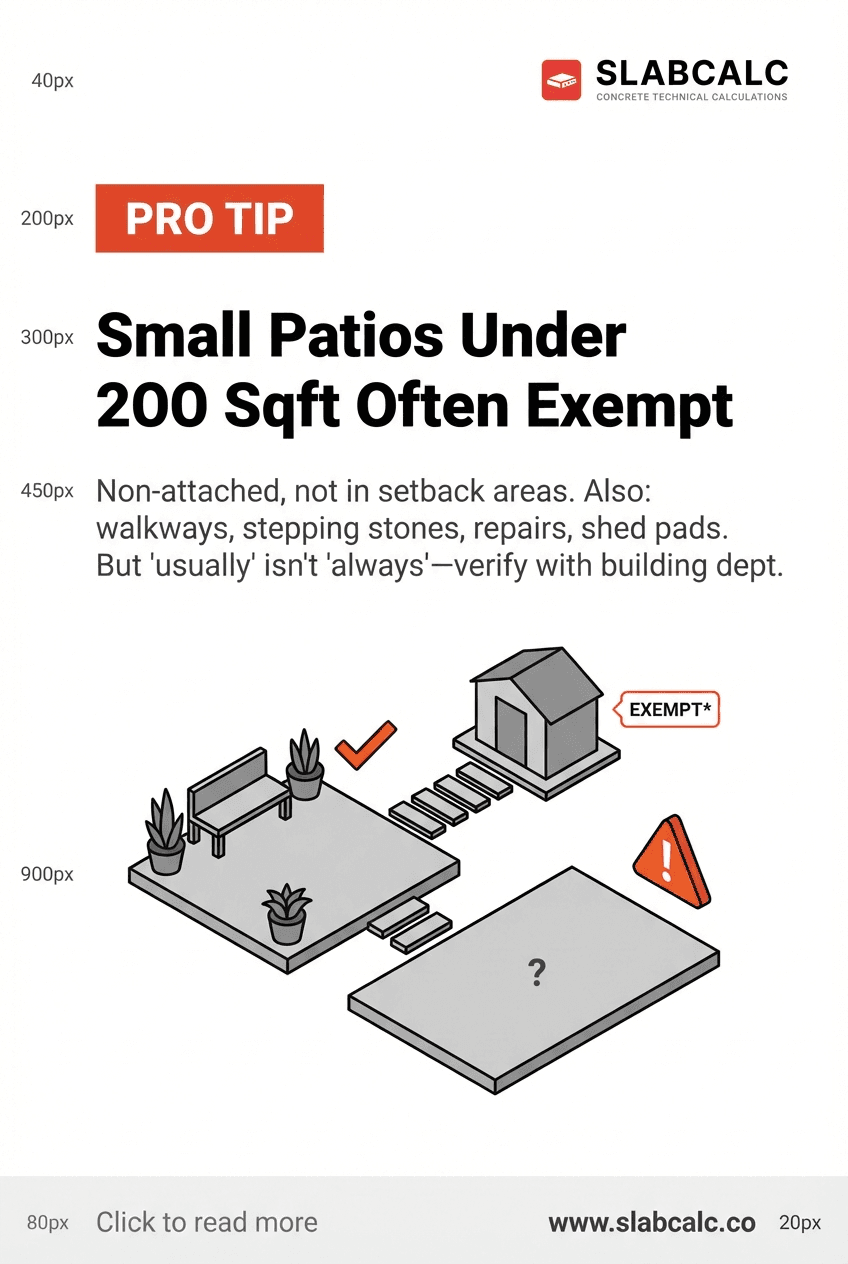
Small Patios Under 200 Sqft Often Exempt
The Biggest Permit Mistake Most DIYers Make
Homeowners routinely assume all concrete work requires a permit. This leads them to either abandon projects entirely or, worse, skip permits they should have obtained—risking fines, code violations, and real trouble when selling. The opposite mistake is equally costly: paying for permits on work that's actually exempt. The professional approach? Know the exemption thresholds and verify with your building department before spending a dime.
The 200 Square Foot Rule Explained
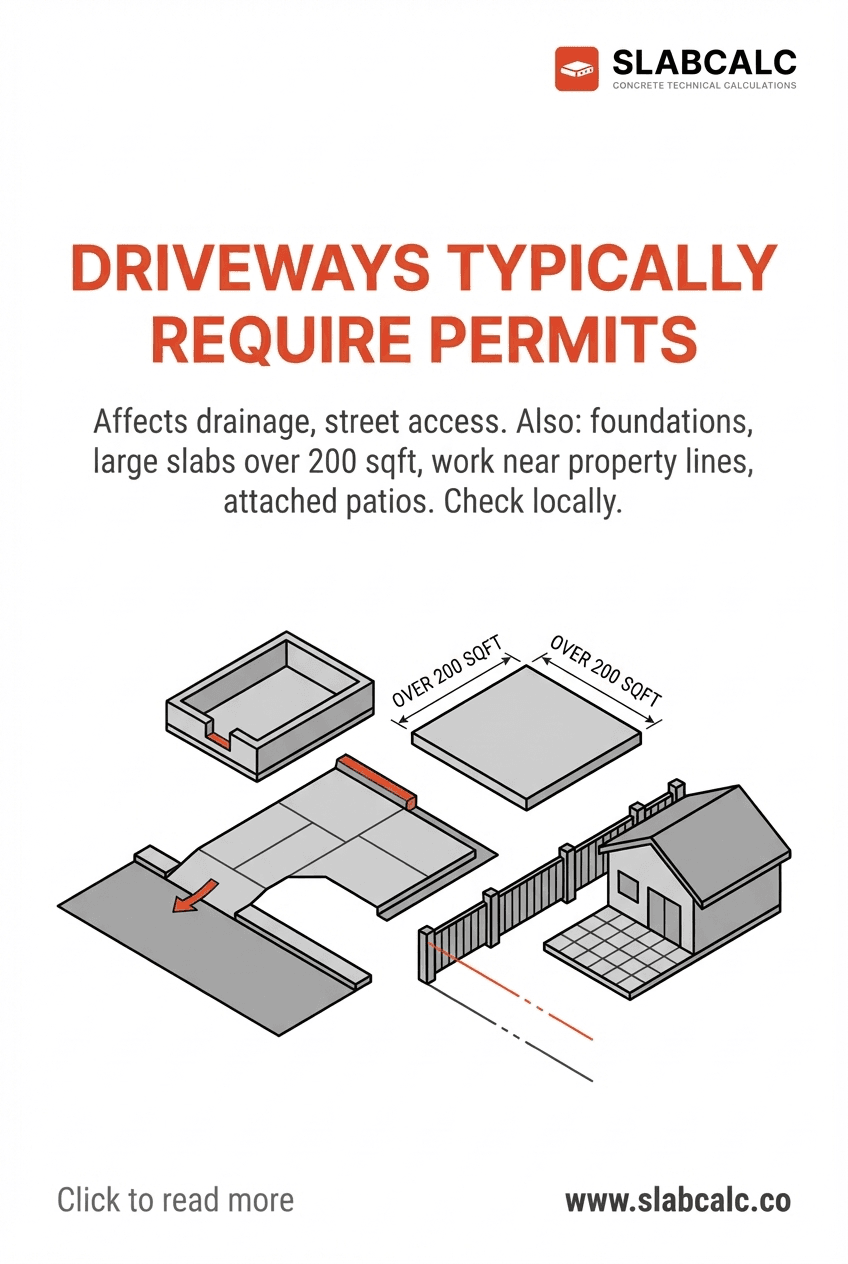
Most U.S. jurisdictions exempt small concrete patios under 200 square feet from permit requirements. A 200 sqft patio is roughly 14×14 feet—a modest but usable size for a seating area or small dining space. This exemption exists because small non-structural slabs pose minimal risk to drainage, property lines, or building safety.
But here's the critical catch: This exemption only applies when your patio is detached from your house and not in setback areas (the required distance from property lines). The moment your patio attaches to your home—becoming part of the structure—it requires a permit. Same rule if your lot sits close to a property line; setback violations can trigger enforcement action regardless of slab size.
What Else Is Usually Exempt
Beyond small patios, several other concrete projects skip the permit requirement:
- Walkways and paths under 4 feet wide and not serving as required egress (emergency exit)
- Stepping stones and informal pathways
- Repairs and resurfacing on existing slabs (like-for-like replacement)
- Small shed pads under 120–200 sqft, depending on location
- Replacing same-sized slabs in the same location
These exemptions recognize that you're either doing minimal work, not creating structural changes, or maintaining what's already there. However, if your "repair" actually expands the slab size or changes its purpose, you've crossed into permit territory.
The Verification Step That Saves Headaches
Here's the pro move: Always confirm with your building department before starting. Jurisdiction rules vary dramatically. Some counties impose stricter setback requirements; others have lower exemption thresholds (150 sqft instead of 200). One jurisdiction might exempt shed pads; another requires permits for anything over 40 sqft.
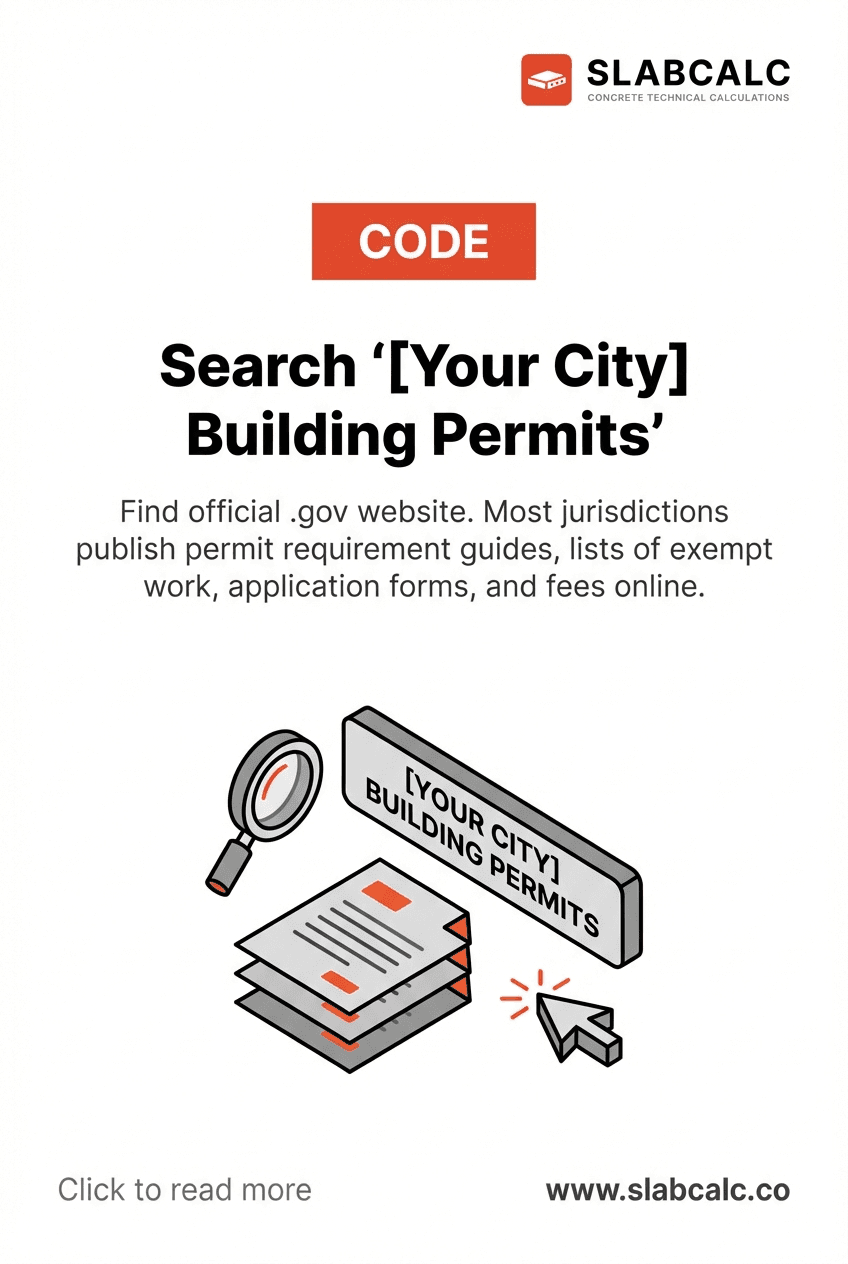
Call or visit your local building department's website. Ask specifically: "Do I need a permit for [describe your exact project]?" Provide details—size, location, whether it attaches to your home. Get the answer in writing if possible. This 10-minute conversation costs nothing and prevents expensive problems.
Permit exemptions exist for genuinely low-impact work. Leverage them correctly, and you'll save time and money while staying compliant. Misunderstand them, and you're exposing yourself to fines or forced removal of your work. The professional approach is always verification first.