
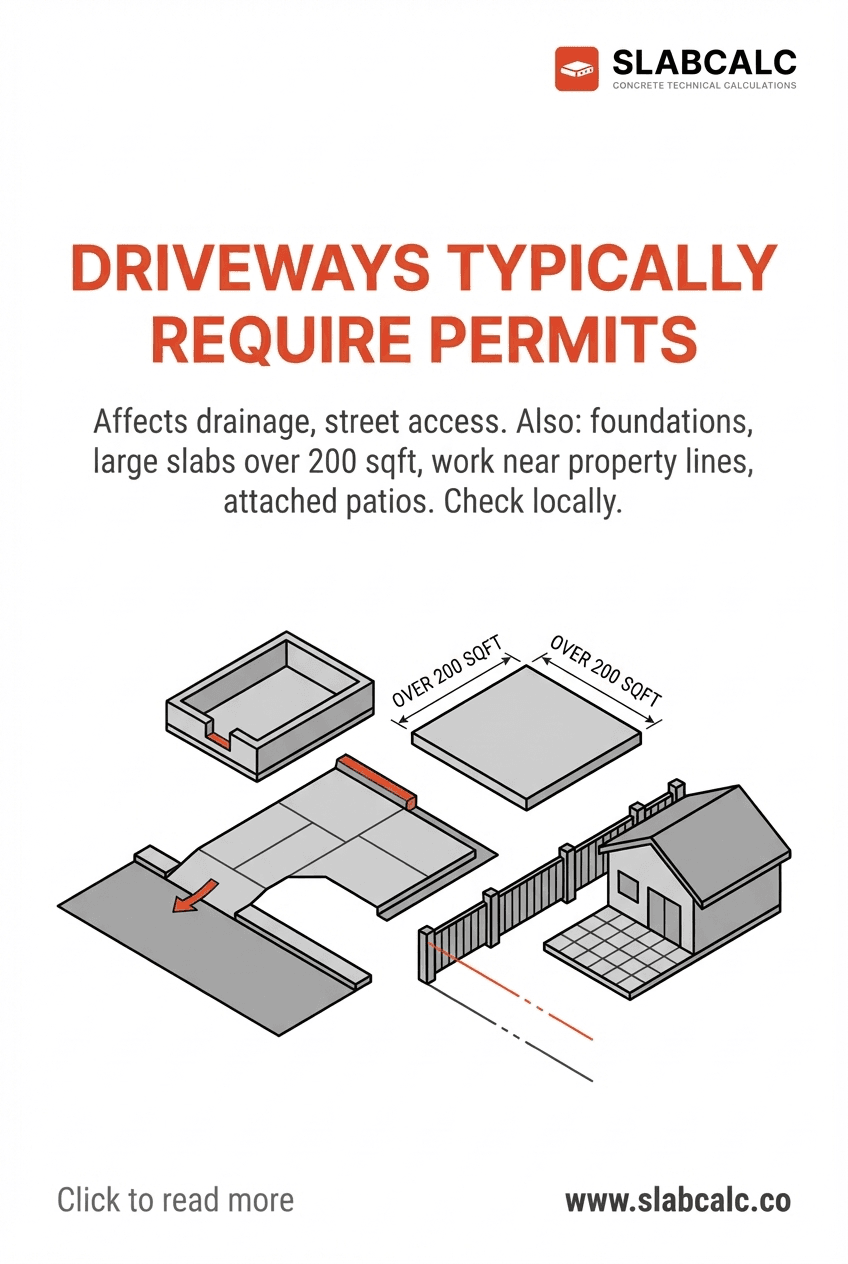
Driveways Typically Require Permits
The Key Number: Most Driveways Need Permits
Nearly 95% of new driveway projects require a building permit. This isn't a suggestion—it's a legal requirement in most municipalities. Skipping this step puts you at financial and legal risk, especially when selling your home.
Why Driveways Require Permits
Concrete driveways affect more than just your property. They impact drainage patterns, street access, and setback compliance. Local building departments enforce these permits to prevent water runoff from damaging neighboring properties, ensure vehicles can safely access public roads, and verify that your construction doesn't violate property line restrictions.
A permit also ensures your driveway meets the thickness standard for your climate and vehicle load. Most jurisdictions require 4 inches of concrete for residential driveways, but snow-heavy regions may demand 5–6 inches. The permit process catches these details before you pour 30 cubic yards of concrete that doesn't meet code.
When Permits Are Required
Definitely need a permit for:
- New driveways (any size)
- Driveway replacements or expansions
- Driveways near property lines (setback violations are costly)
- Large slabs exceeding 200 square feet
- Any concrete foundation work
- Patios attached to your home
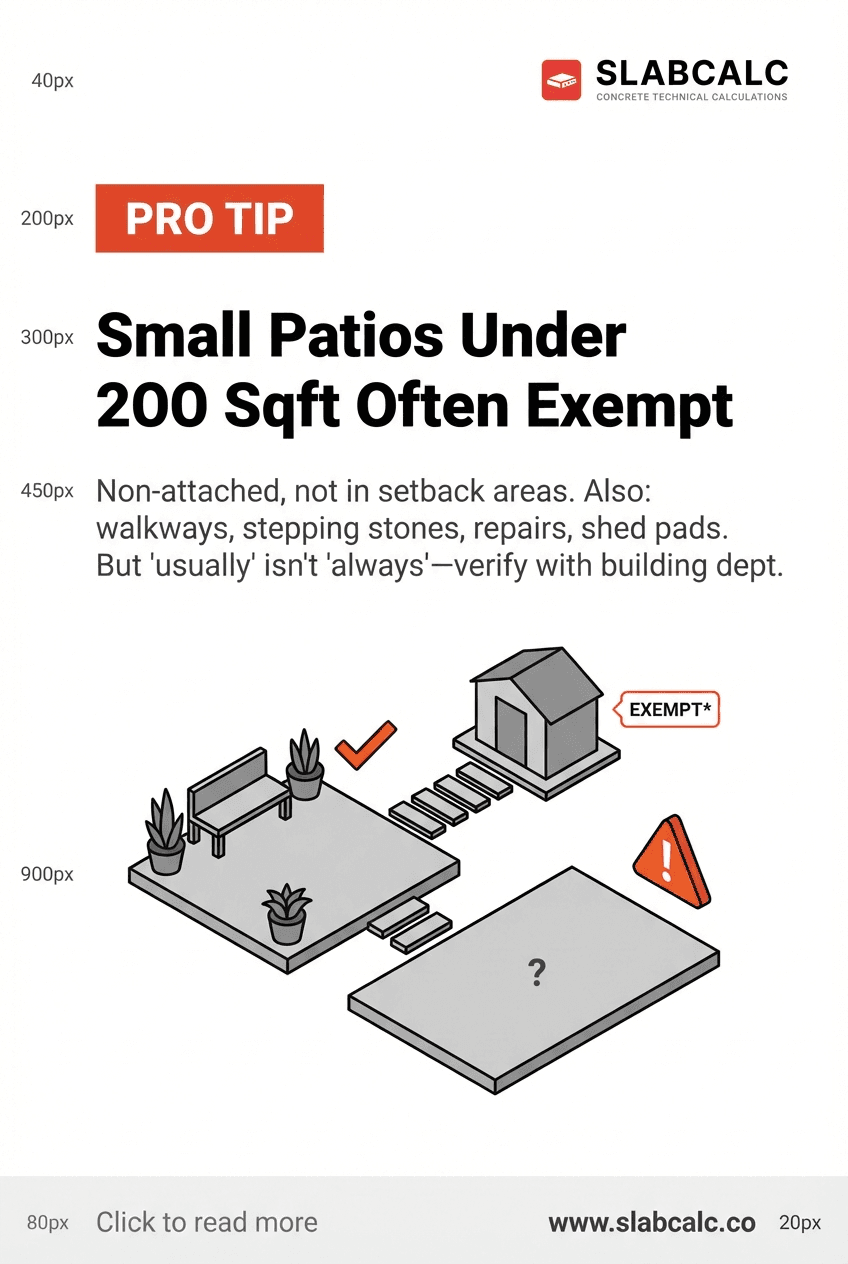
Likely exempt (verify locally):
- Small detached patios under 200 square feet
- Walkways and garden paths
- Repairs or resurfacing of existing slabs
- Small shed pads or stepping stones
The 200-square-foot threshold appears in most jurisdictions because slabs this size rarely cause drainage issues. A 20×10-foot patio generally flies under the radar. But a 30×12-foot driveway? That requires a permit.
How to Check Your Local Requirements
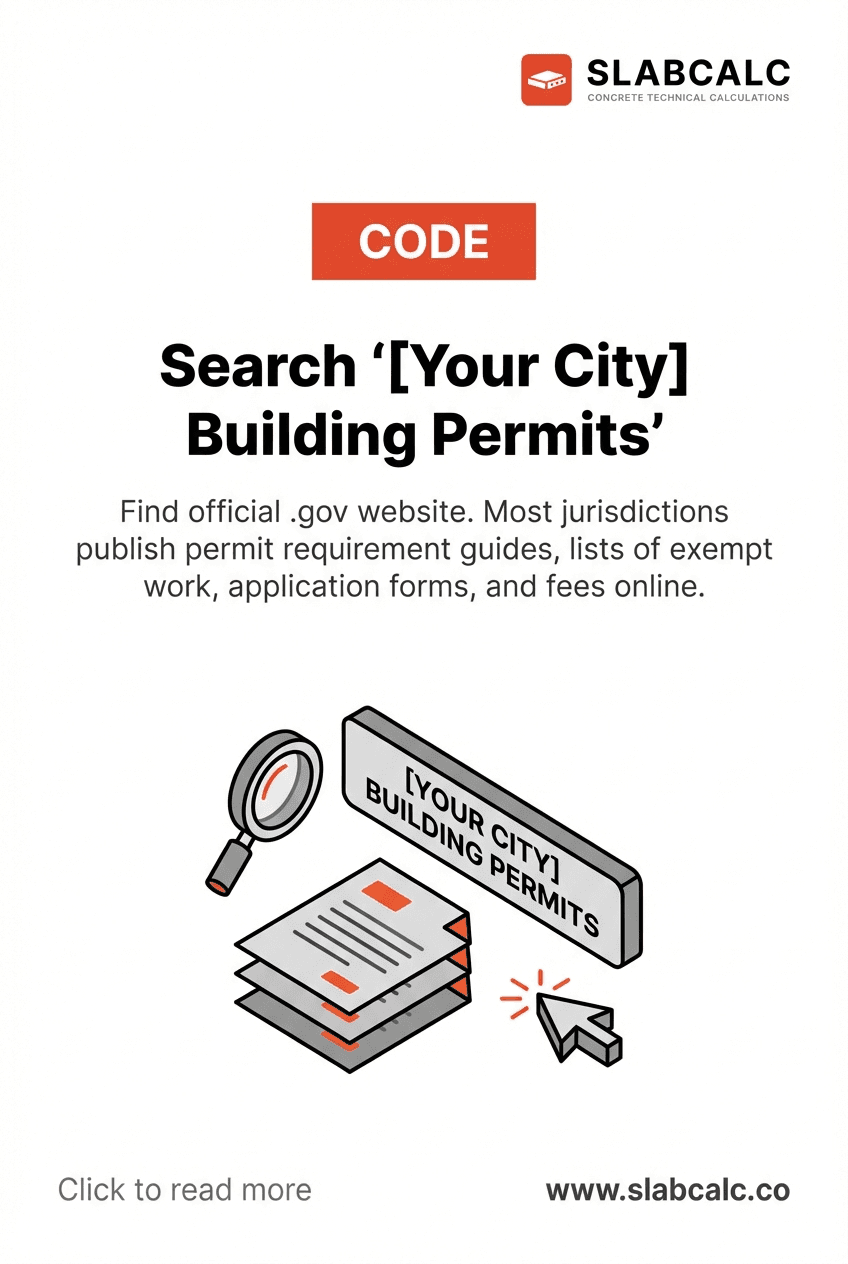
Step 1: Contact your building department. Search "[Your city/county] building permits" online. Most jurisdictions have a website listing what requires a permit and application fees.
Step 2: Ask specific questions. Call and ask: "Do I need a permit for a 500-square-foot driveway?" Get a written answer via email if possible. Requirements vary dramatically by location—what's exempt in one town may require a permit in another.
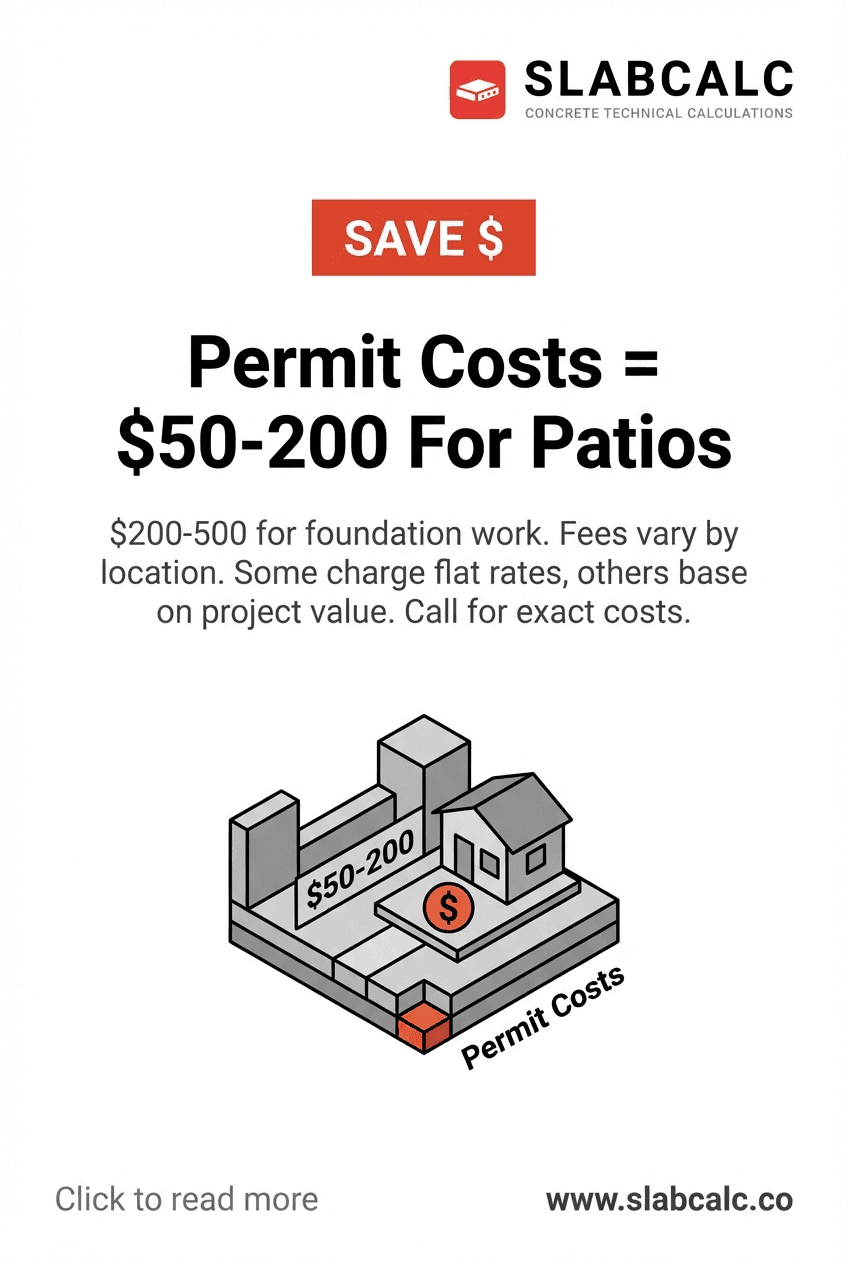
Step 3: Budget for the process. Permit fees range from $50 to $500+ depending on your project size and location. Add 1–2 weeks to your timeline for approval. Some areas offer expedited permits for $100–200 extra.
The Real Cost of Skipping Permits
Selling your home without permitted work? Inspectors will find unpermitted concrete. You'll face fines, forced removal, or costly remediation—easily $2,000–$5,000. Buyers may demand a discount or walk away entirely.
Building unpermitted work also voids your homeowner's insurance coverage if someone is injured on your driveway.
Bottom line: Spend the permit fee upfront. It's cheap insurance against serious problems later.