
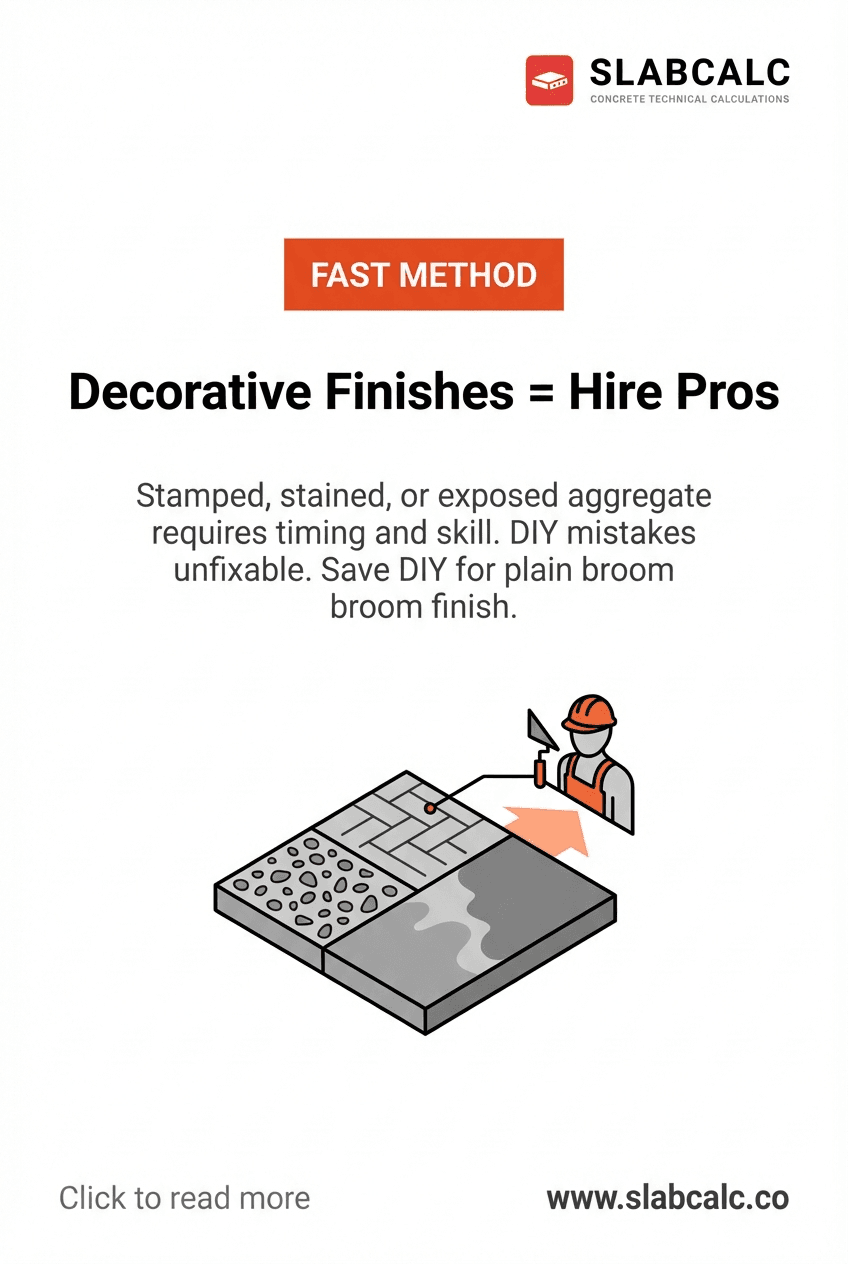
Decorative Finishes = Hire Pros
The Time Trap: DIY vs. Professional Decorative Work
The slow way: A homeowner tackling a 144-square-foot stamped patio might invest 16–20 hours across 3–4 days, plus weeks of research on stamping technique, tool rental logistics, and curing procedures. The fast way: A concrete contractor completes the same project in 6–8 hours with a single crew, delivering a finished product the same day.
That time difference isn't just convenience—it's the difference between a fixable surface and a permanent mistake.
Why Decorative Finishes Fail in DIY Hands
Plain broom finishes are forgiving. You sweep a broom across curing concrete, and even uneven strokes look intentional. Decorative finishes operate on a razor-thin margin of error.
Stamped concrete requires synchronized timing. The concrete must reach a precise hardness level—too soft and stamps sink unevenly; too firm and stamps won't imprint. This window lasts 20–40 minutes. Professionals know this window by feel. DIYers often miss it entirely, resulting in inconsistent imprints, shallow details, or stamps that stick and tear the surface.
Stained concrete demands flawless base preparation. Any dust, dirt, or residue blocks stain absorption, creating blotchy, uneven coloring. Professionals acid-etch and clean systematically. DIYers often skip steps, then discover permanent discoloration only after the stain dries.
Exposed aggregate finishes (pebbles or stones visible in the surface) require careful timing and pressure-washing expertise. Too much pressure blasts out the aggregate; too little leaves excess paste. The window is 12–24 hours after pouring. Professionals coordinate crews to hit this window reliably.
The Unfixable Problem
Here's the brutal truth: decorative concrete mistakes cannot be repaired. You cannot unbomb-stamp imprints or re-stain a blotchy surface. Your options are grinding it down (expensive and noisy) or tearing out and replacing the entire slab.
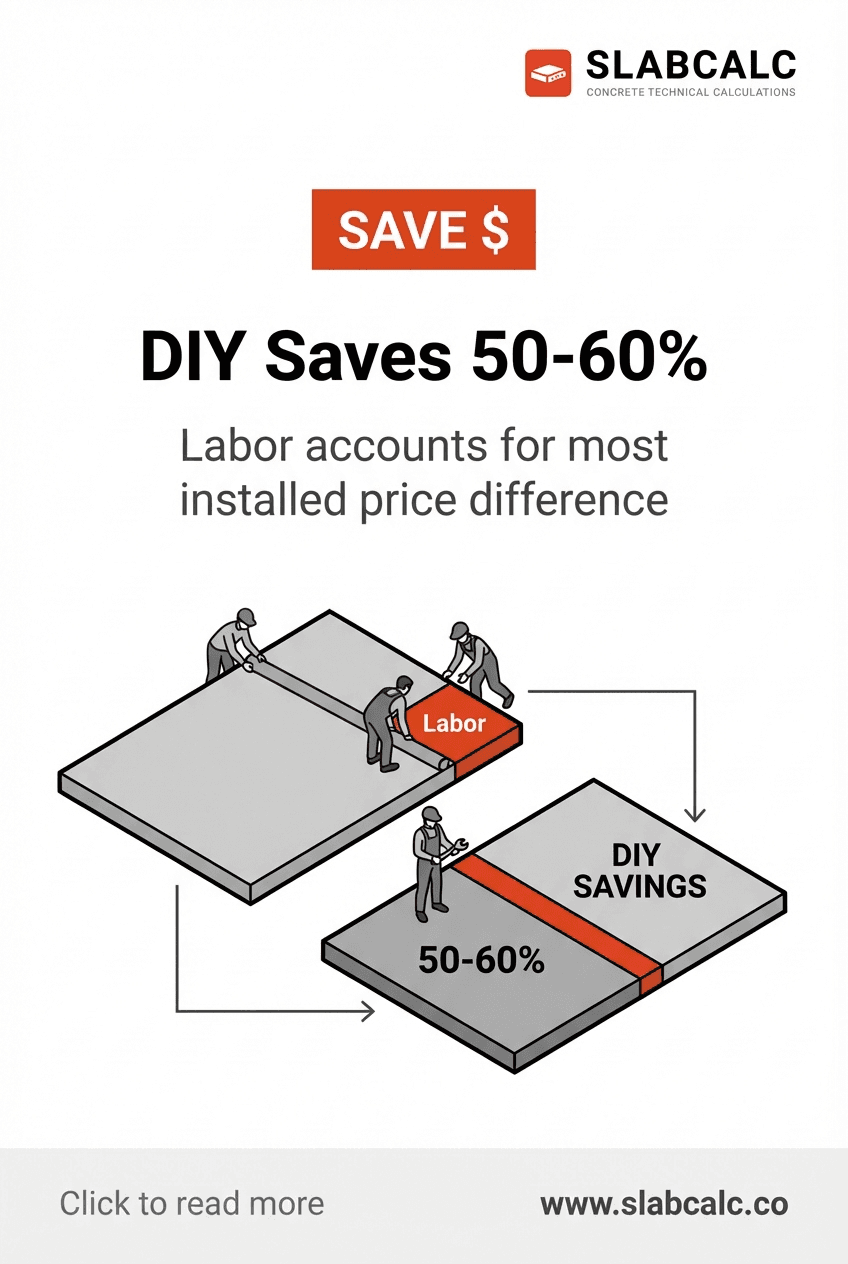
A 12×12 stamped patio costs $1,200–$2,000 professionally. If you DIY it and fail, you've spent $600 on materials for a ruined slab, then face another $1,200–$2,000 to fix it. Total damage: $1,800–$2,600—far more than hiring pros from the start.
Where DIY Concrete Still Makes Sense
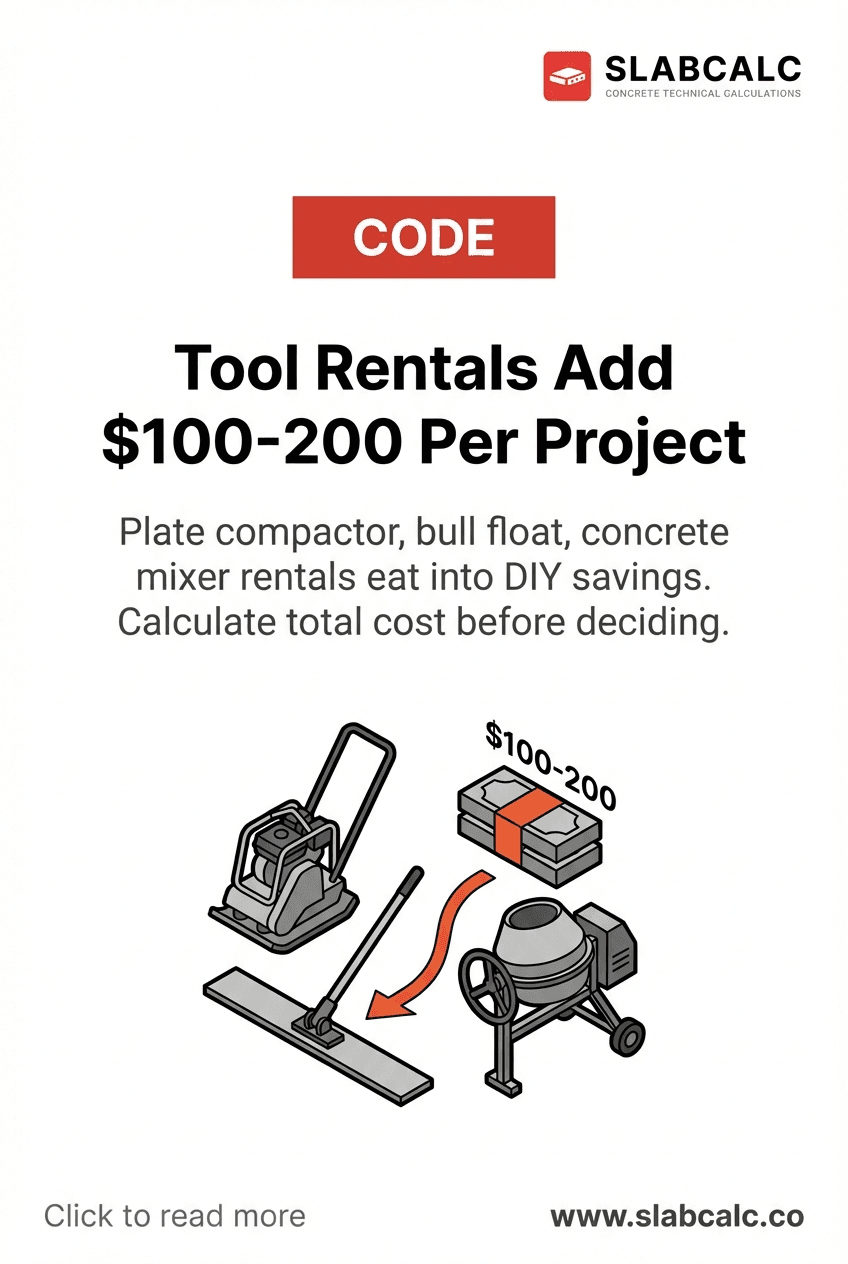
Plain broom-finish slabs (driveways, garage floors, utility pads) are genuinely DIY-friendly. The steps are straightforward: prepare the base, pour, screed level, brush for traction. You have hours of forgiveness, not minutes. Tool rental runs $75–$100. Material costs for a 400-square-foot driveway total $350–$450. Even if you make minor imperfections, they won't be visible or structural.
The Smart Strategy
Use our concrete cost calculator to budget both options for your project. If you're considering anything beyond a plain finish—stamped, stained, exposed aggregate, or colored concrete—add 15–20% to the professional cost and compare it against your realistic risk of failure.
For decorative work, hiring professionals isn't a luxury—it's insurance against a $2,000+ mistake.