
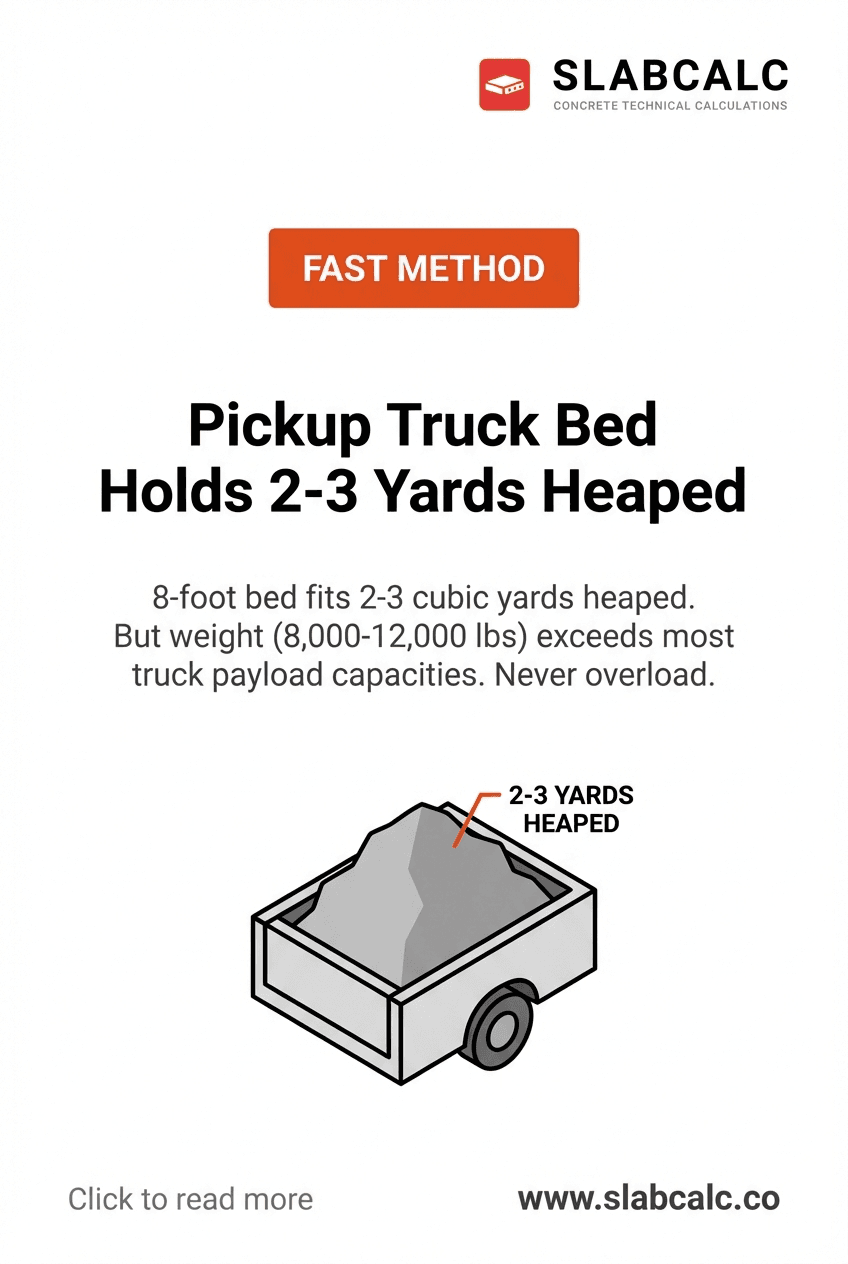
Pickup Truck Bed Holds 2–3 Yards
The Time Trade-Off
The slow way: Order ready-mix concrete delivered to your site in a truck. Wait for availability (often 2–7 days), pay delivery fees ($50–$150), and deal with a 1–2 hour unload window. Total time to material in hand: 3–10 days.
The fast way: Load a pickup truck bed yourself from a landscape supply yard or concrete distributor. Load time: 15–30 minutes. Availability: same day. Cost: minimal or free delivery.
The catch? Understanding your truck's actual capacity and weight limits is non-negotiable.
Standard Truck Bed Volume
An 8-foot pickup truck bed (the most common size) holds approximately 2–3 cubic yards when material is heaped level with or slightly above the bed rails. This assumes gravel, sand, or bagged concrete mix—not liquid ready-mix.
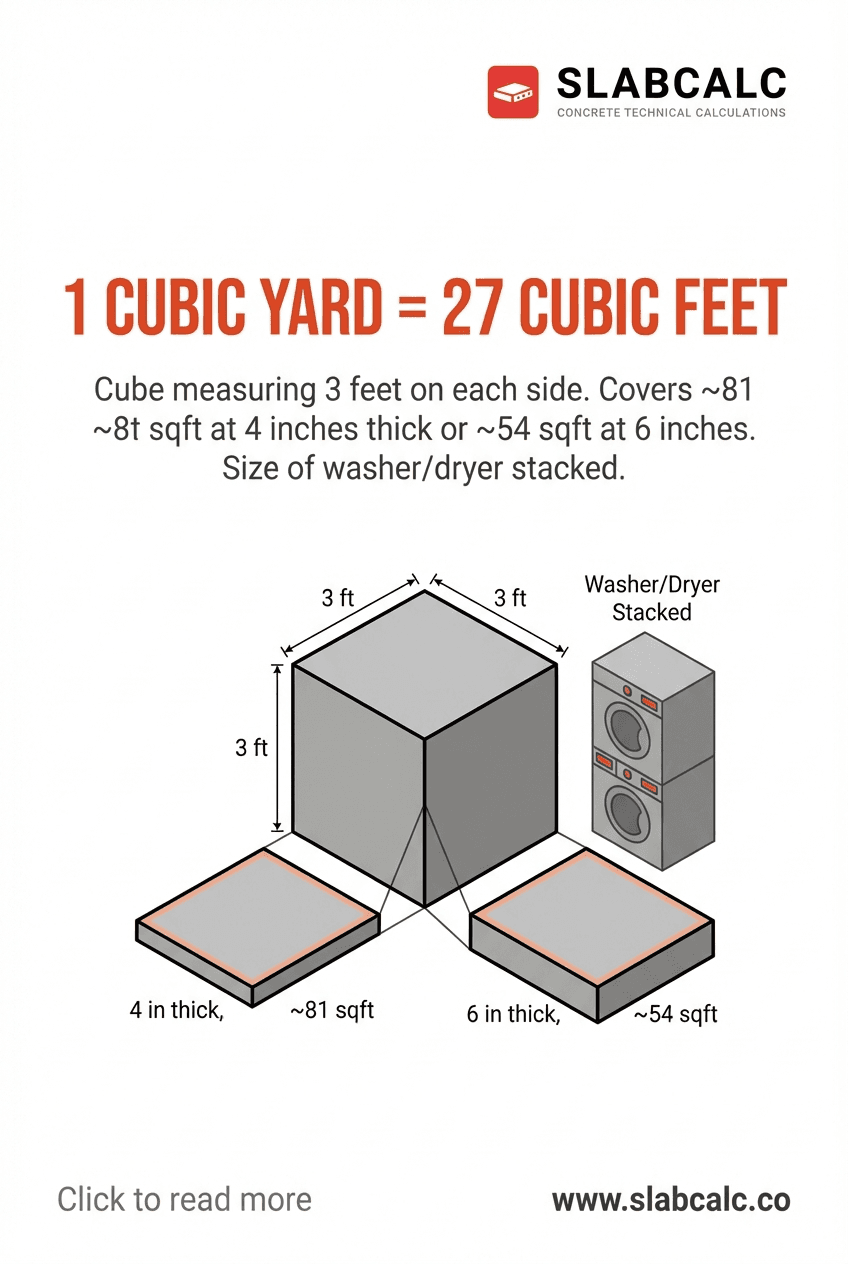
To visualize: one cubic yard equals 3 feet × 3 feet × 3 feet (27 cubic feet). An 8-foot bed measures roughly 8 feet long, 5.5 feet wide, and 1.5–2 feet deep when heaped. Do the math: that's about 66–88 cubic feet, or 2.4–3.3 cubic yards maximum.
Reality check: Most DIYers safely load 2 full yards without overfilling or creating visibility problems.
Weight Is the Real Limiter
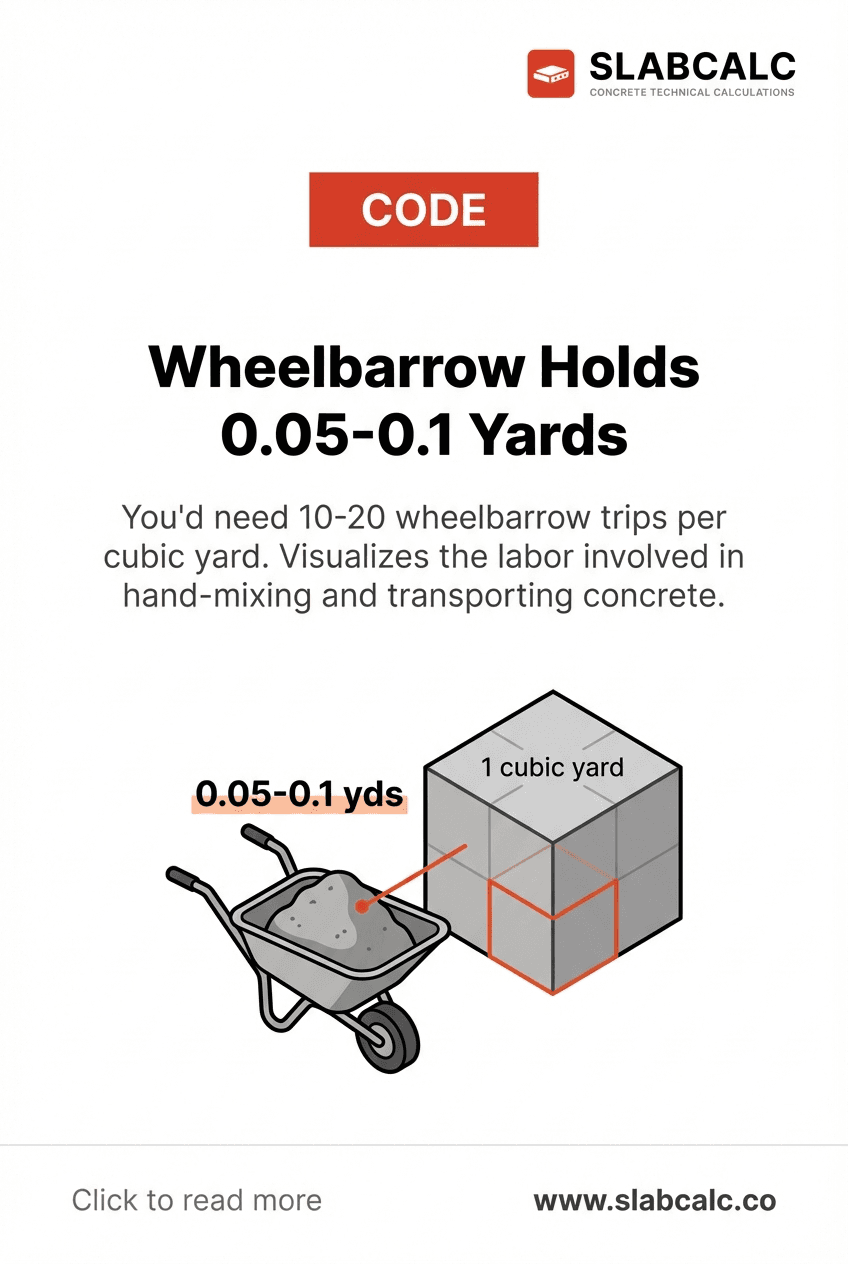
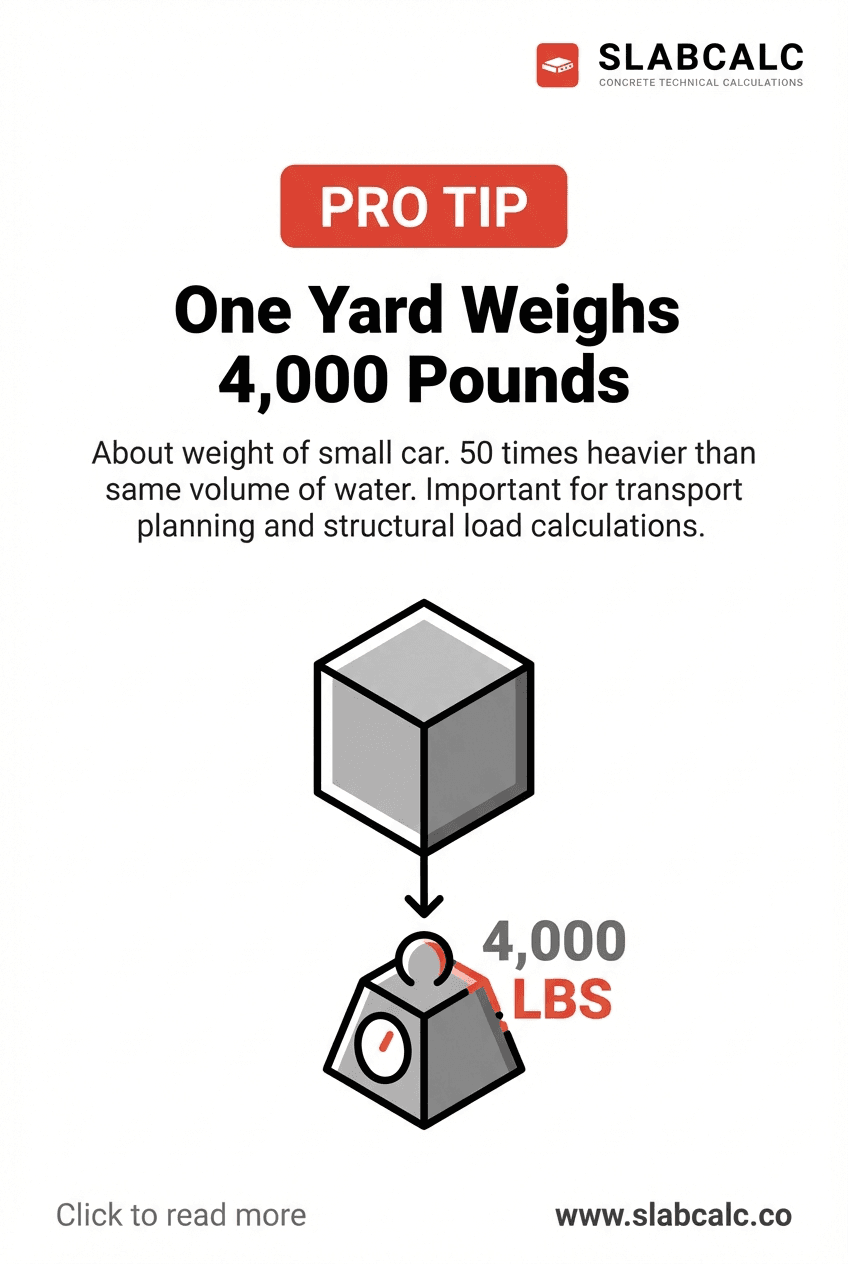
Here's where truck bed volume becomes irrelevant. One cubic yard of concrete weighs 4,000 pounds. Two yards? 8,000 pounds. Three yards? 12,000 pounds.
Most pickup trucks have a payload capacity of 1,000–1,500 pounds, which is the maximum weight the suspension and axles can handle beyond the truck's own weight. Even "heavy-duty" trucks rarely exceed 3,500 pounds of payload.
A 2-yard load (8,000 lbs) will overload most trucks significantly. Exceeding payload capacity causes:
- Broken leaf springs or suspension damage ($800–$3,000 repairs)
- Unsafe handling, especially on curves or braking
- Accelerated wear on transmission and brakes
- Voided manufacturer warranty
Check your truck's door placard or owner's manual for exact payload capacity. Never assume.
Safe Loading Strategy
Step 1: Know your payload. Find the yellow GVWR (Gross Vehicle Weight Rating) sticker on the driver's door jamb. Subtract your truck's dry weight. The result is your payload limit.
Step 2: Weigh material before leaving the supplier. Many landscape yards have scales.
Step 3: Load in layers. Distribute weight evenly from front to back. Avoid heaping all material toward the cab.
Step 4: Secure the load with tarps or netting if any material will spill.
Step 5: Drive slowly (under 45 mph). Avoid sudden turns and hard braking.
When to Order Delivery Instead
If your project needs more than 1.5 cubic yards, or if your truck's payload is under 2,000 pounds, order ready-mix delivery or rent a dump trailer. The $50–$150 delivery fee is cheap insurance against a $3,000 suspension repair.
For smaller jobs—patching driveways, setting fence posts, or mixing bagged concrete—a truck bed load is fast and practical. Just respect the weight limits.